

What is small batch coffee? Your guide to artisanal brews
TL;DR:
- Small batch coffee is roasted in limited quantities to ensure maximum freshness, artisanal quality, and distinct flavor profiles. It offers superior aroma, complexity, and transparency compared to mass-produced coffee, with a focus on ethical sourcing and experimentation. Brewing small batch beans involves precise techniques, and subscriptions provide access to a curated, fresh selection that elevates the home coffee experience.
Most coffee drinkers have sipped their way through dozens of bags without ever tasting what coffee actually can be. That gap between what you buy at a supermarket and what small batch coffee delivers is not subtle. It is the difference between a flat, predictable cup and one that makes you stop and think. Understanding what is small batch coffee means understanding how freshness, roast size, and artisanal intention combine to produce something genuinely worth brewing. If you care about flavor, this is where that conversation starts.
Table of Contents
- What defines small batch coffee? Key characteristics explained
- How small batch coffee unlocks superior flavor and unique blends
- Comparing small batch coffee vs. mass-produced coffee: freshness, flavor, and quality
- How to brew small batch coffee at home: techniques to maximize flavor
- Exploring small batch coffee subscriptions: your gateway to unique blends
- Why small batch coffee is more than a trend: a perspective for discerning home brewers
- Experience small batch excellence with Variatea Coffee
- Frequently asked questions
Key Takeaways
| Point | Details |
|---|---|
| Definition of small batch | Small batch coffee is roasted in limited amounts to maximize freshness and flavor complexity. |
| Flavor superiority | Small batch coffees deliver richer, more vibrant flavors compared to mass-produced blends. |
| Home brewing methods | You can use various common brewing techniques to unlock small batch coffee’s unique taste at home. |
| Subscription benefits | Subscriptions offer fresh, curated small batch coffees delivered regularly for variety and quality. |
| Ethical and artisanal value | Choosing small batch supports sustainable sourcing and artisanal craftsmanship in coffee. |
What defines small batch coffee? Key characteristics explained
The small batch coffee definition comes down to one core principle: roasting less to achieve more. Rather than running hundreds of pounds of beans through an industrial drum roaster, small batch roasters work in tight quantities, sometimes as little as 5 to 22 pounds per roast. That size constraint is not a limitation. It is the entire point.
When you roast in smaller quantities, you have real control over heat distribution, roast timing, and the development of each individual bean. Large commercial roasters sacrifice that precision in the name of volume. The result is beans that taste like they were processed, not crafted. As roast quality experts note, small batch coffee roasters prioritize delivering vibrancy and flavor that supermarket stale beans simply cannot match.
What else separates small batch from the standard shelf product?
- Bean origin transparency. Small batch roasters typically source directly from specific farms or cooperatives, often naming the region, altitude, and harvest season on the bag.
- Freshness by design. Beans are roasted to order or in very short intervals, meaning what you receive was likely roasted within days, not months.
- Roast profile customization. Each origin responds differently to heat. Small batch roasters dial in the exact profile to highlight what makes that bean interesting.
- Sustainable sourcing. Direct trade relationships mean farmers receive fair prices, which in turn supports quality because growers have an incentive to tend their crops carefully.
Understanding the hand crafted coffee flavor distinction starts here. Craft is not a marketing word when the roaster is literally standing over a small drum, making decisions in real time.
How small batch coffee unlocks superior flavor and unique blends
Having defined small batch coffee, the next logical question is why it tastes so different. The answer is not just freshness. It is the freedom that small batch roasting gives to experiment.
Commercial roasters need a product that appeals to the widest possible audience, which means smoothing out anything unusual or polarizing. Small batch roasters do the opposite. They seek out beans with pronounced, specific character, and then build roast profiles designed to amplify it rather than normalize it.
Consider what that means in practice. A washed Ethiopian Yirgacheffe roasted in small batches might carry distinct notes of jasmine, bergamot, and lemon zest that would disappear entirely under a mass-production roast. A natural-processed Brazilian bean roasted carefully in small quantities can taste like blueberry and dark chocolate with a syrupy body. These are not exaggerations. They are what happens when someone with skill roasts a small amount of exceptional beans with full attention.
The additional benefits worth knowing:
- Ethical sourcing improves quality directly. When roasters pay farmers fairly and build long-term relationships, farmers invest in better processing, shade growing, and selective harvesting.
- Seasonal rotation keeps things interesting. Small batch roasters follow harvest cycles, meaning your coffee changes throughout the year as new crops arrive from different origins.
- Blending becomes an art form. When you understand each component deeply, you can combine them for something greater than the sum of its parts.
As Bon Appétit reports, the best small batch coffees come from roasters who prioritize morality and flavor over mass profits, curating selections that reflect genuine care for the product. Looking for best artisanal small-batch coffees means seeking those roasters who treat each batch like a decision, not a production run.
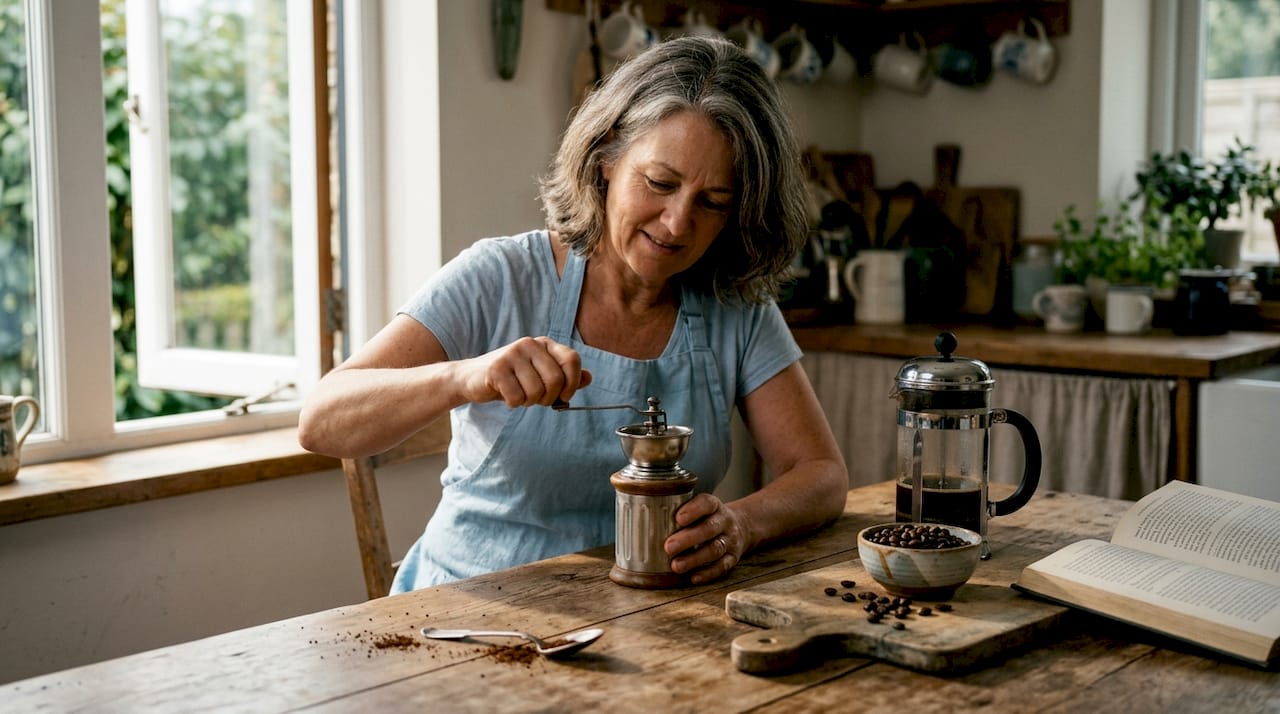
Pro Tip: Always grind your beans immediately before brewing. Small batch beans carry volatile aromatic compounds that begin dispersing the moment the bean is cracked open. Pre-ground, even excellent beans taste muted within hours.
Understanding specialty coffee flavor is inseparable from understanding why grind timing matters as much as the roast itself.
Comparing small batch coffee vs. mass-produced coffee: freshness, flavor, and quality
Here is where the rubber meets the road. The advantages of small-batch coffee over mass-produced coffee are not abstract. They show up in the cup every single morning.
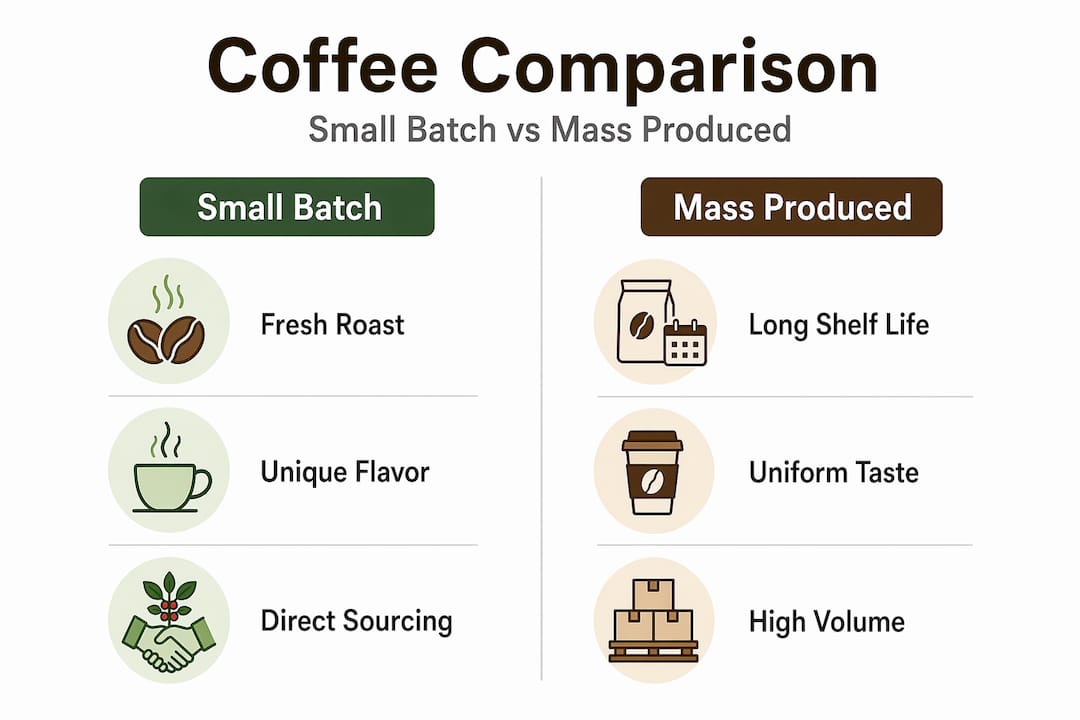
| Feature | Small batch coffee | Mass-produced coffee |
|---|---|---|
| Roast freshness | Roasted to order, often within days | Roasted months before purchase |
| Flavor complexity | High, with distinct origin notes | Flat and generic by design |
| Bean sourcing | Direct trade, single origin options | Commodity blends, mixed origins |
| Roast control | Precise, small-drum craft roasting | Industrial, high-volume processing |
| Aroma | Vibrant and pronounced | Faded due to long shelf storage |
| Transparency | Origin, farm, and roast date listed | Rarely disclosed |
| Sustainability | Often certified or direct trade | Frequently commodity market pricing |
Mass-produced coffee is engineered for shelf life, not peak flavor. The beans are often roasted dark to mask defects and inconsistencies that come with purchasing commodity-grade green coffee in bulk. By the time that bag reaches your kitchen, the coffee has already passed its best days.
Small batch roasters work on a different timeline entirely. As noted by roasters focused on peak quality, their promise is delivering coffee at its absolute best, which means timing the entire process around your cup rather than around a warehouse schedule.
The benefits of small batch coffee also extend to the experience of buying it. When you purchase from a small batch roaster, you often receive a roast date, tasting notes, origin story, and brewing recommendations. That information makes you a better brewer because you know exactly what you are working with.
Pro Tip: Store your small batch beans in an opaque, airtight container at room temperature. Avoid the refrigerator. Moisture and temperature fluctuations pull flavor out of the bean faster than air alone.
Understanding how roasting transforms coffee flavor helps you appreciate why those storage decisions actually matter.
How to brew small batch coffee at home: techniques to maximize flavor
Once you have quality beans in hand, brewing becomes the deciding factor. Small batch coffee rewards precision and patience. The good news is that you do not need expensive equipment. You need attention.
- Start with whole beans. Buy whole bean whenever possible. Grind only what you will brew immediately.
- Calibrate your water temperature. Aim for 195 to 205 degrees Fahrenheit. Water that is too hot scorches the grounds and turns delicate flavors bitter.
- Match your grind to your brew method. Coarse grind for French press, medium for pour-over, fine for espresso. Wrong grind size is the most common reason a good bean produces a bad cup.
- Control your brew ratio. A reliable starting point is 1 gram of coffee per 15 grams of water. Adjust from there based on taste.
- Choose your method intentionally. Pour-over highlights clarity and brightness. French press brings out body and texture. Espresso concentrates intensity. Each reveals something different in the same bean.
- Time your extraction. Pour-over typically takes 3 to 4 minutes. French press brews best at 4 minutes before pressing. Over-extraction turns even great coffee harsh.
As small batch roasters confirm, quality roasters will often grind beans to suit your specific brewing method on request, from stovetop to filter to cafetiere. That flexibility is part of the service model.
Pro Tip: Adjust grind size before you adjust any other variable. Most off-flavors in home brewing trace back to grind inconsistency rather than water temperature or brew time.
For those who want to push further, the overlap between home brewing specialty beans and creative preparation opens up entirely new territory.
Exploring small batch coffee subscriptions: your gateway to unique blends
A subscription is the most efficient way to access consistent small batch quality without the guesswork of hunting down individual roasters. The best services function less like a shopping cart and more like a curator who knows your palate.
What a good small batch subscription actually delivers:
- Freshness guarantees. Roast-to-order models mean your beans ship within 24 to 48 hours of roasting.
- Taste profile matching. Answer a few questions and receive beans that align with your preferences for roast level, origin, and flavor notes.
- Frequency flexibility. Adjust delivery timing based on how fast you actually drink coffee, not a fixed schedule.
- Variety by design. Rotating selections expose you to origins and processing methods you would never find on a store shelf.
The scale of what top subscription services offer is remarkable. Bon Appétit documents subscription platforms offering access to over 600 curated brews from sustainable roasters, all tailored to individual taste and delivered fresh.
| Subscription type | Typical frequency | Quantity per delivery | Average monthly cost |
|---|---|---|---|
| Single roaster | Weekly or biweekly | 8 to 12 oz | $18 to $30 |
| Multi-roaster curated | Monthly | 4 to 16 oz | $20 to $45 |
| Personalized matching | Flexible | 8 to 16 oz | $25 to $50 |
| Regional specialty focus | Monthly | 12 oz | $22 to $40 |
Pro Tip: Look for subscriptions that list the roast date on every bag and ship within 48 hours of roasting. If a service cannot tell you when the coffee was roasted, that is a signal the freshness model is not actually built around the customer.
Discovering innovative coffee subscriptions means finding services that treat curation as a craft, not an algorithm.
Why small batch coffee is more than a trend: a perspective for discerning home brewers
Here is something the coffee marketing world rarely says plainly: most people have never actually tasted coffee at its potential. They have tasted coffee at its most convenient. Those are very different things.
Small batch coffee is not a premium label. It is a methodology with real consequences. When a roaster limits batch size, they are choosing quality control over output efficiency. Every single time. That choice filters through every part of the supply chain, from the farmer who gets paid a fair price to the roaster who stands over a drum making real-time decisions to you, the person holding a cup that actually tastes like something.
“Small batch roasters prioritize ethics and quality over mass profits, supporting a more sustainable coffee culture.” — Bon Appétit
The deeper argument is this: choosing small batch coffee is also choosing to be an active participant in what the coffee industry becomes. Mass commodity markets have driven down prices to a point where many farmers cannot sustain quality farming. Direct trade relationships funded by small batch buyers reverse that pressure. You are not just buying better coffee. You are funding the conditions that make better coffee possible.
For the home brewer specifically, small batch coffee also changes the practice of brewing itself. When you know the farm, the harvest season, and the roast profile, brewing becomes an informed act rather than a routine one. You make different choices. You pay attention differently. That engagement produces better results. Understanding why bold coffee matters in your daily ritual is part of that shift.
The trend conversation misses the point entirely. Small batch coffee is not popular because it is fashionable. It is gaining ground because people who try it rarely go back.
Experience small batch excellence with Variatea Coffee
At Variatea Coffee, small batch quality is not a claim. It is the foundation of every blend we create. Our Whiskey Barrel Aged coffee is a perfect example of what the small batch process makes possible: beans aged in authentic charred oak barrels to develop deep, smoky bourbon and vanilla notes that no mass-production line could replicate. This is coffee as a craft object.

Whether you are drawn to that barrel-aged boldness or to something entirely different, our full collection covers the range from rich Dubai Chocolate Coffee to our Cinnamon Hazelnut blend to a complete lineup of artisanal teas. Every product is built around the same principle: flavor first, always. Start your small batch journey at Variatea Coffee and taste what intentional brewing actually feels like.
Frequently asked questions
What exactly is small batch coffee?
Small batch coffee is roasted in limited quantities to ensure maximum freshness, unique flavor profiles, and artisanal quality. Unlike mass-produced coffee, small batch roasters prioritize vibrancy and flavor that stale supermarket beans cannot deliver.
How does small batch coffee taste different from regular supermarket coffee?
It tastes noticeably fresher, more aromatic, and more complex because it is roasted in small amounts and delivered quickly after roasting. Small batch roasters promise coffee at peak freshness, which means you taste the bean at its absolute best rather than its shelf-life compromise.
Can I brew small batch coffee at home without special equipment?
Yes. Small batch coffee works beautifully with everyday methods like pour-over, French press, or a standard drip machine. Many small batch roasters will grind beans to match your specific equipment, from stovetop to filter to cafetiere, making quality accessible regardless of what you own.
Are small batch coffee subscriptions worth it?
For anyone serious about freshness and flavor variety, they absolutely are. The best services provide access to over 600 curated brews from sustainable roasters, matched to your taste and delivered fresh, which is something no retail shelf can replicate.
Recommended
- Best coffees for flavor: small-batch artisanal picks – Variatea Coffee
- Artisanal coffee flavor profiles and brewing techniques – Variatea Coffee
- Coffee tasting workflow: Step-by-step guide for artisanal flavor – Variatea Coffee
- Explore artisan coffee varieties for unique flavor experiences – Variatea Coffee