

How roasting transforms coffee flavor: A guide
TL;DR:
- Roasting triggers chemical reactions that develop and modify coffee flavors.
- Different roast levels produce distinct taste profiles, from bright and floral to bold and smoky.
- The roasting method and precise profiling influence the final cup’s complexity and clarity.
Most coffee enthusiasts spend hours researching bean origins, single-origin estates, and processing methods. Yet the single biggest lever on what ends up in your cup is something that happens after harvest: roasting. A flawlessly grown Ethiopian Yirgacheffe can taste flat and lifeless if roasted poorly, while a modest Central American bean can sing with complexity under a skilled roaster’s hand. By the end of this guide, you’ll understand exactly how roasting builds, breaks, and reshapes flavor so you can choose and taste artisanal coffees with real confidence.
Table of Contents
- How roasting creates coffee flavor: The science revealed
- Comparing roasting levels: From light to dark
- Roasting techniques: Drum, air, and precision profiling
- Practical tasting tips: Savoring roast flavors like a pro
- Why the art of roasting is underestimated by most enthusiasts
- Discover premium blends crafted for flavor explorers
- Frequently asked questions
Key Takeaways
| Point | Details |
|---|---|
| Roasting defines flavor | The roasting stage creates the vast majority of coffee’s unique flavors and aromas. |
| Roast level matters | Light, medium, and dark roasts yield distinct sensory profiles, from bright and floral to bold and smoky. |
| Method shapes nuance | Drum versus air roasting, plus profiling, bring out different notes in every batch. |
| Taste with intent | Sampling various roast levels helps you discover the optimal flavor for your palate. |
How roasting creates coffee flavor: The science revealed
Raw green coffee beans taste nothing like the beverage you love. They’re grassy, dense, and almost undrinkable. Roasting is what converts those raw materials into something extraordinary, and it does so through a cascade of chemical reactions that happen in a matter of minutes.
The two most important reactions are the Maillard reaction and caramelization. The Maillard reaction begins around 300°F (149°C) and involves amino acids and reducing sugars bonding together to form hundreds of new flavor and aroma compounds. This is the same reaction that browns a steak or toasts bread. Caramelization kicks in slightly later, converting sucrose into complex, sweet, and slightly bitter compounds. Together, these two processes are responsible for the majority of coffee aroma compounds that define your cup.
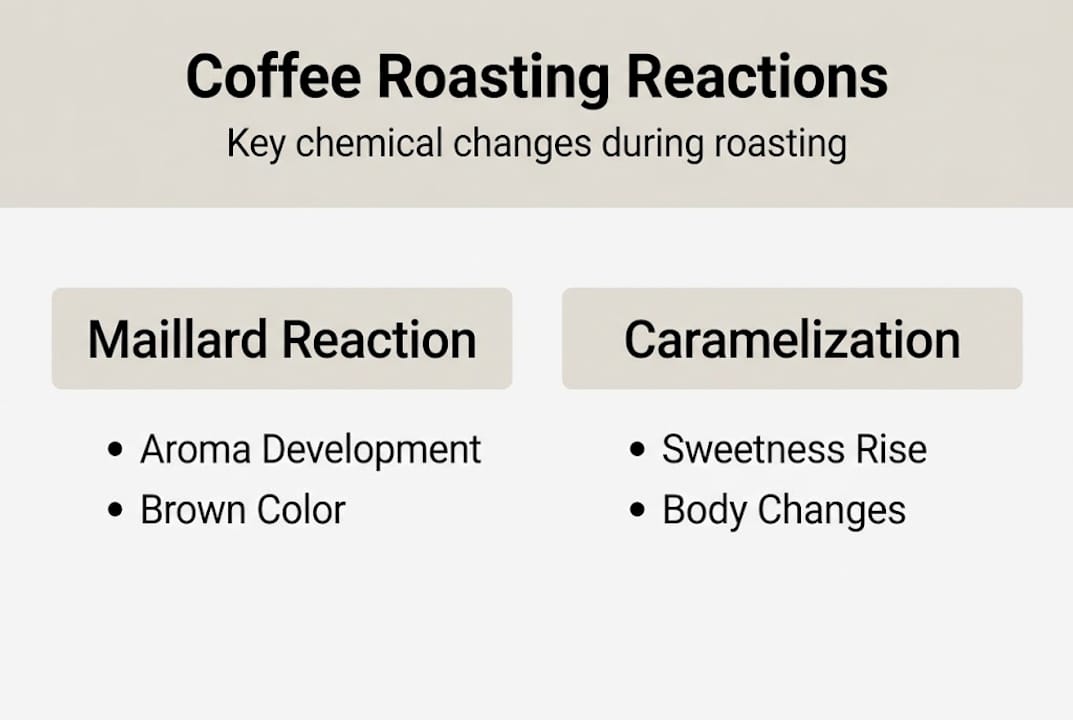
At the same time, chlorogenic acids degrade and volatiles shift as the roast progresses. Light roasts retain more of these acids, which is why they taste brighter and more fruit-forward. As the roast darkens, those acids break down, and the flavor shifts toward caramel, chocolate, and eventually smoky or bitter notes.
The bean itself gives you visual cues. It swells as moisture escapes, transitions from green to yellow to brown, and audibly “cracks” at two distinct stages. The first crack signals the start of a light roast. The second crack marks the entry into dark roast territory. Each of these milestones corresponds to real chemical changes inside the bean.
Roasting is not just heat applied to a bean. It is a controlled sequence of chemical transformations where a difference of 10 seconds or 5 degrees can mean the difference between a bright, complex cup and a flat, ashy one.
Main flavors produced at each roast level:
- Light roast: Floral, citrus, berry, tea-like, high acidity
- Medium roast: Caramel, hazelnut, milk chocolate, balanced acidity and body
- Medium-dark roast: Dark chocolate, toasted nuts, mild smokiness, heavier body
- Dark roast: Smoky, bitter, earthy, charred, low acidity, bold body
| Roast level | Dominant flavors | Key chemical transition |
|---|---|---|
| Light | Floral, fruit, bright acidity | High chlorogenic acids, low Maillard products |
| Medium | Caramel, nut, chocolate | Acid breakdown begins, Maillard peaks |
| Medium-dark | Toasted, bittersweet | Sugars nearly depleted, oils surface |
| Dark | Smoky, bitter, bold | Acids minimal, carbonization starts |
Comparing roasting levels: From light to dark
Understanding the transformations leads naturally to comparing what you can actually taste in each roast. This is where the knowledge becomes practical for the adventurous brewer.
Research confirms that bean color follows a universal curve as roasting progresses, and the flavor compounds shift in predictable patterns regardless of origin. That means the roast level is a reliable predictor of taste, even across different farms or varietals.
| Roast level | Acidity | Body | Dominant flavors | Best for |
|---|---|---|---|---|
| Light | High | Light | Floral, citrus, berry | Pour-over, filter brewing |
| Medium | Moderate | Medium | Caramel, chocolate, nuts | Drip, French press |
| Medium-dark | Low-moderate | Full | Toasted, bittersweet | Espresso, milk drinks |
| Dark | Low | Heavy | Smoky, bitter, earthy | Cold brew, bold espresso |
For enthusiasts chasing bold artisanal profiles, the medium and medium-dark ranges tend to offer the richest complexity without sacrificing nuance.
Advantages and drawbacks of each roast level:
- Light: Preserves origin character and delicate aromatics, but can taste sour or thin if underdeveloped
- Medium: Broadest flavor appeal, excellent balance, though some origin uniqueness is lost
- Medium-dark: Rich and satisfying body, pairs well with milk, but subtle floral notes disappear
- Dark: Bold and consistent, easy to identify, yet bitterness can mask the bean’s natural qualities
The roast profile chemistry is more nuanced than most buyers realize. Two coffees labeled “dark roast” can taste dramatically different depending on how fast or slow the roaster applied heat. Speed matters as much as final temperature.
Roasting techniques: Drum, air, and precision profiling
Beyond roast levels, the actual roasting method opens new worlds of flavor for those willing to experiment. The equipment a roaster uses shapes the final cup in ways that are just as significant as the roast level itself.
Drum roasters are the industry standard. Green beans tumble inside a rotating metal drum while heat is applied from below. The drum provides even, consistent contact heat, which produces a full, rounded body and smooth flavor. Most specialty roasters use drum machines because they allow precise control over heat curves.
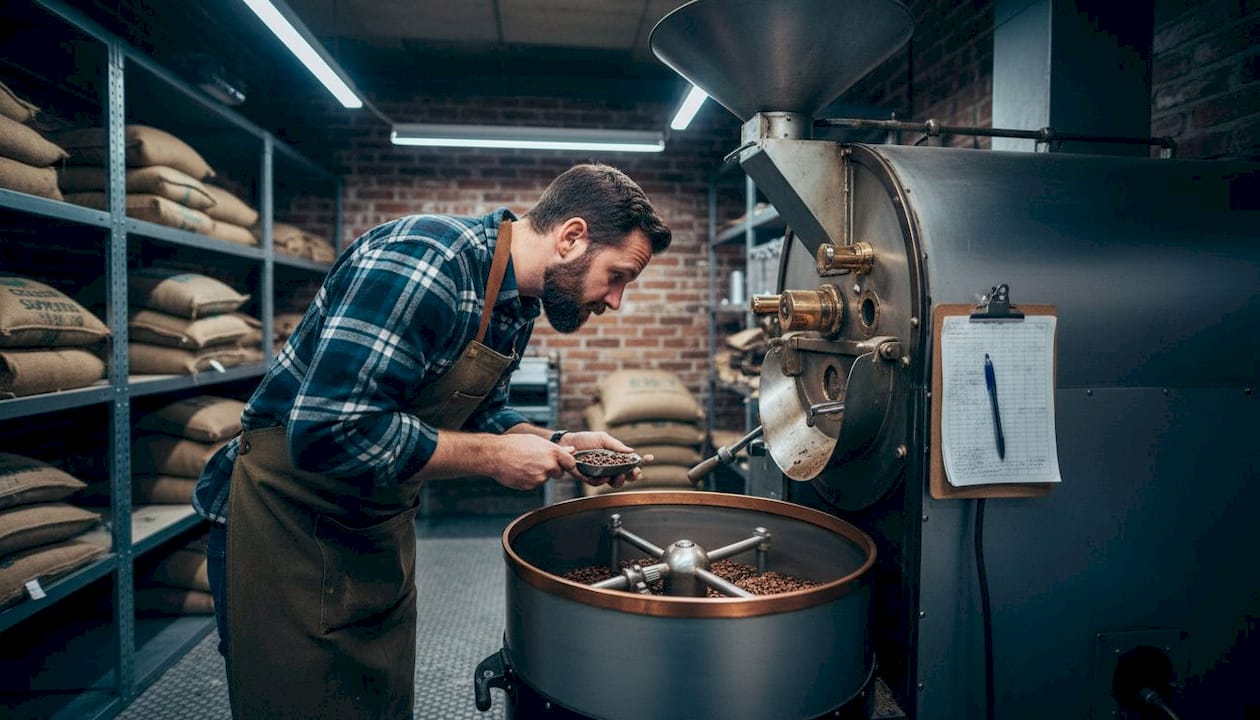
Air roasters (also called fluid bed roasters) suspend beans in a stream of hot air. Heat transfer is faster and more uniform across the bean surface. The result is typically a brighter, cleaner cup with more aromatic clarity. Air roasting tends to highlight the origin character of the bean rather than adding roast-derived notes.
The real game-changer for specialty coffee is precision profiling. Roasters use software to track and adjust the rate of rise (how fast temperature climbs), development time (the phase after first crack), and colorimetry (measuring bean color digitally). Drum vs. air roasting methodologies both benefit from profiling because it ensures batch-to-batch consistency and allows deliberate flavor targeting.
Steps in precision profiling a batch:
- Set the charge temperature (the temperature at which green beans enter the drum)
- Monitor the rate of rise every 30 seconds and adjust heat accordingly
- Identify the first crack by sound and log the exact time and temperature
- Control the development time ratio (typically 20 to 25% of total roast time)
- Drop the beans at the target color reading and immediately cool to stop the roast
- Log all data for replication and future adjustments
Pro Tip: Development time is the single most critical variable for fruit-forward specialty coffees. Too short and the coffee tastes underdeveloped and grassy. Too long and those delicate floral and berry notes bake off entirely. A skilled roaster treats this window like a surgeon.
For home brewers exploring flavor layering at home, understanding profiling helps you ask better questions when selecting a roaster. Look for brands that publish their roast dates and development notes, as this transparency signals genuine craft. You can also apply these ideas through coffee blending techniques to build your own flavor combinations.
Practical tasting tips: Savoring roast flavors like a pro
Armed with this know-how, it’s time to taste the difference for yourself. Cupping is the professional method for evaluating coffee, and you can do a simplified version at home with just a few tools.
To cup at home, grind 10 grams of coffee coarsely, add 180ml of water just off the boil, and let it steep for four minutes. Break the crust of grounds that forms on top and inhale deeply before stirring. Then taste by slurping loudly (this aerates the coffee across your palate). Repeat at two, five, and ten minutes as the cup cools, because flavors evolve dramatically with temperature.
Sensory evaluation and chemical tracking confirm that careful cupping significantly enhances your ability to detect roast-derived flavors. Your palate becomes more accurate with every session.
What to look for at each roast level:
- Light roast: Notice the brightness on the tip of your tongue (acidity), look for fruity or floral aromas, and check for a clean, tea-like finish
- Medium roast: Identify sweetness in the mid-palate, chocolate or caramel notes, and a smooth, rounded finish
- Medium-dark roast: Feel the heavier body coating your mouth, notice toasted or nutty aromas, and look for a lingering bittersweet finish
- Dark roast: Focus on the bold, smoky character, low acidity, and the intensity of the aftertaste
Pro Tip: Train your palate by cupping the same coffee at two different roast levels side by side. The contrast makes subtle notes obvious. Start with a light and a medium from the same origin, and you’ll immediately hear the difference between brightness and sweetness.
Applying these strategies to your daily brew is straightforward. Use the step-by-step guide to enhancing coffee flavors to refine your approach, and explore coffee flavor tips for adventurous enthusiasts to keep pushing your palate further. Understanding artisanal flavor profiles and brew techniques will help you connect what you taste in the cup to the decisions made during roasting.
Why the art of roasting is underestimated by most enthusiasts
Here’s an uncomfortable truth: most coffee lovers spend far more time researching bean origin than roasting, and that’s exactly backwards. Origin tells you the potential. Roasting determines whether that potential is realized or wasted.
We’ve seen it repeatedly. A rare, expensive micro-lot bean roasted carelessly produces a forgettable cup. Meanwhile, a well-sourced but unremarkable bean, roasted with precision and intention, can stop you mid-sip. The roast is the X-factor that even the best farms can’t overcome if it’s handled poorly.
The real flavor gains for adventurous palates come from experimenting across the roast spectrum, not just hunting for exotic origins. Try the same bean from a light roast and a dark roast and you’ll taste what feels like two completely different coffees. That’s not a trick. That’s chemistry.
Our challenge to you: next time you’re sampling, compare two roast levels of the same coffee directly. Take notes. You’ll start to hear your own preferences more clearly, and you’ll develop the vocabulary to describe what you love. Understanding bold profiles and how they’re built gives you the framework to make that comparison meaningful.
Discover premium blends crafted for flavor explorers
Now that you understand how roasting shapes every note in your cup, the next step is tasting blends where that craft is front and center. At Variatea Coffee, every product is built around a deliberate flavor vision, not just a roast level.

Our whiskey barrel aged coffee takes roasting a step further by aging the beans in charred oak barrels, layering smoky bourbon and vanilla notes onto an already complex roast profile. If you’re drawn to the tea side of the spectrum, our artisanal tea collection includes roasted options like Hojicha that bring the same roast-driven complexity to your cup without the caffeine. Explore both and find the profile that matches your palate.
Frequently asked questions
What is the main effect of roasting on coffee flavor?
Roasting triggers chemical reactions that convert raw, grassy green beans into hundreds of new flavor compounds, shifting the profile from floral and fruity in light roasts to caramelized, chocolatey, or smoky in darker ones. Chlorogenic acids degrade and volatiles shift at each stage, making roast level the primary driver of what you taste.
How do drum and air roasters affect coffee flavor?
Drum roasters apply contact heat that builds a fuller, rounder body, while air roasters use convection heat that produces a brighter, more aromatic cup. The drum vs. air roasting methodologies each suit different flavor goals, with drum roasting favoring richness and air roasting favoring clarity.
Which roast level should I choose for maximum flavor complexity?
Medium roast is generally the sweet spot because it balances acidity, body, and a wide range of flavors including caramel, chocolate, and nuts without any single note dominating. Chlorogenic acids degrade at this stage in a way that creates harmony rather than intensity.
How can I taste roast differences at home?
Cup the same coffee at light and medium roast levels side by side using the same water temperature, grind size, and steep time. Sensory evaluation and chemical tracking show that direct comparison is the fastest way to train your palate to detect roast-derived differences in acidity, aroma, and finish.