

Why bold coffee matters: elevate your brew ritual
TL;DR:
- Bold coffee is characterized by full body, low acidity, and complex smoky or chocolaty notes.
- Properly roasted bold coffee offers smooth, layered flavors without bitterness, unlike over-extracted brews.
- It is versatile for various brewing methods and can suit health and sustainability preferences.
Most people assume bold coffee means one thing: bitter, face-scrunching intensity that numbs your palate and leaves you reaching for water. That assumption is wrong, and it’s costing adventurous brewers some of the most rewarding cup experiences available. Bold coffee, done right, is about depth, richness, and a flavor complexity that light or medium roasts simply can’t deliver. Whether you’re chasing smoky undertones, velvety chocolate notes, or a brew that holds its own through steamed milk, understanding what bold truly means transforms your entire at-home ritual.
Table of Contents
- What makes coffee bold? Defining the profile
- The science behind boldness: From roast to ritual
- Health, sustainability, and the boldness trade-off
- Bold coffee in practice: Brewing for premium at-home rituals
- Why bold coffee is misunderstood—and how to make it your ritual superpower
- Discover premium bold coffees and blends to elevate your ritual
- Frequently asked questions
Key Takeaways
| Point | Details |
|---|---|
| Bold isn’t bitter | Properly roasted bold coffee is full-bodied and smooth, not harsh or burnt. |
| Crafted by science | Extended roasting, grind, and brew control create bold depth while avoiding unwanted bitterness. |
| Worth the ritual | Bold coffee stands out for adventurous at-home brewers seeking unique, premium flavor experiences. |
| Balance of health and impact | Bold roasts offer lower acidity and distinct digestion benefits but require more energy to produce than light roasts. |
What makes coffee bold? Defining the profile
The word “bold” gets thrown around on packaging like a marketing buzzword, but there’s real science behind it. Bold coffee refers to dark or darker roast coffee characterized by intense, full-bodied flavor, low acidity, smoky and chocolatey notes, and a rich mouthfeel from oils developed during extended roasting past second crack. That second crack is the key moment: it happens around 435 to 450 degrees Fahrenheit, when the bean’s cell walls break down further and oils migrate to the surface.
Here’s the distinction that matters most: bold is about flavor profile, not bitterness. Bitterness comes from over-extraction or poor technique, not from roast level alone. A well-roasted, properly brewed dark coffee should taste smooth, full, and layered. Understanding bold vs strong coffee helps clarify this further: strong refers to brew concentration, while bold refers to roast character.
The core traits that define a bold bold coffee flavor profile include:
- Full body: A heavy, coating mouthfeel from surface oils
- Low acidity: Gentler on the palate and stomach than lighter roasts
- Complex notes: Smoke, dark chocolate, toasted nuts, and caramel
- Reduced brightness: Less of the fruity or floral notes found in light roasts
| Roast level | Flavor notes | Acidity | Body |
|---|---|---|---|
| Light | Floral, citrus, berry | High | Light |
| Medium | Caramel, nuts, mild chocolate | Moderate | Medium |
| Dark/Bold | Smoke, dark chocolate, molasses | Low | Full |
Who gravitates toward bold? Espresso drinkers love it because the roast holds up to pressure extraction. French press fans appreciate how oils remain in the cup. And anyone who drinks milk-based beverages, lattes, cappuccinos, flat whites, needs a bold roast to cut through the dairy and still taste like coffee. Exploring small-batch artisanal picks is one of the best ways to discover how nuanced a bold roast can actually be.
The science behind boldness: From roast to ritual
Understanding the definition, let’s see what really makes bold coffee happen, right down to the chemistry and the cup.
When beans roast past medium, two critical chemical reactions accelerate. The Maillard reaction creates hundreds of flavor compounds by bonding amino acids with sugars, producing the roasty, nutty, and caramel-like notes we associate with boldness. Caramelization follows, breaking down sugars further into deeper, more complex flavor molecules. Extended roasting triggers Maillard reactions, caramelization, and oil migration, balancing intensity without bitterness when precisely controlled. The phrase “precisely controlled” is doing a lot of work there. Rushing or uneven roasting is what creates harsh, acrid flavors.
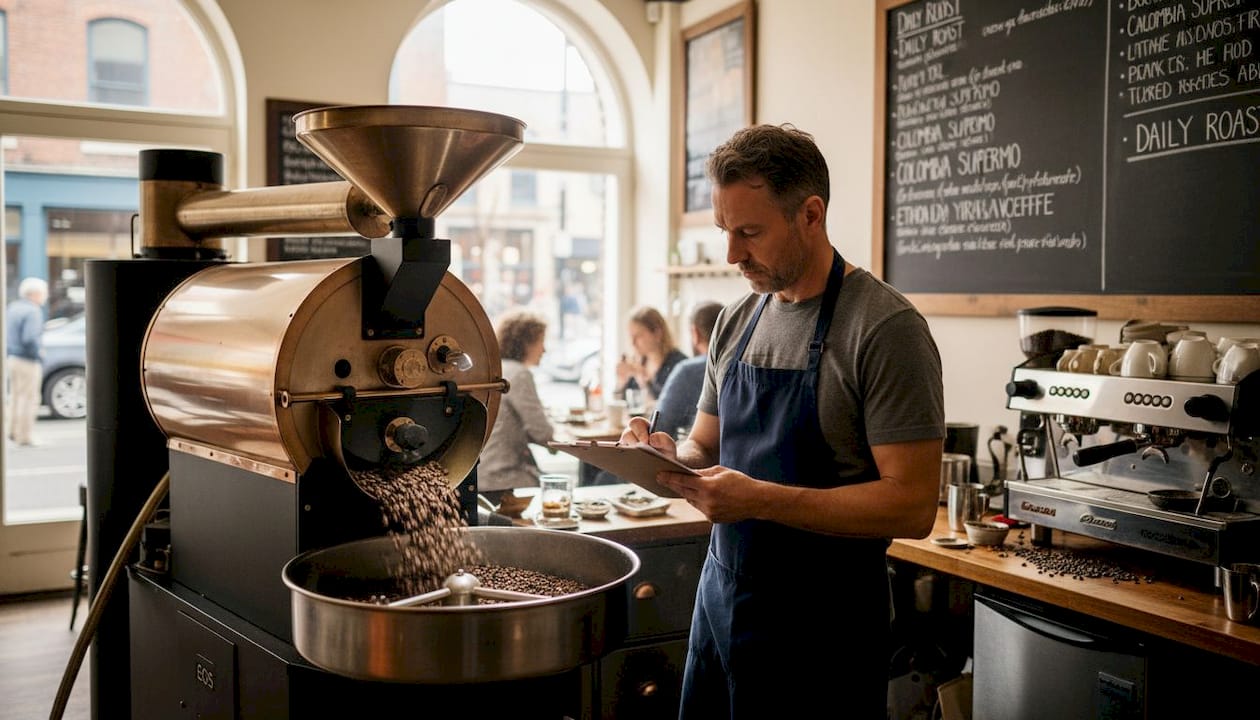
Oil migration matters enormously. As beans roast longer, oils move from the interior to the surface, making beans look shiny. These oils carry fat-soluble flavor compounds and contribute directly to mouthfeel. They also make bold roasts more porous, meaning water extracts flavor faster. That’s why grind size and brew time need adjustment.
Here’s a practical brewing framework for bold coffee:
- Grind coarser for French press: Use a coarse grind (sea salt texture) and steep for 4 minutes at 200 degrees Fahrenheit
- Grind finer for espresso: A fine, powdery grind with 9 bars of pressure and a 25 to 30 second pull
- Use a 1:15 coffee-to-water ratio for French press to avoid over-extraction
- Pull espresso shots at 1:2 ratio (18g in, 36g out) for balanced boldness
- Avoid water above 205 degrees Fahrenheit to prevent scorching the oils
“The roast is where the roaster’s craft lives. Origin tells you the potential; roasting tells you what was done with it.”
Pro Tip: If your bold coffee tastes bitter, the problem is almost always over-extraction, not the roast itself. Try a coarser grind or shorter brew time before blaming the beans. Pairing bold roasts with spice infused coffee techniques can add another dimension without masking the roast character. And if you want to go deeper on technique, coffee blending techniques can help you build custom flavor profiles at home. For a structured approach to roast selection, bold roast selection is worth reviewing.
Health, sustainability, and the boldness trade-off
Brewing technique aside, let’s dig into bold coffee’s impact on health and the planet so you can make conscious choices.
Caffeine is where most people get it wrong. Bold coffee tastes stronger, so it must have more caffeine, right? Actually, no. Dark roasts have slightly less caffeine (around 189.85 mg/L versus 196.35 mg/L for light roasts) because extended roasting degrades caffeine molecules. The perception of strength comes from flavor intensity, not stimulant content.
For digestion, bold roasts offer a real advantage. Light roasts are high in chlorogenic acids, which can irritate sensitive stomachs. Bold roasts have lower chlorogenic acid but higher levels of N-methylpyridinium, a compound that may actually stimulate stomach acid production in a more regulated way. Many people who experience acid reflux from lighter roasts find dark roasts far more comfortable.
| Factor | Light roast | Bold/dark roast |
|---|---|---|
| Caffeine (mg/L) | ~196 | ~190 |
| Chlorogenic acid | High | Low |
| N-methylpyridinium | Low | High |
| Stomach friendliness | Lower | Higher |
| Carbon emissions | Lower | Higher |
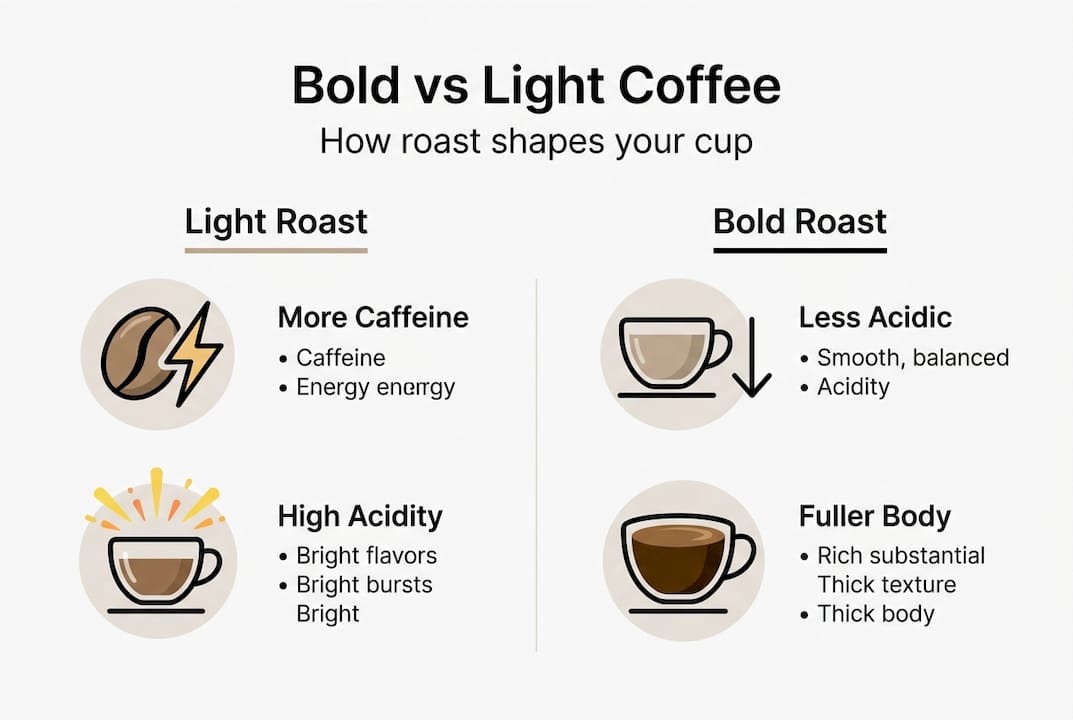
On the environmental side, the picture is more nuanced. Light roasts lower carbon emissions by roughly 33% compared to dark roasts because extended roasting requires more energy. If sustainability is a priority for you, that’s a real consideration. However, sourcing matters more than roast level in the overall picture. A bold roast from a certified, sustainably farmed origin can still have a lower total footprint than a light roast from an irresponsible supply chain.
Exploring a coffee complexity guide can help you weigh these trade-offs and find blends that align with both your flavor values and your ethics.
Bold coffee in practice: Brewing for premium at-home rituals
With the science, health, and sustainability aspects covered, let’s bring it home by looking at how to get premium results from bold coffee in your everyday rituals.
Bold coffee genuinely excels in specific brewing contexts. Bold roasts excel in milk drinks and espresso, as well as cold brew, where their intensity survives dilution and temperature changes that would flatten a lighter roast. Cold brew made with a bold roast produces something remarkable: smooth, low-acid, almost chocolatey concentrate that works equally well hot or over ice.
Here’s where bold coffee truly shines:
- Espresso-based drinks: The roast holds up to milk, foam, and syrups without disappearing
- French press: Oils stay in the cup, delivering that full, coating mouthfeel
- Cold brew concentrate: Bold roasts produce a richer, more stable concentrate
- Flavored pairings: Smoke, chocolate, and nut notes in bold roasts pair naturally with vanilla, caramel, or spice additions
Timing matters too. Peak flavor for bold roasts hits between 3 and 7 days post-roast. Unlike light roasts, which need longer degassing periods, bold roasts are ready to brew relatively quickly after roasting. This makes them more forgiving for home brewers who don’t track roast dates obsessively.
Pro Tip: For cold brew with a bold roast, use a 1:4 coffee-to-water ratio and steep for 18 hours in the refrigerator. The result is a concentrate you can dilute to taste, and it stores well for up to two weeks.
Understanding bold vs bitter coffee is the foundation for getting this right. Once you know the difference, your flavor layering guide skills and brewing techniques can take the ritual much further.
Why bold coffee is misunderstood—and how to make it your ritual superpower
Here’s the uncomfortable truth: most people who say they don’t like bold coffee have never actually had it done well. They’ve had over-extracted, poorly roasted, or stale dark coffee and blamed the roast level. That’s like eating a burnt steak and deciding you don’t like beef.
Bold coffee is a roaster’s canvas. Where light roasts celebrate origin and terroir, bold roasts emphasize roaster craft, consistency, and low acidity for those with sensitive stomachs. Neither approach is superior. They’re different disciplines. But bold roasts reward the brewer who understands technique, because precision unlocks complexity rather than masking it.
The real superpower of bold coffee is its versatility. Once you master a bold base, you can layer flavors, experiment with milk ratios, build cold brew rituals, and explore specialty blends like barrel-aged or chocolate-infused roasts without the profile falling apart. It’s a stable foundation for creativity. Exploring artisanal profiles explained gives you the vocabulary and context to make those experiments intentional rather than accidental. Bold isn’t just a roast level. It’s a philosophy.
Discover premium bold coffees and blends to elevate your ritual
If you’re inspired to deepen your bold coffee ritual, these curated offerings make the next step easy and delicious.

At Variatea Coffee, we’ve built our entire lineup around the idea that bold should mean interesting, not just intense. Our Whiskey Barrel Aged coffee is aged in authentic charred oak barrels to develop deep smoky and vanilla notes that go far beyond a standard dark roast. Not sure where to start? The flavored coffees sample pack lets you explore multiple bold profiles side by side. And if you want something approachable and crowd-pleasing, the Gourmet Donut Shop coffee delivers smooth, rich boldness with a comforting sweetness that works beautifully in any brew method.
Frequently asked questions
Is bold coffee stronger in caffeine than light roast?
Despite tasting stronger, bold dark coffee actually contains slightly less caffeine than light roasts per serving, around 189.85 mg/L versus 196.35 mg/L for light. The intensity you taste is flavor, not extra stimulant.
What’s the best brewing method for bold coffee at home?
Espresso and French press highlight bold coffee’s rich, oily body best. Bold roasts also excel in cold brew, where their intensity survives dilution and produces a smooth, robust concentrate.
Is bold coffee bad for my stomach?
Bold coffee is often easier on sensitive stomachs than lighter roasts. Bold dark roasts emphasize low acidity, which reduces irritation for people prone to acid reflux or digestive discomfort.
Does bold coffee have more flavor than lighter roasts?
Bold coffee delivers fuller body and deeper roast-driven flavors, while light roasts highlight bright, origin-specific notes. Light roasts preserve terroir and higher antioxidants, while bold roasts emphasize roaster craft and consistency. Each offers a genuinely different and rewarding experience.