

Why specialty coffee unlocks flavor you can't get elsewhere
TL;DR:
- Specialty coffee is defined by high quality standards, careful sourcing, and unique flavor profiles.
- Origin, terroir, and roasting method significantly influence the complexity and clarity of flavors.
- Proper brewing techniques maximize the distinctive qualities of specialty beans, enhancing overall experience.
Most coffee lovers pour their morning cup without realizing they’re missing an entirely different level of taste. The assumption that all coffee is essentially the same, just varying in strength and darkness, is exactly what keeps most people stuck in a cycle of mediocre brews. Specialty coffee isn’t a marketing label. It’s a category defined by rigorous standards, careful sourcing, and a commitment to preserving what makes each bean genuinely unique. If you care about what’s actually in your cup, this guide will take you from confusion to a much clearer, more satisfying place.
Table of Contents
- What distinguishes specialty coffee from commercial blends
- How origin and terroir shape specialty coffee flavors
- The science and artistry behind roasting profiles
- Brewing and taste nuances: Getting the most from specialty coffee
- Our perspective: The hidden risks and rewards of embracing specialty coffee
- Explore specialty coffee and tea at Variatea
- Frequently asked questions
Key Takeaways
| Point | Details |
|---|---|
| Flavor complexity | Specialty coffee unlocks a world of distinct flavors shaped by origin and artisan roasting. |
| Traceability matters | You can trace specialty coffee’s nuances back to unique terroir and varietals for a richer experience. |
| Brewing makes the difference | Choosing the right home brew method maximizes the potential of high-quality specialty beans. |
| Empirical quality wins | Specialty’s higher price tags reflect real, measurable quality—and not just marketing hype. |
What distinguishes specialty coffee from commercial blends
Walk into any grocery store and you’ll find dozens of coffee options. Dark roast, medium roast, whole bean, pre-ground. Most of it looks the same. The difference between what you find there and true specialty coffee isn’t just marketing speak. It runs deep into sourcing, processing, and how the final product is treated before it ever reaches you.
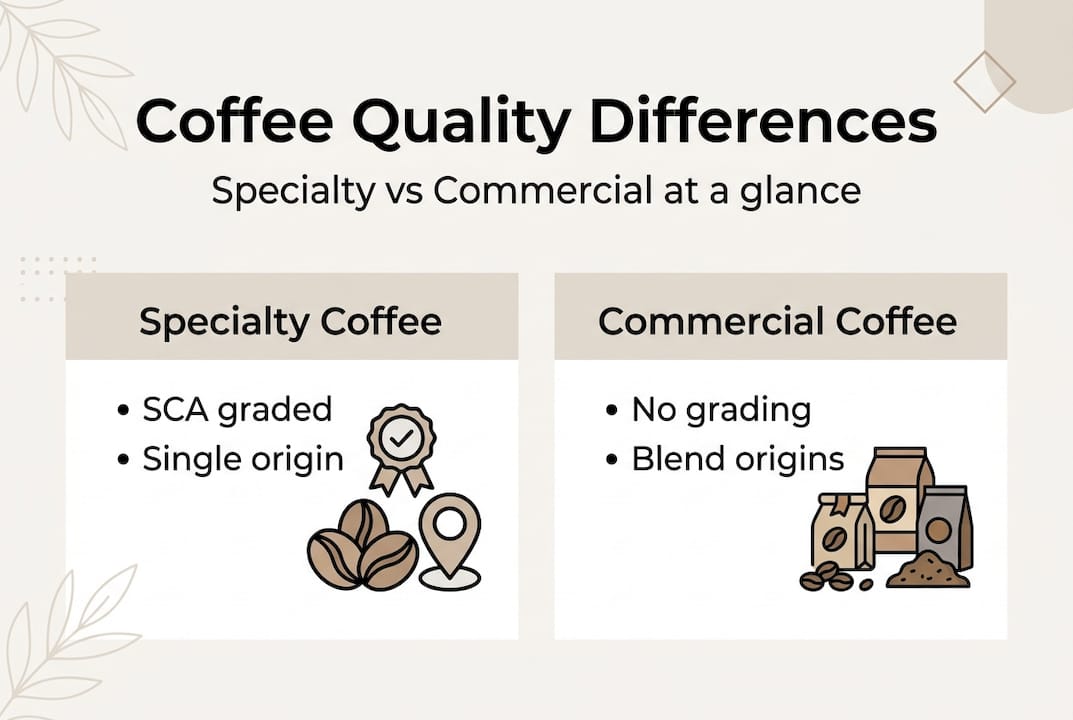
Specialty coffee is defined by its score. The Specialty Coffee Association (SCA) grades green beans on a 100-point scale, and only coffees scoring 80 or above earn the “specialty” classification. Commercial coffee, by contrast, uses commodity-grade beans that are often blended across multiple origins, prioritizing consistency and volume over taste. The result is a cup that’s reliable in the worst possible way: reliably flat.
One of the most important distinctions is small-batch roasting, which tailors flavor profiles to each bean’s origin rather than forcing a one-size-fits-all approach. A light Ethiopian Yirgacheffe processed through a small roastery will taste completely different from the same bean pushed through an industrial drum at high heat. Small-batch roasters monitor temperature curves, adjust timing, and target flavor outcomes that reflect the bean’s natural character.
Understanding what premium coffee qualities actually means helps set realistic expectations before you start exploring.
Here’s a side-by-side look at the key differences:
| Feature | Specialty coffee | Commercial/supermarket coffee |
|---|---|---|
| SCA grading | 80+ points required | No standard grading applied |
| Sourcing | Single-origin or traceable blends | Mixed commodity beans |
| Roasting method | Small-batch, profile-driven | Industrial, high-volume |
| Flavor complexity | Fruit, floral, chocolate, caramel notes | Bitter, flat, generic |
| Transparency | Farm, region, process listed | Rarely disclosed |
| Defect tolerance | Near zero allowed | Defects masked by dark roast |
That last row is worth emphasizing. Industrial dark roasting is frequently used not to enhance flavor, but to hide it. High heat destroys the compounds that carry nuance, leaving behind a char that tastes bold but tells you nothing about where the coffee came from or what made it interesting.
Key reasons specialty coffee stands apart:
- Traceability: You know the farm, region, and often the farmer
- Intentional processing: Washed, natural, and honey-process methods each shape flavor deliberately
- Lower defect counts: SCA standards allow very few defective beans per sample
- Freshness priority: Small-batch roasters typically ship within days of roasting
“Specialty coffee isn’t about exclusivity. It’s about accountability — to the farmer, to the bean, and to the person drinking it.”
The way roasting transforms flavor from raw green bean to a complex cup is the foundation of understanding what specialty actually delivers.
How origin and terroir shape specialty coffee flavors
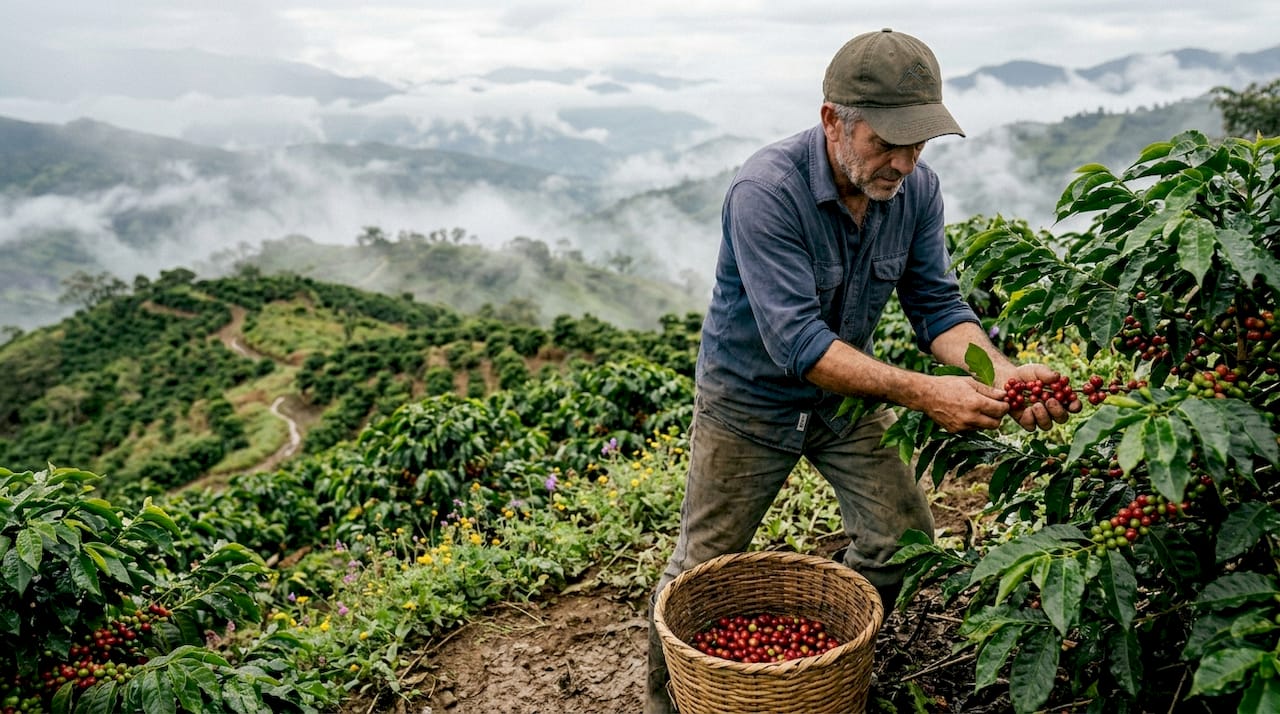
Terroir is a term borrowed from wine, referring to how a plant’s environment shapes its flavor. In coffee, it means everything from soil mineral content and altitude to rainfall patterns and shade coverage. Two farms in Ethiopia, just miles apart, can produce beans with distinctly different flavor profiles because of subtle shifts in these variables.
This is where specialty coffee gets genuinely fascinating. The volatile organic compounds (VOCs) present in a roasted bean can actually reveal where it was grown. Compounds like pyrazines, furans, and aldehydes form during roasting and are directly influenced by the bean’s origin chemistry. This means your cup carries a kind of geographic fingerprint if you know how to read it.
Here’s how major origin regions translate into flavor patterns:
| Origin | Common flavor compounds | Typical tasting notes |
|---|---|---|
| Ethiopia (Yirgacheffe) | Aldehydes, esters | Blueberry, jasmine, lemon |
| Colombia (Huila) | Furans, acids | Caramel, red apple, hazelnut |
| Guatemala (Antigua) | Pyrazines, phenols | Dark chocolate, brown sugar, smoky |
| Kenya (Nyeri) | Organic acids, ketones | Black currant, tomato, citrus |
| Sumatra (Mandheling) | Guaiacols, earthy compounds | Cedar, tobacco, dark fruit |
Lighter roasts are essential for preserving these distinctions. When heat climbs too high and holds too long, many VOCs are burned off or transformed into the generic bitter notes that dominate commercial blends. This is why specialty roasters obsess over development time, the portion of roasting where heat finishes the bean’s transformation without destroying what makes it distinctive.
Understanding coffee aroma and how it connects to bean origins helps you recognize what you’re tasting when you move beyond the basic coffee smell most people accept.
Why choosing by origin matters for your brewing practice:
- You can match flavor profiles to your preferences rather than guessing from vague labels
- Seasonal lots from single farms offer rotating flavors that keep your palate engaged
- Altitude correlates with acidity: Higher grown beans tend to have brighter, more complex acidity
- Processing method adds another layer: natural-processed beans tend to taste fruitier and fuller bodied
Exploring single-origin coffee flavors is one of the most direct paths to developing your palate and understanding what separates a memorable cup from a forgettable one.
A useful stat: specialty green coffee can contain hundreds of aromatic compounds, while commercial robusta blends typically express far fewer. That’s the difference between listening to an orchestra and a single instrument.
The science and artistry behind roasting profiles
Roasting isn’t just applying heat to beans until they’re brown. It’s a series of chemical events, each one either building or destroying flavor, depending on how it’s managed. The two most important reactions are the Maillard reaction and caramelization.
The Maillard reaction occurs roughly between 280°F and 330°F (138°C and 166°C), where amino acids and reducing sugars combine to produce hundreds of flavor compounds. This is the phase that builds complexity, creating the nutty, chocolatey, and toasty notes associated with well-developed coffee. Caramelization follows, adding sweetness and body. Push past these windows too aggressively and you get bitterness instead of balance.
Roasting in small batches allows roasters to tailor these profiles specifically to each origin’s density, moisture content, and sugar composition. A dense Kenyan bean needs a different curve than a low-density Sumatran. Industrial roasters can’t afford to make those adjustments at scale.
Light roasts stop before or at first crack, preserving origin volatiles and acidity. Medium roasts extend slightly into development, rounding out acidity while adding body. Dark roasts push past second crack, where most of what made the bean interesting is gone, replaced by carbon-forward bitterness.
Benefits of artisan small-batch roasting over mass-market production:
- Precision control over temperature and development time per batch
- Real-time monitoring using tools like Cropster or Artisan roasting software
- Origin-specific profiles that highlight what each bean does best
- Faster turnaround from roast to shipment, meaning fresher coffee for you
- Lower defect risk because smaller batches are easier to sort and inspect
Why does industrial dark roasting suppress complexity? It standardizes flavor at the expense of origin character. When every bean gets the same aggressive roast, the result is coffee that tastes like roasting, not like coffee.
Pro Tip: Match your roast profile to your brewing method. Light roasts shine in pour-over and filter brewing where water contact time is controlled. Medium roasts work beautifully in AeroPress. Reserve darker profiles for cold brew or French press, where immersion rounds out any remaining harshness.
The guide to roasting coffee goes deeper into specific temperature curves and what they mean for your home brewing. For those interested in elevated methods, artisanal coffee techniques and coffee flavor variety are worth exploring as your palate develops.
Brewing and taste nuances: Getting the most from specialty coffee
Buying excellent specialty coffee and then brewing it wrong is one of the most common, and most avoidable, frustrations for new enthusiasts. The brewing method you choose acts as a filter between the bean’s potential and what ends up in your cup. Get it right and you’ll experience what made that coffee worth the price.
Filter brewing methods, particularly pour-over and drip, are the closest to how SCA evaluates coffee in controlled cupping sessions. The relatively short extraction time and clean filtration allow brightness and floral notes to come through without interference. If you’re buying a high-scoring Ethiopian or Kenyan lot, pour-over is almost always the best starting point.
Light roasts for high SCA scores preserve acidity and complexity beautifully in filter brewing but can taste sharply sour in espresso if the extraction isn’t dialed in precisely. Espresso demands higher pressure and temperature over a short time, which amplifies acidity to the point of imbalance when the roast is too light.
Here’s a step-by-step approach to choosing the right brewing method for your specialty beans:
- Check the roast level first. Light roasts go to pour-over or AeroPress. Medium roasts are versatile. Developed medium-dark roasts work for espresso.
- Consider the bean’s origin acidity. High-acid African coffees can feel harsh in espresso without adjustment. Central American beans with moderate acidity are more forgiving.
- Set your grind for the method. Coarser for French press, medium for drip, fine for espresso. Even a single step on your grinder changes the extraction rate significantly.
- Adjust your water temperature. Lighter roasts benefit from slightly lower water temperature (around 195°F) to avoid over-extracting bitter compounds. Darker roasts tolerate up to 205°F.
- Use a brew ratio. Start at 1:15 (coffee to water) for filter and adjust based on taste. Too weak means you need more coffee or finer grind. Too bitter means less coffee or coarser grind.
- Taste, then adjust. One variable at a time. Changing too many factors at once makes it impossible to know what worked.
Pro Tip: If your specialty espresso consistently tastes sour, switch to a medium or developed roast before adjusting your machine settings. You’ll solve the problem faster and waste less coffee.
Specialty beans used in cocktails follow similar logic. The base flavor of your bean needs to be right before you start layering other ingredients. Exploring artisanal brewing techniques and unique coffee rituals can open up entirely new ways to experience these flavors beyond the standard morning brew.
Our perspective: The hidden risks and rewards of embracing specialty coffee
Here’s something the specialty coffee world doesn’t talk about enough: the premium you pay doesn’t always reach the farmer. High-scoring lots from auction platforms like Cup of Excellence command extraordinary prices per kilo, but critics argue that these auctions can concentrate wealth and attention around a tiny fraction of producers while the broader farming community remains underpaid. That’s a real tension worth acknowledging.
At the same time, we believe the SCA’s empirical grading system is one of the most honest quality frameworks in any food category. It’s verifiable, repeatable, and it gives you, the buyer, a meaningful signal beyond marketing.
The real risk isn’t spending too much. It’s falling for reputation over taste. Some of the most memorable coffees we’ve encountered were modestly priced lots from lesser-known regions that simply tasted extraordinary. True connoisseurs seek transparency, not status. They want to know what’s in the bag and why it tastes the way it does. If a roaster can’t tell you the farm, the process, and the roast date, that’s your answer.
Build your knowledge through an expert premium coffee guide and develop your own standards rather than deferring to price alone.
Explore specialty coffee and tea at Variatea
If this article shifted the way you think about your daily cup, the next step is experiencing it firsthand.

At Variatea Coffee, we curate small-batch specialty offerings designed for exactly the kind of adventurous brewing this article describes. Our Whiskey Barrel Aged beans offer a sophisticated, non-alcoholic roast with deep smoky and vanilla notes that pair beautifully with pour-over and AeroPress methods. If you want a bold everyday cup, the Max Caf Blend delivers reliable, high-caffeine intensity with complex flavor intact. Tea enthusiasts can explore our full artisan tea collection, including Hojicha, Matcha, and Moroccan Mint, each chosen for the same flavor transparency we demand from our coffee.
{% youtube mTyQWuYcg_k?si=wPv_8KdEmtrXq5gP %}
Frequently asked questions
What makes specialty coffee more expensive than regular coffee?
Specialty coffee costs more due to small-batch production, rigorous SCA grading, and direct sourcing that preserves unique origin flavors. Each step in the supply chain adds accountability that commodity coffee simply skips.
Can specialty coffee taste sour in espresso?
Yes. Light roasts in espresso preserve acidity beautifully in filter brewing but can taste aggressively sour under espresso pressure. Using a medium or developed roast and dialing in your extraction temperature solves this.
How can I identify true specialty coffee?
Look for origin details, SCA grading above 80, roast date, and process information. VOCs from terroir create traceable flavor fingerprints that lighter roasts preserve, so tasting notes should reflect specific fruit, floral, or chocolate characteristics tied to the bean’s region.
What brewing method best highlights specialty coffee flavors?
Pour-over and filter brewing best highlight origin-specific acidity and delicate tasting notes. According to SCA cupping standards, these methods most closely replicate the conditions under which specialty coffee is professionally evaluated and scored.