

Why hand crafted coffee delivers unique flavor and quality
TL;DR:
- Hand crafted coffee involves active control over variables like water temperature, pour pattern, and grind size.
- Skilled manual brewing allows customization but introduces variability, while machines prioritize consistency.
- Manual methods enhance flavor complexity and health considerations but require practice and experimentation.
There’s a real debate brewing among coffee enthusiasts: is hand crafted coffee actually better, or just more work? Some insist the ritual alone justifies every extra minute spent pouring, timing, and adjusting. Others wonder if a well-programmed machine could match or even beat the results. The honest answer lives somewhere in the middle, and it depends entirely on what you value in your cup. This guide cuts through the noise with evidence-backed explanations, clear tradeoffs, and practical insight for anyone ready to take their brewing seriously.
Table of Contents
- What makes coffee ‘hand crafted’?
- The science behind the craft: extraction and flavor control
- Hand crafted vs automated: art, control, and consistency
- Nuance and health: Beyond taste, what most people miss
- The uncomfortable truth about hand crafted coffee
- Ready to explore true hand crafted flavor?
- Frequently asked questions
Key Takeaways
| Point | Details |
|---|---|
| Ultimate control | Hand crafted coffee lets you fine-tune flavor by controlling every variable yourself. |
| Science meets art | Manual brewing allows you to target extraction ranges for complexity balanced with the nuances of human technique. |
| Flavor vs consistency | Customization brings unique results, but requires skill and practice for repeatable excellence. |
| Beyond taste | Hand crafted choices―like filters and method―impact health as well as flavor. |
| Experience matters | The journey of learning and experimenting is a central part of the hand crafted coffee appeal. |
What makes coffee ‘hand crafted’?
Hand crafted coffee isn’t just a marketing label. It describes a brewing process where you, the brewer, actively make decisions at every step rather than delegating them to a machine’s preset programming.
The core idea is direct, hands-on control over the variables that shape your cup. When you brew by hand, you’re adjusting things like:
- Water temperature: Ranging from around 195°F to 205°F, even a few degrees changes how compounds extract from the grounds.
- Pour pattern: A steady spiral pour promotes even saturation; an uneven pour creates channeling, where water rushes through weak spots and skips others.
- Timing and agitation: How long water stays in contact with the coffee, and how much you stir or swirl, shifts the balance between acidic brightness and deeper body.
- Grind size: Coarser grinds slow extraction; finer grinds accelerate it. Getting this wrong by even a step can pull your cup toward bitter or sour territory.
These aren’t small tweaks. Together, they determine whether your brew is crisp and fruit-forward or deep and chocolatey. Understanding the artisanal flavor profiles that result from different brewing choices is what separates a casual brewer from someone who’s genuinely developing their palate.
Set-and-forget drip machines standardize most of these variables. That consistency is valuable, but it also means the machine defines a ceiling on what’s possible. Manual brewing, by contrast, trades repeatability for a higher control ceiling, letting you systematically adjust temperature, flow, and contact time to chase flavors a fixed machine profile can’t reach.
“The difference between a good cup and a remarkable one often comes down to decisions made in the 3 to 4 minutes you spend actively brewing.”
If you’re serious about elevating your brew beyond what a standard machine allows, understanding these variables is where everything starts.
The science behind the craft: extraction and flavor control
With the definition clear, let’s explore the science that makes all those hand crafted adjustments worthwhile.
Every time hot water passes through coffee grounds, it pulls out soluble compounds. This process is called extraction, and the goal is to land in a range that delivers balanced flavor rather than harsh bitterness or thin sourness. The Specialty Coffee Association (SCA) sets widely used benchmarks called the Golden Cup Standards: an extraction yield between 18% and 22%, and a brew strength measured as total dissolved solids (TDS) between 1.15% and 1.35%. Hand crafted coffee targets these ranges deliberately, rather than relying on fixed machine profiles that may not account for your specific beans or water chemistry.
Here’s a practical look at how the main variables map to extraction outcomes:
| Variable | Adjust to increase extraction | Adjust to decrease extraction |
|---|---|---|
| Water temperature | Higher (up to 205°F) | Lower (closer to 195°F) |
| Grind size | Finer | Coarser |
| Contact time | Longer | Shorter |
| Agitation | More stirring or swirling | Less agitation |
| Pour rate | Slower, smaller pours | Faster, continuous pour |
This table shows why hand crafted brewing is both exciting and demanding. Every variable affects the others. Pull one lever and you shift the entire system. Research confirms that brewing method strongly affects the chemical composition and sensory properties of the final cup, meaning your choices are literally reshaping the flavor chemistry.
Pro Tip: If your cup tastes sour and thin, you’re likely under-extracting. Dial in by grinding finer or slowing your pour. If it tastes harsh and dry, you’re over-extracting. Try a coarser grind or cooler water.
This level of interaction is why serious brewers keep tasting notes. It’s the fastest way to connect the variables you changed to the flavor you experienced. Resources on how to enhance coffee flavors walk through this process in detail, including how to use your senses to diagnose what’s happening in the cup. If you’re drawn to experimenting with DIY coffee techniques, the science behind extraction gives you a real framework to work within instead of guessing.
Hand crafted vs automated: art, control, and consistency
You’ve seen how control leads to unique outcomes. How does the hand crafted experience compare with the automated path?
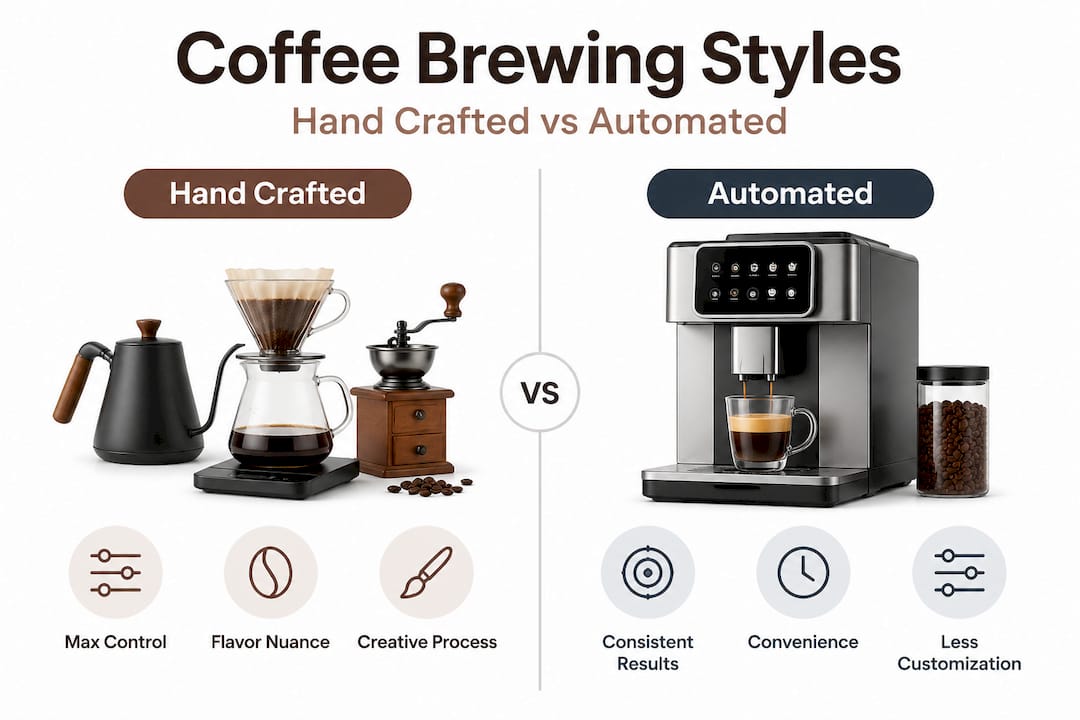
Here’s a direct side-by-side look at both approaches:
| Factor | Hand crafted | Automated |
|---|---|---|
| Flavor nuance | Higher ceiling for complexity | Limited to machine’s preset |
| Repeatability | Requires skill and practice | High by design |
| Time investment | Active, 5 to 10+ minutes | Minimal, mostly hands-off |
| Learning curve | Steep but rewarding | Low |
| Adaptability | Adjust for any bean or roast | Limited adjustment range |
| Convenience | Low | High |
Manual machines consistently score higher in taste tests, though the final decision depends on priorities like consistency and convenience. That finding tells you something important: when skill is applied well, hand crafted wins on flavor. But skill is the key phrase. Without it, the manual path introduces errors that an automated machine would never make.
The four biggest risk factors for manual brewers are:
- Inconsistent water temperature: A kettle that cools too quickly between pours shifts your extraction mid-brew.
- Uneven saturation: Dry patches in the grounds cause under-extraction in those areas while other spots over-extract.
- Timing drift: Losing track of your pour intervals, even by 30 seconds, changes the cup measurably.
- Grind inconsistency: A budget grinder introduces fine particles called “fines” that extract much faster than the rest, muddying the flavor.
Manual systems offer maximal customization but are sensitive to human error, while automated systems standardize the process. That’s not a knock on either approach. It’s just an honest description of the tradeoff. Some brewers love the fact that no two cups are exactly identical. There’s a kind of aliveness to it. Others would rather have a reliable baseline every morning without the variables.
“The best brewing method is the one you’ll actually engage with consistently, whether that’s a pour-over at 6 a.m. or a pod machine between meetings.”
Exploring creative flavor enhancement through manual methods is genuinely rewarding, especially when you start experimenting with coffee blending techniques that let you layer flavors from different roast profiles.
Nuance and health: Beyond taste, what most people miss
Taste is only part of the equation. Crafting a cup also means considering the impact on health and some easily overlooked nuances.
Most coffee drinkers focus entirely on flavor and caffeine. But the way you brew actually changes the chemical makeup of what you’re drinking, beyond just taste. Here’s what craft brewers tend to consider:
- Filtration type: Paper filters trap oils and fine particles. This produces a cleaner cup and removes compounds called diterpenes, specifically cafestol and kahweol. Filtration mechanics materially change diterpene levels00087-0/fulltext), affecting both taste and health profile.
- Metal filters: Common in French press and some pour-over setups, metal filters allow oils to pass through. This creates a fuller body and richer mouthfeel but retains more of those natural compounds.
- Brew temperature: Higher temperatures extract more of everything, including both desirable flavor compounds and some that contribute to bitterness or acidity in sensitive stomachs.
- Contact time: Longer steep times, like those used in cold brew, extract a different compound profile than a quick espresso pull, which is part of why cold brew tends to feel smoother and less acidic.
Understanding these factors lets you build a brew that aligns with your body, not just your taste preferences. If you’re sensitive to cholesterol or gastric irritation, a paper-filtered pour-over is genuinely a smarter health choice, not just an aesthetic one.
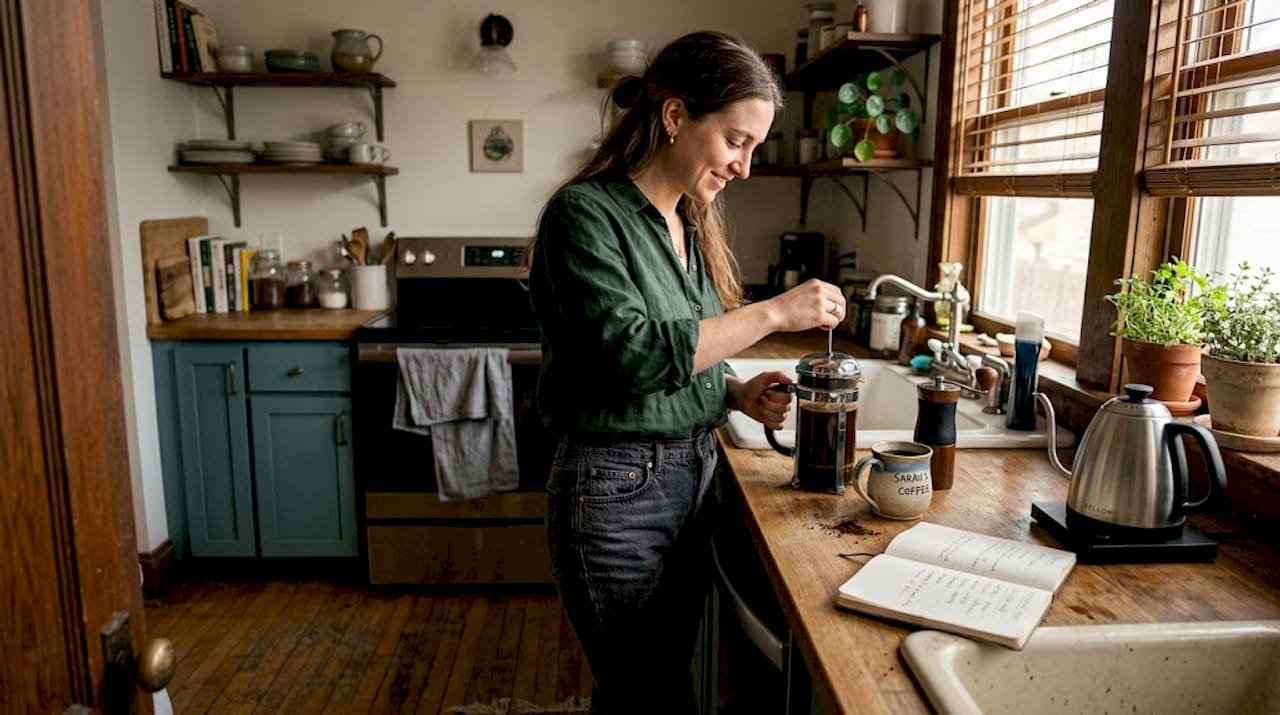
Pro Tip: If you love the richness of French press but want to reduce cafestol intake, try a hybrid method: brew in a French press for body and depth, then pour through a paper filter before drinking. You get the flavor complexity with much of the oil stripped out.
Exploring bold artisanal profiles through different brewing methods isn’t just a flavor experiment. It’s a way to tune your daily cup to work better for your lifestyle.
The uncomfortable truth about hand crafted coffee
Here’s something most guides won’t tell you: hand crafted coffee is not a solved science. It’s a living experiment, and even experienced brewers produce inconsistent results. That’s not a flaw in the method. It’s part of the deal.
The specialty coffee world sometimes presents manual brewing as a path to perfection. Dial in your grind, nail your water temperature, time your pour exactly, and you’ll achieve the platonic ideal cup. That framing sounds inspiring, but it sets a standard that nobody consistently hits in real life. Beans change between harvests. Water mineral content shifts. Your grinder produces slightly different particle distributions on different days. Even your mood affects how carefully you pour.
Manual brewing introduces real risks of over-extraction, under-extraction, and subtle missteps that even skilled brewers encounter regularly. Accepting that isn’t defeatist. It’s actually liberating. Once you stop chasing a perfect, repeatable cup and start treating each brew as its own experiment, the whole process becomes more enjoyable and more educational.
The practical approach we’d recommend for tips for adventurous coffee lovers who want to improve without burning out is simple. Change one variable at a time. Keep a small notebook or even just a notes app where you log what you adjusted and what you tasted. After a few weeks, you’ll start to see patterns. You’ll understand your grinder, your kettle, and your preferred beans in a way no YouTube tutorial can teach you.
The brewers who grow the fastest aren’t the ones obsessing over 0.1-gram differences on a scale. They’re the ones who stay curious, drink lots of coffee, and actually enjoy the process of discovery. Flavor adventure consistently beats robotic consistency for anyone who came to specialty coffee because they wanted something more interesting in their cup than what a pod machine delivers.
Ready to explore true hand crafted flavor?
Armed with this knowledge and perspective, here’s how you can experience hand crafted excellence at home.
At Variatea Coffee, we build our products specifically for brewers who want something worth crafting carefully. Every bean and blend is chosen to reward the effort you put into the cup.

Start your exploration with our Gourmet Donut Shop blend, a smooth, approachable roast that highlights what thoughtful sourcing tastes like in the cup. If you’re ready for something bolder, our Whiskey Barrel Aged coffee is aged in authentic charred oak barrels to develop deep smoky and vanilla notes that reward a careful slow pour more than anything from a drip machine could. And if you’re curious about expanding beyond coffee entirely, our tea collection includes everything from ceremonial-grade matcha to roasted hojicha, all selected for flavor-forward adventurers who believe every cup should be an experience.
{% include youtube.html id=“mTyQWuYcg_k?si=wPv_8KdEmtrXq5gP” %}
Frequently asked questions
What variables matter most in hand crafted coffee?
Water temperature, pour rate, timing, and grind size are the main variables you control, and open extraction systems rely on getting all of them working together. Grind size and water temperature tend to have the biggest immediate impact on flavor.
Is hand crafted coffee really healthier than machine-brewed?
It depends heavily on your filter type. Filtration mechanics change diterpene levels00087-0/fulltext) in meaningful ways, so paper-filtered methods reduce cafestol while metal or no-filter methods preserve more of the bean’s natural oils and compounds.
Can you achieve consistent results with hand crafted brewing?
Yes, but it takes dedicated practice. Manual systems depend on skill and introduce variability that automated systems handle mechanically, so consistency is achievable but never effortless.
Why do enthusiasts keep experimenting with manual brewing?
Because manual brewing is an iterative experiment where you adjust a variable, taste the result, and refine your approach. The process itself becomes part of the reward, and the flavor discoveries along the way are genuinely hard to replicate any other way.
Recommended
- Explore artisan coffee varieties for unique flavor experiences – Variatea Coffee
- Artisanal coffee flavor profiles and brewing techniques – Variatea Coffee
- Why flavor variety in coffee makes every cup unique – Variatea Coffee
- Single origin coffee: flavor, origin, and artisanal experience – Variatea Coffee