

How to Pair Coffee with Desserts Like a Pro
TL;DR:
- Pairing coffee with desserts enhances flavor and creates memorable tasting experiences.
- Understanding roast levels, body, and texture is essential for selecting complementary or contrasting pairings.
- Using coffee as an ingredient in baking requires careful adjustment of liquids and flavor intensity for best results.
Most people treat coffee and dessert as two separate experiences sitting at the same table. The coffee arrives, the cake gets eaten, and neither gets the chance to shine. Knowing how to pair coffee with desserts changes that entirely. The right combination does not just complement the flavors. It amplifies them, turning a good bite into a genuinely memorable one. This guide gives you the sensory framework, practical steps, and baking insights to make every pairing purposeful and delicious.
Table of Contents
- Key takeaways
- How to pair coffee with desserts: start with flavor profiles
- Matching body and texture
- Using coffee as an ingredient in desserts
- A step-by-step guide to dessert-specific pairings
- My take on getting really good at this
- Take your pairings further with Variateacoffee
- FAQ
Key takeaways
| Point | Details |
|---|---|
| Roast level drives the match | Light, medium, and dark roasts each have dominant flavor notes that pair best with specific dessert categories. |
| Body and texture must align | A high-body coffee paired with a light, delicate dessert will overpower it; matching tactile sensations is the first step to balance. |
| Espresso powder is a baker’s tool | Using espresso powder in baked goods intensifies chocolate flavor without adding unwanted moisture. |
| Contrast and complement both work | You can either mirror flavors (nutty coffee with a hazelnut cake) or use contrast (bright acidic coffee cutting through a rich cheesecake). |
| Experimentation beats rules | Treat pairing guidelines as a starting point, then adjust based on what your palate tells you. |
How to pair coffee with desserts: start with flavor profiles
Coffee is not a single flavor. It is a spectrum, and where your roast sits on that spectrum determines everything about what dessert will work beside it.
Light roasts carry citrus and floral notes that pair beautifully with lemon tarts, fresh berry pastries, and fruit-based cakes. Their brightness mirrors the acidity in fruit desserts without clashing. Medium roasts bring caramel, brown sugar, and nutty undertones, making them natural partners for caramelized sweets, vanilla custards, almond croissants, and coffee cake combinations. Dark roasts go deep: chocolate, smoke, and earthy tones that match the intensity of dense chocolate layer cakes, spiced cookies, and molten lava cakes.
Espresso occupies its own category. A properly pulled shot has concentrated intensity with layers of bitter and sweet that cut through richness rather than adding to it. Cold brew, on the other hand, tends to produce a sweeter, lower-acid cup that works surprisingly well with creamy, milk-based desserts and cheesecakes.
The practical coffee pairing guide most people skip is paying attention to the aftertaste. A coffee with a long, lingering finish will compete with any dessert that has its own bold finish. A cleaner, shorter finish gives the dessert room to be the star.
Coffee roast to dessert pairing table
| Coffee type | Dominant flavor notes | Best dessert matches |
|---|---|---|
| Light roast | Citrus, floral, bright acidity | Lemon tart, berry scones, fruit cake |
| Medium roast | Caramel, nutty, brown sugar | Almond croissant, crème brûlée, coffee cake |
| Dark roast | Chocolate, smoky, earthy | Dark chocolate cake, spiced brownies, pecan pie |
| Espresso | Intense, bittersweet, complex | Dark chocolate, tiramisu, chocolate truffles |
| Cold brew | Smooth, sweet, low acid | Cheesecake, vanilla panna cotta, milk chocolate mousse |
Understanding flavor profiles in artisan coffee is the single most useful skill you can develop for this kind of pairing. Once you can identify what your cup actually tastes like, the dessert match becomes almost intuitive.
Matching body and texture
Flavor is only half the equation. The other half is what professionals call tactile sensation, the physical weight and texture of what you are drinking and eating. Evaluating body and mouthfeel is critical to avoiding the experience where one element overwhelms the other entirely.
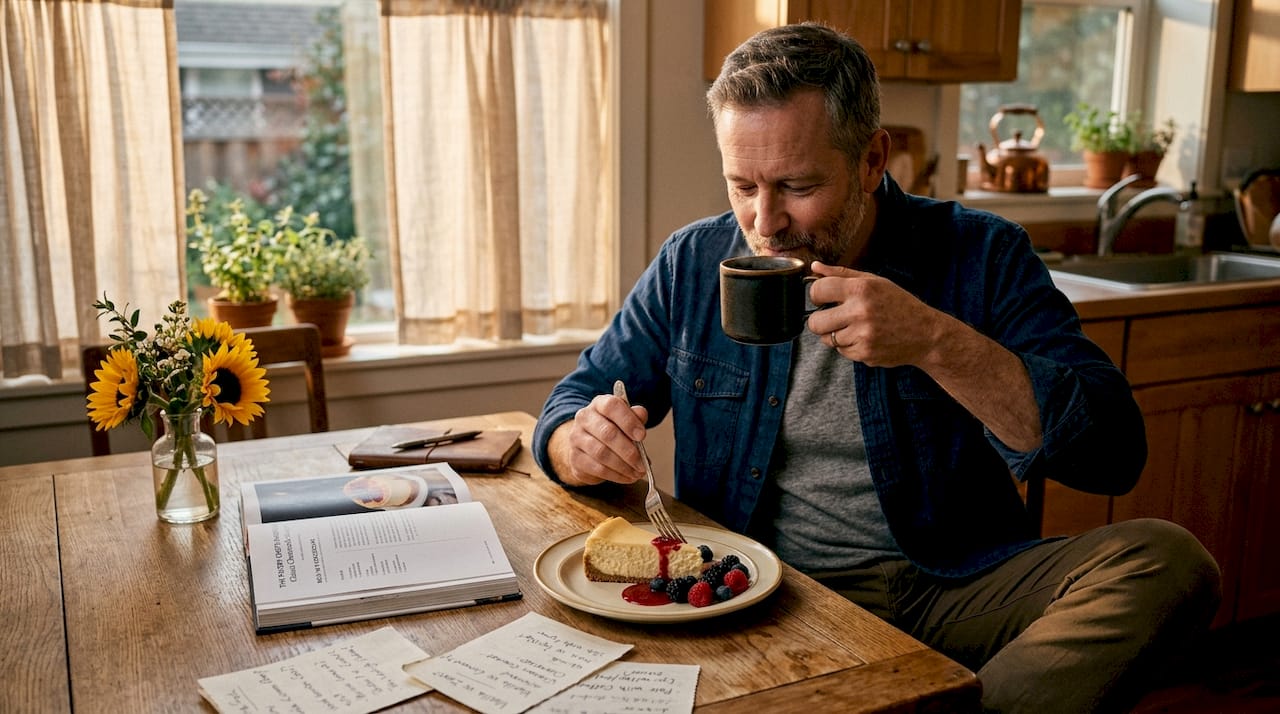
Think of it this way. A thin, watery cup of light drip coffee served alongside a dense New York cheesecake creates a mismatch. The cheesecake coats every surface of your mouth with fat and cream, and the coffee does not have the body to cut through it. The result is that neither tastes as good as it should. Dense desserts like cheesecake pair best with medium-to-dark roast coffees that have the body to stand alongside that richness.
On the opposite end, a bold, syrupy espresso next to a delicate choux pastry with light vanilla cream will bulldoze the dessert. The pastry never gets a chance.
Here is how to think through body and texture before you pour:
- High-body coffees (French press, espresso, moka pot): Match with dense, rich desserts. Think dark chocolate tortes, cheesecake, carrot cake with cream cheese frosting, or pecan bars.
- Medium-body coffees (drip, pour-over with medium roast): The most versatile category. Works with layer cakes, biscotti, shortbread, and most pastries.
- Light-body coffees (pour-over light roast, cold brew concentrate diluted): Pair with mousses, fruit tarts, madeleine cookies, and anything with a delicate crumb.
Pro Tip: Take a sip of your coffee, swirl it, and notice whether it feels light or coating in your mouth. Then take a bite of the dessert and do the same thing. If they feel similar in weight, you are already most of the way to a good pairing.
Using coffee as an ingredient in desserts
Pairing coffee with desserts does not always mean placing a cup beside a plate. Some of the best coffee and dessert combinations happen when coffee becomes part of the dessert itself. Knowing how to use it correctly makes a dramatic difference in the final result.
There are two main forms for baking: espresso powder and brewed coffee. They behave very differently. Espresso powder enhances chocolate flavor without adding any moisture to your batter, making it the better choice for dry mixes, fudgy brownies, and flourless chocolate cakes. It is not just a coffee flavor. It actually amplifies the chocolate itself, pulling out depth you would not otherwise get. Espresso powder intensifies chocolate in baked goods in a way that is almost imperceptible as “coffee” but unmistakably richer.
Brewed coffee, by contrast, adds liquid. That means you need to account for it in your recipe’s hydration balance. Used well, it can give coffee cakes, chocolate loaves, and tiramisu a subtle, rounded flavor. Used carelessly, it makes things soggy.
Here is a step-by-step approach to incorporating coffee in desserts without common pitfalls:
- Choose the right form. Use espresso powder for dry baked goods where you want depth without texture change. Use brewed coffee in recipes that already call for liquid or where a subtle flavor is the goal.
- Start small. Add one teaspoon of espresso powder per batch and taste before adding more. Coffee flavor concentrates during baking.
- Reduce liquids to compensate. If you add brewed coffee, reduce coffee liquid or decrease another liquid in the recipe by an equal amount to maintain the right texture.
- Match the coffee to the dessert’s dominant flavor. A smoky dark roast powder added to a caramel cake can easily overpower the caramel. Use a medium roast espresso powder instead.
- Apply to coffee-forward recipes. Coffee buttercream, coffee glaze, coffee-soaked ladyfingers, and chocolate coffee cake all showcase the ingredient rather than hide it.
Pro Tip: For tiramisu or any dessert using soaked layers, let your brewed coffee cool completely before adding it. Hot coffee softens the layers too fast and causes collapse during assembly.
A step-by-step guide to dessert-specific pairings
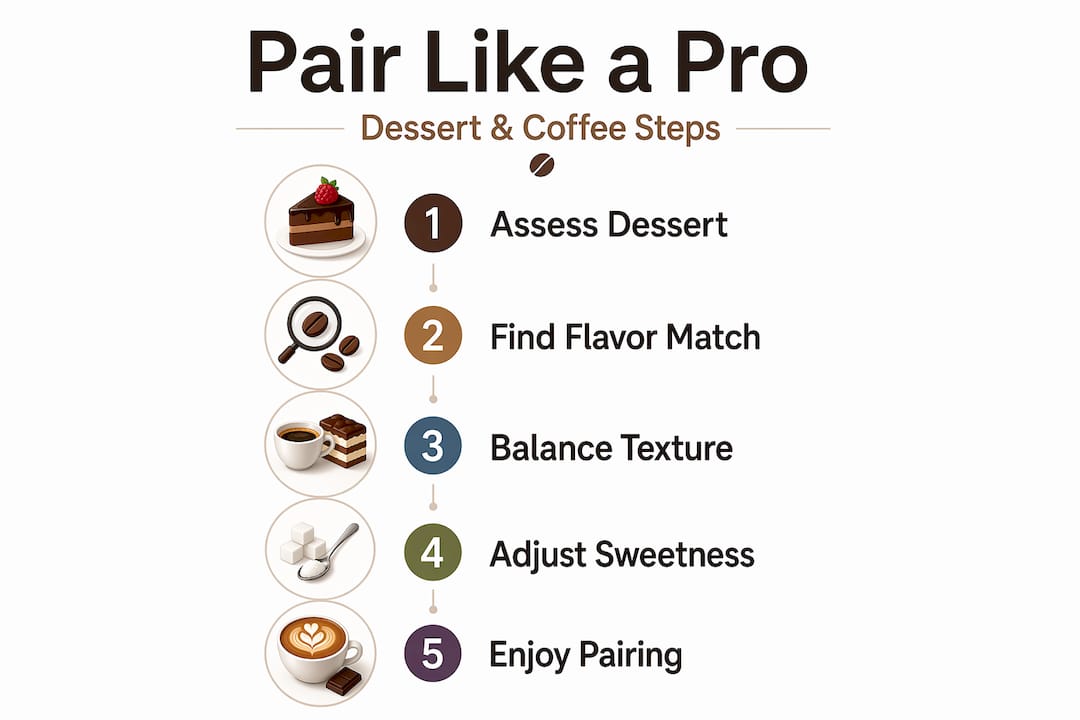
Pairing coffee and dessert thoughtfully transforms simple combinations into elevated experiences, much like wine paired with food. Here is a practical framework you can apply every time.
Step 1: Assess the dessert first
Before thinking about coffee, identify the dessert’s dominant flavor, its texture, and its sweetness level. Is it rich and fatty? Bright and fruity? Nutty and dry? These are your anchors.
Step 2: Match or contrast deliberately
You have two strategies. You can mirror similar flavors (a hazelnut-forward medium roast beside a hazelnut tart) or use contrast to create tension that highlights both (a bright, acidic light roast cutting through a buttery croissant). Managing acidity and bitterness is the key variable in this decision. Neither strategy is wrong. They just create different experiences.
Step 3: Apply these proven pairings
- Chocolate-rich desserts: A double shot of espresso beside dark chocolate (70% cocoa or higher) is one of the most reliable pairings in this genre. Espresso’s acidity cleanses the palate between bites while the bitterness of both coffee and chocolate echo each other.
- Fruity desserts: Light roast pour-over with a lemon tart or blueberry muffin. The citrus notes in the coffee lift the fruit flavor rather than competing with it.
- Creamy and custard desserts: Medium roast drip or a latte alongside crème brûlée, panna cotta, or a vanilla bean cake. The caramel notes in a medium roast mirror the caramelized sugar notes in these desserts.
- Nutty pastries: Medium roast with almond croissants, pecan pie, or hazelnut biscotti. You can also use a Cinnamon Hazelnut blend to double down on that warm, aromatic profile.
- Cheesecake: A medium-to-dark roast coffee stands up to the density and tangy creaminess. Avoid very light roasts here. They disappear.
Step 4: Adjust sweetness in the cup
If the dessert is very sweet, go unsweetened in the coffee. If you are serving a bittersweet or dark chocolate dessert, a touch of sweetness in the cup prevents the combination from turning harsh.
My take on getting really good at this
I will be honest with you. The rules I have just described are exactly that: rules. They are useful starting points, especially if you are new to intentional pairing. But some of the best pairings I have encountered have come from throwing a guideline out the window.
A whiskey barrel-aged coffee next to a slice of salted caramel tart should not work as well as it does. The smoky oak and vanilla notes in the coffee wrap around the caramel in a way that mirrors a good bourbon pairing. I never would have tried it following conventional logic, which would have pointed me to a dark roast or an espresso. Exploring unique flavor combinations is where this practice gets genuinely exciting.
What I have learned is that the underlying skill is sensory mindfulness. Slow down. Take a bite, then a sip, and actually pay attention to what happens. Does the coffee wash the flavor away? Does it bring something new forward? Does the sweetness of the dessert soften the coffee’s bitterness in a way you enjoy? These observations become your personal pairing database, and over time they are worth more than any chart.
The biggest mistake I see is people stopping at “this works.” Keep asking why it works, and you will start building intuition that lets you improvise. That is when pairing becomes genuinely creative rather than just functional.
— Jonathan
Take your pairings further with Variateacoffee
If you are ready to move beyond grocery-aisle coffee and start pairing with intention, the roast you start with matters enormously. Variateacoffee’s Whiskey Barrel-Aged Coffee is one of those rare options that creates unexpected synergy with desserts. The barrel-aging process infuses genuine smoky, vanilla, and bourbon-like notes into a non-alcoholic roast that pairs beautifully with salted caramel tarts, dark chocolate brownies, and spiced pecan pie.

Every Variateacoffee roast is small-batch and roasted to order, so what arrives at your door is genuinely fresh. You can also enhance your coffee flavors by experimenting with brew methods, grind sizes, and water temperatures to get the exact profile you want before pairing. Ready to explore? Browse the full Variateacoffee collection and find your next perfect pairing roast.
FAQ
What desserts go well with coffee in general?
Chocolate-based desserts, caramel sweets, nut pastries, and cheesecakes are among the best coffee dessert pairings across roast levels. Light roasts work best with fruit desserts, while dark roasts complement dense, rich chocolate treats.
How do I match coffee roast level with a specific dessert?
Identify the dessert’s dominant flavor (fruity, chocolatey, creamy, or nutty), then choose a roast with matching or complementary notes. Light roasts match citrus and fruit, medium roasts match caramel and nuts, and dark roasts match chocolate and spice.
Can I use any coffee when baking with coffee?
Espresso powder is the preferred baking form because it deepens chocolate flavor without changing batter moisture. Brewed coffee works too, but you need to reduce other liquids in the recipe to avoid sogginess.
What is the best coffee to pair with chocolate desserts?
A double shot of espresso alongside dark chocolate at 70% cocoa or higher creates a sophisticated balance. The espresso’s acidity cleanses the palate between bites and its bitterness echoes the chocolate’s intensity.
How do I adjust a coffee pairing if it feels too bitter or too sweet?
If the combination tastes too bitter, add a small amount of sweetener to the coffee or switch to a medium roast. If it tastes too sweet, go unsweetened in the cup and consider a darker, more bitter roast to create a contrasting balance.