

How to enhance coffee flavors: step-by-step guide
You’ve tried a new bag of beans, maybe even a fancier grinder, and your cup still tastes flat, bitter, or just forgettable. The frustrating truth is that most flavor problems have nothing to do with the beans themselves. They come from small, fixable mistakes in brewing mechanics. This guide walks you through every variable that matters, from water temperature and grind size to creative spice add-ins, so you can pull a genuinely complex, satisfying cup every single time.
Table of Contents
- What you need to enhance coffee flavors
- Step-by-step guide: Brewing mechanics for optimal flavor
- Choosing and matching roast levels for flavor
- Advanced techniques: Agitation, blooming, and brewing methods
- Flavor enhancements: Spices, extracts, and creative add-ins
- Troubleshooting and flavor rescue tips
- Elevate your coffee experience with Variatea
- Frequently asked questions
Key Takeaways
| Point | Details |
|---|---|
| Brewing mechanics matter most | Proper ratio, grind size, and temperature control are the primary drivers of flavor enhancement. |
| Roast and method pairing | Matching roast level to brewing method helps you bring out specific flavor notes. |
| Creative add-ins boost aroma | Spices, extracts, and even a pinch of salt can safely personalize and rescue coffee flavor. |
| Troubleshoot for consistency | Diagnose and fix brewing flaws so every cup is full of nuanced, artisanal flavor. |
What you need to enhance coffee flavors
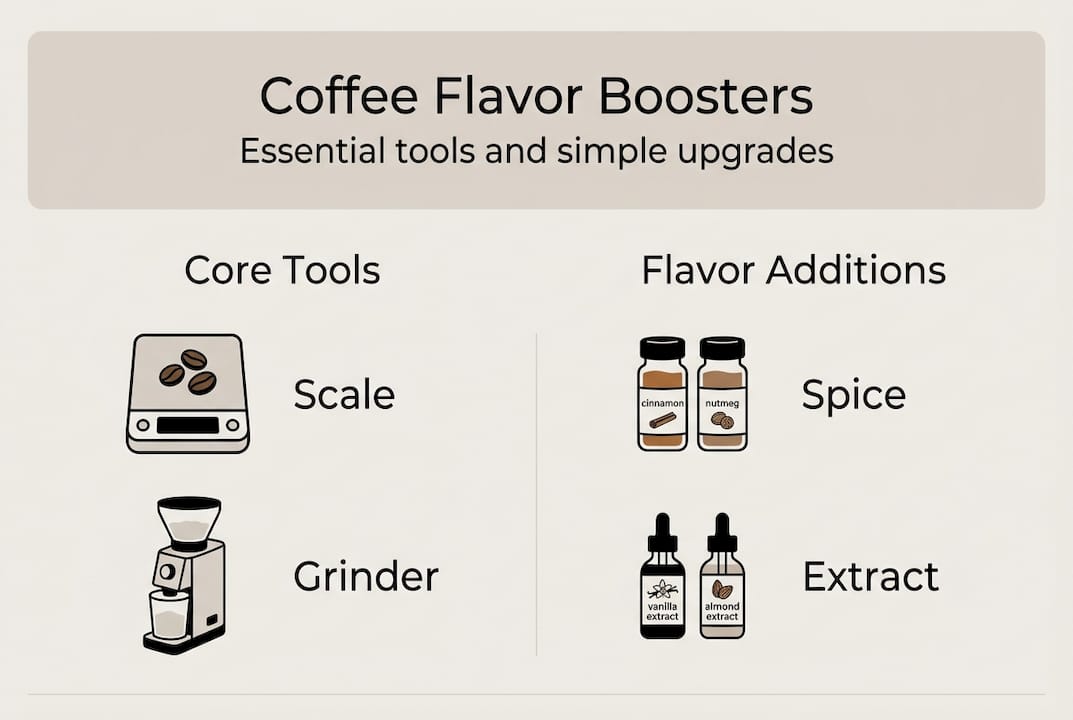
Before you change a single thing about your brew, make sure your setup isn’t working against you. The right tools don’t need to be expensive, but they do need to be precise. Optimal water temperature and ratios are the two biggest levers you have, and both require basic equipment to control.
Here’s what belongs in every serious home brewer’s kit:
- Digital scale: Eyeballing scoops introduces inconsistency. A scale removes guesswork entirely.
- Variable-temperature kettle: Lets you hit exact temperatures instead of guessing after boiling.
- Burr grinder: Produces uniform particle sizes. Blade grinders create uneven fragments that extract at different rates, muddying flavor.
- Fresh filters: Old or low-quality filters add papery off-notes. Rinse paper filters with hot water before brewing.
- Filtered water: Tap water minerals and chlorine compete with your coffee’s natural flavor compounds.
- Quality beans: Freshness matters more than origin. Look for a roast date within the last two to four weeks.
For ingredients, keep cinnamon, vanilla extract, and a small container of kosher salt on hand. These aren’t gimmicks. Used correctly, they fine-tune flavor without masking it. Exploring the brewing experience essentials behind each tool helps you understand why each upgrade compounds on the last.
| Tool | Why it matters | Upgrade impact |
|---|---|---|
| Digital scale | Consistent coffee-to-water ratio | High |
| Burr grinder | Uniform extraction | Very high |
| Variable kettle | Precise temperature control | High |
| Fresh filters | No off-flavors from paper | Medium |
| Filtered water | Clean flavor baseline | High |
Step-by-step guide: Brewing mechanics for optimal flavor
With the right gear in place, here are the brewing steps that have the greatest impact on flavor. These aren’t preferences. They’re parameters backed by extraction science.
- Measure your coffee and water. Use a 1:15 to 1:18 ratio by weight. Start at 1:16 (e.g., 20g coffee to 320g water) and adjust from there.
- Grind fresh, right before brewing. Grind size should match your method: coarse for French press, medium for drip, fine for espresso. Stale pre-ground coffee loses volatile aromatics within 15 minutes of grinding.
- Heat water to the correct temperature. Optimal brewing temperature is 195 to 205°F (90 to 96°C). Below that, you under-extract and get sour, weak coffee. Above it, you over-extract bitter compounds.
- Rinse your filter. Pour hot water through the filter before adding grounds. This removes papery taste and preheats the brewer.
- Bloom the grounds. Add twice the weight of water to coffee (e.g., 40g water for 20g coffee) and wait 30 to 45 seconds. This releases trapped CO2 and primes even extraction.
- Pour slowly and evenly. Avoid channeling by pouring in a steady spiral from center outward.
- Time your brew. Pour-over should finish in 3 to 4 minutes. Adjust grind size if it runs too fast or too slow.
Primary enhancements come from brewing mechanics, not add-ins. Nail these steps first, and every other tweak becomes more effective. Understanding flavor layering basics and brew profile techniques will help you build on this foundation.
| Parameter | Target range | Effect if off |
|---|---|---|
| Water temperature | 195 to 205°F | Sour (low) or bitter (high) |
| Coffee-to-water ratio | 1:15 to 1:18 | Weak (high) or harsh (low) |
| Grind size | Method-dependent | Uneven extraction |
| Brew time (pour-over) | 3 to 4 minutes | Under or over-extracted |
Pro Tip: Write down your ratio, grind setting, and brew time after each session. One variable at a time. You’ll dial in your perfect cup in a week, not a month.
Choosing and matching roast levels for flavor
Once you’ve mastered mechanics, matching your preferred flavors starts with understanding roast differences. Roast level is the single biggest determinant of what flavor notes are even available in your cup.
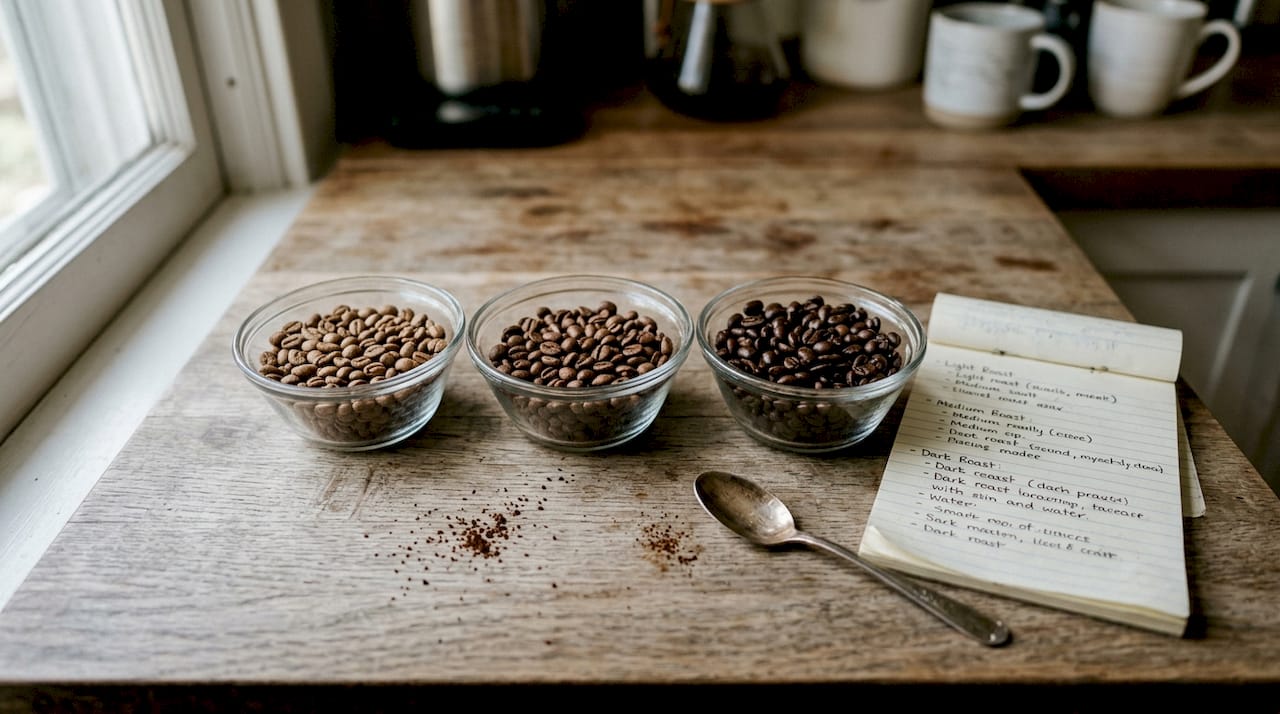
Light roasts (196 to 205°C) preserve origin-driven flavors like fruit, florals, and bright acidity. Medium roasts (210 to 220°C) develop sweetness and nuttiness while softening acidity. Dark roasts (225 to 235°C) push into chocolate, smoke, and low-acidity territory with a heavier body.
Matching roast to brew method is just as important. Roast-to-method mismatches mute the best qualities of a bean or amplify the worst. Here’s how to pair them:
- Light roast: Best with pour-over or Chemex. The clean, filtered extraction highlights delicate fruity and floral notes.
- Medium roast: Works well with drip machines and AeroPress. Balanced enough to shine in most methods.
- Dark roast: Excels in French press, moka pot, or espresso. Immersion and pressure methods bring out body and sweetness without turning harsh.
If you’re chasing chocolate and nutty notes, explore dark roast options built for immersion brewing. For a broader comparison, checking out the best roast for flavor across different profiles gives you a practical starting point.
Pro Tip: Order a small sample of light, medium, and dark from the same origin. Brew all three with identical parameters. The difference in flavor will be dramatic and immediately educational.
| Roast level | Flavor notes | Best brew method |
|---|---|---|
| Light | Fruity, floral, bright acidity | Pour-over, Chemex |
| Medium | Nutty, sweet, balanced | Drip, AeroPress |
| Dark | Chocolate, smoky, full body | French press, espresso |
Advanced techniques: Agitation, blooming, and brewing methods
With your beans and process dialed in, advanced barista techniques further elevate flavor and consistency. These aren’t complicated, but they require attention.
Blooming is the 30 to 45 second pre-infusion step where you saturate the grounds with a small amount of hot water before the main pour. Fresh beans release CO2 during this phase. If you skip it, that gas escapes during brewing and creates uneven extraction. The result is a cup with inconsistent flavor from sip to sip.
Once you’re blooming, the next question is whether to swirl or stir. During bloom, a gentle swirl or stir using a 2:1 water-to-coffee ratio promotes even saturation and enhances aroma release. However, too much agitation causes fine coffee particles to migrate and clog the filter, slowing extraction and creating bitterness.
Choosing the right brew method shapes the entire flavor profile:
- Pour-over: Produces clarity and brightness. Best for highlighting fruity or floral notes in light roasts.
- French press: Full immersion extracts more oils and body. Immersion brewing boosts body and chocolate notes in medium and dark roasts.
- Espresso: Pressure-driven extraction concentrates sweetness and creates a syrupy mouthfeel.
- AeroPress: Versatile and forgiving. Can mimic both pour-over clarity and espresso concentration depending on technique.
For those interested in building layered, complex cups, the coffee blending tips at Variatea Coffee offer a practical next step.
“Even saturation during bloom is the difference between a cup that tastes alive and one that tastes flat.”
Flavor enhancements: Spices, extracts, and creative add-ins
Once the foundation is set, creative add-ins and flavor tweaks let you personalize each cup. The key is integration, not masking.
Adding cinnamon (up to 1/4 tsp) directly to grounds before brewing infuses warmth evenly throughout the extraction without leaving clumps in your cup. Nutmeg, cardamom, and clove work the same way. Start with a small pinch and scale up based on taste.
For extracts, vanilla and almond work best when added to the finished cup, not the grounds. Use no more than 1/4 teaspoon per 8 oz serving. Too much extract turns sharp and artificial fast.
A small pinch of salt blocks bitter taste receptors on your tongue, making the same cup taste smoother without changing the actual chemistry. This works best as a correction tool, not a substitute for good brewing. If you’re salting every cup, your grind or temperature is off.
Here’s a quick reference for add-ins:
- Cinnamon: 1/4 tsp to grounds. Adds warmth and sweetness.
- Cardamom: Small pinch to grounds. Floral, slightly citrusy lift.
- Vanilla extract: 1/4 tsp to finished cup. Smooth, creamy depth.
- Salt: One small pinch to grounds. Reduces perceived bitterness.
- Syrups: Add to cup after brewing. Start with 1/2 tsp and adjust.
For deeper inspiration on spice infusion methods, Variatea Coffee’s blog covers the full process with specific ratios and pairings.
Pro Tip: Keep a small notebook next to your coffee station. Log every add-in, amount, and your rating. You’ll reproduce your best cups and avoid repeating your worst.
Troubleshooting and flavor rescue tips
Even seasoned enthusiasts face flavor setbacks. Here’s how to troubleshoot common missteps and rescue your cup.
Bitter cup: Usually over-extraction. Grind is too fine, water too hot, or brew time too long. Over-extracted coffee can be softened short-term with a pinch of salt, but the real fix is coarsening your grind or lowering temperature by 5°F.
Thin body or flat taste: Under-extraction or stale beans. Try a finer grind, higher temperature, or fresher coffee. Also check your ratio. Going too light on coffee (above 1:18) produces watery, flavorless results.
Weak aroma: Beans are past their prime or ground too far in advance. Grind right before brewing and store beans in an airtight container away from light and heat.
Inconsistent cup to cup: Dirty equipment is a common culprit. Consistent poor cups often signal dirty gear. Oils and residue build up in grinders, carafes, and brewers and turn rancid over time. Deep clean everything weekly.
Temperature at the drinking stage matters too. Drinking coffee at 110 to 140°F preserves volatile aromatic compounds. Below that, the flavor flattens noticeably. Preheat your mug with hot water before pouring. Never reheat brewed coffee. Reheating irreversibly alters flavor compounds and produces a stale, metallic taste.
For more on layering flavors troubleshooting, Variatea Coffee’s guide covers how to identify and fix extraction issues at every stage.
- Bitter: Coarsen grind, lower temp, shorten brew time
- Sour/weak: Fine grind, raise temp, increase coffee dose
- Flat aroma: Use fresher beans, grind immediately before brewing
- Inconsistent: Clean all equipment, re-measure every variable
- Thin body: Increase dose or switch to immersion method
Pro Tip: Fix one variable at a time. Changing grind and temperature simultaneously makes it impossible to know which adjustment actually worked.
Elevate your coffee experience with Variatea
Now that you know how to bring out the best in every cup, the next step is having the right beans to practice with. Variatea Coffee is built for exactly this kind of exploration. Every blend is designed with a specific flavor profile in mind, so you can apply everything you’ve learned here and taste the difference immediately.

Start with the Whiskey Barrel Aged coffee to experience what barrel-aging does to body and smokiness in a dark roast. If you want to experiment across multiple profiles at once, the flavored coffees sample pack gives you a range of blends to test your new brewing skills against. For origin-driven exploration, the single origin coffee samples let you compare how roast level and terroir interact across different regions. Every bag comes with a roast date, so freshness is never a question.
Frequently asked questions
What is the ideal temperature for brewing coffee to maximize flavor?
The optimal brewing temperature is 195 to 205°F (90 to 96°C). Brewing outside this range either under-extracts (sour, weak) or over-extracts (bitter, harsh).
How can I reduce bitterness in my coffee if I over-extract?
A pinch of salt in the grounds blocks bitter taste receptors and softens the cup. For a lasting fix, coarsen your grind or lower your water temperature by 5°F.
Does the roast level really change how coffee tastes?
Absolutely. Light roasts preserve fruity and floral origin notes with high acidity, while dark roasts develop chocolate, smoke, and a heavier body with much lower acidity.
Which brewing method gives the clearest flavor?
Pour-over enhances clarity and highlights bright, fruity notes. It’s the best choice when you want to taste the nuances of a light or medium roast without the heaviness of immersion brewing.
Is it safe to add spices like cinnamon directly to coffee grounds?
Yes. Adding up to 1/4 tsp cinnamon directly to your grounds before brewing infuses warmth evenly throughout the extraction without clumping or leaving residue in your cup.