

What makes coffee premium? Expert guide to flavor and quality
TL;DR:
- Genuine premium coffee is defined by sensory quality, expert evaluation, and transparent sourcing.
- Most coffee in stores does not meet the specialty grade standards of 80+ points from the SCA.
- Proper brewing techniques enhance the complex flavors of high-quality beans.
Most people assume premium coffee is simply the most expensive bag on the shelf, or the one with the fanciest label. That assumption leads to a lot of disappointing cups and wasted money. True premium coffee is defined by measurable sensory qualities, rigorous expert evaluation, and a transparent journey from farm to cup. Understanding what actually separates a genuinely exceptional roast from clever marketing changes how you shop, how you brew, and ultimately how much pleasure you get from every single cup.
Table of Contents
- How coffee is evaluated as premium
- Flavor, aroma, and complexity: Sensory attributes that matter
- Beyond the bean: Traceability, ethics, and sustainability
- Artisan brewing: The role of method and precision
- What most people get wrong about premium coffee
- Experience premium coffee with Variatea
- Frequently asked questions
Key Takeaways
| Point | Details |
|---|---|
| Expert criteria matter | Premium coffee is defined by structured SCA scoring, not just by price or branding. |
| Flavor and complexity | True premium coffees show layered flavors, clarity, and balance revealed through artisanal brewing. |
| Transparency and ethics | Traceable origin and sustainable practices are essential for authentic premium coffee quality. |
| Brewing methods count | Method and precision in brewing unlock the potential of high-quality beans at home. |
| Price isn’t everything | Exclusivity doesn’t guarantee excellence; consistency and sensory experience separate real premium from the rest. |
How coffee is evaluated as premium
The word “premium” gets thrown around constantly in the coffee world, but there is a concrete, expert-backed framework that separates real quality from branding noise. The Specialty Coffee Association sets the global benchmark, and their grading system is the closest thing the industry has to an objective standard.
According to SCA scoring standards, premium coffee earns 80+ points out of 100 on a structured cupping evaluation, placing it in the specialty grade category with exceptional flavor, aroma, balance, and minimal defects. Trained Q-graders assess each coffee blind, scoring attributes like acidity, sweetness, body, aftertaste, and overall balance. A single defect can drop a coffee below the threshold entirely.
Here is what that evaluation actually looks at:
- Fragrance and aroma: Dry grounds and wet grounds are assessed separately
- Flavor: The overall taste impression across the palate
- Aftertaste: How long and how pleasantly the finish lingers
- Acidity: Brightness and liveliness, not sourness
- Body: The weight and texture of the liquid in your mouth
- Balance: How well all attributes work together without one overpowering another
- Uniformity and cleanliness: Consistency across multiple cups from the same sample
| Score range | Classification | What it means |
|---|---|---|
| 90 to 100 | Outstanding | Rare, competition-level quality |
| 85 to 89 | Excellent | Top-tier specialty coffee |
| 80 to 84 | Very good | Specialty grade, premium quality |
| Below 80 | Not specialty | Commercial or commodity grade |
Only 5 to 10% of global coffee production meets the specialty threshold. That is a remarkably small slice of the total market, which means most of what fills grocery store shelves never came close to a Q-grader’s cupping table. Understanding how premium coffee is measured helps you recognize genuine quality signals instead of reacting to packaging design.
The scoring system is not just a number. It is a language that communicates the entire sensory story of a coffee, from the farm conditions that shaped the bean to the roasting decisions that unlocked its potential.
Flavor, aroma, and complexity: Sensory attributes that matter
Once you understand the scoring framework, the next step is learning to actually taste what the scores are measuring. Premium coffee is not just “stronger” or “richer” than regular coffee. It is more dimensional, more specific, and more interesting.
The SCA’s Coffee Value Assessment goes beyond a single cup score. It evaluates coffee across four dimensions: physical attributes like defects and moisture content, descriptive sensory attributes, affective qualities based on personal preference, and extrinsic factors like traceability and sustainability. This holistic view reflects how complex genuine quality actually is.
Here is how premium and typical coffee compare across key sensory categories:
| Attribute | Premium coffee | Typical commercial coffee |
|---|---|---|
| Acidity | Bright, clean, fruit-like | Flat or harsh |
| Sweetness | Natural, caramel or fruit tones | Absent or added artificially |
| Aroma | Layered, distinct, origin-specific | Generic, roast-dominant |
| Aftertaste | Long, pleasant, evolving | Short or bitter |
| Body | Silky, full, well-structured | Thin or muddy |
| Complexity | Multiple notes shifting over time | One-dimensional |
Exploring artisanal flavor profiles reveals how much origin, processing method, and roast level shape what ends up in your cup. An Ethiopian natural process coffee might taste like blueberries and dark chocolate. A washed Colombian might deliver clean citrus and brown sugar. These are not additives. They are the natural result of terroir and careful processing.
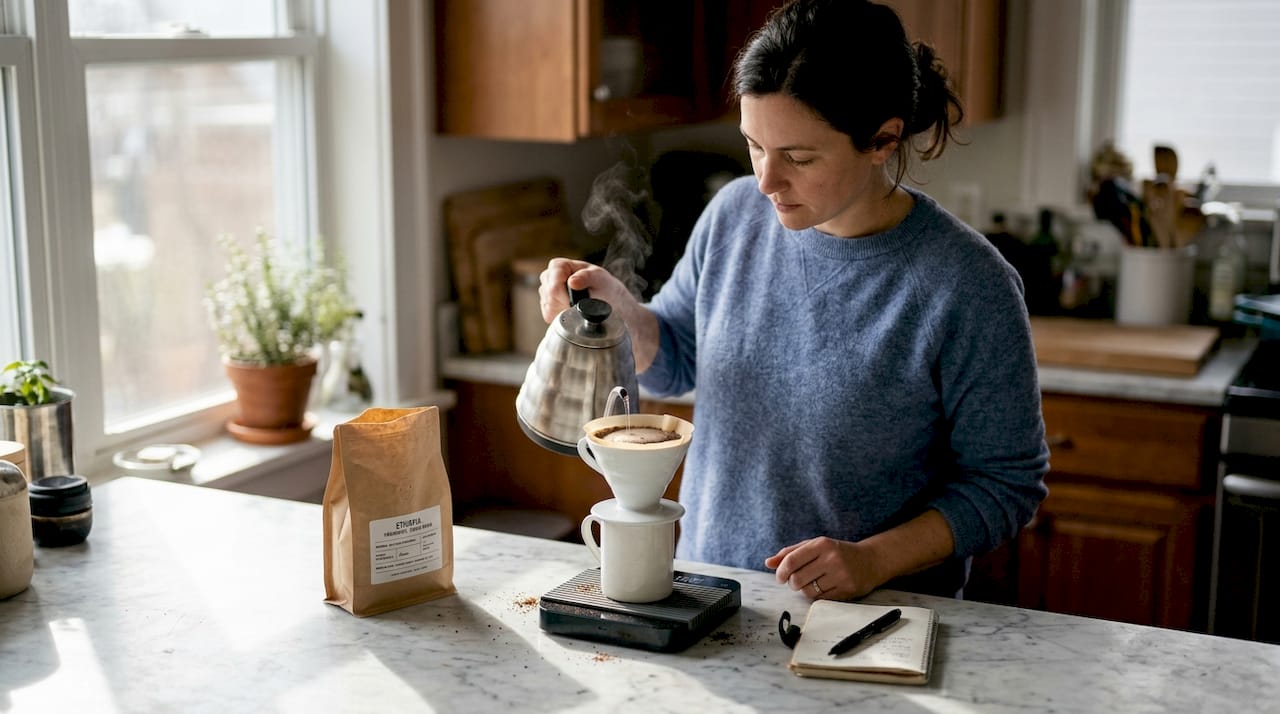
Pro Tip: If a coffee tastes overwhelmingly bitter with no sweetness or brightness, that is almost always a sign of over-roasting, not quality. Roasters sometimes use dark roasts to mask defects in lower-grade beans. True complexity requires a lighter touch.
The single origin coffee advantages are especially clear when it comes to sensory specificity. A single-origin bean from a known farm in a specific harvest year gives you a traceable, repeatable flavor story. Blends can be excellent too, but they often prioritize consistency over the kind of distinct character that defines the premium experience.
Beyond the bean: Traceability, ethics, and sustainability
Flavor is only part of what makes coffee genuinely premium. The other part is invisible in the cup but very present in the value you are paying for. Traceability, ethical sourcing, and sustainable farming practices are not just feel-good marketing points. They are quality signals.
“Farm-to-cup transparency, fair wages, and regenerative practices are not optional extras in specialty coffee. They are foundational to the integrity of the product itself.” — SCA specialty coffee standards
Here is why coffee traceability standards matter for quality, not just ethics:
- Known origin means accountability. When a roaster can name the farm, the farmer, and the processing method, they are staking their reputation on that information. Vague sourcing language usually means commodity-grade beans dressed up with specialty marketing.
- Fair wages support quality farming. Farmers who earn sustainable income invest in better harvesting practices, selective picking, and careful post-harvest processing. Low-cost sourcing often translates to rushed, lower-quality production.
- Ecological stewardship protects flavor. Shade-grown, organically managed farms produce beans with more complex flavor development. Healthy soil and biodiversity directly influence the sensory profile of the coffee.
- Direct trade relationships create feedback loops. When roasters work directly with producers, quality feedback travels both ways. That relationship produces better beans over time because everyone in the chain is invested in the outcome.
Pro Tip: Look for roasters who publish harvest dates, farm names, and processing methods on their bags or websites. If that information is missing, the sourcing story probably is too.
Understanding what sets premium coffee apart goes well beyond what you taste. It includes the decisions made months before the coffee reaches a roaster, and the relationships that make those decisions possible.
Artisan brewing: The role of method and precision
Even the highest-scoring, most ethically sourced coffee can fall flat if the brewing is careless. Method and precision are the final variables that determine whether premium beans deliver a premium experience.
Artisanal brewing methods like pour-over and siphon brewing enhance clarity and complexity in ways that automatic drip machines typically cannot match. Pour-over gives you direct control over water distribution, bloom time, and flow rate. Siphon brewing uses vapor pressure and full immersion to produce an exceptionally clean, bright cup. Both methods reward attention and reward you with the full sensory range the bean has to offer.
Here are the variables that matter most:
- Water temperature: Aim for 92 to 96 degrees Celsius. Too hot scorches delicate aromatics; too cool leaves sugars and acids under-extracted.
- Grind size: Match your grind to your method. Coarser for French press, medium for pour-over, fine for espresso. Inconsistent grind size creates uneven extraction.
- Brew ratio: A starting point of 1:15 (one gram of coffee to fifteen grams of water) works well for most filter methods. Adjust to taste from there.
- Freshness: Grind immediately before brewing. Pre-ground coffee loses volatile aromatics within minutes of exposure to air.
Pro Tip: Bloom your grounds before the full pour. Add twice the weight of water to coffee, wait 30 to 45 seconds, then continue. This releases CO2 trapped in fresh coffee and allows for more even, efficient extraction.
Research confirms that precise temperature control, within plus or minus one degree Celsius and with consistent water flow, yields 92% target extraction in SCA-certified machines. That level of control is what separates a technically excellent cup from an average one. Exploring artisan coffee varieties alongside refined technique is how you truly enhance your coffee flavors at home.
What most people get wrong about premium coffee
Here is the uncomfortable reality: the specialty coffee world has a premiumization problem. As demand for “premium” coffee has grown, so has the number of brands using exclusivity and high price tags as proxies for quality. But exclusivity does not equal excellence. A coffee that sold for a record price at auction may reflect scarcity, novelty, or marketing momentum more than it reflects what is actually in the cup.
We have tasted coffees that cost three times as much as our favorites and delivered half the experience. And we have found genuinely outstanding cups at prices that would surprise most people. The lesson is that true coffee complexity is built on consistency, transparency, and sensory merit, not on auction records or limited-edition hype.
The real differentiators are simpler than the marketing suggests: a verifiable score, a traceable origin, a roaster who can explain every decision, and a cup that genuinely surprises you. That is the standard worth chasing.
Experience premium coffee with Variatea
Now that you know what genuine quality looks like, the next step is tasting it for yourself. At Variatea Coffee, every blend we craft is built around the same principles covered in this guide: exceptional sourcing, deliberate roasting, and flavors that go far beyond what a standard grocery aisle can offer.
Whether you are ready to explore the bold, high-caffeine intensity of our Max Caf Blend or the warm, comforting sweetness of our Gourmet Donut Shop coffee, we have something curated for the adventurous brewer in you. Watch how we approach flavor and craft:
Explore our full lineup and find your next favorite cup at variateacoffee.com.
Frequently asked questions
What is the SCA score and why does it matter?
The SCA score rates coffee quality out of 100, and only coffees that earn 80 or above qualify as specialty grade, meaning they meet strict standards for flavor, aroma, and defect-free consistency.
Does expensive coffee always mean it’s premium?
Not at all. High prices can reflect rarity or exclusivity rather than actual cup quality. True premium coffee is validated by expert sensory evaluation, not just its price tag.
What brewing method brings out the best in premium coffee?
Pour-over and siphon methods offer the most control and clarity, allowing complex flavors to emerge fully. Both methods highlight the nuanced notes that define a high-scoring specialty bean.
Why are traceability and sustainability important for premium coffee?
They are quality signals, not just ethical ones. Farm-to-cup transparency and fair trade practices support the careful farming and processing that produce genuinely exceptional beans.
Can regular brewing gear produce premium coffee results?
Yes, with quality beans and careful attention to temperature and ratio. Even basic home gear can yield excellent results when extraction parameters are controlled consistently.