

What Is Natural Coffee Processing: A Flavor Guide
TL;DR:
- Natural coffee processing involves drying whole cherries with their skin and pulp intact, resulting in sweet, fruit-forward flavors like berries, tropical fruits, and winey notes. This method requires careful timing, turning, and moisture management over several weeks to produce a complex, full-bodied cup with lower acidity. Proper roasting and brewing techniques amplify the natural intensity, offering a distinct experience compared to washed coffees.
Natural coffee processing is defined as drying whole coffee cherries intact, with the fruit skin, pulp, and mucilage still surrounding the bean throughout the entire drying period. This method, also called dry processing, is one of the oldest coffee processing techniques in the world, practiced extensively in Ethiopia and Brazil where sun and airflow do the heavy lifting. The result is a cup that tastes nothing like your standard grocery store roast. Expect blueberry, tropical fruit, and winey fermentation notes layered over a heavy, syrupy body. Understanding the natural coffee processing method is the fastest way to explain why two coffees from the same farm can taste completely different.
What is natural coffee processing and how does it work?
Natural coffee processing means drying whole coffee cherries intact before hulling, preserving all fruit layers around the bean during the drying stage. No water is used to strip the fruit. No pulping machines run before drying. The cherry goes from the tree to the drying bed as a complete unit, and the bean absorbs sugars and fermentation compounds from the surrounding fruit over several weeks.
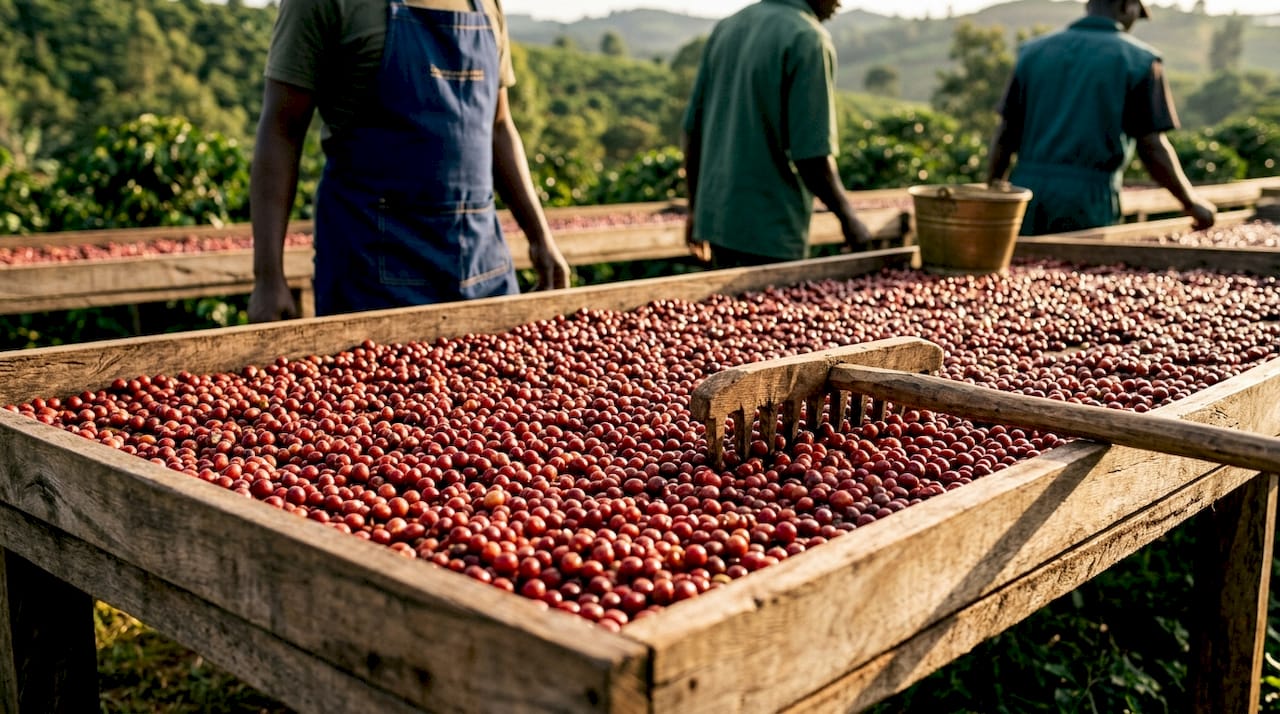
This is the foundational difference between natural and every other processing method. The bean is essentially marinating inside its own fruit. That contact time is what drives the intense sweetness and fruit-forward character that natural processed coffees are known for. CoffeeGeek describes this as the fruit layers acting as a flavor conduit during fermentation and drying.
Regions like Ethiopia and Brazil rely on dry processing extensively because the method requires minimal infrastructure and almost no water. A sun-drenched patio or a set of raised drying beds is all the equipment a producer needs to get started. That simplicity is part of why the method has persisted for centuries.
How is natural coffee processed step by step?
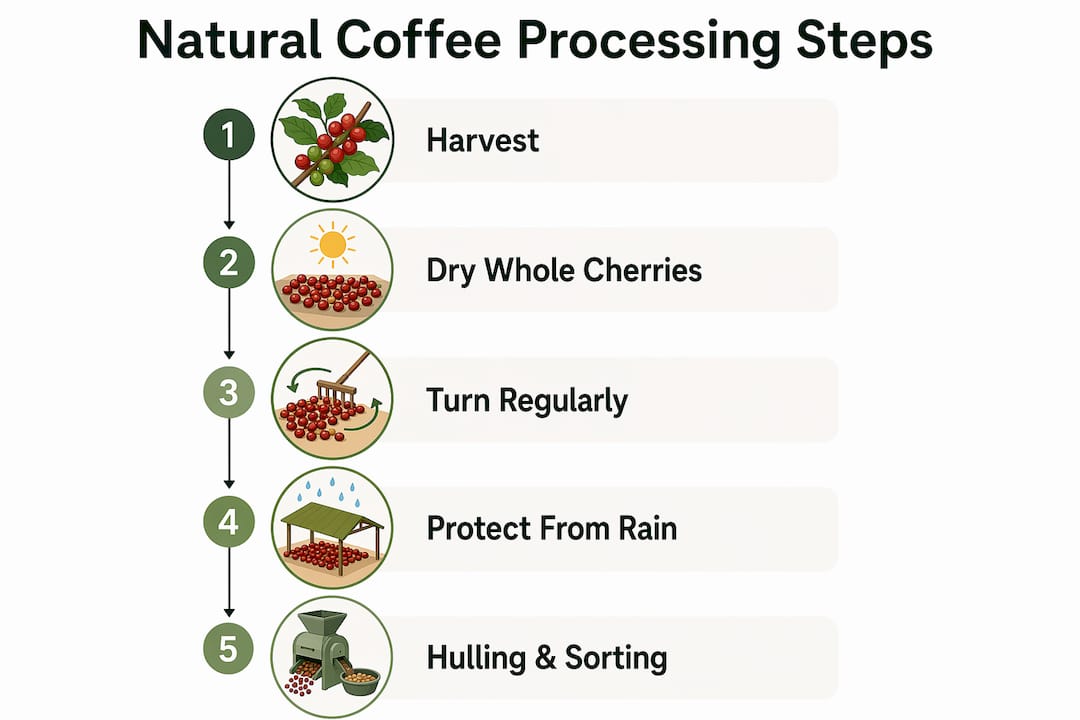
The natural processing method follows a clear sequence, and each stage directly affects the final cup quality.
-
Harvesting ripe cherries. Selective hand-picking is the standard for quality natural lots. Only fully ripe, red or yellow cherries are chosen. Unripe or overripe cherries introduce off-flavors that no amount of careful drying can fix.
-
Sorting and floating. Freshly picked cherries are floated in water to remove defects. Damaged or hollow cherries float; dense, healthy ones sink. This step takes minutes but protects the entire batch.
-
Spreading on drying surfaces. Cherries are spread in thin, even layers on raised drying beds or concrete patios. Raised beds allow airflow underneath the cherries, which reduces the risk of mold and speeds even drying. Patios are more common in Brazil; raised beds are the standard in Ethiopian specialty production.
-
Turning and raking. Workers turn the cherries multiple times per day, every day. Consistent raking and airflow management are critical quality factors that prevent uneven fermentation and mold. Cherries left in piles will rot from the inside out.
-
Drying to target moisture. The cherries dry until the beans inside reach approximately 11% moisture content. Drying to ~11% moisture is the critical quality gate for natural coffees. Depending on weather conditions, this process takes anywhere from three to six weeks.
-
Hulling. Once dried, the entire outer structure, including skin, dried pulp, and parchment, is removed in a single pass through a hulling machine. This is different from washed coffees, where pulp is stripped before drying.
Pro Tip: Cover drying beds with shade cloth or tarps during rain. Even brief moisture exposure on partially dried cherries can trigger mold growth that ruins the batch. Producers in Ethiopia’s Yirgacheffe region use portable covers as standard practice.
What flavor characteristics differentiate natural processed coffee?
Natural processed coffees display fruit-forward, sweeter, and fuller-bodied profiles with often lower acidity than washed coffees. The science behind this is straightforward. As the cherry dries over weeks, sugars from the fruit migrate into the bean. Fermentation also occurs naturally during this period, producing organic acids and esters that translate directly into the cup as winey or tropical fruit notes.
The flavor intensity of a natural processed coffee is unlike anything produced by washed methods. Where a washed Ethiopian Yirgacheffe might taste clean and floral with bright citrus acidity, a natural from the same region often tastes like blueberry jam with a thick, almost velvety mouthfeel. That contrast comes entirely from the processing decision, not the variety or the roast.
Understanding flavor profiles from processing helps you predict what will be in your cup before you brew a single gram. Here are the most common tasting notes you will encounter in natural processed coffees:
- Berries: Blueberry, strawberry, and blackberry are the most frequently cited descriptors
- Tropical fruit: Mango, papaya, and pineapple appear in naturals from Central America and Africa
- Winey or fermented: A grape-like or kombucha-adjacent quality that divides coffee drinkers
- Chocolate and caramel: Heavier roasts of natural coffees often express dark chocolate and brown sugar
- Full body: The mouthfeel is noticeably heavier and more syrupy than washed coffees
- Lower perceived acidity: The fruit contact softens the sharp brightness typical of washed processing
This flavor complexity is why specialty roasters prize natural processed lots. The tradeoff is consistency. Drying conditions and handling directly tie cup quality to environmental variables that no producer fully controls.
How does natural processing compare with washed and other methods?
The four main coffee processing techniques are natural (dry), washed (wet), honey, and anaerobic. Each method produces a distinct flavor outcome and requires different resources and labor.
Washed processing strips the fruit from the bean before drying using water and pulping machines. The result is a clean, bright cup where the bean’s origin characteristics shine through without fruit interference. Washed coffees from Kenya or Colombia show high acidity and clarity that natural processing cannot replicate.
Honey processing is a middle ground. The skin is removed but varying amounts of mucilage are left on the bean during drying. Yellow honey retains less mucilage; black honey retains the most. The flavor sits between natural and washed, with moderate sweetness and body.
Anaerobic processing seals cherries or depulped beans in oxygen-free tanks before drying. The controlled fermentation environment produces intense, sometimes polarizing flavors. It is the newest method and the most technically demanding.
| Method | Water use | Drying time | Flavor profile | Risk level |
|---|---|---|---|---|
| Natural | Minimal | 3 to 6 weeks | Fruity, full body, winey | High (mold, spoilage) |
| Washed | High | 1 to 2 weeks | Clean, bright, high acidity | Low |
| Honey | Low to moderate | 2 to 4 weeks | Sweet, medium body | Moderate |
| Anaerobic | Low | Variable | Intense, complex, experimental | High |
Natural processing uses little to no water, relying entirely on sun and airflow. This makes it the most environmentally sustainable option in water-scarce growing regions. The tradeoff is labor intensity and the risk of spoilage if drying conditions are not managed carefully.
Pro Tip: If you prefer clean, tea-like coffees with high acidity, start with washed processing. If you want maximum sweetness and fruit intensity, go natural. Honey processed coffees are the best entry point for drinkers moving between the two styles.
What should home brewers know about roasting and brewing naturals?
Natural coffees need careful roasting due to retained sugars causing uneven development and possible harsh or boozy notes if overdone. The sugar content in natural processed beans is significantly higher than in washed beans, which means the Maillard reaction and caramelization happen faster and more intensely during roasting.
Roasters working with natural lots typically apply a slower heat ramp in the early stages of the roast to protect the delicate fruit compounds. A charge temperature that is too aggressive scorches the sugars before they can develop properly, producing a flat, harsh cup instead of the layered fruitiness the processing method promises. The goal is a gradual heat ramp-up that preserves the syrupy intensity and fruit character.
For home brewers, the roast level matters enormously with natural coffees. Light to medium roasts preserve the berry and tropical fruit notes. Dark roasts push those flavors into chocolate and tobacco territory, which can be excellent but loses the signature fruitiness entirely.
Here are the brewing adjustments that get the most from a natural processed coffee:
- Grind slightly coarser than usual. The higher sugar content means natural coffees extract faster. A coarser grind prevents over-extraction and the bitter, boozy finish that comes with it.
- Lower your water temperature by 2 to 4 degrees Fahrenheit. Brewing at 195°F instead of 200°F reduces extraction speed and protects fruit notes.
- Use a pour-over or French press. Both methods highlight body and sweetness. A Chemex or V60 will show the fruit clarity; a French press will amplify the full body.
- Reduce your brew ratio slightly. A 1:15 coffee-to-water ratio instead of 1:16 or 1:17 produces a denser, sweeter cup that suits the natural profile.
- Taste before adding milk. Natural coffees are sweet enough to drink black. Milk masks the fruit notes that make these coffees worth buying.
The artisanal brewing techniques that work best for naturals all share one principle: slow down the extraction to let the sweetness lead.
Key takeaways
Natural coffee processing produces the most flavor-complex and fruit-forward cups of any processing method, but that intensity depends entirely on precise drying conditions, moisture control, and careful roasting.
| Point | Details |
|---|---|
| Core definition | Natural processing dries whole cherries intact, letting fruit sugars migrate into the bean. |
| Moisture target | Drying to approximately 11% moisture is the critical quality gate for safe storage and flavor integrity. |
| Flavor profile | Expect berries, tropical fruit, winey notes, heavy body, and lower acidity compared to washed coffees. |
| Roasting adjustment | Use a gradual heat ramp to protect sugars and preserve fruitiness; avoid aggressive early heat. |
| Brewing tip | Grind coarser, lower water temperature, and use pour-over or French press to highlight sweetness and body. |
Why natural processing is the most misunderstood method in specialty coffee
I have tasted hundreds of natural processed coffees over the years, and the ones that disappoint almost always share the same flaw: they were rushed through drying. A producer who cuts the drying time short to hit a shipping deadline delivers a cup that tastes muddy and fermented in the wrong way. The winey quality that makes a great Ethiopian natural so compelling becomes a barnyard note when the drying was inconsistent.
What most articles on this topic miss is that natural processing is not a shortcut. It is actually more demanding than washed processing because the producer has less control over the fermentation happening inside each cherry. Washed processing lets you intervene at multiple stages. Natural processing requires you to set up the conditions correctly and then wait, watching the weather and turning the beds every few hours.
The variability is real. Dry method coffees can be more variable in quality than washed coffees precisely because of this sensitivity to drying conditions. That is not a reason to avoid them. It is a reason to buy from roasters who source carefully and can tell you exactly where and how the coffee was dried.
My honest recommendation for adventurous home brewers: start with a natural processed Ethiopian or Brazilian lot and brew it as a pour-over before you do anything else with it. No milk, no flavoring, no adjustments. Taste what the processing method actually produces. Then you will understand why specialty roasters obsess over these coffees, and why the coffee tasting workflow matters so much when evaluating naturals.
— Jonathan
Taste natural processing in every cup with Variateacoffee
If natural processing’s depth and intensity appeal to you, Variateacoffee has taken that flavor philosophy further than most roasters dare to go.

The Whiskey Barrel Aged Coffee at Variateacoffee starts with a natural processed base and then ages the roasted beans in authentic charred oak barrels, layering bourbon and vanilla notes on top of the fruit-forward character that natural processing already delivers. It is a non-alcoholic roast that tastes like nothing else in specialty coffee. Every batch is roasted to order and shipped fresh, so you get the full flavor impact from the first brew.
Ready to go deeper? Explore the full Variatea Coffee & Tea Collections and find your next favorite roast, delivered fresh to your door.
FAQ
What does “natural” mean on a coffee bag?
Natural on a coffee label means the beans were dried inside the whole cherry, with the fruit skin and pulp intact. This process infuses the bean with fruit sugars and fermentation compounds that produce sweet, fruit-forward flavors in the cup.
How long does natural coffee processing take?
Natural processing typically takes three to six weeks, depending on weather conditions and the drying infrastructure used. Producers must dry cherries to approximately 11% moisture content before hulling.
Is natural processed coffee stronger than washed coffee?
Natural processed coffee is not stronger in caffeine, but it tastes more intense. The heavier body, higher sweetness, and fruit-forward flavor profile make it feel bolder compared to the clean, bright character of washed coffees.
Why do some natural coffees taste fermented or winey?
The winey or fermented quality comes from organic acids and esters produced during the weeks of natural fermentation inside the drying cherry. Controlled fermentation creates desirable complexity; poor drying management produces off-putting sourness or barnyard notes.
What brewing method works best for natural processed coffee?
Pour-over methods like the V60 or Chemex highlight the fruit clarity in natural coffees, while a French press amplifies the full body. Both work well when you grind slightly coarser and lower your water temperature by a few degrees to prevent over-extraction.