

What Is Dubai Chocolate Coffee? A Flavor Guide
TL;DR:
- Dubai chocolate coffee fuses Middle Eastern dessert ingredients like pistachio cream, tahini, and kataifi pastry with specialty espresso techniques. It emphasizes the balance of textures and flavors, including crunch, creaminess, and savory undertones, creating a dessert-inspired beverage that differs from traditional Arabic coffee and mocha. Both artisanal home brews and RTD versions showcase this innovative trend, expanding coffee’s flavor possibilities beyond conventional boundaries.
Dubai chocolate coffee is not simply chocolate-flavored coffee with an exotic name slapped on it. It is a deliberate fusion of Middle Eastern dessert culture and specialty coffee technique, built around ingredients most coffee drinkers have never brewed with. Think pistachio cream, tahini, toasted kataifi pastry, and milk chocolate melted directly into an espresso base. This guide breaks down what makes this drink genuinely different, where it comes from, how to make it properly at home, and why the chocolate flavored coffee world will never look quite the same once you try it.
Table of Contents
- Key takeaways
- What is Dubai chocolate coffee, really?
- Origins and cultural context
- Key ingredients and flavor components
- How to make it at home
- Variations and ready-to-drink formats
- Where to find and explore Dubai chocolate coffee
- My take on this trend
- Taste it for yourself with Variateacoffee
- FAQ
Key takeaways
| Point | Details |
|---|---|
| Not just chocolate coffee | Dubai chocolate coffee is defined by pistachio cream, tahini, and kataifi pastry, not just cocoa. |
| Cultural fusion, not tradition | The drink blends Middle Eastern dessert flavors with modern specialty coffee techniques. |
| Specific ratios matter | Authentic home preparation calls for 18 to 20g espresso with 40g of the chocolate-pistachio-tahini blend. |
| RTD versions now exist | Ready-to-drink Dubai Chocolatey Style lattes launched nationally in 2026 for on-the-go indulgence. |
| Quality beans change everything | A well-roasted espresso base is the difference between balanced richness and a cloying, one-note drink. |
What is Dubai chocolate coffee, really?
The name creates a reasonable assumption: coffee made in Dubai, or at least coffee inspired by local coffee culture. Neither is quite accurate. The drink’s label references the flavor world of Dubai’s dessert scene rather than any traditional regional coffee preparation. Arabic coffee, the genuine article, is a lightly roasted, cardamom-spiced brew with no chocolate in sight.
What sparked the modern Dubai chocolate coffee trend was the viral popularity of a specific Dubai-style chocolate bar: a thick, crackly confection filled with pistachio cream and shredded kataifi pastry. That bar became a social media phenomenon, and coffee culture absorbed it almost immediately. Baristas and home brewers started melting it directly into espresso, and the flavor combination proved almost absurdly compelling. Rich, nutty, slightly savory from the tahini, with a satisfying crunch from the kataifi garnish.
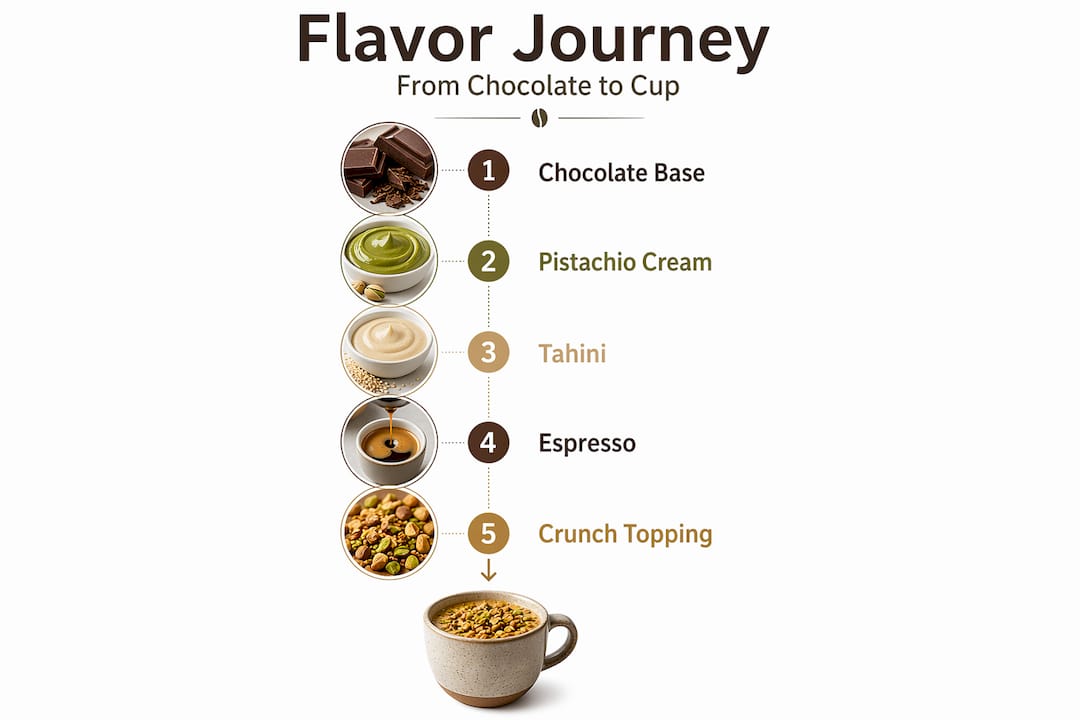
Understanding what this drink actually is matters because it explains why approximating it with chocolate syrup produces a disappointingly flat result. The pistachio, chocolate, and crunchy elements work as a system. Remove one and the whole character shifts.
Origins and cultural context
The origin story here has two threads running in parallel. One is the Middle Eastern dessert tradition that supplies the core ingredients. The other is specialty coffee culture’s appetite for global dessert flavors merging into daily rituals.
The dessert side draws from a long history of combining pistachios, tahini, and pastry in Lebanese, Turkish, and Gulf cooking. Kataifi is shredded wheat pastry used in sweets across the region. Pistachio cream appears in everything from baklava to ice cream. Tahini adds a roasted, slightly bitter undertone that keeps rich desserts from becoming cloying. These are not novel ingredients in the Middle East. They are deeply embedded in the dessert vocabulary of the region.
The coffee side is newer. The youth-driven coffee culture in the Gulf, particularly in Saudi Arabia where over 60% of the population is under 30, created the conditions for this kind of creative fusion. Specialty coffee shops in the region began incorporating local dessert flavors into espresso-based drinks years before the trend went global. Social media accelerated everything.
Key forces behind the trend’s spread include:
- TikTok and Instagram gave the drink its visual identity. The chocolate pour, the foam layer, and the kataifi garnish photograph extraordinarily well.
- Specialty coffee’s global reach meant baristas in London, New York, and Sydney were recreating the drink within months of it going viral.
- The Dubai chocolate bar itself acted as a gateway product. Once people tasted the pistachio-kataifi combination, the coffee version made intuitive sense.
- Flavor ritualization turned an indulgent dessert into something you could justify having every morning.
The distinction from traditional Arabic coffee is worth holding onto. Traditional Arabic coffee is restrained, herbal, and ceremonial. This drink is indulgent, dessert-forward, and contemporary. Both deserve respect on their own terms.
Key ingredients and flavor components
Every element in Dubai chocolate coffee earns its place. This is not a case of dumping multiple flavors together and hoping for complexity. Each ingredient fills a specific sensory role.
- Milk chocolate provides sweetness and a creamy, fatty richness that softens the espresso’s edge without erasing it.
- Pistachio cream delivers a deep, slightly sweet nuttiness with a smooth, almost butter-like texture.
- Tahini is the ingredient most people overlook, and the one that makes the biggest difference. It adds a roasted, mildly bitter, savory undercurrent that stops the drink from tasting like dessert syrup.
- Toasted kataifi pastry is the signature crunchy garnish that provides textural contrast and visual drama. Skip it and you lose a major part of the sensory experience.
- Espresso anchors the drink. It needs to be bold enough to cut through the chocolate-pistachio mixture without becoming harsh. A medium-dark roast with natural sweetness works best.
- Steamed or frothed milk brings everything together, adding body and smoothness. For iced versions, pistachio foam replaces steamed milk as the top layer, made by whipping heavy cream and pistachio cream to stiff peaks.
Exploring how confections elevate coffee helps frame why this combination works at a deeper level. The fat in both chocolate and pistachio cream coats the palate, extending flavor and making the experience linger in a way that a standard latte simply does not.
Pro Tip: Buy pistachio cream from a specialty grocer rather than making it from scratch. Quality pistachio cream should have a vivid green color and taste almost savory, not candy-sweet. The cheap versions are more almond-based and lack the depth you need.
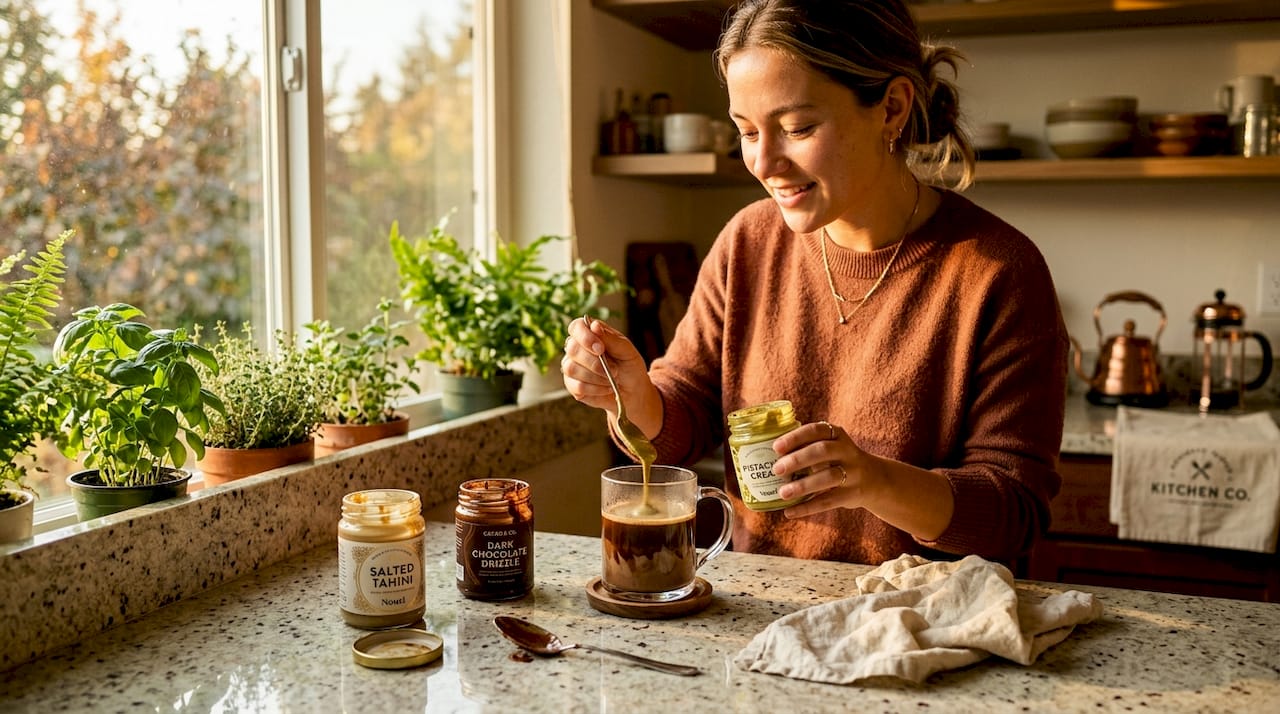
How to make it at home
Getting this right at home requires attention to ratios and temperatures, not exotic equipment. Here is a method that produces a genuinely authentic result.
- Prepare the chocolate-pistachio-tahini blend. Combine 20g of chopped milk chocolate, 10g of pistachio cream, and 10g of tahini in a small bowl. Microwave in 15-second intervals, stirring between each, until fully melted and smooth. This 40g blend is your flavor base.
- Pull your espresso. Use 18 to 20g of freshly ground espresso for a double shot. A medium-dark roast with cocoa or nutty notes complements the blend naturally.
- Combine espresso and the blend. Pour the hot espresso directly over the chocolate mixture and stir vigorously until fully incorporated. The heat from the espresso does the work here.
- Steam your milk. Use approximately 150ml of whole milk or oat milk. Steam to around 65°C for a silky, latte-style texture. Going hotter introduces bitterness that fights the chocolate layer.
- Pour and layer. Add the espresso-chocolate mixture to your cup, then pour steamed milk over the back of a spoon to create a gentle layer.
- Toast the kataifi. In a dry pan over medium heat, toast a small handful of kataifi pastry for 2 to 3 minutes, stirring constantly, until golden. It burns fast. Watch it.
- Garnish and serve. Top with toasted kataifi and a pinch of crushed pistachios. For an iced Dubai chocolate latte, skip the steamed milk and spoon pistachio foam made from equal parts heavy cream and pistachio cream whipped to stiff peaks directly over ice and espresso.
Pro Tip: Make the chocolate-pistachio-tahini blend in larger batches and refrigerate it. It keeps for about a week and transforms your morning routine from a 15-minute project into a 3-minute ritual.
The full process for crafting gourmet chocolate coffee at home is worth reading alongside this if you want to go deeper on technique.
Variations and ready-to-drink formats
The Dubai chocolate coffee trend has now split into two distinct tracks: the artisanal home brew and the commercial convenience format. Both have real merit, and they serve different needs.
| Format | Flavor Experience | Preparation | Best For |
|---|---|---|---|
| Home brew with fresh ingredients | Full complexity: tahini, kataifi crunch, fresh pistachio foam | 10 to 15 minutes active prep | Flavor purists, weekend rituals |
| Specialty flavored coffee beans | Bean-infused chocolate-pistachio notes, brewed your usual way | Standard brew time | Daily coffee routine, no extra ingredients |
| RTD Dubai Chocolatey Style latte | Convenient dessert-inspired flavor, shelf-stable | No prep | On-the-go indulgence, tasting the trend quickly |
The ready-to-drink format is worth understanding on its own terms. RTD Dubai Chocolatey Style lattes launched nationally in 2026, capturing the core pistachio-chocolate-espresso flavor profile in a format you can grab from a retail shelf. They are not a substitute for the real thing, but they offer a no-friction entry point for curious drinkers who want to understand the flavor before committing to a full home preparation.
The viral dessert flavor becoming a daily ritual is precisely what made RTD viable. When a flavor goes from aspirational to habitual, convenience formats follow. Seasonal variations are already appearing, with white chocolate pistachio and cardamom-spiked versions showing up in specialty shops.
Where to find and explore Dubai chocolate coffee
Finding an authentic Dubai chocolate coffee experience outside of specialty coffee shops used to mean sourcing five separate ingredients and hoping you got the ratios right. That gap is closing, but it is still present enough that where you source your coffee base matters enormously.
Consider these options when pursuing the full experience:
- Specialty coffee roasters who specifically formulate blends around the Dubai chocolate flavor profile. The difference between a generic medium roast and a blend designed to complement chocolate and pistachio is noticeable from the first sip.
- Online specialty retailers who source small-batch beans and ship them fresh. Freshness affects how well the espresso base integrates with the chocolate-pistachio mixture. Stale beans produce a flat, muddy result regardless of ingredient quality.
- Home brew experimentation using quality pistachio cream and tahini sourced from specialty or Middle Eastern grocery stores. The ingredients are more widely available than most people assume.
Variateacoffee’s Dubai Chocolate blend is built specifically around this flavor profile, with roast characteristics selected to work with cocoa and nut elements rather than fight them. Exploring the full flavored coffee collection also surfaces options like the Cinnamon Hazelnut blend for those who want to work through the spectrum of dessert-inspired coffees methodically.
The broader point is that specialty coffee unlocks flavor that commodity beans cannot produce. When the rest of your ingredients are as distinctive as tahini and pistachio cream, your coffee base needs to hold its own.
My take on this trend
I have watched a lot of coffee trends arrive with fanfare and fade without leaving anything behind. Dubai chocolate coffee is not one of those. What I find genuinely compelling about it is the structural logic of the flavor combination. The tahini’s savory note is doing real work here. It is not decoration. It keeps the drink from collapsing into sugar bomb territory.
What I keep coming back to when recreating this at home is how much the texture matters. The kataifi crunch against the creamy foam is the kind of contrast that makes you think about the drink after you have finished it. Most flavored coffees are one-dimensional. This one has a middle, a beginning, and a finish.
My honest opinion is that the home brew version, when done with quality ingredients, beats any commercial format I have tried. RTD products capture the flavor concept but lose the textural dimension entirely. The foam, the toasted pastry, the temperature contrast in the iced version: these are tactile experiences, not just flavor notes.
If you are approaching this as a coffee enthusiast, I would encourage you to resist the urge to simplify it. The tahini is not optional. The kataifi is not optional. What you get when you use all five components is a drink that genuinely expands your understanding of what coffee can be, not just how it can taste.
— Jonathan
Taste it for yourself with Variateacoffee

Ready to skip the sourcing headache and brew straight into the good part? Variateacoffee’s Dubai Chocolate Coffee is roasted to order, formulated specifically to complement cocoa and pistachio flavors, and shipped fresh. No stale supermarket bags. No guessing whether your beans will hold up against the chocolate-tahini blend.
If you want to go further into the flavor spectrum, the Whiskey Barrel Aged Coffee delivers a completely different kind of depth: smoky, vanilla-tinged, and aged in authentic charred oak barrels. It is a natural next step for anyone who finds themselves drawn to coffees that tell a story in the cup.
Explore the Variatea Coffee and Tea collections to find your next brew, roasted fresh and delivered directly to you.
FAQ
What exactly is Dubai chocolate coffee?
Dubai chocolate coffee is an espresso-based drink flavored with a blend of melted milk chocolate, pistachio cream, and tahini, garnished with toasted kataifi pastry and crushed pistachios. It draws from Middle Eastern dessert flavors rather than traditional Arabic coffee culture.
What makes Dubai chocolate coffee different from a mocha?
A mocha uses chocolate syrup or cocoa powder mixed with espresso and steamed milk. Dubai chocolate coffee adds pistachio cream and tahini for a savory, nutty dimension that a mocha does not have, plus the kataifi pastry garnish for crunch.
Can you make a Dubai chocolate latte at home without special equipment?
Yes. You need an espresso machine or strong moka pot, a small bowl for melting the chocolate blend, a milk frother, and a dry skillet for toasting kataifi. The preparation requires no barista-level tools beyond basic brewing gear.
What does tahini add to Dubai chocolate coffee?
Tahini adds a roasted, mildly bitter, savory undercurrent that balances the sweetness of the milk chocolate and pistachio cream. Without it, the drink tastes flat and overtly sweet.
Where can I buy authentic Dubai chocolate coffee blends?
Specialty coffee retailers who formulate blends specifically for the Dubai chocolate flavor profile offer the best results. Variateacoffee’s Dubai Chocolate blend is roasted to order and designed to complement the cocoa and pistachio combination at the core of this drink.