

What Is Barrel Aged Coffee and How to Brew It Right
TL;DR:
- Barrel aged coffee involves green beans absorbing aromatic compounds from used spirit barrels before roasting, resulting in a complex, natural flavor. The process requires careful selection, seasoning, monitoring, and customized roasting to preserve the delicate barrel characteristics. It differs from flavored coffee, as it involves organic absorption rather than surface coating with artificial additives.
If you’ve come across barrel aged coffee and assumed it’s just regular coffee doused in artificial whiskey flavor, you’re not alone in that misconception. Barrel aged coffee, also called barrel-matured coffee in specialty circles, is a genuinely distinct category. Green, unroasted beans are placed inside charred oak barrels that once held bourbon, rum, rye, or wine. Over weeks, the beans absorb volatile aromatic compounds from the wood and spirit residue. The result is a deeply layered cup with notes of vanilla, caramel, and toasted oak that no flavoring agent can replicate. No alcohol survives the roasting process. What survives is something far more interesting.
Table of Contents
- Key Takeaways
- What is barrel aged coffee: the process explained
- Flavor profiles by barrel type
- Barrel aging vs. other flavoring methods
- How to brew barrel aged coffee
- Choosing, storing, and enjoying barrel aged coffee
- My take on why barrel aged coffee matters
- Experience barrel aged coffee from Variateacoffee
- FAQ
Key Takeaways
| Point | Details |
|---|---|
| Aging happens before roasting | Green beans sit in used spirit barrels for weeks, absorbing flavor compounds before any heat is applied. |
| No alcohol in the final cup | Residual spirits evaporate completely during roasting, leaving only aromatic flavor compounds behind. |
| Barrel type shapes the flavor | Bourbon barrels deliver vanilla and caramel; rum barrels add tropical sweetness; wine barrels bring fruit-forward complexity. |
| Brewing method matters | French press and cold brew unlock the most barrel-derived flavor layers compared to quick extraction methods. |
| Storage preserves your investment | Airtight containers away from light and heat protect the delicate aromatics that make barrel aged coffee special. |
What is barrel aged coffee: the process explained
The first thing to understand is that barrel aging applies to green coffee beans, not roasted ones. This is the detail most people miss entirely. By the time those beans hit a roaster, they’ve already spent anywhere from 2 to 8 weeks resting inside a previously used spirit barrel, slowly drawing in flavors through their porous cellular structure.
Here is the step-by-step barrel aging workflow roasters actually follow:
-
Select the barrel. Roasters choose barrels based on wood type, previous contents (bourbon, rye, rum, or wine), and the level of char inside. Barrel history and char level directly affect the aromatic intensity of the finished coffee. A first-fill bourbon barrel delivers a bolder, more saturated flavor than a barrel used multiple times.
-
Source and inspect the green beans. Origin matters. A bright Ethiopian bean will interact with a bourbon barrel very differently than a heavy-bodied Sumatra. The coffee’s natural flavor is not masked by aging; it’s transformed by it.
-
Load and seal the barrel. Green beans are poured in and the barrel is sealed. From this point, moisture, oxygen, and temperature govern the outcome. Too much humidity causes mold. Too little, and the beans don’t absorb enough. Most producers target a controlled cellar environment that mirrors spirit aging conditions.
-
Monitor throughout the aging window. This is not a “set it and forget it” step. Roasters sample beans regularly, checking aroma and moisture content. Longer aging is not automatically better. Compounds like vanillin, lactones, and caramelized congeners migrate into the bean’s cellular structure over time, but extended contact can push flavors toward musty or overworked territory.
-
Roast with a customized profile. Because barrel-aged beans carry more moisture than standard green coffee, the roasting approach requires adjustment. Successful roasters use slower initial heat and lower charge temperatures to preserve the delicate aromatics absorbed during aging.
-
Rest and package. Like any specialty roast, the coffee needs a short degassing period after roasting before it reaches peak flavor.
Pro Tip: The aging stage is where most producers differentiate themselves, but the roast profile is where most of them either preserve or destroy that work. Ask your roaster whether they’ve customized their curve specifically for barrel-aged beans. If they haven’t, those weeks in the barrel may not show up in your cup.
Flavor profiles by barrel type
One of the most rewarding aspects of exploring artisanal coffee flavors is understanding how dramatically the barrel choice shapes the cup. Barrel aged coffee moves sensory notes from the fruity and floral end of the spectrum toward wood, spice, caramel, and added sweetness. Acidity often softens while body increases, which makes the texture feel noticeably heavier than a standard single origin.
Here is how the most common barrel types compare:
| Barrel type | Primary flavor notes | Body & texture | Best coffee origin pairings |
|---|---|---|---|
| Bourbon oak | Vanilla, caramel, toasted oak, chocolate | Full, silky | Central American, Brazilian |
| Rye whiskey | Spice, pepper, dried fruit, light smoke | Medium-full | Colombian, Guatemalan |
| Rum | Brown sugar, tropical fruit, molasses | Full, sweet | Ethiopian, Peruvian |
| Red wine | Cherry, berry, earthy tannins | Medium, dry finish | Ethiopian, Kenyan |
| White wine | Floral, citrus, light honey | Light-medium | Rwandan, Yemeni |
Bourbon barrels produce what most people recognize as the “classic” barrel aged profile: chocolate hazelnut, sweet plums, roasted nuts, and a smooth bourbon finish. They’re the most widely available and a logical starting point. Rye barrels are sharper and spicier, a better fit for coffee drinkers who find bourbon-aged coffee too sweet. Rum barrels are arguably the most expressive for naturally processed coffees, where fruit notes in the bean and sugar notes from the rum create a genuinely complex cup.
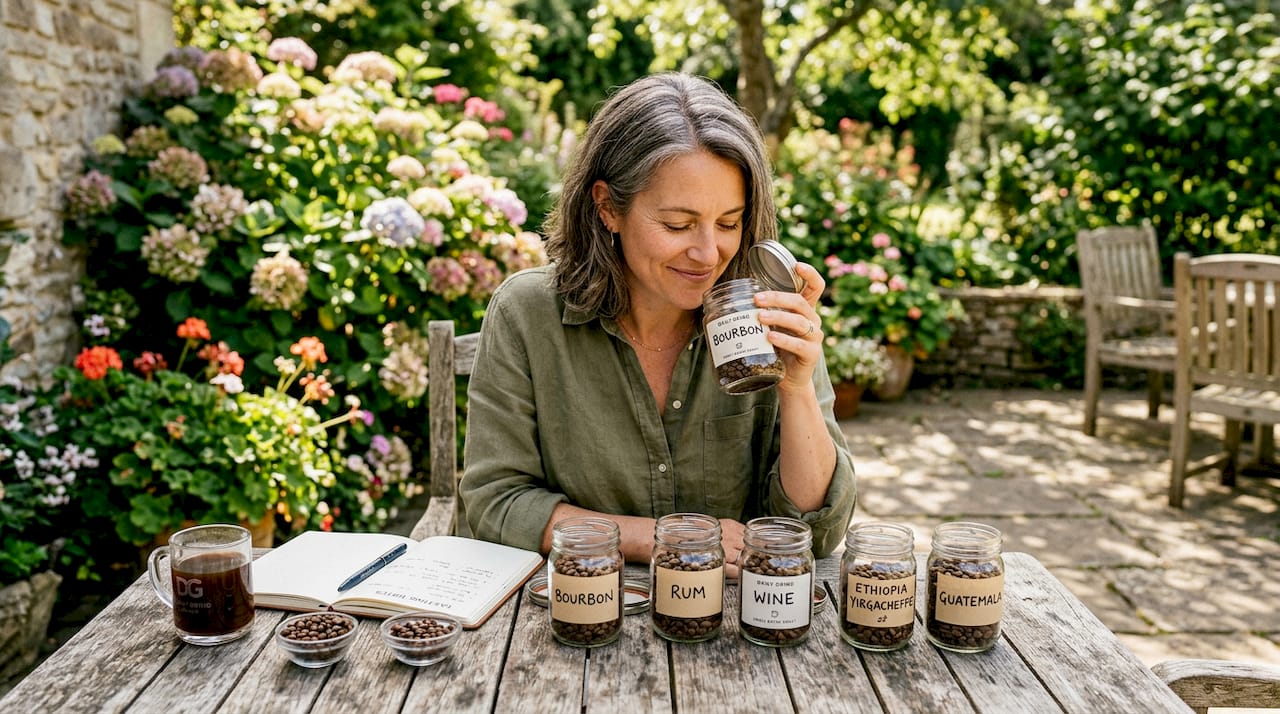
Wine barrels remain underrated in the barrel aged category. A coffee aged in a red wine barrel takes on tannin-like dryness and cherry brightness that feels closer to a wine-forward natural coffee than anything spirit-adjacent.
Pro Tip: If you prefer a darker, bolder cup, lean toward bourbon or rum barrel aging in a medium-dark roast. If you want brightness and complexity without intensity, white wine or rye barrels in a medium roast will serve you better. Matching barrel type to your existing flavor preferences is the fastest path to a coffee you’ll love immediately.
Barrel aging vs. other flavoring methods
Here’s where a lot of coffee drinkers get confused about what they’re actually buying. Barrel aged coffee is fundamentally different from flavored coffee, and the distinction is not just marketing language. It’s a matter of process, integrity, and what ends up in your cup.
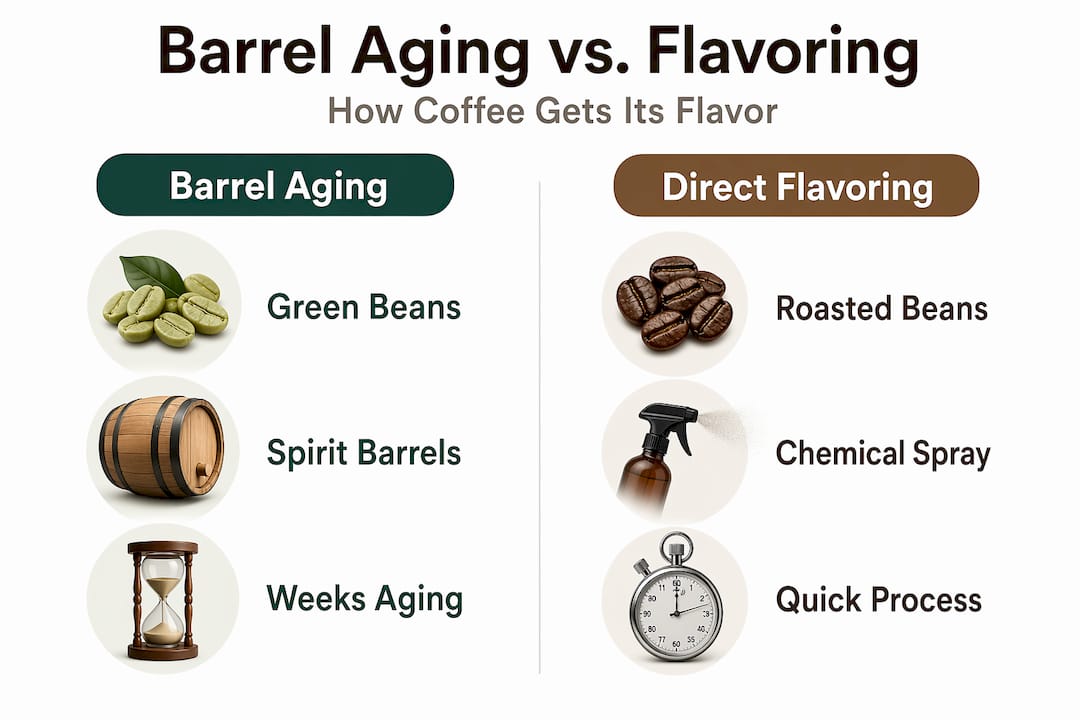
Standard flavored coffees are made by spraying chemical flavor compounds directly onto roasted beans after the roast. Those compounds sit on the surface of the bean and dissolve into your brew. The coffee itself contributes very little of that “hazelnut” or “vanilla” you’re tasting. It’s mostly additive.
Barrel aging works from the inside out. The volatile aromatic compounds from the wood and spirit residue penetrate the bean’s cellular matrix while it’s still green, before any roasting has occurred. By the time you’re brewing, those flavors are structurally embedded in the coffee itself.
A few distinctions worth knowing:
- No artificial additives. True barrel aged coffee contains no added flavoring agents, syrups, or extracts.
- Alcohol-free by default. Any residual ethanol from the barrel evaporates entirely during the roasting process. The final product is non-alcoholic.
- Greater complexity. Because the bean absorbs compounds over weeks rather than being coated in minutes, the flavor development is layered and nuanced in ways synthetic flavoring cannot replicate.
- Higher production cost. Barrel sourcing, controlled aging environments, and customized roast profiles add cost. Genuine barrel aged coffee is not cheap to produce, which is one reason to be skeptical of bargain-priced products claiming this process.
- Flavor varies by batch. Unlike synthetic flavoring where every bag tastes identical, barrel aged coffee naturally varies between batches due to barrel condition, seasonal bean variation, and aging duration.
For a broader look at how production method shapes taste from bean to cup, the guide on artisanal coffee flavor profiles breaks down the sensory differences in useful detail.
How to brew barrel aged coffee
Getting the most out of barrel aged coffee means choosing a brewing method that lets those layered flavors fully develop. High-pressure, fast-extraction methods tend to flatten the complexity you paid for. Slow-extraction and immersion methods do the opposite.
Here are the approaches that work best:
- French press. Full immersion for 4 minutes at 200°F lets the heavier, oil-soluble compounds from the barrel aging come through cleanly. You get the full body and sweetness. Use a coarse grind.
- Cold brew. Steeping coarsely ground barrel aged coffee for 16 to 20 hours in cold water produces an exceptionally smooth result. The low temperature pulls sweetness and body while keeping bitterness almost entirely out of the equation. Bourbon barrel-aged coffee is particularly well-suited to cold brew because of its natural sweetness and chocolate depth.
- Pour over. A medium-coarse grind with water at 195 to 205°F works well for lighter barrel aging styles, particularly wine and rye barrel variants. Pour over keeps the cup cleaner and more aromatic.
- AeroPress. A shorter brew time (1 to 2 minutes) at 205°F with a medium grind is ideal for an intense, concentrated cup. Good for tasting barrel notes without the volume of a full French press.
Pro Tip: Brew the same barrel aged coffee hot and as a cold brew from the same batch, side by side. The flavor contrast is dramatic. Cold brew will emphasize chocolate and caramel. The hot version will show you the oak and spice. It’s the best way to fully understand what the barrel contributed.
Pairing your barrel aged cup with the right food also amplifies the experience. The guide on pairing coffee with desserts covers which flavors complement barrel aged profiles well, from dark chocolate to caramelized nuts.
Choosing, storing, and enjoying barrel aged coffee
Once you decide to invest in a quality bag, a few practical habits will protect your purchase.
-
Read the label carefully. Look for barrel type (bourbon, rum, rye, wine), aging duration, green bean origin, and roast date. Producers serious about quality include these details. If the label just says “barrel aged flavor” without specifics, that’s a red flag.
-
Buy in small batches. Barrel aged coffee is best within 2 to 4 weeks of roasting. Buying smaller, more frequent quantities beats purchasing a large bag that sits for months and slowly loses aroma.
-
Store it right. Keep your coffee in an airtight container away from direct light, heat sources, and humidity. The best storage practices for gourmet blends apply here with even more importance, since barrel-derived aromatics are more volatile than those in standard roasts.
-
Taste it black first. Before adding milk or sweetener, taste the coffee on its own. The barrel character is most perceptible without masking. Once you’ve identified the notes you’re experiencing, add what you like.
-
Compare batches over time. If you find a producer you trust, try their seasonal releases side by side. Natural variation in barrel condition and bean harvest creates real, interesting differences between bags from the same producer.
My take on why barrel aged coffee matters
I’ve tasted enough specialty coffee to recognize when something is genuinely different, not just marketed that way. Barrel aged coffee earns its reputation. What changed my perspective wasn’t the flavor alone, it was understanding the production discipline required to do it correctly. The roasting adjustments alone, managing extra moisture, slowing the heat application to protect delicate barrel-derived aromatics, require a level of roaster attention most standard production batches never see.
What I find most coffee enthusiasts overlook is the storage window. They invest in a quality bag and then let it sit for six weeks before finishing it. By that point, the volatile compounds that made the coffee remarkable have dissipated. The best barrel aged coffee experiences I’ve had came from bags consumed within two weeks of roast date.
My honest view on the trend: barrel aged coffee belongs in the specialty tier permanently, not as a novelty. The crossover between craft spirits culture and specialty coffee culture has produced something neither category could create alone. That’s worth paying attention to.
— Jonathan
Experience barrel aged coffee from Variateacoffee

Variateacoffee’s Whiskey Barrel-Aged Coffee is aged in authentic charred oak barrels and roasted to order, so every bag arrives at peak flavor. You’re not getting warehouse stock. You’re getting a roast timed to your order, with all the vanilla, bourbon, and toasted oak character the aging process was designed to deliver without any alcohol. For those ready to explore beyond a single product, the full Variatea Coffee & Tea Collections include flavor-forward blends and artisanal teas built for adventurous brewers who want something genuinely different in their cup.
FAQ
What exactly is barrel aged coffee?
Barrel aged coffee is made by placing green, unroasted coffee beans inside previously used spirit or wine barrels for 2 to 8 weeks. The beans absorb aromatic compounds from the wood and spirit residue before being roasted and brewed.
Does barrel aged coffee contain alcohol?
No. Any residual ethanol from the barrel evaporates completely during the roasting process. The finished coffee is entirely non-alcoholic; only the wood and spirit-derived flavor compounds remain.
What does barrel aged coffee taste like?
The flavor depends on the barrel type. Bourbon barrels deliver vanilla, caramel, and chocolate notes. Rum barrels add tropical sweetness, while wine barrels bring fruit-forward complexity and dry tannin character.
What is the best way to brew barrel aged coffee?
French press and cold brew are the two methods that best highlight barrel-derived flavors. Both use longer extraction times that allow heavier aromatic compounds to fully develop. Brew at 195 to 205°F for hot methods.
How is barrel aged coffee different from flavored coffee?
Flavored coffee is made by spraying synthetic compounds onto roasted beans after roasting. Barrel aged coffee develops its flavor organically, with aromatic compounds absorbed into the green bean’s cellular structure before any roasting occurs. The result is far more complex and entirely additive-free.