

What is a home barista? Your guide to cafe-style brews
Most people assume that truly great coffee lives exclusively behind a commercial espresso machine, operated by someone with a barcode tattoo and a practiced pour. That assumption is wrong. A home barista is someone who crafts high-quality, cafe-style drinks at home using specialized equipment and refined technique, and many home setups now rival what you get at your local shop. This guide walks you through everything: what the practice actually means, the tools that make it possible, the mechanics that separate good coffee from great coffee, and the creative flavor possibilities that make it genuinely exciting.
Table of Contents
- What is a home barista?
- Key tools and equipment every home barista needs
- Mastering the core mechanics of cafe-style brewing at home
- Expert tips and advanced techniques: elevating your home barista craft
- Exploring flavor innovation: blending coffee and tea at home
- Enhance your home barista journey with Variatea Coffee
- Frequently asked questions
Key Takeaways
| Point | Details |
|---|---|
| Home barista definition | A home barista crafts cafe-style drinks using pro-level tools and methods. |
| Essential equipment | Espresso machines, quality grinders, and milk frothers are core for home barista setups. |
| Mastering mechanics | Precision grinding, temperature control, and extraction are key to flavor-rich brews. |
| Expert tips | Advanced baristas weigh doses, optimize water chemistry, and adapt to different milks. |
| Flavor innovation | Creative blending and layering enable unique, artisanal coffee and tea experiences at home. |
What is a home barista?
The term “home barista” does not refer to a product, a brand, or a piece of equipment. It describes a person and a practice. A home barista is someone who goes beyond pressing a button on a drip machine and instead applies intentional technique, quality ingredients, and calibrated equipment to produce cafe-level results in their own kitchen.
What separates a home barista from a casual coffee maker comes down to three things:
- Intentionality: Every variable, grind size, dose, temperature, and timing, is considered and adjusted.
- Equipment investment: Tools are chosen to give control over the brewing process, not just convenience.
- Flavor curiosity: The motivation is taste. Home baristas explore coffee blending techniques and small-batch roasts because they genuinely want something better in the cup.
One common misconception worth clearing up: searching for “At Home Barista” as a product or brand turns up no specific branded product. The phrase is purely about the person and the craft.
“The home barista movement is about reclaiming the ritual of coffee. It is not about owning the most expensive machine. It is about understanding what you are doing and why.”
This mindset is exactly what drives enthusiasts toward artisanal, flavor-forward experiences rather than commodity coffee.
Key tools and equipment every home barista needs
Once you understand the concept, the next question is always: what do I actually need? The answer depends on your goals and budget, but certain tools are non-negotiable if you want cafe-quality results.
| Tool | Beginner option | Advanced option |
|---|---|---|
| Espresso machine | Entry-level pump machine | Dual boiler with PID control |
| Grinder | Blade grinder (not ideal) | Burr grinder with stepless adjustment |
| Scale | Basic kitchen scale | 0.1g precision espresso scale |
| Kettle | Standard electric kettle | Variable temperature gooseneck |
| Milk frother | Handheld frother | Steam wand on espresso machine |
Here is what each tool actually does for your cup:
- Espresso machine: Controls pressure and temperature for extraction. This is the centerpiece of most home setups.
- Burr grinder: Produces consistent particle size, which is critical for even extraction. Blade grinders create uneven chunks that ruin flavor.
- Precision scale: Lets you weigh your dose and yield to hit repeatable ratios every time.
- Variable temperature kettle: Essential for pour-over and tea brewing, where temperature directly affects flavor.
- Milk frother or steam wand: Creates microfoam for lattes and cappuccinos. Texture matters as much as taste.
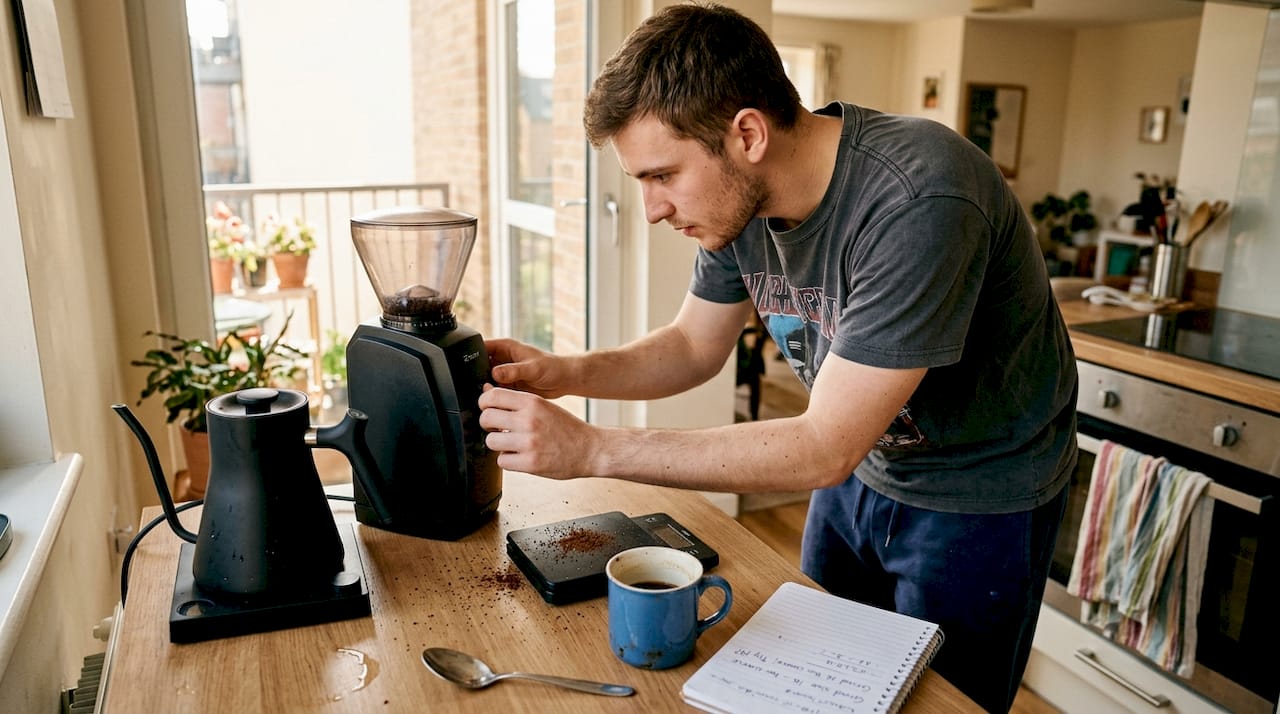
If you are just starting out, a solid grinder and a scale will improve your coffee more than any other purchase. You can explore brewing techniques with even a modest setup. For those who prefer a no-fuss entry point, quality instant coffee options can bridge the gap while you build your station.
Mastering the core mechanics of cafe-style brewing at home
Equipment is only half the story. The other half is knowing how to use it. These are the mechanics that actually determine whether your espresso tastes like a cafe shot or a bitter disappointment.
- Grind fresh, weigh everything. Use an 18 to 22g dose of freshly ground beans. Pre-ground coffee goes stale within minutes of exposure to air.
- Nail your temperature. The ideal extraction temperature is around 200°F (93°C). Too hot and you scorch the grounds; too cool and you under-extract.
- Hit 9 bars of pressure. Professional espresso machines extract at 9 bars. Pre-infusion, a brief low-pressure soak before full pressure, improves evenness.
- Time your shot. A well-pulled espresso shot runs 25 to 30 seconds for a 1:2 ratio (18g in, 36g out).
- Texture your milk properly. Microfoam should feel like wet paint, silky and glossy, not bubbly or stiff.
Extraction yield is the percentage of coffee solids dissolved into your cup. The target range is 18 to 22%. Below that and the shot tastes sour and thin; above it and bitterness takes over.
Setup cost reality check: Beginner setups run $100 to $300 (grinder, scale, kettle). Intermediate setups with an entry espresso machine land between $500 and $1,500. Advanced dual-boiler rigs push $2,000 and beyond.
Once you have the basics dialed in, you can start experimenting with spice-infused coffee blending or use a flavor layering guide to build more complex cups. The mechanics give you the foundation; creativity gives you the destination. For a deeper look at building taste, the enhancing coffee flavors guide is a practical next step.
Expert tips and advanced techniques: elevating your home barista craft
Once the fundamentals are solid, the details start to matter more. These are the refinements that separate a good home barista from a great one.
Grind precision is everything. A
Water chemistry is underrated. Most home baristas overlook this completely. If you use reverse osmosis or very soft tap water, you need to remineralize it. Minerals in water act as carriers for flavor compounds. Without them, even a perfect extraction tastes flat.
Pro Tip: Add a small amount of Third Wave Water mineral packets to distilled water for a consistent, cafe-calibrated brewing base. It costs almost nothing and makes a noticeable difference.
Manual vs. automated machines. This is a genuine debate in home barista circles. Lever machines like the Flair give you hands-on pressure profiling and a tactile connection to the shot. Automated machines like the Breville Barista Express prioritize consistency and ease. Neither is wrong. It depends on whether you want control or repeatability.
Here are the most common problems and their fixes:
- Sour, thin shot: Grind finer or extend extraction time.
- Bitter, harsh shot: Grind coarser or shorten extraction time.
- Flat, bubbly milk foam: Lower the steam wand tip just below the surface and introduce air in the first two seconds only.
- Oat milk not texturing well: Oat milk requires a lower steaming temperature, around 130 to 140°F, compared to dairy at 150 to 155°F.
“Taste is the ultimate benchmark. Rigid recipes are a starting point, not a finish line.”
Exploring the coffee complexity guide will help you understand why certain beans respond differently to the same technique. And if you want to understand what goes into a well-constructed coffee blend, that knowledge directly informs how you dial in your grinder. Building a consistent coffee ritual around these habits is what turns a hobby into a genuine craft. For inspiration on what to brew, check out these small-batch flavor picks.
Exploring flavor innovation: blending coffee and tea at home
Here is where home barista culture gets genuinely exciting. Once you have the mechanics down, the creative possibilities open up fast. Blending coffee and tea, layering flavors, and experimenting with artisanal ingredients is where your setup becomes a real playground.
Some approaches worth trying:
- Spiced espresso pulls: Add a pinch of cardamom or cinnamon to your grounds before tamping. The heat of extraction draws out the oils beautifully. This is the foundation of spice-infused coffee blending.
- Tea-based lattes: Brew a concentrated hojicha or matcha base and steam oat milk over it. The toasty, caramel notes of hojicha pair surprisingly well with a light foam.
- Layered cold drinks: Pour a chilled hibiscus berry tea over ice, then float a cold brew concentrate on top. The density difference creates a visual and flavor gradient.
- Flavor-forward pour-overs: Use the flavor layering guide to match bean origin to brewing method. A fruity Ethiopian pour-over hits differently than a chocolatey Brazilian one.
- Barrel-aged cold brew: Steep a whiskey barrel-aged coffee as a cold brew overnight. The oak and vanilla notes intensify with time and cold water extraction.
The key to all of this is starting with quality ingredients. Artisanal coffee blending techniques only work when the base materials are worth blending. Commodity coffee and generic tea bags will not give you the flavor complexity you are chasing.
Enhance your home barista journey with Variatea Coffee
You have the knowledge. Now you need ingredients that are actually worth brewing. At Variatea Coffee, we build every product around the adventurous brewer who wants more than what a grocery shelf offers.

Our artisanal tea collection includes hojicha, matcha, Moroccan mint, and hibiscus berry, each sourced and crafted for the kind of flavor complexity that rewards a skilled hand. For coffee lovers, our whiskey barrel-aged coffee delivers deep smoky bourbon and vanilla notes that make every pull feel like an event. Not sure where to start? The single origin favorites sample pack lets you explore multiple profiles before committing to a full bag. Your setup deserves ingredients that match your ambition.
Frequently asked questions
What is the difference between a home barista and a typical coffee maker?
Home baristas use specialized equipment and technique to craft cafe-quality drinks, while typical coffee makers rely on basic machines and standard recipes without intentional calibration.
How much does it cost to set up a home barista station?
A beginner setup costs $100 to $300 for a grinder, scale, and kettle; intermediate setups with an espresso machine run $500 to $1,500; advanced rigs exceed $2,000.
Does water quality really impact coffee flavor?
Yes. Water chemistry affects extraction significantly, and remineralizing soft or reverse osmosis water is often necessary to achieve consistent, full-flavored results.
Can I use milk alternatives for cafe-style drinks as a home barista?
Absolutely. Oat milk requires lower steaming temperatures, around 130 to 140°F, to achieve the right silky texture without scorching or losing body.