

Unlock Coffee Cupping: Discover Artisan Flavors at Home
TL;DR:
- Coffee cupping is a simple, structured tasting method anyone can learn at home to analyze coffee.
- Regular cupping improves sensory skills, helping you better understand flavor, aroma, and balance.
- Using artisan blends enhances flavor discovery and deepens appreciation for coffee’s complexity.
Coffee cupping has a reputation for being the exclusive domain of Q-graders and roastery professionals, but that idea is holding a lot of great home brewers back. The truth is, cupping is simply a structured way to taste coffee, and anyone with a curious palate and a few basic tools can do it well. Whether you’re chasing the smoky depth of a barrel-aged roast or trying to identify what makes one single-origin bean taste like dark chocolate and another like citrus, cupping gives you a reliable framework. This guide breaks down everything you need to know, from the basics of the process to practical ways you can use it to level up your everyday brew.
Table of Contents
- What is coffee cupping? The basics explained
- The coffee cupping process: Step-by-step guide
- Sensory evaluation: Unlocking coffee’s flavors and aromas
- Applying coffee cupping at home: Ideas and benefits
- A fresh take: Why home cupping matters for every coffee lover
- Ready to explore flavors? Try Variatea Coffee blends
- Frequently asked questions
Key Takeaways
| Point | Details |
|---|---|
| Cupping demystified | Coffee cupping is an approachable process for anyone eager to explore flavor complexity. |
| Step-by-step guide | Clear instructions help you start cupping at home with confidence. |
| Sensory empowerment | Cupping sharpens your palate and makes every brew more rewarding. |
| Artisan flavor exploration | Use cupping to discover new blends and tastes in specialty coffee. |
What is coffee cupping? The basics explained
Coffee cupping is a standardized tasting method used to evaluate the aroma, flavor, body, acidity, and aftertaste of brewed coffee. Think of it as a structured sensory audit. Professionals use it to assess quality before buying green beans, and roasters use it to dial in their roast profiles. But the method itself isn’t locked behind a credential. It’s a repeatable, learnable process that rewards attention and practice.
The biggest distinction worth understanding is the difference between specialty and commercial cupping. In specialty coffee, SCA specialty coffee grading sets the benchmark at 80 out of 100 points for a coffee to qualify as “specialty grade,” while commercial cupping focuses more on identifying defects and ensuring cleanliness rather than chasing high scores. A newer framework called the Coffee Value Assessment (CVA) is pushing the field further by using sensory research to establish precise thresholds for defects. That’s a meaningful shift because it means flavor evaluation is becoming more science-backed and less subjective over time.
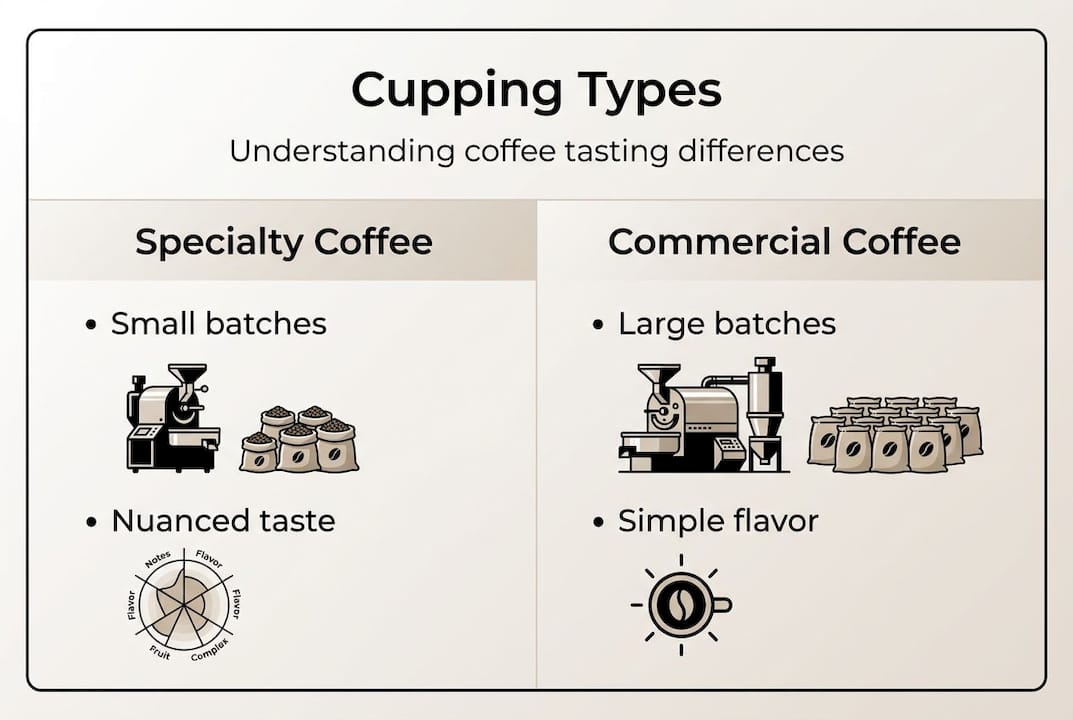
For home brewers, understanding this gap between specialty and commercial coffee is one of the most useful things you can do for your coffee quality guide journey. It explains why two coffees at similar price points can taste completely different and why some blends feel flat while others seem to have layers.
Specialty vs. commercial cupping at a glance:
| Feature | Specialty cupping | Commercial cupping |
|---|---|---|
| Scoring system | 80+ out of 100 | Defect-based |
| Primary goal | Flavor discovery | Quality control |
| Who uses it | Roasters, enthusiasts | Large-scale buyers |
| Sensory focus | Aroma, acidity, body, finish | Cleanliness, absence of defects |
Here’s what cupping evaluates at a high level:
- Fragrance and aroma: Dry grounds vs. wet brew smell
- Flavor: The overall taste impression
- Aftertaste: What lingers after you swallow
- Acidity: Brightness or liveliness in the cup
- Body: The weight and texture of the liquid
- Balance: How all elements work together
Pro Tip: Start with two coffees side by side during your first cupping session. Contrast makes differences easier to detect and helps you build vocabulary faster.
Now that we’ve unlocked why cupping matters, let’s examine the process step by step.
The coffee cupping process: Step-by-step guide
Cupping follows a consistent sequence, and that consistency is what makes it powerful. When every variable is controlled, the only thing that changes between cups is the coffee itself. Here’s how to run a session at home without any professional equipment beyond what you probably already own.
- Grind your coffee coarse. Use a medium-coarse grind, similar to what you’d use for a French press. Aim for about 8.25 grams of coffee per 150 milliliters of water.
- Smell the dry grounds. Before adding water, take a long, slow inhale over each cup. This is the fragrance stage. Note anything floral, earthy, nutty, or sweet.
- Add hot water. Pour water just off the boil (around 200°F) directly over the grounds. Start a timer immediately.
- Let it steep for 4 minutes. Don’t stir. Let a crust form on the surface.
- Break the crust. At 4 minutes, use a spoon to gently push through the crust while leaning in to smell the wet aroma. This is one of the most revealing moments in the process.
- Skim the surface. Remove the floating grounds and foam with two spoons.
- Taste by slurping. Use a cupping spoon to scoop a small amount and slurp it forcefully. This sprays the liquid across your entire palate and helps you detect more nuance.
- Score and take notes. Rate each attribute and write down what you notice, even if it’s just “tastes like walnuts” or “bright like lemonade.”
For anyone building out their setup, checking home barista essentials will help you prioritize the right tools without overspending. And if you want to go deeper on building complexity in the cup, the flavor layering guide is a great next read.
Consistency is everything here. The coffee defect thresholds used in professional cupping exist precisely because small inconsistencies in preparation can skew your results. Use filtered water, weigh your coffee, and keep your water temperature steady across all cups.
Pro Tip: The most common beginner mistake is rushing the crust break. Wait the full 4 minutes. Rushing it mutes the wet aroma, which is where a lot of the interesting flavor signals live.
With the basics in mind, it’s time to follow the process and experience cupping for yourself.
Sensory evaluation: Unlocking coffee’s flavors and aromas
Once you’ve run a few sessions, the real work begins: learning to describe what you’re tasting with enough precision to be useful. You don’t need a poet’s vocabulary. You need a practical set of reference points.

Start with broad categories before going narrow. Is the coffee fruity or earthy? Sweet or bitter? Bright or flat? From there, you can move into more specific notes like dried cherry, brown sugar, cedar, or dark cocoa. The brewing ritual tips on building a consistent tasting practice can help you develop this habit over time.
Common tasting notes by category:
- Fruity: Blueberry, citrus, dried cherry, peach
- Nutty/chocolatey: Hazelnut, almond, dark chocolate, cocoa powder
- Floral: Jasmine, rose, lavender
- Earthy/savory: Cedar, tobacco, leather, mushroom
- Sweet: Caramel, brown sugar, honey, vanilla
- Spicy: Cinnamon, clove, black pepper
Artisan coffees tend to express several of these categories at once, often shifting as the cup cools. Commercial coffees usually present one or two dominant notes with less complexity. That difference is exactly why sensory research in coffee now focuses on quantifying what separates a flat cup from a layered one.
“The CVA framework moves beyond simple scoring to identify precise sensory thresholds, giving enthusiasts a more reliable map for understanding what makes a coffee truly exceptional.”
Artisan vs. commercial flavor profiles:
| Attribute | Artisan coffee | Commercial coffee |
|---|---|---|
| Flavor complexity | Multi-layered, evolving | Single-note, consistent |
| Aroma depth | Distinct, origin-specific | Mild, generic |
| Acidity | Bright, structured | Low or flat |
| Aftertaste | Long, nuanced | Short, sometimes bitter |
One practical way to sharpen your sensory acuity is to taste coffee at different temperatures. A coffee that smells like citrus when hot might reveal a caramel sweetness as it cools. Letting your cup sit for 10 to 15 minutes before finishing it tells you a lot about the coffee’s complexity and balance.
After following the process, you’ll sharpen your sensory skills. Now, let’s decode flavors like an expert.
Applying coffee cupping at home: Ideas and benefits
Cupping isn’t just a one-time experiment. It’s a practice that compounds over time. The more sessions you run, the faster your palate develops and the more confident you become in choosing and brewing coffees you’ll actually love.
Here’s how home brewers are putting cupping to real use:
- Blind tastings: Remove labels and taste coffees without knowing what they are. This removes bias and forces you to rely purely on your senses.
- Origin comparisons: Cup the same roast level from two different countries side by side. Ethiopian vs. Colombian, for example, reveals how geography shapes flavor.
- Roast level experiments: Compare light, medium, and dark roasts of the same bean to understand how heat transforms flavor.
- Blend building: Cup individual components before combining them to predict how they’ll interact in a blend.
- Pre-purchase evaluation: Use cupping notes from roasters to predict whether a new coffee will match your preferences before buying a full bag.
The benefits of building a regular cupping habit are real:
- You stop wasting money on coffees that don’t suit your taste
- You develop a personal flavor vocabulary that makes ordering and brewing more intentional
- You start noticing how grind size, water temperature, and brew time affect flavor expression
- You gain the confidence to experiment with unique coffee rituals that go beyond the standard morning cup
The specialty grading benchmark of 80 or above isn’t just a number for buyers. It’s a useful mental anchor for home brewers too. When you start recognizing what an 80-point cup feels like compared to a 70-point one, your whole relationship with coffee shifts.
Now that you’ve built sensory skills, let’s put coffee cupping into practical use at home.
A fresh take: Why home cupping matters for every coffee lover
Most cupping guides treat the process like a gatekeeping ritual, something you do once you’ve earned the right by investing in expensive gear or taking a certification course. We think that’s backwards.
The real value of cupping isn’t in the score. It’s in the attention it trains. When you slow down and actually taste your coffee instead of just drinking it, you start noticing things that change how you brew, what you buy, and how much you enjoy each cup. That’s not a professional skill. That’s just being present.
What most guides miss is that cupping is most powerful when it’s personal. You’re not trying to match a Q-grader’s scorecard. You’re building your own flavor map. The artisanal blending insights that come from understanding how individual components taste on their own are the same insights that make your home brewing genuinely better. Cupping democratizes expertise. And the only barrier left is choosing to start.
Ready to explore flavors? Try Variatea Coffee blends
If you’re ready to put your cupping skills to work, the coffee you start with matters. Artisan blends with distinct, layered profiles give you more to discover and more to learn from in every session.

At Variatea Coffee, we build blends specifically for curious brewers. The Max Caf Blend is a bold, high-caffeine option that holds up beautifully under cupping scrutiny. The Whiskey Barrel Aged brings deep oak, vanilla, and smoky bourbon notes that make sensory evaluation genuinely exciting. And the Gourmet Donut Shop is a sweet, approachable blend perfect for first-time cuppers building their palate. Each one was designed to reward the kind of attention that cupping teaches you to give.
Frequently asked questions
Can coffee cupping be done without professional equipment?
Yes, you can run a solid cupping session at home using bowls, standard spoons, filtered water, and a kitchen scale. The specialty cupping process is designed to be replicable, not expensive.
How is coffee cupping different from regular tasting?
Cupping uses a fixed ratio, controlled temperature, and a structured scoring system to make comparisons reliable. Regular tasting is informal and doesn’t control for variables the same way, which makes it harder to draw consistent conclusions.
What should I focus on during my first coffee cupping?
Focus on aroma first, then broad flavor categories like fruity, nutty, or sweet. Comparing two coffees side by side makes differences easier to spot and helps you build a working vocabulary faster than tasting one at a time.
How can I improve my sensory skills for coffee cupping?
Practice consistently, write tasting notes after every session, and actively explore artisan blends with distinct profiles. The CVA sensory research shows that structured, repeated exposure is the most reliable way to build genuine sensory acuity over time.