

Unlock unique coffee rituals: expert brews & premium flavor
TL;DR:
- Brewing method mastery and attention to detail create better coffee experiences than expensive equipment.
- Precise techniques, like pour-over height or Turkish boiling, harness physics to enhance flavor and texture.
- Ritual and knowledge of brewing variables transform simple coffee into a personal, memorable ritual.
Most coffee lovers assume a stronger, richer cup demands more beans, a pricier grinder, or a machine with more buttons than a cockpit. That assumption is wrong. Science and centuries of tradition have quietly solved the flavor puzzle in ways that don’t cost a fortune. Whether you’re chasing clarity, texture, body, or pure intensity, the method you choose shapes the cup far more than the equipment budget. This guide walks you through four distinct brewing rituals, each backed by real technique and surprising physics, so you can stop guessing and start brewing with genuine intention.
Table of Contents
- Pour-over mastery: Science-driven strength and clarity
- Turkish coffee: Ritual and texture through tradition
- French Press evolution: Cleaner cup with Hoffmann’s method
- Moka pot: Espresso-like adventure at home
- Why home rituals matter more than fancy machines
- Elevate your daily ritual with Variatea Coffee
- Frequently asked questions
Key Takeaways
| Point | Details |
|---|---|
| Pour-over strength | A slow, steady pour unlocks stronger coffee flavors without extra beans. |
| Turkish texture | Boiling fine grounds on low heat produces thick, creamy, and aromatic coffee. |
| Clean French Press | Hoffmann’s gentle method delivers clarity and body in every cup. |
| Moka pot control | Medium heat and careful timing ensure balanced, espresso-like results. |
| Ritual over equipment | Memorable coffee experiences depend on method and creativity, not expensive machines. |
Pour-over mastery: Science-driven strength and clarity
Now that you’ve seen coffee isn’t just about beans, let’s break down how pour-over science reveals another layer of brewing magic.
Most people think pour-over is just a slow, pretty way to make drip coffee. It’s actually a precision tool. The way water moves through the grounds determines how much flavor compounds dissolve, and even a small change in pouring height or speed can shift the entire taste profile of your cup.

Here’s the key insight: pour-over coffee achieves optimal extraction through an “avalanche” mixing effect created by slow, steady pouring from height, producing stronger flavor without using extra beans. When water falls from a few inches above the bed, it creates turbulence that pushes fresh water into contact with more ground particles. The result is a more even, thorough extraction. That’s not a brewing tip from a barista blog. That’s physics.
To get the most from your pour-over flavor techniques, follow these steps:
- Bloom first. Pour just enough hot water (about twice the weight of your grounds) to saturate the bed. Wait 30 to 45 seconds. This releases trapped CO2 and primes the grounds for even extraction.
- Pour slowly from height. Hold your kettle 3 to 4 inches above the dripper. Use a steady, circular motion. Don’t rush.
- Pour in controlled pulses. Add water in 3 to 4 pours, letting the level drop slightly between each. This keeps the avalanche mixing effect working throughout the brew.
- Target a 3 to 4 minute total brew time. Too fast means under-extraction. Too slow risks bitterness.
- Use water at 200°F (93°C). Just off the boil. Too hot scorches; too cool under-extracts.
The most common mistake? Pouring too fast and too close to the grounds. This flattens the bed, bypasses the avalanche effect, and produces a thin, weak cup regardless of how good your beans are.
Pro Tip: If your pour-over tastes flat, try raising your pour height by 2 inches before changing anything else. You’ll notice the difference immediately.
For anyone serious about flavor-forward brewing, pour-over is the method that rewards patience the most. Every variable is in your hands.
Turkish coffee: Ritual and texture through tradition
With clarity and strength explored, let’s move into a tradition where texture and ritual are everything.
Turkish coffee is one of the oldest brewing methods still practiced daily across the world, and it produces a cup that no filter method can replicate. The texture is thick, almost syrupy. The aroma is intense. And the experience of drinking it is deliberate and slow by design.
What makes it distinct is the grind and the process. Turkish coffee is boiled in a cezve (a small, long-handled pot) using an extra-fine powder grind. Slow, low-heat heating creates a thick foam called köpük, and because the grounds remain in the cup, the texture stays rich and heavy throughout. This is unfiltered coffee in its purest form.
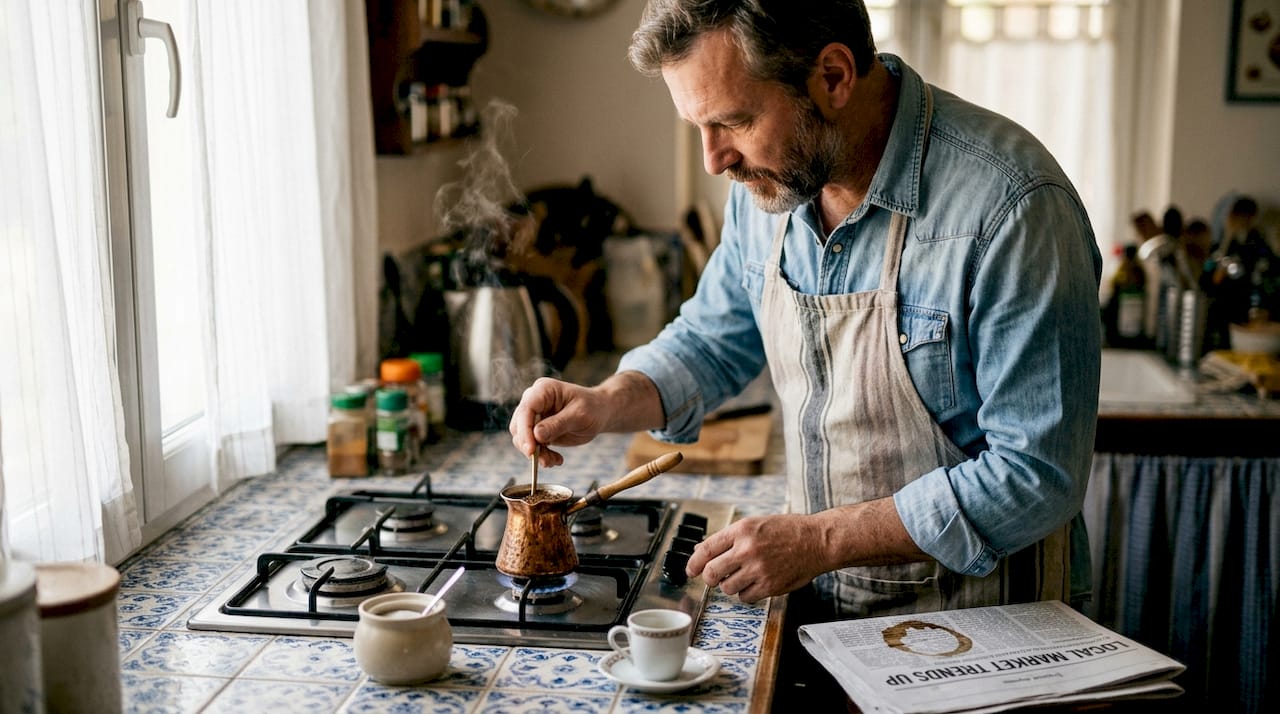
Here’s a comparison of what sets Turkish coffee apart from other methods:
| Feature | Turkish coffee | Standard drip |
|---|---|---|
| Grind size | Extra-fine (powder) | Medium |
| Filtration | None | Paper or mesh |
| Foam | Yes (köpük) | No |
| Texture | Thick, syrupy | Light, clean |
| Brew vessel | Cezve | Drip machine |
To replicate authentic Turkish coffee steps at home:
- Measure 1 heaping teaspoon of extra-fine ground coffee per 3 oz of cold water.
- Add sugar now if desired (not after brewing).
- Heat over the lowest flame possible, stirring gently until the foam begins to rise.
- Remove from heat just before it boils. Let the foam settle, then return to heat once more.
- Pour slowly into a small cup, foam first.
The sensory reward is layered. You get the Turkish coffee texture on your tongue, the deep aroma rising from the cup, and the ritualistic slowness that turns a morning drink into a genuine moment.
Pro Tip: Never let Turkish coffee reach a full boil. The foam is the signal. Once it rises to the rim, pull it off the heat immediately. Boiling destroys both the foam and the flavor.
For adventurous brewers curious about bold coffee rituals, Turkish coffee is a must-try experience.
French Press evolution: Cleaner cup with Hoffmann’s method
After exploring texture, let’s upgrade body and clarity with a scientific approach to French Press.
The French Press has a reputation problem. Most people either love it for its bold body or avoid it because of the gritty sediment. James Hoffmann, a World Barista Champion and coffee educator, fixed both issues with a simple technique adjustment that most home brewers haven’t heard of.
Here’s how the classic method compares to Hoffmann’s refined approach:
| Step | Classic method | Hoffmann’s method |
|---|---|---|
| Steeping | 4 min, stirred | 4 min, undisturbed |
| Crust break | Immediate press | Gentle break, scoop foam |
| Settling time | None | 5 to 8 minutes |
| Plunge depth | Full press | Shallow, to surface only |
| Result | Murky, gritty | Clean body, less sediment |
The logic is elegant. By leaving the brew undisturbed during steeping, the grounds settle naturally. Breaking the crust gently and letting everything settle for another 5 to 8 minutes means the fine particles sink to the bottom before you plunge. Then, plunging shallowly to the surface only keeps those settled grounds from being forced back into suspension.
Step-by-step for the clean French Press brewing experience:
- Add coarse-ground coffee (1:15 ratio by weight) and pour all hot water at once.
- Do not stir. Place the lid on loosely and steep for 4 minutes.
- Break the crust with a spoon, then scoop off the foam and floating grounds.
- Let it settle undisturbed for 5 to 8 more minutes.
- Press the plunger just to the surface of the liquid. Pour immediately.
“The goal isn’t to press the grounds down. The goal is to create a barrier that lets you pour without disturbing what’s settled.” This is the insight that changes how you think about the French Press entirely.
For a richer French Press flavor experience, this method delivers both the body you love and the clarity you didn’t think was possible. It also opens the door to layering French Press flavor with specialty blends.
Moka pot: Espresso-like adventure at home
With clarity and body explored, let’s see how you can capture espresso spirit with a stovetop adventure.
The Moka pot is one of the most misunderstood brewing tools in the home kitchen. People either overcook it into bitterness or underbrew it into something weak and sour. When you understand the pressure mechanics, the whole process clicks.
A Moka pot uses steam pressure of roughly 1.5 bar to push hot water through finely ground coffee, producing an espresso-like brew with intense aroma and rich body. That’s not true espresso (which needs 9 bar), but it’s the closest thing achievable on a stovetop without a machine.
Here’s how to get it right:
- Use filtered cold water in the bottom chamber, filled just below the safety valve.
- Grind fine but not powder-fine. Think espresso grind, but slightly coarser. Too fine and you choke the flow; too coarse and you lose intensity.
- Fill the basket loosely. Don’t tamp. Tamping increases resistance and risks uneven extraction.
- Use medium-low heat. High heat rushes the process and scorches the coffee before it can develop properly.
- Listen for the sputter. That gurgling sound means the water is nearly gone. Pull it off the heat immediately.
Pro Tip: Wrap the base of the Moka pot in a damp cloth after brewing to stop residual heat from over-extracting the last drops. This one small step eliminates most of the burnt flavor complaints.
For Moka pot blending experiments, this method pairs beautifully with bold, single-origin roasts. If you want to explore artisanal coffee for Moka pot brewing, look for medium-dark roasts with chocolate or nutty notes.
Why home rituals matter more than fancy machines
Having seen how method transforms every cup, let’s ask: what really matters for coffee adventure?
The coffee industry has spent decades convincing you that better gear means better coffee. A $400 grinder. A precision kettle. A machine that connects to your phone. And while quality tools help, they are not the variable that separates a forgettable cup from one you actually remember.
Method is. Attention is. Ritual is.
The precise control over brewing physics, whether that’s pour-over height for strength, Turkish ritual for texture, or Hoffmann’s settling technique for refinement, creates experiences that no automatic machine can replicate. Because machines remove the human variable. And the human variable is exactly what makes a cup feel personal.
When you pour slowly and watch the bloom expand, you’re paying attention. When you pull the cezve off the heat at the exact right moment, you’re learning. That engagement is what turns a daily habit into something you actually look forward to. Explore brewing ritual insights to understand why the ritual itself is the reward.
The most adventurous thing you can do as a home brewer isn’t buy a new machine. It’s master one method so well that you can feel when something’s off before you even taste it.
Elevate your daily ritual with Variatea Coffee
Every method in this guide deserves a coffee that can keep up with it. Pour-over rewards clarity and brightness. Turkish coffee demands depth and body. French Press opens up with complex, layered roasts. Moka pot thrives on bold, aromatic blends. The right coffee makes every technique shine brighter.

At Variatea Coffee, we’ve built our entire collection around the adventurous brewer. Whether you’re looking for instant coffee options for a quick ritual or want to experience the deep, smoky complexity of our whiskey barrel aged coffee, every blend is crafted to reward the curious palate. Browse our coffee collection and find the perfect match for your next brewing adventure.
{% include ‘youtube’ id: ‘mTyQWuYcg_k?si=wPv_8KdEmtrXq5gP’ %}
Frequently asked questions
How does pouring technique affect pour-over coffee flavor?
A slow, steady pour from height triggers the avalanche mixing effect, improving extraction and producing stronger, richer flavor without adding more beans.
What makes Turkish coffee so thick and creamy?
Slow, low-heat boiling in a cezve with an extra-fine powder grind creates the signature foam and thick texture, while unfiltered grounds remaining in the cup add even more body.
Is Hoffmann’s French Press method hard to master?
Not at all. Follow the timing precisely: steep 4 minutes undisturbed, break the crust, let it settle 5 to 8 minutes, then plunge shallowly for a clean, flavorful result.
How can I avoid bitterness with a Moka pot?
Use medium-low heat with a fine grind, and stop brewing the moment you hear the sputter. The Moka pot’s steam pressure does the work; your job is knowing when to pull it off the heat.
Do I need expensive equipment to create unique coffee experiences at home?
No. As these methods show, precise technique and ritual elevate flavor far more reliably than expensive machines ever will.