

Top coffee flavor tips for adventurous enthusiasts
TL;DR:
- Knowing your preferred flavor profile helps guide more satisfying coffee choices.
- Mastering brewing variables like water temperature and grind size unlocks optimal flavor extraction.
- Experimenting boldly with ingredients and food pairings turns brewing into a creative craft.
Most coffee drinkers settle for whatever lands in their mug. But if you’ve ever tasted a cup that stopped you mid-sip, you already know there’s a massive gap between ordinary coffee and something truly memorable. Unlocking that gap isn’t about luck. It’s about understanding flavor, mastering your brewing variables, and being willing to experiment boldly. This guide walks you through five practical strategies, from defining your personal flavor profile to pairing coffee with food, so every cup you brew becomes an experience worth savoring.
Table of Contents
- Understand and define your ideal flavor profile
- Master the art of brewing and extraction
- Layer flavors with creative ingredients and blends
- Pair and elevate coffee with food and confections
- Why true coffee adventure starts with bold experimentation
- Explore unique blends and flavor packs with Variatea Coffee
- Frequently asked questions
Key Takeaways
| Point | Details |
|---|---|
| Define your flavor goals | Knowing which taste notes excite you streamlines your journey to the perfect brew. |
| Experiment with brewing | Small changes to water, grind, and technique can dramatically transform your coffee flavor. |
| Layer and pair creatively | Mixing ingredients and pairing coffee with food unlocks new dimensions in every cup. |
| Embrace bold blends | Trying adventurous combinations often leads to the most memorable taste discoveries. |
Understand and define your ideal flavor profile
Before you can chase a great flavor, you need to know what you’re chasing. Coffee carries an astonishing range of taste characteristics, and most people have never stopped to name what they actually enjoy. That’s the first move.
Start by exploring these common flavor categories:
- Fruity – bright, berry-forward, or citrusy notes common in Ethiopian and Kenyan beans
- Nutty – warm, roasted nut flavors typical of Brazilian and Colombian origins
- Floral – delicate jasmine or lavender tones found in light roasts
- Chocolatey – deep cocoa richness, often in medium to dark roasts
- Spicy – hints of cinnamon, clove, or pepper from certain processing methods
Once you can name what you enjoy, you can build a flavor wishlist. Think of it like a recipe. You wouldn’t bake without knowing what you want to eat, so why brew without knowing what you want to taste?
Expert guidance on artisanal flavor profiles confirms that intentional brewing, guided by flavor goals, consistently produces more satisfying results than random experimentation. When you know you love chocolate and nuts, you’ll reach for a Brazilian dark roast instead of guessing. When you crave brightness, you’ll seek out a light-roasted African bean.
“Flavor clarity is the foundation of every great cup. Know what you love, and let that knowledge guide every decision from bean selection to brew method.”
Your wishlist doesn’t need to be complicated. Jot down three to five words that describe your ideal cup. Revisit it after every new brew. Over time, you’ll notice patterns that reveal your true preferences. And if you want to push those preferences further, exploring bold coffee flavor explained gives you a deeper framework for understanding intensity and complexity.
Knowing your preferences also saves you money. Instead of buying every bag that looks interesting, you’ll zero in on the coffees most likely to excite your palate. That’s not limiting. That’s strategic adventuring.
Master the art of brewing and extraction
Once you’ve defined your flavor ambitions, it’s time to explore the brewing science that brings them to life. Brewing isn’t just a mechanical step. It’s where flavor is either unlocked or lost.
Four variables control almost everything:
- Water quality – Filtered water with balanced mineral content extracts flavor cleanly. Tap water with heavy chlorine flattens aroma and muddies taste.
- Water temperature – The sweet spot sits between 195°F and 205°F. Too hot scorches delicate notes. Too cool under-extracts and leaves the cup sour.
- Grind size – Finer grinds extract faster and more intensely. Coarser grinds slow extraction and produce a smoother, lighter body. Match your grind to your brew method.
- Extraction time – Longer contact between water and coffee pulls more compounds. Too long creates bitterness. Too short creates sourness.
Different brew methods naturally emphasize different qualities. Pour-over highlights brightness and clarity. French press builds body and richness. AeroPress gives you control over both pressure and time, making it incredibly versatile. Cold brew, steeped for 12 to 24 hours, strips out bitterness entirely and produces a naturally sweet, smooth concentrate.
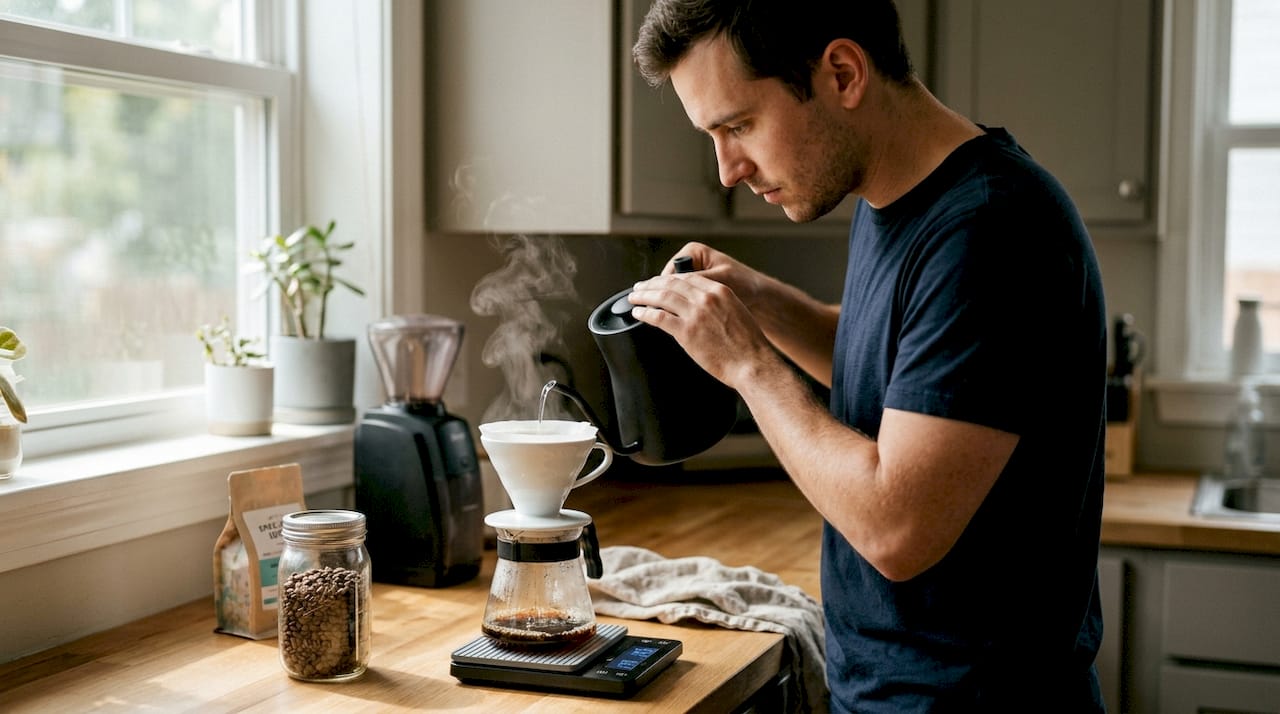
Pro Tip: Before your full pour, add just enough hot water to wet the grounds and wait 30 seconds. This is called the bloom, and it releases trapped CO2 that would otherwise block water from extracting evenly. You’ll notice an immediate improvement in aroma and flavor clarity.
The step-by-step guide to enhancing coffee flavors breaks down each variable in detail, and the home barista guide shows you how to apply cafe-level precision at home. Both are worth bookmarking if you’re serious about leveling up your cup.
Layer flavors with creative ingredients and blends
With brewing variables optimized, the next adventure is layering flavors for a truly unique profile. This is where coffee stops being a routine and starts becoming a craft.
Popular flavor add-ins that actually work:
- Cinnamon – Adds warmth and a subtle sweetness without sugar
- Cardamom – Delivers a floral, slightly spicy complexity popular in Middle Eastern brewing traditions
- Vanilla – Softens bitterness and rounds out the body
- Citrus zest – A few strips of orange or lemon peel brighten a dark roast dramatically
- Cacao nibs – Stirred into grounds before brewing, they add deep chocolate without sweetness
Beyond add-ins, blending beans from different origins opens up a whole new dimension. Mixing a fruity Ethiopian with a nutty Brazilian, for example, creates a balanced cup that neither bean could produce alone. Learning spice-infused coffee blending gives you a solid foundation for combining ingredients confidently. For a broader view of the craft, artisanal blending techniques covers how professional roasters approach the process.
| Method | Flavor result | Best for |
|---|---|---|
| Single origin | Pure, terroir-driven character | Purists and tasting notes explorers |
| Blended beans | Balanced, complex, consistent | Everyday adventurous drinking |
| Infused (spices/zest) | Layered, aromatic, bold | Creative experimentation |
Pro Tip: Try seasonal ingredients. Fresh ginger in winter, lavender in spring, or stone fruit zest in summer can transform a familiar roast into something completely new. The flavor layering guide has specific seasonal pairings worth exploring.
Pair and elevate coffee with food and confections
Layering flavors inside the cup is captivating, but pairing coffee with food makes the experience unforgettable. The right food pairing amplifies both the coffee and the dish, creating a combined taste that’s greater than either alone.
Here are four pairing combinations that consistently deliver:
- Fruity coffee with citrus desserts – A light Ethiopian roast alongside a lemon tart creates a bright, refreshing contrast that highlights the coffee’s berry notes.
- Bold dark roast with dark chocolate – The bitterness in both elements balances each other, and the roasted depth of each intensifies the other.
- Nutty medium roast with aged cheese – A Brazilian or Colombian medium roast pairs beautifully with sharp cheddar or gouda, drawing out the coffee’s caramel undertones.
- Floral light roast with fruit pastries – A jasmine-forward light roast alongside a blueberry scone creates a layered, almost tea-like experience.
Understanding coffee flavor pairings shows how confections in particular act as flavor amplifiers, not just accompaniments.
| Coffee profile | Best food pairing | Flavor effect |
|---|---|---|
| Fruity and bright | Citrus tarts, berry muffins | Amplifies acidity and freshness |
| Bold and dark | Dark chocolate, espresso cake | Deepens roasted bitterness |
| Nutty and smooth | Aged cheese, almond croissant | Highlights caramel and warmth |
| Floral and delicate | Fruit pastries, honey cake | Creates a layered, aromatic finish |
Food pairing also gives you instant feedback. If the combination tastes flat, one element is overpowering the other. If it sings, you’ve found a match. Use that feedback to refine both your brew and your food choices over time.
Why true coffee adventure starts with bold experimentation
Most guides tell you to follow the rules. Use filtered water. Dial in your grind. Stick to established ratios. That’s all solid advice, and we stand behind it. But here’s the part most guides skip: the most memorable cups we’ve ever tasted came from breaking the rules on purpose.
We’ve seen brewers add a pinch of sea salt to a dark roast and completely eliminate bitterness. We’ve watched a cold brew steeped with dried hibiscus flowers turn into something that tasted more like a craft cocktail than a morning coffee. These discoveries didn’t come from following a formula. They came from curiosity and a willingness to look ridiculous.
The coffee world rewards the bold. If you only brew what’s been proven, you’ll only taste what’s already been tasted. True flavor discovery lives just past the edge of your comfort zone. Our artisanal coffee selections were built specifically for brewers who want to push those edges.
Stop waiting for permission to experiment. Your next favorite cup might be one weird idea away.
Explore unique blends and flavor packs with Variatea Coffee
Ready to put these ideas into practice? Variatea Coffee makes flavor experimentation easy with curated products built for adventurous brewers like you.

Start with the flavored coffees sample pack to taste multiple profiles side by side without committing to a full bag of each. If you’re drawn to bold, complex single-origin experiences, the whiskey barrel aged coffee delivers deep smoky vanilla notes from authentic charred oak aging. For those mornings when convenience matters, the instant coffee options bring full flavor without the setup. Every product is designed to give you something genuinely different in your cup.
Frequently asked questions
How do coffee origins affect flavor?
Origins shape a coffee’s acidity, aroma, and taste profile directly. African beans tend fruitier while South American beans lean nutty or chocolatey, making origin the single biggest variable in your cup’s character.
Which brewing method brings out the most flavor?
No single method wins for every coffee. Pour-over unlocks brightness, French press emphasizes body, and cold brew removes bitterness entirely, so the best method depends on the flavor you’re chasing.
Can I add spices or citrus to my coffee for extra flavor?
Absolutely. Spices and citrus zest add unexpected layers and aroma without altering the caffeine content, making them one of the easiest ways to customize your brew.
What foods pair best with bold coffee flavors?
Dark chocolate, rich pastries, and strong aged cheeses pair exceptionally well with bold and dark coffee profiles, each amplifying the other’s depth.