

The Role of Storytelling in Coffee Culture and Taste
TL;DR:
- Storytelling influences coffee perception by priming the brain to notice specific flavors and enhance sensory experience.
- Authentic narratives rooted in genuine relationships and specific details foster trust, loyalty, and deeper appreciation for coffee culture.
Most people think they’re paying for coffee. What they’re actually paying for is a story. The role of storytelling in coffee runs deeper than marketing copy on a bag or a cute chalkboard sign above the espresso machine. Research shows that narratives shape sensory perception, meaning the story you hear before your first sip literally changes how that sip tastes. If you’ve ever felt that a cup hit differently after learning where it came from or who grew it, that wasn’t imagination. That was storytelling doing exactly what it’s designed to do.
Table of Contents
- Key takeaways
- How storytelling shapes flavor and sensory experience
- Coffee brand narratives and why authenticity wins
- Narrative techniques in coffee marketing and culture
- Practical ways to engage with coffee storytelling
- My perspective on what storytelling really changes
- Variateacoffee: where the story is built into the blend
- FAQ
Key takeaways
| Point | Details |
|---|---|
| Stories alter taste perception | Hearing a coffee’s origin story before you drink changes how your brain processes flavor signals. |
| Authentic narratives can’t be copied | A brand’s lived experience and real producer relationships are impossible for competitors to replicate. |
| Human faces close the gap | Showing farmers and baristas as real people makes complex supply chains feel personal and trustworthy. |
| Storytelling reduces buying friction | Emotional connection through narrative makes purchase decisions feel natural, not calculated. |
| Rituals carry the deepest stories | Your personal brewing ritual is itself a narrative that deepens enjoyment over time. |
How storytelling shapes flavor and sensory experience
Here’s what’s genuinely surprising about taste: it is not purely physical. A 2026 Netherlands study with 100 participants confirmed that immersive storytelling positively influences sensory perceptions during coffee experiences. The brain is not a neutral processor. It layers context, emotion, and memory on top of raw sensory data. When you arrive at a cup already knowing a story about the farm, the harvest, or the artisan process behind it, your perception of that cup upgrades before you’ve touched it.
The psychological mechanism is well documented. Storytelling in marketing links emotions, memories, and personal relevance to products at the neurological level, creating mental associations that go far beyond rational evaluation. Think about the difference between drinking a coffee labeled “dark roast blend” versus one described as “aged in charred white oak barrels for 30 days to develop bourbon-forward vanilla notes.” Same beans, different story. The second version primes your brain to search for and actually find those specific flavor signals.
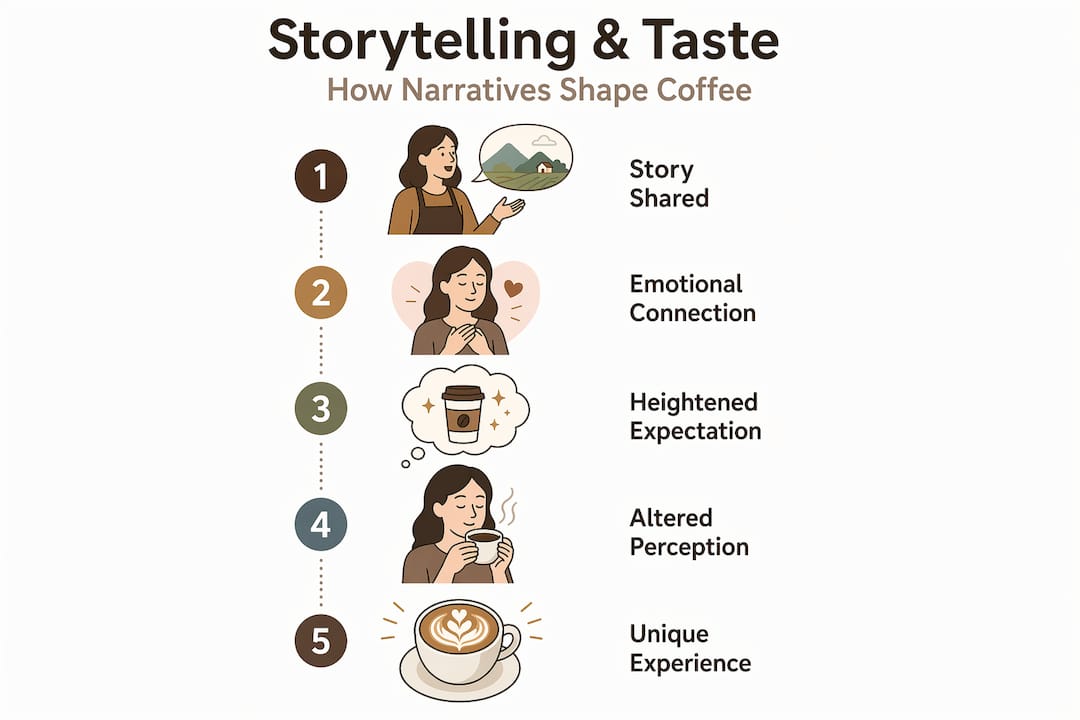
Immersive storytelling also works in physical spaces. A coffee shop that plays field recordings from an Ethiopian highland, displays photographs of the picking process, and trains staff to narrate each cup creates a multi-sensory experience that makes the coffee taste more complex. That’s not a trick. That’s context doing the work that context has always done for food and drink.
Pro Tip: Before your next brewing session, spend two minutes reading about where your coffee was grown and how it was processed. You’ll find that flavors you may have dismissed as background notes suddenly become distinguishable. Story primes the palate.
Here’s what that looks like in practice:
- Read the origin card or bag notes before brewing, not after
- Ask your roaster or retailer one specific question about processing method
- Pair the story’s key flavor descriptors (chocolate, fruit, smoke) with what you’re actively smelling during the bloom
- Compare two cups with different stories side by side, not just different beans
Coffee brand narratives and why authenticity wins
The importance of storytelling in coffee becomes most visible when you look at what separates forgettable brands from ones people genuinely advocate for. According to insights from Bean & Brand founder Nick Usborne, authentic coffee brand narratives are unique assets rooted in organizational truth and lived experience. No competitor can copy the actual story of how a roaster sourced their first direct-trade lot, or the founding mission that drives their quality decisions. They can imitate aesthetics. They cannot imitate truth.
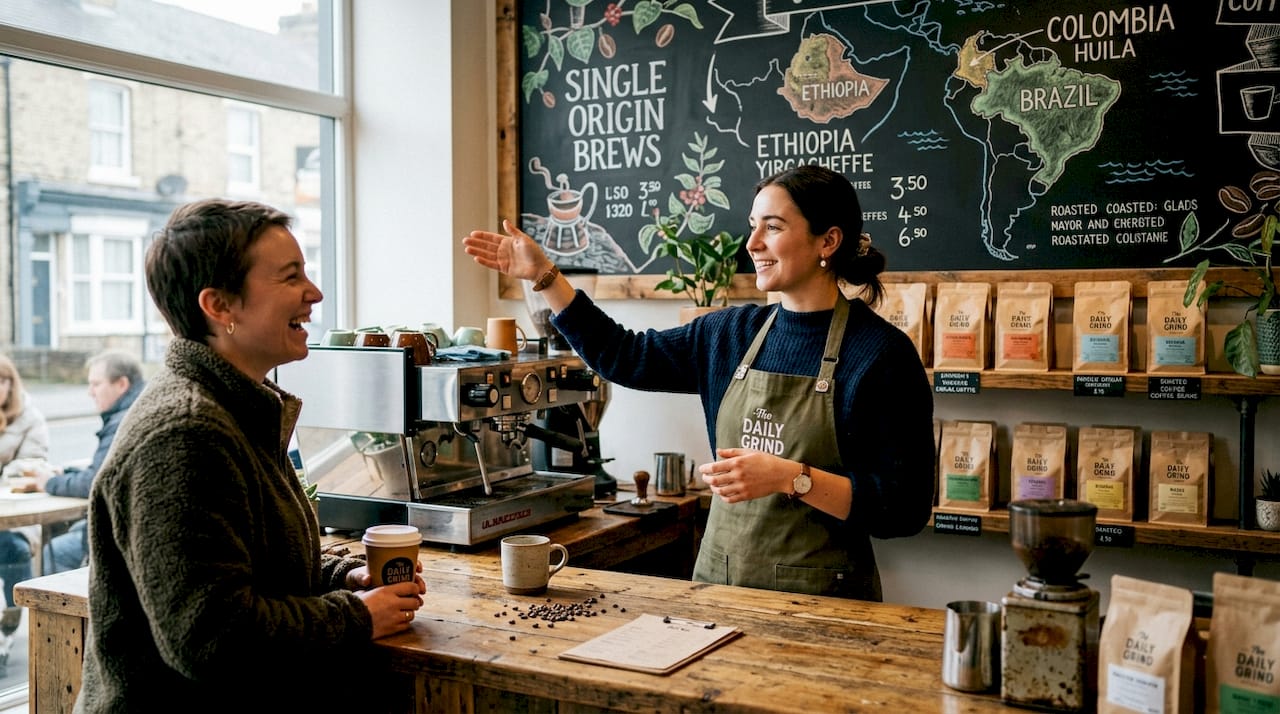
The emotional mechanics behind this are straightforward. Storytelling creates mental shortcuts that reduce buying friction and help consumers feel emotionally connected before a transaction even occurs. When you feel like you know a brand’s story, buying from them feels like supporting something, not just spending money. That shift is enormous for consumer loyalty.
Yet most specialty coffee businesses underuse this advantage. The industry critique from Bean & Brand found that many brands relegate their best narratives to a single “About” page, buried and forgotten, instead of weaving them into every touchpoint a customer encounters. The story of your direct-trade relationship should appear on the bag, the brew guide, the social post, and the in-store conversation. Not just in a paragraph nobody scrolls to.
“Authentic narratives serve as a competitive advantage because they are inherently unique and hard to replicate.” — Specialty Coffee Storytelling Insights
The most common pitfall brands fall into is confusing storytelling with self-promotion. Telling the story of your award wins or your roasting equipment is not storytelling. It’s bragging with extra steps. The narratives that build loyalty are the ones that focus on people, places, and moments that the customer can see themselves inside of. The farmer’s harvest. The long overnight drive to deliver the first batch. The ritual that grew into a brand.
Narrative techniques in coffee marketing and culture
Coffee’s most effective storytelling formats tend to fall into three categories, each speaking to a different part of how consumers connect with the beverage.
| Format | Strength | Best used for |
|---|---|---|
| Environmental storytelling | Educates and builds ethical connection | Sustainability and sourcing campaigns |
| Human-focused narratives | Creates empathy and trust | Farmer profiles, barista features |
| Cultural and ritual storytelling | Builds identity and belonging | Brand world-building, product naming |
Environmental storytelling is especially powerful right now. The fact that over 70% of coffee flowers rely on bee pollination is the kind of detail that transforms a cup of coffee into an entry point for understanding an entire ecosystem. Brands that embed these facts into their packaging and campaigns create customers who feel educated, not marketed to. The distinction matters enormously to specialty coffee drinkers.
Human-focused stories close the gap between production and consumption. Highlighting individual producers helps consumers connect with complex coffee production realities in a way that raw statistics cannot. A face, a name, a detail about a farm family’s third generation of growing practice. These specifics do what broad claims about “quality” never can.
How storytelling enhances coffee culture at a broader level is visible in the names brands give their blends, the myths they build around processing methods, and the rituals they invite customers into. A whiskey barrel-aging process is not just a production method. It’s a story about patience, craft, and the intersection of two distinct artisan traditions. The best specialty roasters understand this and name, describe, and present their products accordingly.
Quiet, understated storytelling hidden in daily rituals and small acts of kindness can be just as powerful as large-scale campaigns. The barista who remembers your order and tells you something new about the day’s single origin is delivering a micro-narrative. Those moments compound into loyalty that no advertisement can manufacture.
Pro Tip: When evaluating whether a coffee brand’s story is authentic, ask one question: could any other brand tell this exact story? If the answer is yes, the brand is trading in aesthetics, not genuine narrative. Look for specificity: real names, real places, real decisions.
Learn more about how sustainable coffee practices connect story to cup in ways that make every brew feel meaningful.
Practical ways to engage with coffee storytelling
You don’t need to be a brand or a roaster to use storytelling as a tool for deeper coffee enjoyment. These steps let any coffee lover apply narrative techniques to their own daily ritual.
- Research before you buy. Before ordering a new coffee, spend five minutes looking up its origin region. Learn one thing about the processing method. That knowledge will be active in your brain when you brew.
- Ask the person serving you. Baristas and shop owners often know details that never make it onto labels. “What’s interesting about this one?” is a genuinely useful question that most are glad to answer.
- Build a personal ritual around one narrative element. If your coffee is processed using the washed method in a high-altitude region, brew it at a slightly lower temperature to honor the brightness that method develops. Let the story guide a brewing decision.
- Use the origin story to choose your brewing method. Naturally processed coffees with heavy fruit notes often shine in a pour-over. Aged or barrel-influenced coffees can stand up to the intensity of a French press. Let origin inform method.
- Write down your tasting notes after reading the story. Compare them over several sessions. You’ll notice your perception sharpening as your narrative context deepens.
The daily coffee ritual is already a personal story. When you connect the drink’s origin to your own practice, the cup stops being a commodity and becomes something you participate in making meaningful.
My perspective on what storytelling really changes
I’ve spent years watching people dismiss the idea that a story changes a flavor as marketing nonsense. I used to think the same thing. What changed my mind wasn’t a study, though the science does back this up. It was a single cup of coffee where I knew the farmer’s name, understood the drying process, and could picture the altitude of the farm. That cup tasted different. Not better by accident. Better because I was paying attention in a new way.
What I’ve found is that storytelling doesn’t manipulate taste. It focuses it. It gives your brain specific things to look for instead of processing the cup as undifferentiated sensation. That’s not deception. That’s literacy. The more you know about what you’re drinking and where it came from, the more precisely you can experience it.
The thing most people miss is that the impact of storytelling on coffee sales, while real, is almost a side effect. The primary value is that it makes coffee more worth drinking. It converts a habit into a practice. Brands that understand this aren’t just selling more bags. They’re building a relationship with people who will never want to go back to anonymous grocery store blends.
The challenge is keeping storytelling honest. When brands fabricate origin stories or romanticize supply chains they’ve never actually walked through, the whole system breaks down. Authenticity isn’t a brand strategy. It’s the only thing that makes the story mean anything at all.
— Jonathan
Variateacoffee: where the story is built into the blend
Every product at Variateacoffee starts with a concept that can’t be separated from its narrative. The Whiskey Barrel Aged Coffee doesn’t just have an interesting flavor profile. It has a story about patience: beans spending weeks inside charred white oak barrels, absorbing the same bourbon and vanilla character that whiskey drinkers have chased for centuries. That process is the story, and the story is why the flavor lands the way it does.

Variateacoffee embeds storytelling into the artisan process itself, from barrel-aging timelines to sourcing decisions that prioritize flavor transparency. When you brew a bag from the full collection, you’re not just choosing a flavor. You’re choosing a narrative about what coffee can be when craft, curiosity, and genuine process combine in the same cup.
{% include youtube.html id=“mTyQWuYcg_k?si=wPv_8KdEmtrXq5gP” %}
FAQ
How does storytelling influence how coffee tastes?
A 2026 study found that immersive storytelling positively influences sensory perceptions during coffee experiences. Narrative context primes your brain to identify specific flavors, making them more perceptible and distinct.
Why do authentic coffee brand narratives matter more than advertising?
Authentic narratives are grounded in organizational truth that competitors cannot replicate. They build trust and emotional connection far more durably than any paid campaign can.
What is the role of storytelling in coffee culture beyond marketing?
Storytelling in coffee culture connects consumers to producers, transforms daily habits into meaningful rituals, and builds appreciation for craft processes like fermentation, drying, and roasting that would otherwise be invisible.
How can I use storytelling to improve my daily coffee experience?
Read your coffee’s origin notes before brewing, ask your barista one specific question about the lot, and let the story guide small brewing decisions like water temperature and method. Connecting narrative to process sharpens both attention and flavor perception.
What makes a coffee brand’s story genuinely authentic?
Genuine coffee brand narratives contain specific details: real farm names, real producer relationships, real process decisions. If the same story could apply to any brand without changing a word, it’s aesthetic, not authentic.
Recommended
- Tracing the roots of luxury coffee: Origins to artisanal trends – Variatea Coffee
- Coffee tasting workflow: Step-by-step guide for artisanal flavor – Variatea Coffee
- Discover the coffee ritual: elevate your brewing experience – Variatea Coffee
- What Is Coffee Connoisseurship: a Sensory Guide – Variatea Coffee