

Tea and coffee mindfulness workflow guide
TL;DR:
- Rushing through coffee and tea dulls flavor perception and reduces the calming, focus-enhancing benefits of these beverages.
- A mindful ritual, built around sensory anchors and intentional steps, enriches flavor, sharpens focus, and fosters sensory curiosity.
Most people gulp their morning brew standing over the kitchen sink, barely registering the temperature before rushing out the door. That single habit costs you more than you’d think. Rushing through tea and coffee routines dulls flavor perception, skips the calming sensory window those beverages naturally provide, and leaves focus benefits on the table. A structured mindfulness workflow can be as short as three minutes, built around simple sensory anchors like sound, color change, and aroma, yet it consistently delivers a richer cup and a sharper, calmer mind to go with it.
Table of Contents
- What you need for a mindful tea and coffee routine
- Step-by-step tea mindfulness workflow
- Step-by-step coffee mindfulness workflow
- How does mindfulness impact focus and flavor?
- Troubleshooting and adapting your workflow
- Why mindful beverage rituals matter even more today
- Level up your mindful coffee and tea journey
- Frequently asked questions
Key Takeaways
| Point | Details |
|---|---|
| Mindful rituals boost enjoyment | Intentional, sensory-focused tea and coffee routines elevate both flavor and presence. |
| Customize for focus and flavor | Personalize your workflows and anchors to increase focus and discover new taste experiences. |
| Adapt to real-world needs | Flexible techniques help make mindfulness possible even in hectic or distracting environments. |
| Premium tools enhance rituals | Investing in quality ingredients and dedicated equipment enriches both the ritual and result. |
What you need for a mindful tea and coffee routine
Now that you see why slowing down matters, let’s organize the simple tools and cues that set the stage for a mindful workflow.
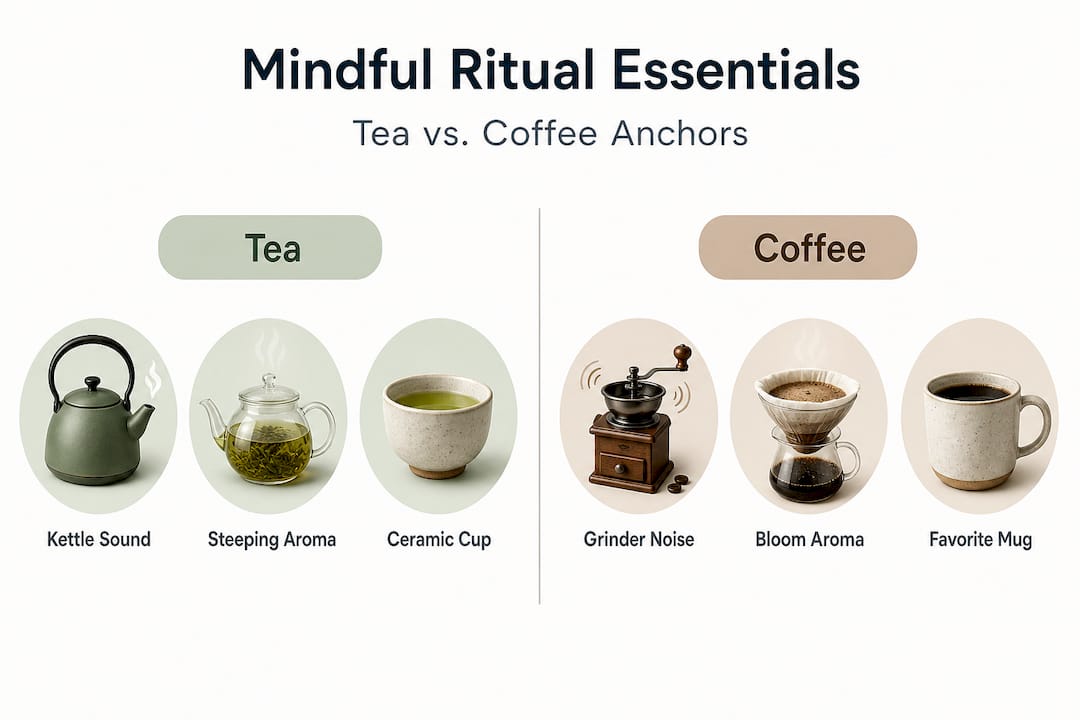
The good news: you don’t need a Zen garden or an expensive setup. You need a short list of purposeful items and one or two anchors that signal your brain to shift gears. Think of these anchors the way a musician thinks of a tuning fork. One clear note, and everything else falls into place.
Essential tools for tea:
- Loose-leaf tea (quality matters enormously here)
- A dedicated mug or ceramic cup you love
- A simple kitchen timer or phone timer
- A small strainer or infuser
- Fresh, filtered water
Essential tools for coffee:
- Freshly ground beans (grind just before brewing for peak aroma)
- A manual brewer such as a pour-over or French press
- Your favorite cup, ideally ceramic
- A scale or measured scoop for consistency
- A gooseneck kettle for precise water control
Following artisanal tea brewing tips and a solid coffee tasting workflow guide will help you make better use of every item on that list. Premium ingredients aren’t a luxury here. They’re the foundation. A mediocre tea bag brewed mindfully still tastes mediocre. A high-quality loose-leaf Hojicha or a small-batch whiskey barrel-aged coffee gives your senses something genuinely worth focusing on.
Ritual anchors: tea vs. coffee
| Anchor type | Tea ritual | Coffee ritual |
|---|---|---|
| Sound | Kettle boiling, pour sound | Grinder, kettle bloom hiss |
| Aroma | Dry leaf before steeping | Ground beans before brewing |
| Visual | Color change during steeping | Bloom expansion, crema |
| Touch | Warm mug in both hands | Weight and texture of ceramic |
| Timer | Steep countdown | Bloom timer, total pour time |
A coffee ritual wellness study from Stanford confirms that a consistent ritual anchor built around equipment and sensory cues trains the brain to associate those specific cues with focused, calm attention. That’s not mystical. It’s basic conditioning that you can put to work immediately.
Pro Tip: Designate one item exclusively for your mindfulness sessions. A specific mug, a particular tea tray, or even a small wooden spoon. Using it only during your ritual trains your brain to enter a focused state the moment you pick it up.
Step-by-step tea mindfulness workflow
With everything in place, here’s how to bring mindful ritual to your next cup of tea, step by step.
- Set your intention. Before you touch the kettle, pause for five seconds. Ask yourself what you want from this moment: calm, clarity, a creative reset. A single word works fine.
- Engage the sensory anchor. Smell the dry leaves before they hit the water. Notice the color and texture. This isn’t performative. It primes your palate and your attention simultaneously.
- Heat water to the right temperature. Green and white teas need 160 to 180°F. Black teas and herbal blends go up to 212°F. Correct temperature is the single most overlooked factor in tea flavor.
- Start the timer and pour. As you pour, listen to the sound. Watch the water change color. A three-minute tea break is a scientifically grounded window for restoring selective attention.
- Steep with focus. Don’t walk away. Stay present with the color deepening in the cup. This is where the workflow earns its name.
- Remove leaves on time. The timer is your anchor, not a suggestion. Consistent timing means consistent flavor, session after session.
- First sip with full attention. No phone, no screen. One slow sip. Register temperature, flavor, and finish before anything else.
- Continue mindfully. Subsequent sips can be quieter, but maintain awareness. A step-by-step mindful tea ceremony formalizes each of these moments for those who want a more ceremonial experience.
Workflow comparison table
| Format | Time required | Best for | Key adjustment |
|---|---|---|---|
| 3-minute express | 3 minutes | Busy workday, office breaks | Timer is non-negotiable |
| Full home ritual | 15 to 20 minutes | Morning, weekends | Add a second steep |
| Ceremonial style | 30 or more minutes | Deep focus, creative sessions | Multiple small pours, no distraction |
| Office adaptation | 5 minutes | Desk, open-plan setting | Covered infuser, refill method |
For office settings specifically, an office tea brewing guide recommends a refill approach using artisanal tea workflow tips: pour out half the steeped liquid, then add hot water to refresh the infuser. This keeps bitterness in check and extends the sensory window through a busy afternoon.
Watch this: Over-steeping is the most common workflow killer. Even a 60-second overage on a delicate green tea like Matcha or Moroccan Mint can shift the flavor from clean and bright to harsh and tannic. A timer isn’t optional. It’s your quality control.
Pro Tip: Use sound as your primary anchor during steeping. The specific hiss of your kettle or the soft tick of a mechanical timer creates a sensory signal that’s nearly impossible to ignore, even in a noisy environment.
Step-by-step coffee mindfulness workflow
Tea rituals are just the start. Next, transfer mindfulness to your coffee routine with equally effective results.
The biggest difference between tea and coffee mindfulness is the physical engagement. Manual coffee preparation demands more from your hands, which actually works in your favor. More action means more sensory input, and more sensory input means deeper presence.
- Set a micro-intention. Before you grind, decide what this cup is for. Options include calm, focus, gratitude, creative energy, or simply pleasure. Write it on a sticky note if that helps. A structured coffee routine that includes micro-intentions consistently outperforms rushed auto-pilot brewing for both enjoyment and sustained attention.
- Grind fresh. Listen to the grinder. Smell the grounds immediately after. This is one of the richest aroma moments in the entire process, and most people miss it entirely.
- Bloom the coffee. Pour just enough hot water to saturate the grounds (roughly twice the weight of the coffee) and wait 30 to 45 seconds. Watch the grounds expand and release CO2. That’s freshness made visible.
- Pour with intention. A slow, steady pour from a gooseneck kettle keeps you physically engaged. No rushing. Notice the swirl, the resistance, the steam.
- Do a sensory check-in. Before the first sip, smell the cup. Register the aroma notes. A whiskey barrel-aged coffee will offer deep oak and vanilla on the nose. A Dubai Chocolate Coffee will deliver rich cocoa and toasted hazelnut. Name what you detect, even silently.
- Sip slowly and evaluate. Acidity, body, sweetness, finish. You don’t need formal training to notice these things. Curiosity is enough.
- Adjust context intentionally. A large global study found that coffee enjoyment is significantly shaped by contextual factors including cup material, time of day, and setting. Ceramic cups consistently scored higher than paper or plastic for perceived flavor quality.
Micro-intentions you can set before each cup:
- Calm: breathe slowly during the bloom, sip without any agenda
- Focus: set a specific work task you’ll tackle right after
- Gratitude: think of one thing you appreciate while the kettle heats
- Creativity: let your mind wander during the pour, no structure
- Pleasure: no intention beyond enjoying the cup itself
Pro Tip: Change one context variable each week. Switch your ceramic mug to a glass one. Try your espresso in the afternoon instead of morning. Brew the same beans outdoors. Small shifts produce genuinely new flavor and focus experiences from the exact same coffee.
How does mindfulness impact focus and flavor?
Now that you’re practicing the workflows, it’s worth understanding why mindfulness unlocks deeper focus and flavor, according to science.

L-theanine is an amino acid found primarily in tea leaves. It works synergistically with caffeine to produce a state that researchers describe as “calm alertness.” A high-dose L-theanine and caffeine study found measurable improvements in selective attention in sleep-deprived adults, which is relevant for most of us on most mornings.
That said, the science is nuanced. A separate athlete crossover study showed that combining caffeine and L-theanine does not reliably improve all physical or cognitive outcomes across every population. In other words, don’t treat this as a guaranteed hack. Treat it as a tool you personalize through experimentation, which is exactly what these workflows are designed for.
Proven benefits of a mindful beverage routine:
- Sharpened selective attention, especially during morning or post-lunch sessions
- Reduced perceived stress during the ritual itself
- Enhanced flavor perception because attention amplifies sensory processing
- Greater enjoyment and routine satisfaction over time
- A reliable daily transition cue between rest and focused work
You can explore how artisan flavor insights connect to sensory awareness for an even deeper look at how premium ingredients heighten this effect.
Important nuance: Mindfulness does not replace sleep, nutrition, or medical care. The workflows here are designed to enhance daily enjoyment and natural focus. If you’re chronically sleep-deprived or dealing with anxiety, speak with a healthcare professional before relying on caffeine-based rituals as a primary tool.
Troubleshooting and adapting your workflow
Even with the best intentions, the real world can interfere. Here’s how to adapt and keep your ritual resilient.
Common challenges and their fixes:
- Office interruptions: An office-friendly tea mindfulness approach uses a covered travel infuser to pause steeping mid-workflow without over-extracting. Set a physical do-not-disturb signal if your workspace allows it.
- Over-steeping: This is almost always a timer issue, not an attention issue. Move your timer to a visible location. Use audio alerts, not just visual ones.
- Under-extraction in coffee: Slow down your pour and check your grind size. Coarser grinds for pour-over require a slower, steadier pour to achieve full extraction.
- Workflow monotony: This is where flavor experimentation earns its value. A coffee context study confirms that even small environmental changes produce meaningfully different taste experiences.
- No time in the morning: Prep the night before. Measure your beans, set out your cup, and fill the kettle. Reducing friction in the morning makes the ritual easy to start, even on difficult days.
- Losing focus mid-ritual: Return to the primary sensory anchor. Sound is the easiest reset. The pour, the timer, the first sip. You don’t have to start over. Just re-engage.
If you want to sharpen your sensory skills further, exploring coffee cupping techniques will give your mindfulness practice a structured vocabulary for what you’re tasting.
Pro Tip: When you feel genuinely stuck in a rut, don’t change your tea or coffee. Change your cup. A new vessel completely resets your sensory expectations, making a familiar blend feel surprisingly new.
Why mindful beverage rituals matter even more today
Here’s the honest perspective that most guides skip: the real point of a tea or coffee ritual isn’t productivity. It isn’t about squeezing more focus out of your brain or optimizing your cortisol curve. That framing turns something pleasurable into another item on your performance checklist, and that pressure kills the ritual faster than any bad steep ever could.
What these moments actually offer is something rarer. They offer a daily permission slip to be fully present with something small and beautiful. The bloom on your pour-over. The color shift in a cup of Moroccan Mint Tea. The first hit of smoke and vanilla from a whiskey barrel-aged roast. These aren’t productivity tools. They are creative anchors that reconnect you to sensory curiosity.
We’ve noticed, in building Variatea Coffee, that the adventurous brewer isn’t chasing efficiency. They’re chasing genuine experience. They want a cup that surprises them, a ritual that grounds them, and a routine that feels like it belongs to them rather than to a calendar. Premium preparation isn’t extravagance. It’s self-respect expressed through attention.
The most durable rituals we’ve seen are the ones built on play, not obligation. Try a new blend. Brew in a different room. Steep your Hojicha a little lighter and notice what changes. Discover mindful coffee rituals that go beyond the basics and keep your curiosity alive. Rituals should expand your experience of daily life. The moment they start adding stress, simplify. One cup, one anchor, one full minute of honest attention. That’s enough.
Level up your mindful coffee and tea journey
If today’s guide sparked something, the next step is getting your hands on ingredients that give your senses something genuinely worth paying attention to. A mindful workflow with a grocery-store blend is like meditating with distractions in the background. It works, but it’s harder than it needs to be.

At Variatea Coffee, we craft every blend to reward attentive brewers. Our Whiskey Barrel-Aged Coffee is a remarkable sensory anchor, offering layered oak, vanilla, and smoky depth that unfolds differently with each sip. Pair it with our Hojicha Roasted Green Tea for a low-caffeine afternoon ritual that delivers its own toasty, caramel-like warmth. Browse our full range of unique coffee rituals and artisan teas, and find the blend that turns your next workflow into a genuine experience worth repeating.
Frequently asked questions
Can mindfulness routines with tea or coffee improve my focus?
Evidence suggests that a mindful brewing and sipping workflow can boost selective attention, especially with tea. A selective attention study found measurable improvements in sleep-deprived adults, though individual results vary.
What’s the easiest way to start a tea or coffee mindfulness workflow?
Pick one sensory anchor, like aroma or the sound of your kettle, set a simple one-word intention, then brew slowly with your phone out of reach. A three-minute repeatable sequence is the lowest-friction starting point, while a structured coffee routine that builds in micro-intentions adds depth as you progress.
Does cup material or context really affect coffee taste?
Yes, and the effect is well documented. A global study confirmed that contextual factors including cup material meaningfully shape coffee enjoyment, with ceramic cups and morning timing consistently scoring highest.
How do I avoid over-steeping tea during a busy day?
Use a dedicated timer with an audio alert and consider the half-pour refill method, where you pour out half the steeped liquid before topping up with fresh hot water. An office-focused refill workflow shows how to maintain flavor consistency through even the most interrupted workdays.
Recommended
- Coffee tasting workflow: Step-by-step guide for artisanal flavor – Variatea Coffee
- Tea brewing tips for artisanal flavor: master every cup – Variatea Coffee
- Unlock unique coffee rituals: expert brews & premium flavor – Variatea Coffee
- How to enhance coffee flavors: step-by-step guide – Variatea Coffee