

Single origin coffee: flavor, origin, and artisanal experience
Not all coffee is created equal. If you’ve ever sipped a cup that tasted like blueberries, dark chocolate, or jasmine without a single added ingredient, you’ve already met single origin coffee. Most people grow up thinking coffee is a uniform, bitter commodity, but that assumption misses something remarkable. The origin of a bean shapes its flavor more than almost any other factor. In this guide, we’ll walk through what single origin coffee actually means, how it stacks up against blends, which regions produce the most distinctive cups, and how to brew it at home for the best possible experience.
Table of Contents
- What is single origin coffee?
- Single origin vs coffee blends: What makes them different?
- Notable coffee-growing regions and their flavor profiles
- How to select and brew single origin coffee for peak flavor
- Why single origin coffee is more than just a trend
- Explore premium single origin and artisanal blends at Variatea Coffee
- Frequently asked questions
Key Takeaways
| Point | Details |
|---|---|
| Unique taste journeys | Single origin coffee reveals flavors specific to its place of growth. |
| Transparency matters | You can trace single origin coffee back to its farmers and region. |
| Brewing unlocks potential | Choosing the right method and grind brings out the best in each single origin. |
| Not one-size-fits-all | Both single origin and blends have unique roles for different palates and occasions. |
What is single origin coffee?
Single origin coffee is exactly what it sounds like: coffee that comes from one specific place. That place can be as broad as a country or as precise as a single farm or even a single lot within a farm. According to coffee label terms, single origin is sourced from a specific geographic location such as one country, region, or even farm. That traceability is the whole point.
When you buy a bag labeled “Ethiopia Yirgacheffe” or “Colombia Huila,” you’re not just getting a region name as decoration. You’re getting a story. The altitude at which those beans grew, the rainfall patterns that season, the soil composition, and even the processing method used after harvest all leave fingerprints in the cup. This concept is sometimes called terroir, borrowed from the wine world, and it’s just as real in coffee.
Here’s what single origin coffee can tell you:
- Where it grew: Country, region, or farm name
- How it was processed: Washed, natural, or honey process
- What variety it is: Heirloom, Bourbon, Gesha, and others
- Who grew it: Many specialty roasters include farmer or cooperative names
- When it was harvested: Crop year is often listed on specialty bags
Blended coffees, by contrast, pull beans from multiple origins and combine them to hit a consistent flavor target. That’s a legitimate craft, but it erases the individual voices of each origin in favor of a unified profile. Single origin keeps those voices intact.
“Traceability isn’t just a marketing word. It’s a direct line between your cup and the hands that grew it.”
For the adventurous brewer, that traceability is part of the appeal. You’re not just drinking coffee. You’re tasting a place. The more you explore, the more you realize how dramatically flavor shifts from one origin to the next, even when the roast level stays the same.
Single origin vs coffee blends: What makes them different?
Now that you know what single origin means, it’s useful to see how it compares to common coffee blends. The differences go beyond sourcing. They shape the entire drinking experience.
Blends are designed for consistency, while single origin coffees showcase unique characteristics. That single sentence captures the core trade-off. Blends are engineered. Single origins are discovered.
| Feature | Single origin | Coffee blend |
|---|---|---|
| Sourcing | One region or farm | Multiple origins |
| Flavor | Distinctive, variable by season | Consistent year-round |
| Traceability | High | Low to moderate |
| Best for | Tasting and exploration | Everyday drinking, espresso |
| Price | Often higher | Often lower |
Neither is objectively better. They serve different purposes, and knowing when to reach for each one makes you a smarter brewer.
When to choose single origin:
- You want to taste the character of a specific region
- You’re brewing with a method that highlights clarity, like pour-over or Aeropress
- You’re learning to identify flavor notes and build your palate
- You want to support direct trade or specific farming communities
When to choose a blend:
- You need a reliable espresso base that won’t shift between bags
- You’re making milk-based drinks where bold, consistent flavor matters
- You prefer a familiar, balanced cup every morning without surprises
If you’re curious about how roasters craft multi-origin profiles, the discover coffee blends guide covers the creative side of that process. For a deeper look at how ingredients are layered, coffee blending techniques breaks down the artisanal approach.
Pro Tip: Brew the same roast level as a single origin and as a blend side by side. The contrast in flavor clarity will immediately show you what origin-specific character actually means in the cup.
Notable coffee-growing regions and their flavor profiles
To appreciate what single origin can offer, let’s explore where these coffees come from. Geography is flavor. A bean grown at 2,000 meters in Ethiopia tastes nothing like one grown at 900 meters in Sumatra, even if both are roasted identically.
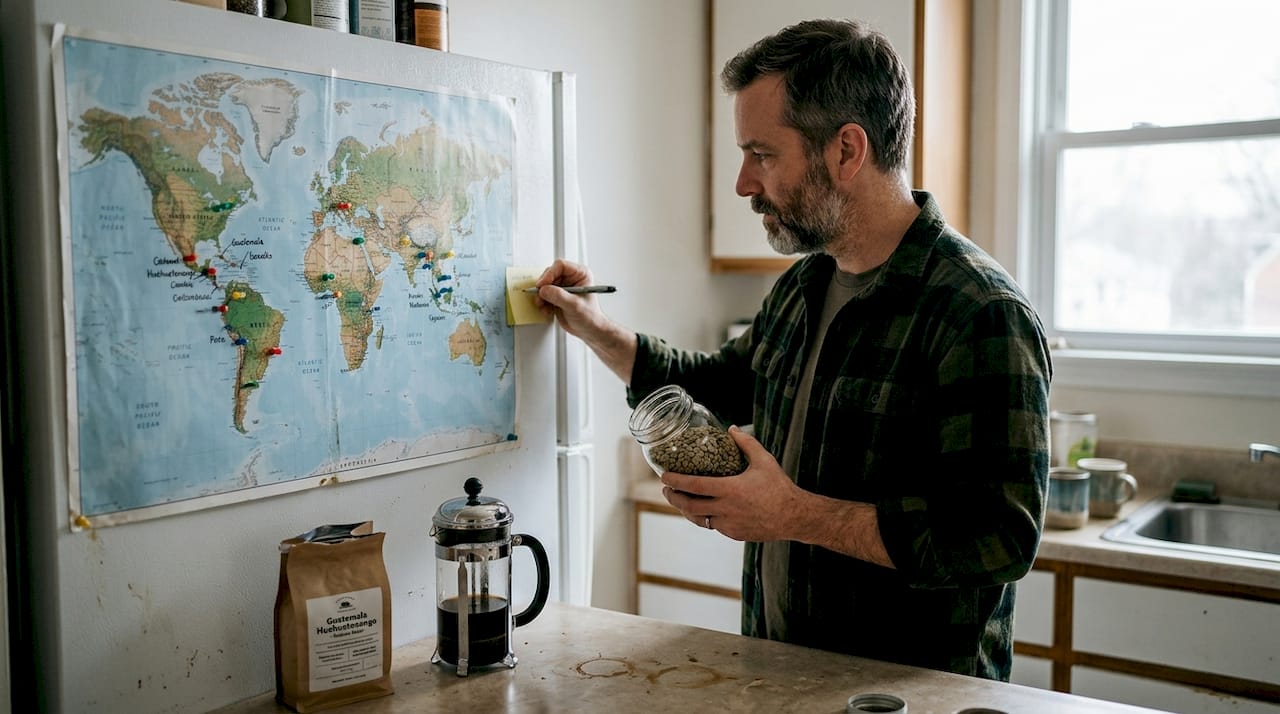
Ethiopian coffees often have floral and citrus notes, while Colombian beans are prized for their balance and mild sweetness. That’s just the beginning of the regional story.
| Region | Elevation | Typical flavor notes |
|---|---|---|
| Ethiopia | 1,500 to 2,200m | Jasmine, blueberry, citrus, bergamot |
| Colombia | 1,200 to 2,000m | Caramel, red apple, mild sweetness |
| Kenya | 1,400 to 2,000m | Black currant, tomato, bright acidity |
| Guatemala | 1,300 to 1,800m | Dark chocolate, brown sugar, walnut |
| Indonesia | 1,000 to 1,500m | Earthy, cedar, dark fruit, low acidity |
Environment shapes flavor in ways that go beyond altitude. Rainfall timing affects sugar development in the cherry. Soil mineral content influences body and acidity. Processing method, whether the fruit is removed before or after drying, can swing flavor dramatically. A naturally processed Ethiopian coffee can taste almost like a fruit smoothie, while a washed version from the same farm reads cleaner and more tea-like.
Here’s what makes each region’s character distinct:
- Ethiopia: The birthplace of Arabica coffee, with wild heirloom varieties that produce some of the most complex cups in the world
- Kenya: Volcanic soils and a dual rainy season create intense, wine-like acidity that coffee enthusiasts either love intensely or find too bold
- Guatemala: Shade-grown traditions and volcanic soil produce a reliable, chocolatey cup that bridges the gap between approachable and complex
- Indonesia: Wet-hulling, a unique local processing method, creates the earthy, full-bodied profile that makes Sumatran coffee unmistakable
Exploring these differences is easier when you start with a curated selection. The small-batch artisanal picks guide is a great starting point for narrowing down where to begin. If you want to understand how flavor notes translate from bag to cup, coffee flavor profiles walks through the connection between origin and brewing technique.
How to select and brew single origin coffee for peak flavor
After traveling the world with your taste buds, here’s how to pick and make the most of a single origin brew at home. Choosing and brewing single origin coffee well is a skill, but it’s not complicated once you know what to look for.
Reading the label: A quality single origin bag should tell you the country, region or farm, processing method, variety if known, and roast date. Avoid bags that only say “100% Arabica” with no other details. That’s a blend in disguise.
Questions to ask before you buy:
- How recent is the roast date? Fresher is better, ideally within four weeks
- What processing method was used? Natural coffees are fruitier; washed coffees are cleaner
- What roast level? Light roasts preserve more origin character; dark roasts shift flavor toward roast notes
- Is there a harvest year? Older crop coffee loses brightness over time
Brewing for full flavor:
- Grind fresh: Grinding right before brewing preserves volatile flavor compounds that go stale within minutes of grinding
- Use filtered water: Tap water minerals can clash with delicate single origin notes
- Match the method to the roast: Light to medium roasts shine in pour-over or Aeropress; medium to dark roasts work well in French press
- Control your ratio: Start at 1:15 coffee to water by weight and adjust from there
- Taste without milk first: Additives mask the origin character you paid for
Pro Tip: Try the same single origin bean as espresso and as a pour-over on the same day. Espresso concentrates sweetness and body; pour-over opens up the floral and fruit notes. You’ll taste two completely different coffees from the same bag.
For a more advanced approach to building flavor complexity, the flavor layering guide covers techniques that work beautifully with single origin beans. If you’re setting up a home brewing station, the home barista guide is worth bookmarking.
Why single origin coffee is more than just a trend
Here’s an opinion worth stating plainly: single origin coffee isn’t a trend. Trends fade when the novelty wears off. Single origin keeps growing because it delivers something that blends structurally cannot, which is accountability. You can trace your cup to a place, a person, and a practice.
That accountability changes the economics of coffee farming. When roasters pay premiums for traceable, high-quality lots, farmers have a financial reason to invest in quality rather than volume. That feedback loop is what drives the specialty coffee movement forward.
We’ve also noticed that enthusiasts who start with single origin rarely go back to anonymous commodity coffee. Not because blends are bad, but because once you’ve tasted the coffee complexity that a single farm can express, a generic cup feels like a step backward. Single origin trains your palate. And a trained palate is one of the most enjoyable things you can develop as a coffee lover.
Explore premium single origin and artisanal blends at Variatea Coffee
Ready to put all of this into practice? At Variatea Coffee, we’ve made it easy to start your single origin journey without committing to a full bag of something unfamiliar.

Our Single Origin Favorites Sample Pack lets you taste multiple origins side by side, which is the fastest way to understand regional differences firsthand. If you’re drawn to creative, flavor-forward profiles, the Flavored Coffees Sample Pack pairs beautifully with single origin exploration. And if tea is part of your rotation, our artisanal teas bring that same commitment to origin and craft to every steep. Whether you’re buying for yourself or gifting to a fellow enthusiast, these samplers are the best starting point we know.
Frequently asked questions
Is single origin coffee always better than blends?
Single origins highlight unique flavors, while blends are crafted for balance and consistency. The better choice depends entirely on what you’re looking for in a cup.
Does single origin coffee have more caffeine?
Caffeine is determined by bean type and roast level, not by whether the coffee is single origin or blended. A dark roast blend and a light roast single origin can have very different caffeine levels.
Can I brew single origin coffee with any method?
Yes, though manual brewing unveils more complexity in single origin coffees. Pour-over and French press tend to let the origin’s distinct notes come through most clearly.
Why is single origin coffee often more expensive?
Traceability and small-batch production drive the higher price. Sourcing from one farm or region in limited quantities requires more care, quality control, and often direct relationships with growers.
Are there single origin decaf coffees?
Single origin decaf options are increasingly available from specialty roasters, and they retain much of the regional flavor character that makes single origin worth seeking out.