

Premium e-commerce coffee: what sets it apart online
TL;DR:
- Premium e-commerce coffee is defined by origin, freshness, flavor, and storytelling, not price.
- Direct trade sourcing and small-batch roasting enhance flavor complexity and transparency.
- Consumers should evaluate sourcing details, roast date, flavor notes, and brand stories when buying online.
Most people assume premium coffee just means a higher price tag. That assumption costs you a lot of bad cups. True premium e-commerce coffee is defined by where the beans come from, how they’re roasted, and the story behind every bag. Online platforms have completely changed the game, giving adventurous brewers direct access to small-batch roasters, barrel-aged blends, and specialty teas that no grocery store could ever stock. This guide breaks down exactly what premium means in the e-commerce world, how to spot it, how to taste it, and how to buy it with confidence every single time.
Table of Contents
- Defining premium coffee in the world of e-commerce
- How premium e-commerce coffee is sourced and crafted
- The flavor experience: What to expect from premium blends
- Choosing and buying premium coffee online
- Our take: Why the future of premium coffee is global and personal
- Discover your next artisan blend at Variatea Coffee
- Frequently asked questions
Key Takeaways
| Point | Details |
|---|---|
| Quality is multi-dimensional | Premium coffee blends ethics, flavor, and craftsmanship, especially in e-commerce. |
| Flavor goes beyond boldness | Artisan blends feature unique notes and complexity that mass-market brands lack. |
| Transparency matters | Online retailers should offer clear sourcing, flavor profiles, and brewing tips. |
| Personal journey counts | The best premium e-commerce coffee connects taste, story, and personal adventure. |
Defining premium coffee in the world of e-commerce
The word “premium” gets thrown around constantly, but it actually has competing definitions depending on who you ask. The Specialty Coffee Association (SCA) uses a scoring system where coffees rated 70 to 79 qualify as “premium” and anything above 80 earns “specialty” status. But outside of that technical framework, many online sellers use the term more broadly to describe anything that sits above standard grocery store quality. Both definitions have merit, and understanding the difference helps you shop smarter.
E-commerce has fundamentally reshaped what premium can mean for everyday coffee drinkers. Before direct-to-consumer (DTC) brands existed, you were limited to whatever your local store carried. Now, a roaster in a small town can ship a single-origin Ethiopian natural process or a coffee complexity explained barrel-aged blend directly to your door. That kind of access was unthinkable a decade ago.
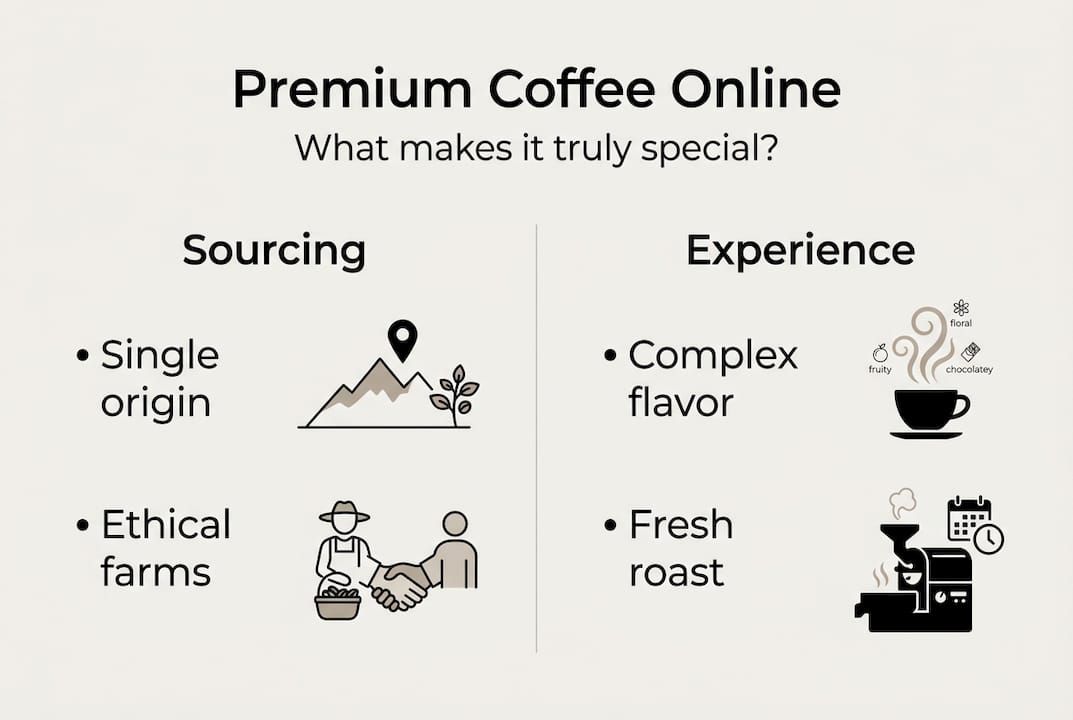
Here’s what separates genuinely premium e-commerce coffee from the noise:
- Transparent sourcing: Farm name, region, and processing method are clearly listed
- Flavor notes: Specific descriptors like “blood orange, dark chocolate, and cedar” rather than vague terms like “bold” or “smooth”
- Roast date: Freshness matters enormously; look for roast dates, not just expiration dates
- SCA score or equivalent: A third-party quality benchmark adds credibility
- Brand story: A compelling founder narrative or ethical sourcing mission that justifies the price
That last point is more important than most shoppers realize. DTC coffee brands that invest in founder storytelling consistently outperform commodity sellers, achieving return on ad spend between 1.8x and 4x. Consumers aren’t just buying coffee. They’re buying into a philosophy.
“Premium coffee is not a price point. It’s a promise about quality, process, and the people behind the cup.”
This is exactly why bold coffee matters to the adventurous brewer. When a brand earns your trust through transparency and flavor, the premium label actually means something.
| Quality tier | SCA score | Typical source | Flavor complexity |
|---|---|---|---|
| Commodity | Below 70 | Mass-market blends | Low |
| Premium | 70 to 79 | Regional farms | Medium |
| Specialty | 80 and above | Single-origin, traceable | High |
| Artisan/craft | Varies | Small-batch, unique process | Very high |
How premium e-commerce coffee is sourced and crafted
Understanding the process behind premium e-commerce coffee deepens your appreciation and sharpens your palate. The journey from seed to cup involves decisions at every stage, and each one either adds or subtracts from the final flavor in your mug.
It starts with sourcing. Premium roasters typically work through direct trade relationships, meaning they buy directly from farmers rather than through commodity brokers. This model ensures farmers receive fair compensation and gives roasters control over quality standards. When a brand can tell you the name of the farm and the altitude it sits at, that’s a reliable sign of genuine direct trade sourcing.
Here’s how the crafting process typically unfolds for a truly premium e-commerce coffee:
- Farm selection: Roasters visit or vet farms based on soil quality, altitude, and processing methods
- Green bean evaluation: Beans are cupped (tasted in raw form) to assess potential flavor profiles
- Small-batch roasting: Smaller batches allow for precise heat control, unlocking complex sugars and acids
- Post-roast resting: Beans degas for 24 to 72 hours before packaging to stabilize flavor
- Specialty processing: Techniques like barrel-aging or honey processing add unique dimensions
The guide to premium coffee blends shows how blending itself becomes an art form when done with intention. Combining beans from different origins or processing methods creates flavor profiles that neither bean could achieve alone.
Barrel-aging is one of the most exciting frontiers in this space. By resting green or roasted beans inside charred oak barrels that once held whiskey, roasters infuse deep notes of vanilla, caramel, and smoky oak into the coffee without adding any alcohol. The result is a completely non-alcoholic brew with a flavor complexity that rivals a fine spirit.
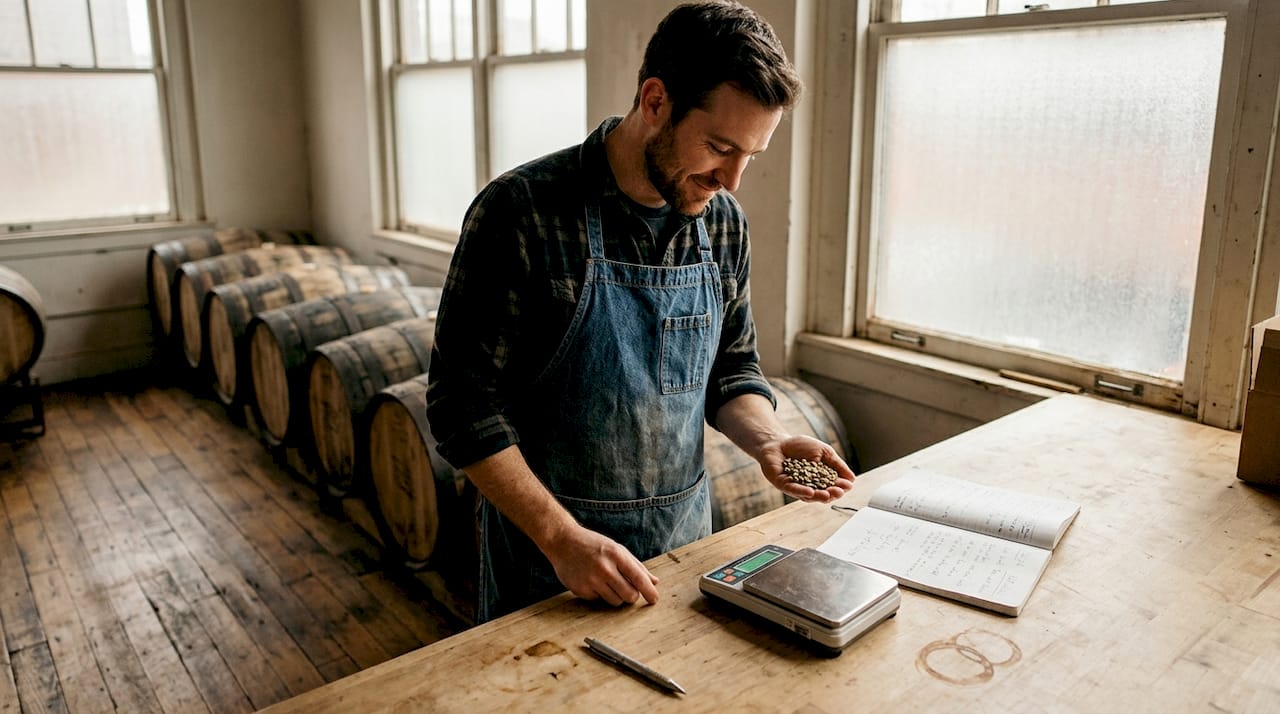
Pro Tip: When buying small-batch coffee online, always check the roast date. Coffee tastes best between 5 and 21 days post-roast. Anything older than 30 days has already lost a significant portion of its volatile aromatic compounds.
According to DTC scaling research, brands that share detailed craftsmanship stories alongside their products generate substantially stronger customer loyalty than those that compete on price alone. The story is part of the flavor. Explore flavor profiles and brewing tips to see how process and taste connect in practice.
The flavor experience: What to expect from premium blends
Having learned what goes into making a premium coffee, it’s time to savor how these factors translate into unforgettable tasting experiences. Premium blends don’t just taste “good.” They taste like something specific, and that specificity is the whole point.
Artisan coffees commonly express notes across four main flavor families:
- Fruity and floral: Blueberry, jasmine, citrus zest, stone fruit
- Earthy and herbal: Cedar, tobacco, dark chocolate, dried herbs
- Nutty and caramel: Hazelnut, brown sugar, toffee, almond
- Spiced and barrel-infused: Cinnamon, vanilla, smoky oak, clove
The unique coffee blends available through specialty e-commerce span all of these families, often in a single cup. That range is what makes the tasting experience so rewarding.
Brewing method dramatically affects which notes come forward. A pour-over highlights bright, acidic, and floral notes. A French press pulls out heavier body and earthier tones. An espresso concentrates sweetness and intensifies any barrel or spice character. Water quality matters too. Filtered water between 195 and 205 degrees Fahrenheit extracts flavor cleanly without introducing mineral interference.
| Blend type | Best brewing method | Primary flavor notes | Food pairing |
|---|---|---|---|
| Whiskey barrel-aged | French press or espresso | Smoky oak, vanilla, bourbon | Dark chocolate, aged cheese |
| Cinnamon hazelnut | Drip or pour-over | Warm spice, toasted nuts | Oatmeal, biscotti |
| Single-origin Ethiopian | Pour-over | Blueberry, jasmine, citrus | Fresh fruit, light pastries |
| Dubai chocolate blend | Espresso or mocha | Cocoa, toasted nuts, cream | Baklava, milk chocolate |
Pro Tip: Try your premium coffee black before adding anything. Even one sip without milk or sugar tells you everything about the roast quality and origin character. If it’s genuinely premium, you won’t need to mask it.
As SCA quality standards confirm, premium and specialty coffees earn their scores through measurable flavor complexity, not just marketing. Pairing the right blend with the right food and brewing method is how you get the most out of every bag. For inspiration on gifting or exploring new profiles, the gourmet coffee gifts guide is a great starting point.
Choosing and buying premium coffee online
Armed with an appreciation of flavor and craftsmanship, you’re ready to find the perfect premium coffee blend for your taste. But the online marketplace is crowded, and not every brand that claims “artisan” or “small-batch” actually delivers on that promise.
Here’s a step-by-step process for evaluating any online coffee brand before you buy:
- Check the sourcing page: Does the brand name specific farms, regions, or cooperatives? Vague language like “sourced from the finest regions” is a red flag.
- Read the flavor notes: Specific descriptors indicate real curation. Generic terms like “rich” or “smooth” suggest commodity blending.
- Look for a roast date: If only an expiration date is listed, the brand may not prioritize freshness.
- Evaluate the story: A genuine founder narrative or ethical sourcing mission adds credibility. Brands that justify premium pricing through storytelling tend to back it up with product quality.
- Check return or satisfaction policies: Confident premium brands stand behind their product.
Common red flags to avoid:
- No origin information beyond country name
- Pricing that undercuts the market significantly (often signals commodity beans with premium branding)
- No roast date or “always fresh” claims without specifics
- Stock photography instead of actual farm or roastery images
Pro Tip: Subscribe to a rotating coffee subscription from a brand you trust. This is the fastest way to train your palate across multiple origins and processes without committing to large quantities of any single blend.
Building coffee rituals and premium flavor habits around your purchases makes the experience richer over time. And if you’re curious about origin-specific flavor, exploring single origin coffee is one of the most educational things you can do as a home brewer.
Our take: Why the future of premium coffee is global and personal
Here’s what most buying guides miss: the real revolution in premium e-commerce coffee isn’t about quality scores or roast profiles. It’s about the relationship between a brand and its community.
For decades, coffee culture was gatekept by geography. You had to live near a great roaster or travel to find something genuinely exciting. E-commerce broke that barrier completely. Now, a brewer in rural Nebraska can access the same evolving coffee complexity that a specialty cafe in Tokyo offers.
But the most interesting shift is how personal the experience has become. Artisan brands can experiment with barrel-aging, unusual processing methods, and cross-cultural flavor fusions in ways that large commercial roasters simply cannot. And they can tell you exactly why they made those choices. That transparency builds trust and turns a transaction into a conversation.
We believe the next wave of premium coffee will be defined less by price and more by curiosity. The brewers who seek out new origins, try unfamiliar processes, and engage with the stories behind their cups will consistently drink better coffee than those who just spend more money. Premium is a mindset before it’s a product.
Discover your next artisan blend at Variatea Coffee
If this guide has sparked your curiosity, you’re exactly the kind of brewer we built Variatea Coffee for. We specialize in bold, flavor-forward blends that you simply won’t find on a grocery store shelf.

From our whiskey barrel-aged coffee with its deep notes of smoky oak and vanilla, to our full lineup of premium teas including Hojicha, Matcha, and Moroccan Mint, every product is crafted for the adventurous brewer who wants more from their cup. Browse our full collection, read the stories behind each blend, and find your next favorite at Variatea Coffee. Your next great cup is one click away.
Watch us in action:
Frequently asked questions
How can I tell if an online coffee is truly premium?
Look for clear sourcing details, an SCA score above 70, specific flavor notes, and a transparent brand story behind the beans. Brands that define premium clearly through both quality standards and storytelling are the most reliable.
Why buy premium coffee online instead of in stores?
E-commerce gives you access to rare, small-batch blends and freshly roasted imports that grocery stores simply don’t carry. Direct-to-consumer models also mean you often get fresher coffee shipped closer to the roast date.
Does higher price always mean higher quality with e-commerce coffee?
Not at all. Quality depends on sourcing transparency, roasting precision, and the brand’s commitment to flavor. A premium label needs to be backed by process and ethics, not just a higher price point.
What makes whiskey barrel-aged coffee different?
The beans rest inside charred oak barrels that previously held whiskey, absorbing complex notes of vanilla, smoky oak, and caramel without any alcohol content. The result is a uniquely layered brew with depth that standard roasting methods can’t replicate.
Recommended
- Ultimate premium coffee gift guide: Curate gourmet experiences – Variatea Coffee
- Unlock unique coffee rituals: expert brews & premium flavor – Variatea Coffee
- Why bold coffee matters: elevate your brew ritual – Variatea Coffee
- Discover unique coffee blends for premium flavor experiences – Variatea Coffee