

Master flavor layering in coffee: a 2026 at-home guide
You brew your morning cup, expecting bold complexity, but instead taste flat, one-dimensional coffee. This disappointment stems from missing a crucial artisanal technique called flavor layering. By strategically combining beans from different origins, roast levels, and processing methods, you can craft balanced, multifaceted coffee at home that rivals specialty cafes. This guide walks you through blending principles, roasting fundamentals, brewing techniques, and evaluation methods to transform your daily brew into an exciting sensory experience. Master these skills and unlock the rich, layered profiles you’ve been chasing.
Table of Contents
- Understanding The Basics: What Is Flavor Layering In Coffee?
- Preparing Your Beans: Selecting And Roasting For Layered Flavors
- Executing The Blend: Brewing Techniques And Flavor Evaluation
- Troubleshooting And Mastering Your Layered Coffee Blends
- Explore Artisanal Blends To Enhance Your Flavor Layering Journey
- FAQ
Key takeaways
| Point | Details |
|---|---|
| Strategic blending creates depth | Combining base coffees with character coffees in 70/30 ratios builds balanced complexity without one flavor dominating. |
| Processing shapes flavor foundation | Washed beans deliver clean acidity, natural processing adds fruity body, and honey methods balance sweetness. |
| Roasting unlocks chemical complexity | Maillard reactions and caramelization during roasting develop layered notes from florals to chocolate to smoke. |
| Cupping protocols reveal success | Systematic tasting at 8.25g per 150ml water for 4 minutes dissects aroma, flavor, aftertaste, and balance. |
| Avoid common pitfalls | Over-blending muddies layers while under-roasting creates sour, unbalanced cups. |
Understanding the basics: what is flavor layering in coffee?
Flavor layering represents the artisanal practice of combining multiple distinct coffee profiles into one harmonious cup. Rather than settling for a single-origin coffee’s characteristics, you deliberately stack complementary flavors to achieve greater complexity and balance. This technique mirrors how professional roasters craft signature blends, but you can execute it at home with careful planning.
The foundation starts with understanding blend ratios using base and character coffees. Base coffees typically comprise 60 to 70 percent of your blend, providing body and sweetness through origins like Brazilian or Colombian beans. Character coffees make up the remaining 20 to 30 percent, contributing brightness and unique notes through Ethiopian or Kenyan varieties. This ratio prevents any single flavor from overwhelming the cup while creating interesting layers.
Roasting level dramatically impacts which flavors emerge and persist in your final brew. Light roasts preserve origin florals and citrus through high acidity, medium roasts balance sweetness with chocolate notes, and dark roasts emphasize bold characteristics like cocoa and smoke. The Maillard reaction and caramelization during roasting build these layers chemically, transforming simple sugars and amino acids into hundreds of flavor compounds.
Consider these roasting stages and their flavor impacts:
- Light roasts stop before second crack, maintaining origin-specific notes like jasmine, lemon, and tea-like qualities
- Medium roasts develop through first crack, creating caramel, nuts, and balanced acidity
- Dark roasts push past second crack, producing bittersweet chocolate, roasted nuts, and smoky depth
Processing methods add another dimension to flavor layering before beans ever reach your roaster. Washed processing removes fruit before drying, yielding clean, bright acidity. Natural processing dries beans inside the cherry, imparting fruity, wine-like characteristics and heavier body. Honey processing splits the difference, leaving some mucilage during drying for sweetness and moderate fruit notes. Choosing beans with complementary processing styles lets you stack these foundational flavors intentionally.
Exploring expertly crafted options like Max Caf Blend or 6 Bean Blend demonstrates how professional roasters apply these principles at scale.
Preparing your beans: selecting and roasting for layered flavors
Successful flavor layering begins with sourcing beans that offer contrasting yet complementary profiles. Your base coffee should deliver reliable body and sweetness, anchoring the blend with familiar comfort. Brazilian naturals provide chocolate and nutty depth, while Colombian washed beans contribute clean sweetness and medium body. These workhorses form the canvas for more adventurous accent coffees.
Character beans inject personality and distinction into your blend. Ethiopian Yirgacheffe brings floral jasmine and bergamot notes with bright acidity. Kenyan coffees add blackcurrant and citrus punch. Sumatran beans contribute earthy, herbal complexity with syrupy body. Select one or two character origins that contrast with your base rather than mirroring it. Pairing fruity Ethiopian with chocolatey Brazilian creates layers, while combining two chocolatey origins produces redundancy.
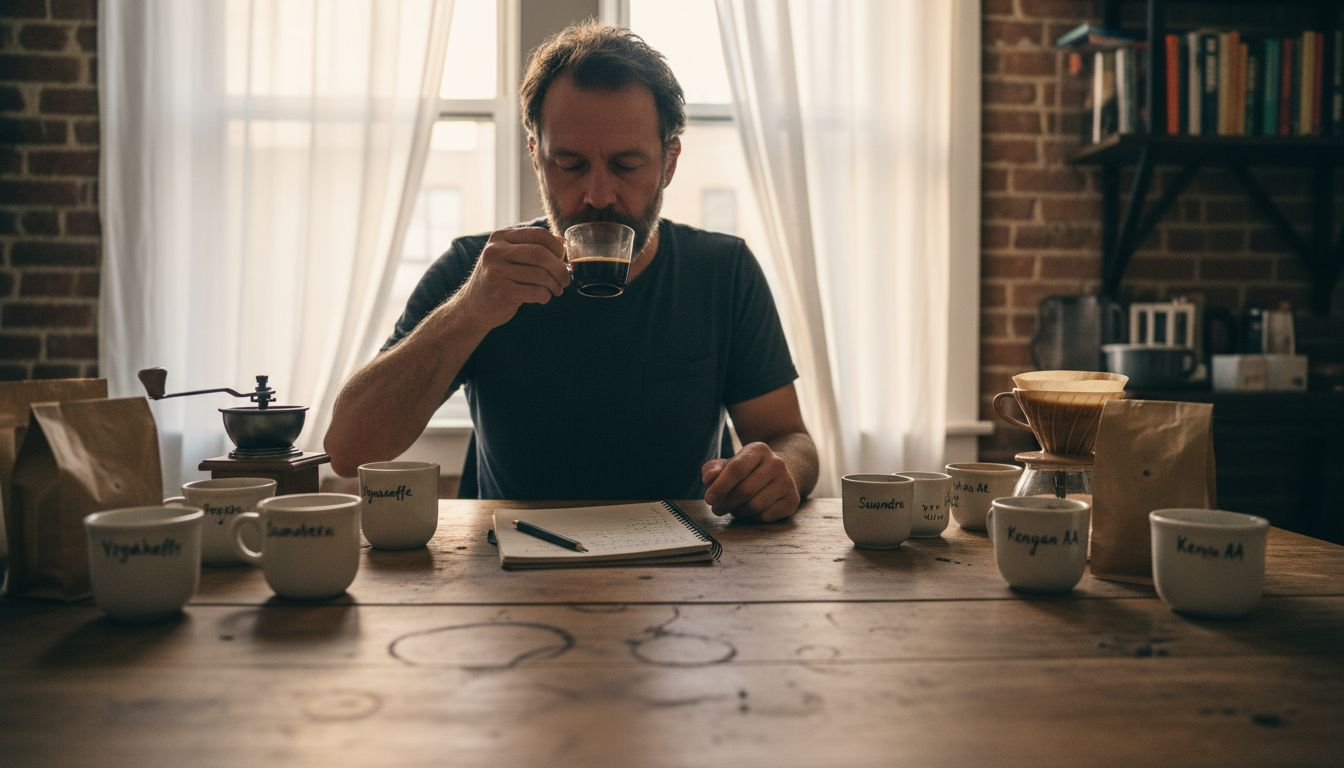
Processing methods influence these base layers significantly. Washed coffees deliver clean acidity that cuts through heavier base notes. Natural processed beans add fruity body that enriches lighter roasts. Honey processed varieties balance sweetness across the flavor spectrum. Match processing to your layering goals: if your base lacks brightness, add a washed character coffee; if it needs body, choose natural processed beans.
Roasting strategy splits into two approaches. Roasting components separately grants maximum control over each origin’s flavor development. You can take Ethiopian beans to a light City roast to preserve florals while pushing Brazilian beans to Full City for chocolate depth. This precision lets you fine-tune each layer before blending. Alternatively, blending green beans and roasting together integrates flavors during development but sacrifices individual control. Beans with similar density and moisture content work best for this method.
Pro Tip: Source beans harvested within the same season and stored similarly to ensure even roasting. Mismatched moisture levels cause uneven development, with some beans scorching while others remain underdeveloped.
Your roasting profile determines which flavors emerge and dominate. Apply higher heat in the early drying phase to develop body, then moderate temperature through Maillard reactions to build sweetness and complexity. Avoid rushing through first crack, as this compressed development window muddies flavors rather than layering them distinctly. Extend development time by 15 to 20 percent compared to single-origin roasting to let layered notes clarify.
Consider starting with proven foundations like Breakfast Blend or Holiday Blend to understand how balanced layers taste before experimenting with your own combinations.
Executing the blend: brewing techniques and flavor evaluation
With roasted beans ready, combine your base and character coffees using a kitchen scale for precision. Start with a 70/30 ratio: 70 grams base coffee to 30 grams character coffee for a 100-gram batch. This proportion typically prevents the accent coffee from dominating while providing enough presence to create distinct layers. Adjust in 5-gram increments based on tasting results, but resist extreme ratios that eliminate the blending benefits.
Follow these steps for consistent blending:
- Weigh each component separately on a digital scale accurate to 0.1 grams
- Combine beans in a clean, dry container with a tight-sealing lid
- Shake vigorously for 30 seconds to distribute beans evenly throughout the blend
- Let the blend rest for 24 hours before brewing to allow flavors to marry slightly
- Grind immediately before brewing to preserve aromatic compounds
Brewing method significantly impacts which layers you perceive and how clearly they present. Pour over techniques using a V60 or Chemex at 92°C water temperature provide exceptional clarity, letting you distinguish individual flavor notes. Use a 1:16 coffee to water ratio (15 grams coffee to 240 grams water) with a total brew time of 2.5 to 3 minutes. The bloom phase should last 30 seconds with twice the coffee weight in water, followed by slow, circular pours every 30 seconds.
Systematic evaluation through cupping protocols dissects layers such as aroma, flavor, aftertaste, and balance. Measure 8.25 grams of medium-coarse ground coffee into a cupping bowl, add 150ml water just off boil, and steep for exactly 4 minutes. Break the crust with a spoon, inhaling deeply to assess aroma complexity. Let cool for 8 to 10 minutes, then slurp from a spoon to spray coffee across your palate, noting distinct flavor layers.
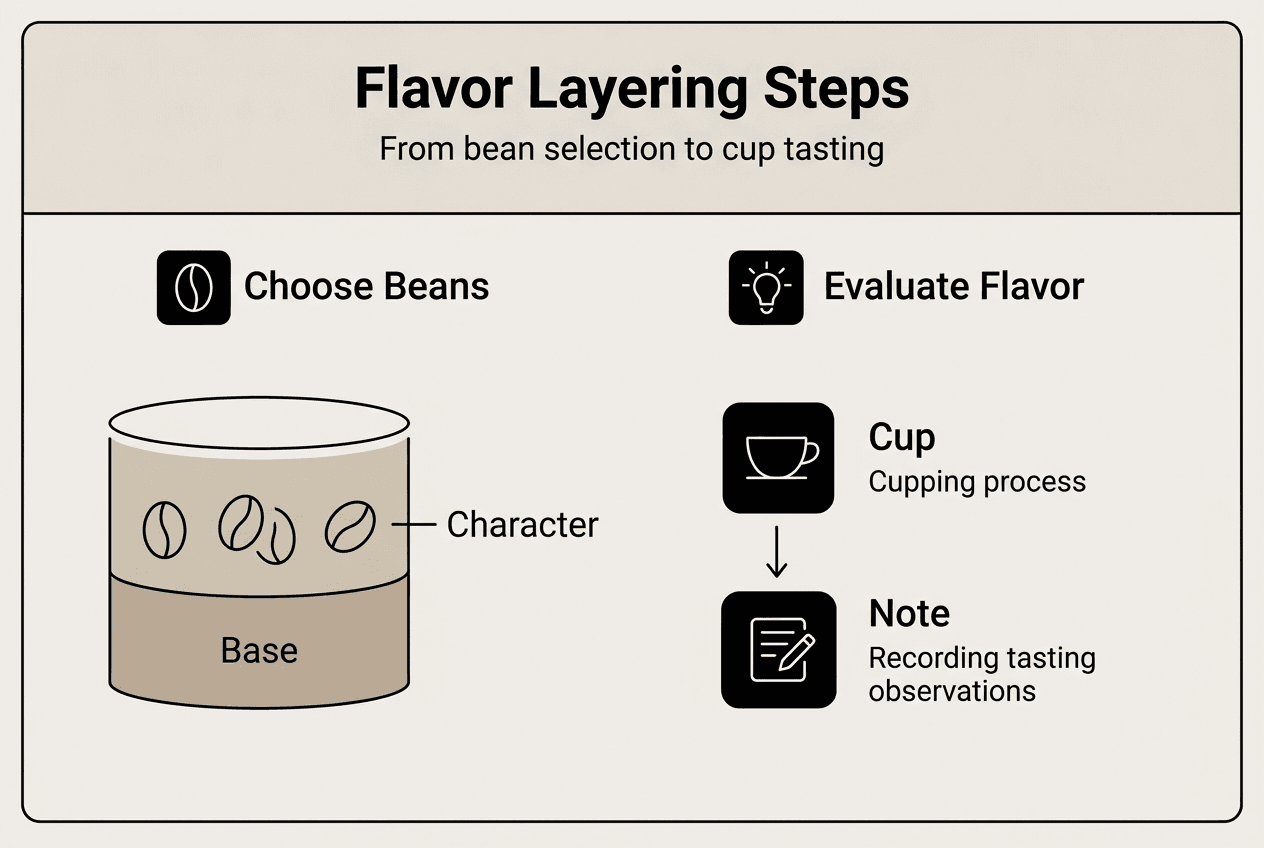
Pro Tip: Cup your blend alongside its component coffees separately. This side-by-side comparison reveals whether you’ve achieved true layering or simply averaged the flavors into homogeneity.
| Evaluation Stage | What to Assess | Layering Success Indicators |
|---|---|---|
| Fragrance (dry grounds) | Aromatic complexity before water contact | Distinct notes from each component detectable |
| Aroma (wet grounds) | Scent evolution after blooming | Multiple aromatic layers emerging sequentially |
| Flavor (first sip) | Initial taste impression and evolution | Clear progression from bright to sweet to finish |
| Aftertaste | Lingering notes after swallowing | Clean finish with pleasant complexity, not muddiness |
| Balance | How components interact | No single element dominates; harmony across layers |
Record your observations using flavor wheels or apps like Coffee Compass. Note specific descriptors for each layer: does the initial sip present citrus brightness from your Ethiopian character coffee? Does the mid-palate reveal chocolate from your Brazilian base? Does the finish linger with caramel sweetness? Document these details alongside your blend ratio and roast levels to refine future batches.
Good layering produces distinct phases in the tasting experience. You should perceive an opening note, typically from your character coffee’s acidity or brightness. The middle develops body and sweetness from your base coffee. The finish integrates both components into a cohesive aftertaste. Muddled results taste flat throughout, lacking this temporal progression. Sour, astringent cups indicate under-extraction or under-roasting that prevents layers from developing fully.
Explore professionally crafted examples like Breakfast Blend or Latin American Blend to calibrate your palate for successful layering.
Troubleshooting and mastering your layered coffee blends
Even experienced blenders encounter problems when components fail to harmonize. Muddy, indistinct flavors signal over-blending, where too many origins or overly similar profiles merge into generic coffee. This typically results from using three or more character coffees simultaneously or selecting origins with overlapping flavor profiles. Simplify your blend by reducing to one base and one character coffee, ensuring they offer clear contrast in acidity, body, or processing method.
Sour, astringent cups point to under-roasting one or more components. Under-roasting creates sour coffee taste because acids haven’t broken down sufficiently and sugars haven’t caramelized into balancing sweetness. Extend your roast development time by 30 to 45 seconds, particularly through first crack and into the development phase. Monitor bean color closely, aiming for at least Full City (medium-dark) for base coffees to ensure adequate sweetness development.
Unbalanced blends, where one component dominates entirely, require ratio adjustments. If your Ethiopian character coffee overwhelms with excessive brightness, reduce it from 30 percent to 20 percent of the blend. Conversely, if your base coffee produces dull heaviness without interesting top notes, increase character coffee to 35 percent. Make incremental 5 percent adjustments rather than dramatic swings to identify the precise tipping point.
Common issues and their solutions:
- Flat, one-dimensional taste: Increase roast contrast between components or select origins with more distinct processing methods
- Harsh, bitter finish: Lower brew temperature to 88-90°C or coarsen grind size to reduce over-extraction
- Weak body with excessive acidity: Increase base coffee percentage or select a natural processed base for more body
- Muted aroma with acceptable taste: Ensure beans are fresh (within 2-3 weeks of roasting) and grind immediately before brewing
| Symptom | Likely Cause | Recommended Fix |
|---|---|---|
| Muddy, indistinct flavors | Too many origins or similar profiles | Simplify to one base and one character coffee with clear contrast |
| Sour, astringent taste | Under-roasted components | Extend roast development by 30-45 seconds past first crack |
| Single flavor dominates | Incorrect blend ratio | Adjust dominant component down by 5-10 percent increments |
| Harsh bitterness | Over-extraction during brewing | Lower water temperature to 88-90°C or coarsen grind |
| Weak, watery body | Insufficient base coffee or light roasting | Increase base percentage or deepen roast level |
Mastery requires systematic experimentation and detailed record keeping. Create a blending journal documenting each attempt’s ratio, roast levels, processing methods, brew parameters, and tasting notes. After 10 to 15 iterations, patterns emerge showing which combinations produce your preferred layers. You’ll discover whether you favor fruit-forward profiles with natural processed character coffees or clean, structured layers using washed beans.
Progressive blending experiments build expertise efficiently. Start with a proven 70/30 ratio using familiar origins. Once you achieve satisfactory layering, introduce a new variable: swap your character coffee to a different origin while keeping the base constant. Taste the difference this single change produces. Next, alter roast level on one component by 30 seconds. This methodical approach isolates each variable’s impact rather than changing everything simultaneously and losing insight into cause and effect.
Pro Tip: Host informal cupping sessions with fellow coffee enthusiasts. Fresh palates often detect nuances you’ve become blind to through repeated tasting. Their feedback accelerates your learning curve and exposes assumptions about your blends.
Consider how professional roasters like those behind Cowboy Blend have refined their layering through countless iterations. Your path to mastery follows the same patient, systematic approach.
Explore artisanal blends to enhance your flavor layering journey
Now that you understand the mechanics behind flavor layering, experiencing professionally crafted blends provides valuable reference points for your own experiments. Variatea Coffee specializes in bold, artisanal combinations that demonstrate layering principles at their finest. 
Our Max Caf Blend showcases how contrasting origins create energizing complexity, while 6 Bean Blend illustrates the sophisticated depth achievable through multi-origin layering. These expertly balanced roasts serve as benchmarks when evaluating your own blending success, helping you recognize what truly harmonious layers taste like.
Beyond coffee, our premium loose leaf teas offer parallel flavor layering experiences. Hojicha’s roasted, caramel notes and Matcha’s creamy umami demonstrate how processing and preparation create distinct sensory layers in tea. Exploring these alternatives expands your palate and deepens your appreciation for how different beverages achieve complexity through similar artisanal techniques. Each product reflects our commitment to adventurous, small-batch quality that transforms your daily brewing ritual into an exciting flavor journey.
FAQ
What is flavor layering in coffee?
Flavor layering combines multiple coffee profiles strategically to create balanced, complex tastes in a single cup. It involves blending different origins, roast levels, and processing methods so distinct flavor notes emerge sequentially during tasting rather than blending into generic coffee. Successful layering produces a progression from bright opening notes through sweet mid-palate to a clean, lingering finish.
How do I choose beans for layered blends?
Select a base bean providing body and sweetness, such as Brazilian or Colombian varieties, for 60 to 70 percent of your blend. Add a character bean offering acidity or floral notes, like Ethiopian or Kenyan coffee, for the remaining 20 to 30 percent. Consider processing methods carefully: washed beans deliver clean acidity, natural processing adds fruity body, and honey methods balance sweetness. Starting with proven combinations like Max Caf Blend helps calibrate your palate for successful pairings.
Can I roast blended beans together?
Roasting components separately allows precise control over each bean’s flavor development, letting you take one origin light to preserve florals while pushing another darker for chocolate depth. Roasting pre-blended green beans together integrates flavors during development but reduces your ability to fine-tune individual layers. This combined approach works best when beans have similar density and moisture content to ensure even roasting.
How to evaluate if my flavor layering works well?
Use the standard cupping method with 8.25g grounds per 150ml water steeped for exactly 4 minutes. Assess aroma complexity when breaking the crust, then evaluate flavor progression, aftertaste length, and overall balance using flavor wheels. Successful layering produces distinct phases: bright opening notes, sweet mid-palate development, and a clean finish where components harmonize rather than muddy together. Record specific descriptors for each layer to track improvement across iterations.