

Tracing the roots of luxury coffee: Origins to artisanal trends
TL;DR:
- Luxury coffee is rooted in sensory science, transparency, and innovative processing that enhance flavor complexity.
- It involves full origin disclosure, detailed processing information, and a focus on crafting a genuine sensory experience beyond branding.
Most people assume luxury coffee is just regular coffee wearing a higher price tag. Better packaging, a trendier café, a fancier name on the bag. That assumption misses everything that actually makes premium coffee worth pursuing. The real story behind luxury coffee is built on formal sensory science, radical supply chain transparency, and processing innovations that push what a roasted bean can taste like. Understanding those roots changes how you shop, how you brew, and how much genuine pleasure you get from every cup you make.
Table of Contents
- Where luxury coffee begins: From ‘specialty’ to premium experience
- Transparency and storytelling: The heartbeat of luxury coffee
- Innovation and controversy: Barrel aging, co-fermentation, and luxury debates
- Elevating your cup: The role of preparation and brewing in luxury experiences
- The uncomfortable truth about luxury coffee trends
- Experience luxury coffee with Variatea
- Frequently asked questions
Key Takeaways
| Point | Details |
|---|---|
| Specialty standards matter | Luxury coffee traces its roots to formal benchmarks and sensory evaluation used since the 1970s. |
| Transparency builds credibility | Detailed origin and process disclosure is essential for luxury coffee to gain trust and status. |
| Innovation invites debate | Novel techniques like barrel aging and co-fermentation push boundaries—but authenticity and full disclosure are crucial. |
| Preparation unlocks premium flavor | Artisanal roasting, blending, and brewing extract the luxury qualities that elevate a cup. |
| Luxury is substance, not hype | True luxury coffee is defined by what you can verify and taste, not just branding or novelty. |
Where luxury coffee begins: From ‘specialty’ to premium experience
The word “specialty” gets thrown around carelessly today, but its origins are precise. The term ‘specialty coffee’ was coined in 1974 by Erna Knutsen, who used it to describe beans with exceptional flavor potential tied directly to specific geographic microclimates. That single phrase created a framework that the entire luxury coffee world still builds on today. Without it, there would be no meaningful way to separate a genuinely remarkable cup from grocery store commodity blends.
The Specialty Coffee Association formalized that framework through its Q-Score system, which grades coffee on a 100-point sensory scale covering aroma, flavor, aftertaste, acidity, body, balance, and uniformity. The SCA Q-Score system positions 80+ coffees as the luxury tier, where professional Q-graders evaluate each lot with calibrated precision. Only coffees that clear that threshold are even eligible to be marketed as specialty. Everything below is commercial grade, regardless of how it’s packaged or priced.
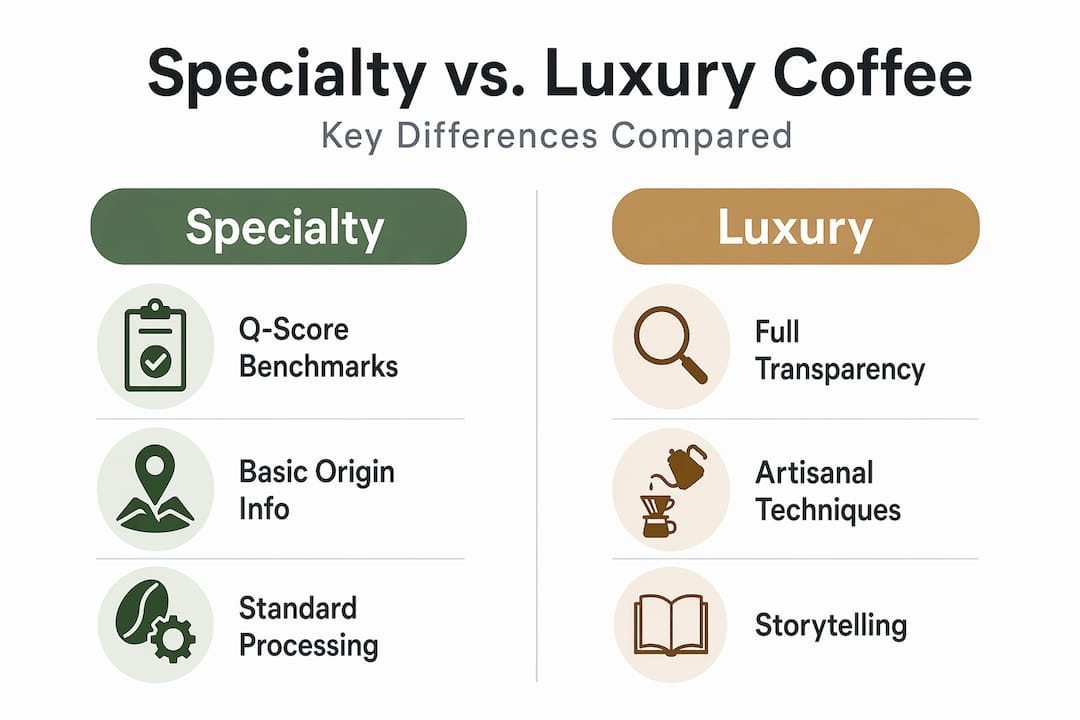
Here’s why that matters to you as an enthusiast: the Q-Score isn’t marketing. It’s a blind sensory audit performed by certified professionals. That objectivity is exactly what opened the door for the flavor-forward innovations that define luxury coffee today, because producers now had a credible benchmark to aim for and beat.
| Coffee grade | Score range | What it means |
|---|---|---|
| Commercial | Below 80 | Commodity, mass-market |
| Specialty | 80 to 84 | High quality, notable origin |
| Premium specialty | 85 to 89 | Exceptional character, traceable |
| Luxury / competition | 90+ | Rare, extraordinary complexity |
“Specialty coffee is not just a score. It’s a philosophy of sourcing, processing, and presenting coffee as a sensory experience rather than a commodity.” — Specialty Coffee Association principles
Exploring the specialty coffee flavor benefits at the source level reveals just how dramatically bean quality shapes what ends up in your cup. The Q-Score framework was essentially a declaration that coffee deserved to be treated like wine, with terroir, vintage, and craft all factoring into the final evaluation.
Transparency and storytelling: The heartbeat of luxury coffee
Scoring systems matter, but they only explain part of what makes luxury coffee feel luxurious. The emotional dimension comes from knowing the story behind what you’re drinking. Luxury coffee trends are defined by transparency and origin storytelling just as much as by evaluation standards. A coffee that scores 88 points but comes with zero sourcing information feels less premium than an 85-point lot with a named farm, a known harvest date, and a described processing method.
Why does the story matter to your flavor experience? Because context literally changes perception. When you know that a particular washed Ethiopian natural came from a specific altitude, fermented for a specific number of hours, and was sun-dried on raised beds for three weeks, your brain connects those sensory details to the cup in front of you. That’s not placebo. That’s how human flavor perception actually works: expectation, context, and narrative shape taste at a neurological level.
Understanding how origin shapes coffee flavor is the single most powerful shortcut to becoming a more discerning buyer. Origin disclosure isn’t just a nice-to-have. It’s the core of what separates genuine luxury from expensive theater.
Here’s what credible luxury coffee transparency looks like in practice:
- Farm or cooperative name disclosed on the bag or product page
- Harvest date or crop year clearly listed, not just a roast date
- Processing method specified (washed, natural, honey, anaerobic, etc.)
- Altitude and region noted, not just the country of origin
- Variety or cultivar identified (Gesha, Bourbon, Typica, SL28, etc.)
- Importer or exporter named in the supply chain description
Pro Tip: Before buying any premium coffee, check the product page for at least four of the six disclosure points above. If a seller can only tell you the country and the roast level, you’re paying for branding, not luxury.
Pairing that transparency with a structured artisanal coffee tasting workflow helps you actually perceive the origin character in your cup, rather than just reading about it on the bag.
Innovation and controversy: Barrel aging, co-fermentation, and luxury debates
Once the specialty framework gave producers a credible platform, innovation accelerated fast. Two techniques in particular have reshaped what luxury coffee can taste like: barrel aging and co-fermentation. Both are fascinating. Both are also genuinely controversial in the specialty world.
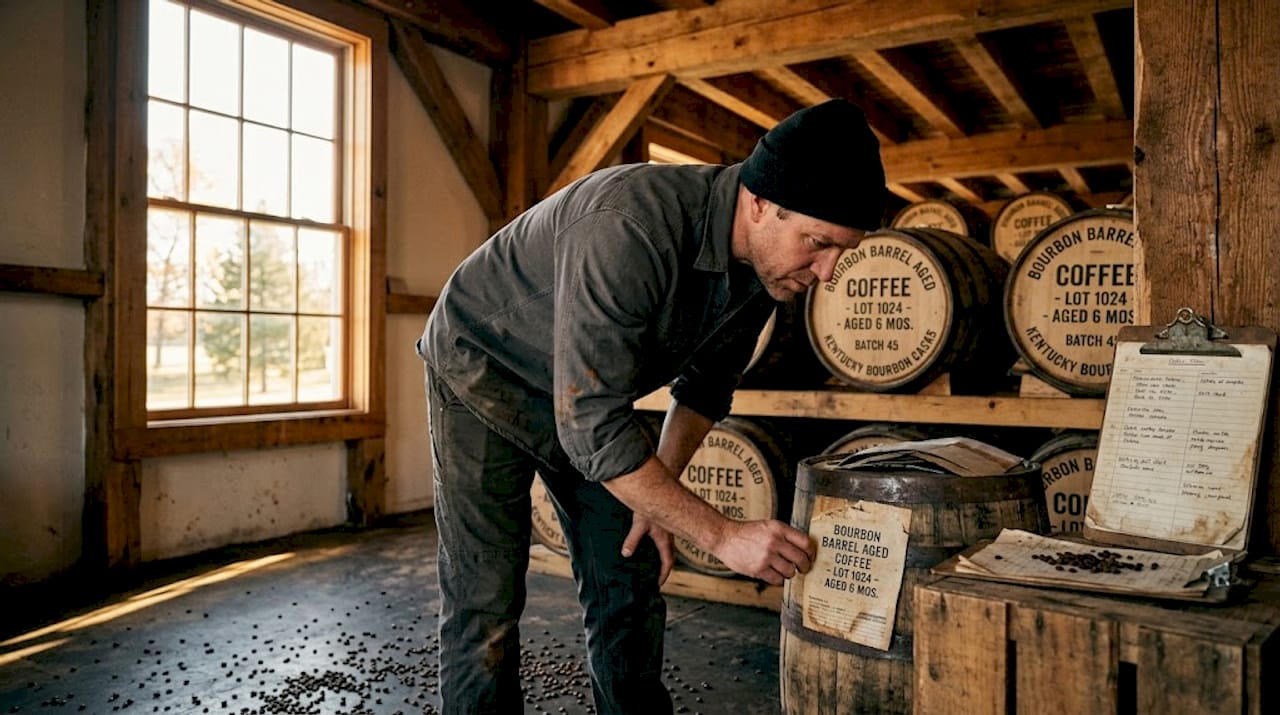
Barrel aging involves resting green or roasted coffee beans inside used spirit barrels, typically bourbon, whiskey, or rum casks, for weeks or months. The porous wood transfers oak-derived compounds, vanilla notes, and residual spirit aromatics directly into the bean. Barrel aging is positioned as a luxury technique, but its credibility depends entirely on detailed producer disclosure. An authentic barrel-aged coffee should tell you exactly what spirit previously occupied the barrel, how long the coffee rested, at what humidity and temperature, and what the base coffee’s origin was before aging began.
Co-fermentation takes a different approach. Rather than aging after processing, co-fermented coffees are fermented alongside other ingredients, fruit juices, yeasts, spices, or even wine-grape skins, to engineer specific flavor compounds during the processing stage. Controversy arises when novelty techniques lack transparency, and co-fermentation sits right at the center of that debate. Purists argue that engineering flavor inputs defeats the purpose of terroir-driven specialty coffee. Innovators counter that winemakers have done this for centuries and the results can be extraordinary.
| Technique | Flavor impact | Transparency requirement | Controversy level |
|---|---|---|---|
| Natural processing | Fruity, wine-like, complex | Medium | Low |
| Anaerobic fermentation | Intense, funky, layered | High | Medium |
| Barrel aging | Smoky, vanilla, oak | Very high | Medium |
| Co-fermentation | Variable, designed flavors | Very high | High |
What to check before buying an innovative luxury coffee:
- Origin details of the base coffee before any processing or aging begins
- Barrel type and history for barrel-aged lots, including previous spirit and aging duration
- Fermentation inputs for co-fermented coffees, including added ingredients and timing
- Full producer disclosure through the importer, not just the retailer’s marketing copy
- Third-party evaluation or at least a Q-Score if available
Mastering layering coffee flavors builds the palate skills you need to actually evaluate these complex profiles yourself. And if you want to experiment at home, there are genuinely rewarding creative coffee enhancements that let you explore barrel and fermentation flavor concepts without spending $40 on a single bag. The broader world of innovative coffee brews continues to push what’s possible in the cup, and the best producers are leading that charge with full transparency.
Elevating your cup: The role of preparation and brewing in luxury experiences
Here’s something that gets underplayed in luxury coffee discussions: even the most extraordinary beans can be ruined by poor preparation. And conversely, a skilled brewer can coax remarkable complexity from a very good, but not astronomically rare, coffee. Luxury positioning is tied to techniques that preserve and showcase origin character throughout every stage, from roasting through brewing.
Artisanal roasting is where the foundation gets set. Small-batch roasters can apply heat curves precisely calibrated to a specific bean’s density and moisture content, developing sweetness and complexity without scorching delicate aromatics. A master roaster working with a 90-point Ethiopian lot treats that coffee completely differently from how a commercial facility would treat the same beans on a high-volume drum. The difference shows up immediately in the cup as clarity, depth, and a clean, lingering finish.
Understanding how roasting transforms coffee flavor gives you a concrete framework for evaluating what you’re tasting. When you know that certain roast profiles emphasize acidity and floral notes while others build body and sweetness, you can make smarter decisions about what to buy and how to brew it.
Techniques that genuinely elevate luxury coffee at the preparation stage:
- Roast curve control: Small-batch roasters manipulate rate-of-rise to develop complexity without bitterness
- Blend architecture: Intentional artisanal flavor profiles combine two or three origins to create a whole greater than its parts
- Grind consistency: Burr grinders at a consistent setting extract evenly, preserving the nuance the roaster built in
- Water quality and temperature: Filtered water at 195 to 205 degrees Fahrenheit brings out sweetness and acidity without introducing mineral interference
- Ritual brewing: Slow pour-over or precise immersion methods give you control over extraction that automated machines simply cannot match
Pro Tip: If you’re brewing a luxury or specialty coffee for the first time, run a simple side-by-side comparison. Brew the same coffee using your standard method and a manual pour-over on the same day. The difference in clarity and flavor definition is almost always striking, and it teaches you exactly what your brewing setup is hiding or revealing.
Thoughtful coffee blending techniques can be just as sophisticated as single-origin sourcing when the blend is built around intentional flavor goals rather than cost reduction. And small adjustments to your brewing routine, things most enthusiasts overlook, are often what unlock flavor-forward coffee experiences at home without requiring any new equipment.
The uncomfortable truth about luxury coffee trends
Let’s be direct about something the luxury coffee world doesn’t always want to admit. Novelty is not the same as quality. An aggressive marketing campaign around a co-fermented, barrel-aged, double-anaerobic coffee sounds thrilling. But if the producer can’t tell you the variety, the farm name, the barrel history, and the fermentation inputs with complete specificity, you’re buying theater.
The most credible luxury coffees disclose full origin and processing details without you having to ask. That transparency isn’t incidental. It’s the actual product. When a producer is proud of every choice they made and every relationship they built along the supply chain, they want you to know it all.
“The most important luxury in coffee is information. A coffee that gives you full transparency about every step of its journey is inherently more valuable than one that merely tastes unusual.”
What we’ve observed across years of sourcing and tasting is that the coffees people remember longest aren’t always the most experimental ones. They’re the ones where the story, the processing artistry, and the flavor all aligned coherently. A beautifully sourced Ethiopian washed coffee, roasted with care, brewed correctly, and accompanied by complete origin information delivers a luxury experience that most novelty-driven experiments can’t match.
The enthusiasts who understand specialty coffee’s transparency standards are the ones who get the most from every premium purchase. Knowing what to look for separates an informed collector from someone who’s just paying more for the same experience dressed up differently.
Luxury in coffee is ultimately about substance. Rare processing with full disclosure. Exceptional growing conditions expressed clearly in the cup. Roasting and brewing decisions that serve the bean, not the branding. That’s the standard worth holding every premium coffee to.
Experience luxury coffee with Variatea
If you’ve been searching for a starting point that brings together genuine transparency, artisanal technique, and bold flavor innovation, Variatea Coffee was built for exactly that.
Our Whiskey Barrel Aged Coffee is the kind of transparent, technique-driven luxury this article describes: a quality base roast aged in authentic charred oak barrels, delivering deep smoky vanilla and bourbon notes without any alcohol. Every detail of the process matters to us, and we share it. Beyond barrel aging, Variatea Coffee offers a full lineup of specialty blends and artisanal teas, each crafted around a specific flavor identity and sourced with the transparency you deserve.
{% include ‘youtube’ id: ‘mTyQWuYcg_k?si=wPv_8KdEmtrXq5gP’ %}
Frequently asked questions
What makes coffee ‘luxury’ versus just specialty?
Luxury coffee relies on detailed origin disclosure, formal sensory evaluation, and intentional processing. Specialty coffee is judged primarily on bean quality and Q-Score, while luxury adds layers of storytelling, traceability, and craft technique. The SCA Q-Score separates specialty and luxury coffee by measurable sensory benchmarks, but transparency is what carries specialty into true luxury territory.
Is barrel-aged coffee always considered luxury?
Not automatically. Barrel-aged coffee earns its luxury status when the producer fully discloses barrel type, aging duration, and the original coffee’s origin. Without that transparency, it may simply be a novelty product with limited credibility in the specialty world.
Why are co-fermented coffees controversial?
Co-fermented coffees spark debate when their production details are vague or their flavors seem engineered rather than origin-driven. Transparency issues fuel controversy around co-fermentation because enthusiasts rightly question whether manufactured flavor compounds represent genuine coffee craftsmanship or clever marketing.
How can I tell if a premium coffee is worth the investment?
Look for full disclosure on farm name, harvest date, processing method, variety, and sensory evaluation. Luxury coffee relies on transparency and formal evaluation, so any credible premium producer will make that information easy to find before you buy.
Recommended
- Coffee tasting workflow: Step-by-step guide for artisanal flavor – Variatea Coffee
- Artisanal coffee flavor profiles and brewing techniques – Variatea Coffee
- How origin shapes coffee flavor: what’s really in your cup – Variatea Coffee
- Unlock unique coffee rituals: expert brews & premium flavor – Variatea Coffee