

How to choose unique coffee blends for an adventurous palate
TL;DR:
- Unique coffee blends are created through rare origins and experimental processing methods.
- Building a skilled palate involves proper tools, tasting routines, and tracking flavor notes over time.
- Staying curious and open to new processes and origins enhances the enjoyment of artisanal coffees.
If you’ve ever stared at a grocery store shelf full of the same three or four coffee brands and felt completely uninspired, you’re not alone. Most mass-produced blends are engineered for consistency, not complexity. They’re designed to offend no one, which means they excite no one either. The good news is that the world of artisanal, small-batch coffee is overflowing with bold, unexpected flavors waiting to be discovered. This guide walks you through exactly what makes a blend worth seeking out, how to build your tasting skills, and how to find the coffees that will genuinely change how you think about your morning cup.
Table of Contents
- What makes a coffee blend truly unique?
- Essential tools and knowledge for your coffee adventure
- How to find and select truly distinctive coffee blends
- Tasting, evaluating, and enjoying your discoveries
- Our perspective: Why the search for the ‘perfect’ blend misses the point
- Discover bold blends and teas from Variatea Coffee
- Frequently asked questions
Key Takeaways
| Point | Details |
|---|---|
| Prioritize small-batch freshness | Small-batch, roast-to-order beans bring out the most innovative and complex coffee flavors. |
| Seek experimental processes | Unique processing like natural or anaerobic methods yields memorable, adventurous blends. |
| Use quality gear and taste mindfully | Proper tools and attentive tasting maximize enjoyment and help you find your favorite blends. |
| Subscriptions enhance exploration | Trying curated subscriptions exposes you to a wide variety of unique coffees you’d rarely find locally. |
| Let your preferences evolve | True coffee enjoyment comes from continual discovery rather than chasing a single perfect blend. |
What makes a coffee blend truly unique?
Not every coffee labeled “specialty” deserves the title. True uniqueness in a blend comes from a combination of rare origins, intentional processing, and the kind of craft that most commercial roasters simply skip. When you discover unique coffee blends, you start to notice that the most memorable cups share a few common traits that set them apart from anything you’d find on a standard supermarket shelf.
Origin matters enormously. Single-origin beans from micro-regions in Ethiopia, Yemen, or Colombia carry flavor fingerprints shaped by altitude, soil, and microclimate. Blends that thoughtfully combine two or three of these origins can create layered complexity that no single-origin alone achieves. But origin is only the starting point.
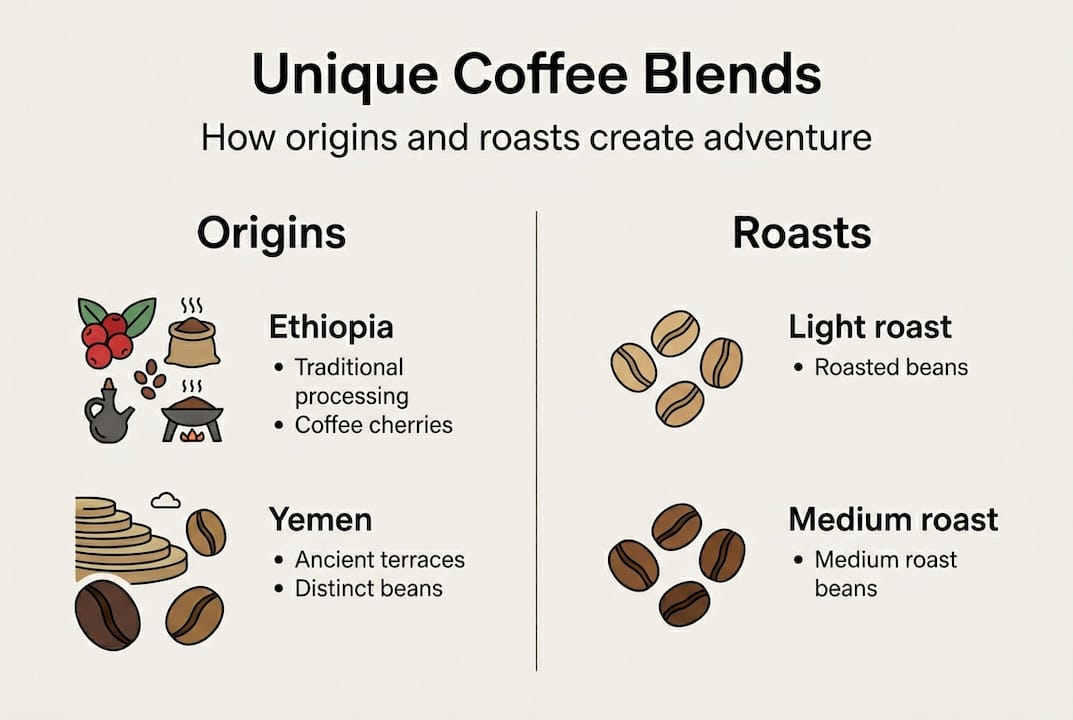
Processing is where things get genuinely exciting. The way a coffee cherry is handled after harvest dramatically shapes what ends up in your cup. Washed coffees tend to be clean and bright. Natural-processed beans, dried whole inside the fruit, develop fruity, wine-like sweetness. Honey-processed coffees fall somewhere in between, with a syrupy body and floral notes. Anaerobic fermentation, where beans ferment in sealed, oxygen-free tanks, pushes flavor into wild, almost fermented-fruit territory. As Bon Appétit notes, seeking out experimental processing methods like honey, natural, and anaerobic, and cupping black first to assess nuance, is the fastest path to genuinely unique coffee experiences.
Here’s what separates a truly distinctive blend from a forgettable one:
- Traceable, single-origin or micro-lot sourcing
- Experimental or non-standard processing (natural, honey, anaerobic)
- Roast profiles designed to highlight, not mask, origin character
- Transparent roast dates and sourcing information
- Small-batch production that allows for quality control at every step
- Intentional flavor pairings, like barrel-aging or spice infusion
“Mass-market blends are built to be inoffensive. Adventurous palates deserve something built to be unforgettable.”
When you explore artisan coffee varieties, you’ll find that the roasters worth following are the ones who treat every batch like a creative project, not a production quota. Wirecutter’s coffee subscription guide is a solid resource for identifying roasters who consistently push boundaries.
Now that you know what makes coffee blends stand out, let’s get hands-on with what you’ll need to start exploring unique coffees.
Essential tools and knowledge for your coffee adventure
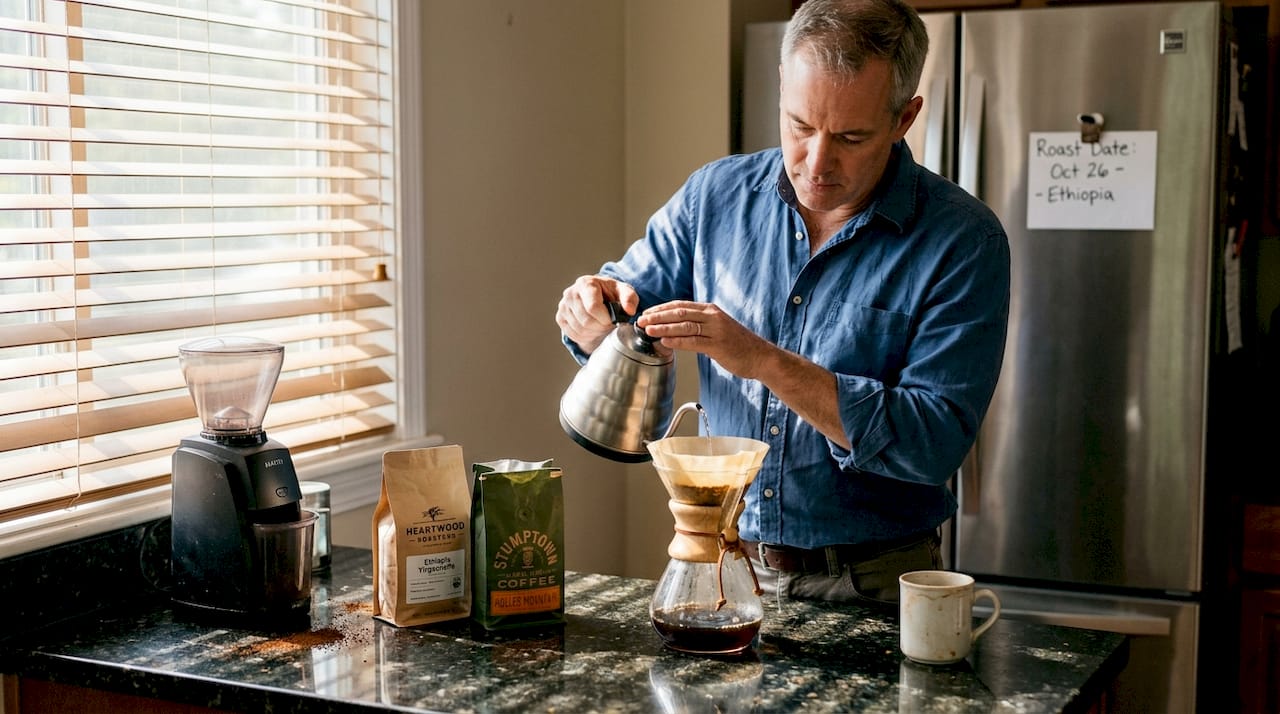
You don’t need a $2,000 espresso machine to appreciate great coffee. But a few key tools make a real difference when you’re trying to evaluate and enjoy complex, artisanal blends.
| Tool | Why it matters |
|---|---|
| Burr grinder | Produces consistent particle size for even extraction |
| Gooseneck kettle | Controls pour speed and water temperature precisely |
| Digital scale | Ensures accurate coffee-to-water ratios every time |
| Pour-over or French press | Highlights nuance better than automatic drip machines |
| Filtered water | Removes chlorine and minerals that distort flavor |
Gear is only half the equation. The other half is mindset. Building a real coffee palate takes practice, but the process is genuinely enjoyable.
Here’s how to set yourself up for a great tasting session:
- Start with freshly roasted small-batch artisanal coffees roasted within the past two to four weeks.
- Grind just before brewing to preserve volatile aromatic compounds.
- Use water between 195°F and 205°F for optimal extraction.
- Brew a small, consistent amount so you can compare blends side by side.
- Taste black first, no milk or sugar, before making any adjustments.
Pro Tip: Roast date matters more than brand reputation. A famous roaster’s two-month-old beans will taste flat compared to a small-batch roaster’s freshly roasted bag. Always check the roast date before buying.
Understanding roasting and flavor transformation is one of the most valuable things you can do as an enthusiast. Light roasts preserve more of the bean’s origin character, while darker roasts develop roasty, caramelized notes. Neither is better. They’re just different tools for different flavor goals. Bon Appétit recommends prioritizing roast-to-order roasters with transparent sourcing for the best results in premium, small-batch quality.
With your tools and mindset ready, it’s time to find and evaluate the most exciting blends.
How to find and select truly distinctive coffee blends
Knowing what to look for is one thing. Actually finding it requires a bit of strategy. Here’s a practical process for tracking down blends worth your time and money.
- Research roasters who specialize in experimental processing or single-origin micro-lots.
- Sign up for a multi-roaster subscription to sample a wide range of styles quickly.
- Order sample sizes before committing to full bags.
- Check roast dates, processing method, and sourcing information before purchasing.
- Keep notes on every blend you try so your preferences become clearer over time.
| Source | Pros | Cons |
|---|---|---|
| Small-batch subscription | Curated variety, fresh roasts, expert sourcing | Less control over specific origins |
| Local specialty roaster | Fresh, relationship-driven, often experimental | Limited variety, regional availability |
| Large commercial brand | Consistent, widely available | Rarely innovative, often stale |
For flavor tips for enthusiasts who want to go deeper, learning to ask the right questions about any new blend is essential. Before buying, ask: When was this roasted? What processing method was used? Where exactly did these beans come from? A roaster who can’t answer those questions clearly is probably not worth your money.
Transparency is a strong signal of craftsmanship. Roasters who publish detailed origin notes, processing information, and flavor profiles are showing you that they care about what’s in the bag. Wirecutter’s coffee subscription recommendations highlight several roasters who excel at this kind of transparency.
Pro Tip: Multi-roaster subscriptions are the fastest way to build your palate. Instead of committing to one roaster’s style, you get exposure to dozens of processing methods, origins, and roast profiles in a short period of time.
If you want to take your evaluation skills further, coffee cupping for home is worth learning. It’s the same method professional tasters use, and it works just as well in a kitchen as in a lab. Bon Appétit also emphasizes that small-batch, roast-to-order sourcing consistently outperforms mass-market options for freshness and innovation. Exploring unique coffee rituals around how you brew and taste can also deepen your appreciation considerably.
Once you’ve picked out some compelling blends, the real magic happens: tasting and understanding their unique identities.
Tasting, evaluating, and enjoying your discoveries
Tasting coffee intentionally is a skill, and like any skill, it improves with repetition. The goal isn’t to become a certified Q-grader. It’s to train your senses to notice more, so every cup becomes more interesting.
Here’s a simple at-home cupping routine you can run in under 20 minutes:
- Grind 10 grams of coffee coarsely and place in a wide mug or bowl.
- Pour 150 ml of water just off the boil directly over the grounds.
- Let it steep for four minutes without stirring.
- Break the crust on top and inhale the aroma deeply before skimming it off.
- Slurp a spoonful, letting the coffee coat your entire palate.
- Note the first flavor you detect, then what lingers on the finish.
As Bon Appétit points out, cupping black first to assess nuance is essential because milk, cream, or sugar immediately mask the subtler notes that make a blend worth exploring.
Tracking your tasting notes over time is surprisingly powerful. A simple notebook or phone note works fine. Write down the blend name, roast date, processing method, and three flavor words you associate with it. After a few months, patterns emerge and your preferences sharpen. You’ll start to notice that you gravitate toward natural-processed Ethiopian beans or that you love the smoky depth of barrel-aged roasts.
Pro Tip: Pair your coffee with a small piece of dark chocolate, a slice of citrus, or a plain cracker to reset your palate between sips. Certain foods amplify specific flavor notes in ways that make the coffee taste even more complex.
Once you’ve developed a feel for what you love, experimenting with flavor profiles and techniques opens up a new level of enjoyment. You can start blending at home, combining a fruity natural-processed bean with a clean washed one to create your own custom cup. The flavor layering guide from Variatea Coffee is a great starting point for that kind of creative experimentation.
Now that you’re well-versed in discovering and appreciating unique blends, what surprises or unconventional truths might the specialty coffee world be missing?
Our perspective: Why the search for the ‘perfect’ blend misses the point
Here’s something the specialty coffee world doesn’t say often enough: the pursuit of the single “perfect” blend is a trap. It sounds noble, but it actually limits you. Coffee preferences are not fixed. They evolve with every new origin you try, every processing method you encounter, and every brewing variable you adjust.
The most satisfying coffee experiences we’ve seen come from people who stay curious, not from people who found their one blend and stopped looking. A natural-processed Yemeni coffee might blow your mind today. Six months from now, a whiskey barrel-aged roast might become your new obsession. That shift isn’t inconsistency. It’s growth.
The real goal isn’t to find a destination. It’s to stay in motion. The blends that surprise you, the ones that taste nothing like you expected, are almost always the most memorable. Predictability is the enemy of discovery. When you stay open to unique coffee experiences, the cup in front of you becomes something worth paying attention to every single morning.
With this in mind, the next step is bringing these discoveries home with carefully chosen specialty offerings.
Discover bold blends and teas from Variatea Coffee
Ready to put everything you’ve learned into practice? Variatea Coffee was built specifically for adventurous brewers who want more than what the grocery store offers.

From the deeply smoky, bourbon-kissed Whiskey Barrel Aged coffee to vibrant ceremonial-grade matcha and refreshing Moroccan Mint Tea, every product is crafted in small batches for maximum flavor impact. You can also explore our full range of artisan teas for days when you want something different. Whether you’re building a tasting rotation or searching for your next favorite cup, shop all unique blends and find the variety your palate has been waiting for.
{% include ‘youtube-embed’, video_id: ‘mTyQWuYcg_k’ %}
Frequently asked questions
What is an experimental coffee process and why does it matter?
Experimental processing methods like honey, natural, or anaerobic fermentation create bold, distinctive flavors by letting beans develop unusual complexity during drying or fermentation. These methods produce flavor profiles that standard washed processing simply cannot replicate.
How does roast-to-order impact the quality of coffee?
Roast-to-order policies guarantee maximum freshness, meaning more vibrant, complex flavors in the cup compared to off-the-shelf beans. Bon Appétit recommends prioritizing roast-to-order sourcing with transparent origins for the best artisanal quality.
Are subscriptions a good way to try unique coffee blends?
Yes, coffee subscriptions from reputable companies deliver a curated variety of unique blends directly to your door for ongoing discovery. They’re especially effective for building your palate quickly because they expose you to diverse processing styles in a short time.
What is the best way to taste a new coffee blend?
Cup the coffee black first to notice all the subtle flavors and evaluate its unique characteristics before adding milk or sugar. This approach, highlighted by Bon Appétit’s tasting guidance, ensures you experience the full complexity of every blend.
Recommended
- Discover unique coffee blends for premium flavor experiences – Variatea Coffee
- Top coffee flavor tips for adventurous enthusiasts – Variatea Coffee
- Explore artisan coffee varieties for unique flavor experiences – Variatea Coffee
- Master coffee blending techniques for artisanal brews – Variatea Coffee