

How origin shapes coffee flavor: what's really in your cup
TL;DR:
- Coffee origin is a complex combination of terroir, microclimate, and farm-specific factors shaping flavor.
- Altitude influences acidity, body, and aromatic complexity, with higher elevations often producing brighter cups.
- Processing methods significantly alter origin characteristics, with washed revealing terroir and natural adding fermentative notes.
Two bags of Ethiopian coffee sit side by side on your counter. Same country, same harvest season, same roast level. You brew them both and they taste nothing alike. One is bright and floral, almost like jasmine tea with a citrus finish. The other is earthy, wine-like, and thick with dark fruit. If origin were just a label, that shouldn’t happen. But it does, constantly, and understanding why is what separates a casual drinker from a true connoisseur. Growing region and terroir shape the plant’s chemistry from the ground up, determining the aromatic and taste-active compounds present long before roasting ever begins.
Table of Contents
- What origin really means in coffee
- Altitude and terroir: the chemistry of taste
- Processing and its interaction with origin
- How to taste for origin: method and context
- Nuance: when coffees from the same origin taste different
- Is origin overrated? A modern connoisseur’s view
- Elevate your exploration with Variatea Coffee
- Frequently asked questions
Key Takeaways
| Point | Details |
|---|---|
| Origin is foundational | Where and how coffee is grown shapes its potential flavor and aroma. |
| Processing modifies flavor | How coffee is processed after harvest can amplify or overshadow origin traits. |
| Altitude drives acidity | Coffees grown at higher elevations are typically brighter and more complex. |
| Tasting requires control | To truly compare origin, keep roast and process constant while varying only the beans’ source. |
| Label isn’t the whole story | Even within one region, microclimate and farm-level practices can lead to surprising cup differences. |
What origin really means in coffee
The word “origin” gets thrown around on coffee bags like it’s a simple geographic stamp. But origin is far more layered than a country name. It refers to the specific region, the altitude band, the soil composition, the microclimate, and in the most precise cases, the individual farm or micro-lot where the coffee was grown. Each of those variables feeds into the green bean’s chemical makeup, which then determines everything you taste in the cup.
Understanding origin and flavor variety starts with terroir, a concept borrowed from wine. Terroir describes the total environmental context of a crop: the mineral content of the soil, the pattern of rainfall, the temperature swings between day and night, and the presence of shade trees or sun exposure. These factors directly influence how the coffee cherry develops and what compounds accumulate inside the bean.
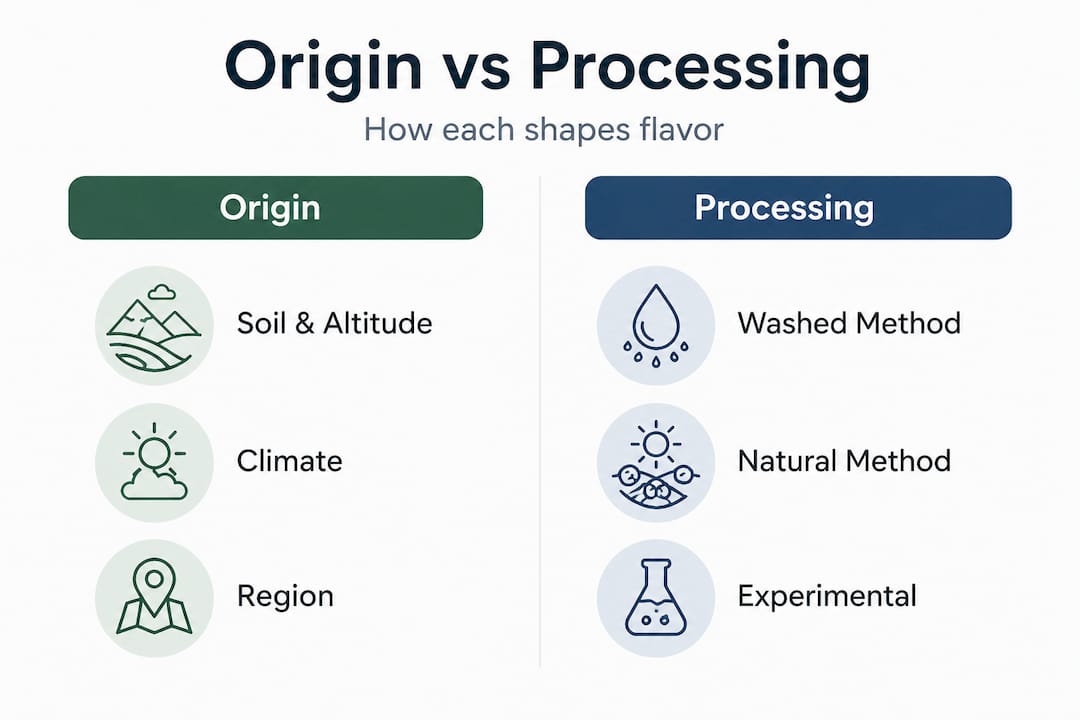
Cultivation conditions like altitude and climate significantly affect volatile aroma compounds and sensory attributes in the final cup. Volatile compounds are the aromatic molecules responsible for the floral, fruity, nutty, or earthy notes you detect. The soil’s mineral profile shapes the availability of nutrients that drive enzyme activity during cherry development, which in turn controls the ratio of sugars, acids, and amino acids in the bean. Those ratios are the blueprint for your cup.
| Origin factor | Primary cup impact |
|---|---|
| Altitude | Acidity, complexity, aromatic intensity |
| Soil mineral content | Sweetness, body, depth of flavor |
| Rainfall and humidity | Body, fermentation potential |
| Temperature variation | Brightness, fruit clarity |
| Shade vs. full sun | Maturation rate, sugar development |
“Origin is not a flavor in itself. It is the environmental sum that sets the ceiling for what a coffee can become.”
Knowing how to read coffee aroma and origins gives you a real advantage when selecting beans or setting up comparative tastings. The table above is a practical reference: if you want brightness and complexity, you’re looking for high-altitude origins. If you want body and sweetness, lower-elevation regions often deliver that naturally.
Altitude and terroir: the chemistry of taste
With origin defined, let’s explore how two foundational factors, altitude and terroir, bring that origin to life in your cup.
Altitude is one of the most reliable predictors of cup character in specialty coffee. At higher elevations, temperatures are cooler and the growing season stretches longer. That extended maturation period gives the coffee cherry more time to develop complex sugars and acids. The result is a denser bean with a brighter, more intricate flavor profile. Higher-elevation cultivation consistently promotes denser beans with distinct volatile profiles compared to their lowland counterparts.
Lowland coffees, grown at elevations below roughly 1,000 meters, often develop more quickly. The warmer temperatures accelerate ripening, which can produce a heavier body and softer, more muted acidity. These coffees are not inferior, they simply express a different set of characteristics. Many beloved Indonesian coffees, for example, come from lower elevations and are prized precisely for their earthy, full-bodied, syrupy texture.
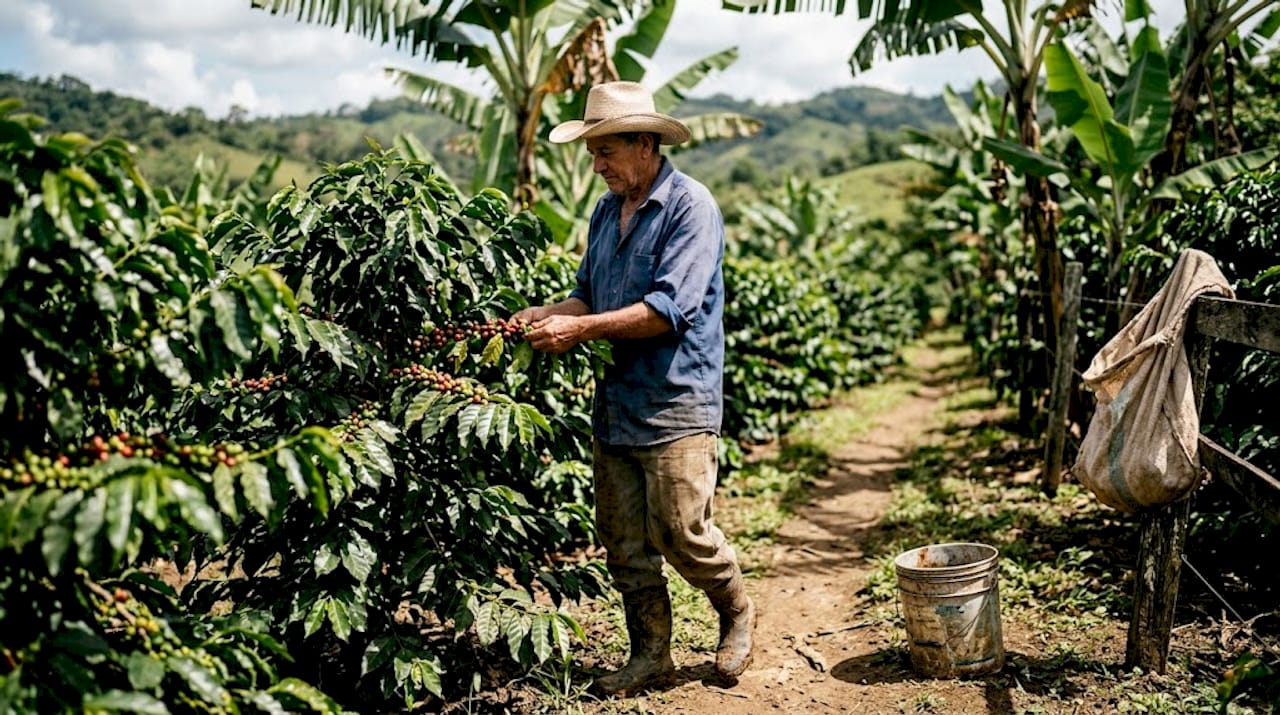
The comparison becomes even more interesting when you look at microclimates within the same region. Two farms on opposite sides of a mountain in Guatemala can produce dramatically different cups because one receives morning mist while the other gets direct afternoon sun. That difference in moisture and light exposure changes the rate of cherry development and the compounds that accumulate.
| Factor | High elevation (above 1,500m) | Low elevation (below 1,000m) |
|---|---|---|
| Acidity | Bright, vibrant | Soft, muted |
| Body | Light to medium | Medium to heavy |
| Aroma | Floral, fruity, complex | Earthy, nutty, simple |
| Common flavor notes | Citrus, berry, jasmine | Chocolate, tobacco, cedar |
| Bean density | High | Lower |
Pro Tip: When shopping for beans, look for specific elevation data on the bag rather than just the country. A Colombian coffee grown at 1,800 meters will taste markedly different from one grown at 900 meters, even if both are labeled “Colombian.” That number tells you more about what’s in your cup than the flag on the packaging.
Exploring artisanal flavor profiles built around altitude-specific sourcing is one of the fastest ways to train your palate for these distinctions.
Processing and its interaction with origin
Terroir and altitude set the stage, but how a coffee is processed directs the final act, sometimes completely redirecting the show.
After the coffee cherry is harvested, it goes through a processing method that removes the fruit and prepares the seed for roasting. The three dominant methods are washed (wet), natural (dry), and honey. Each one interacts with the origin’s baseline chemistry in a distinct way.
Washed processing removes the fruit skin and mucilage quickly, often within 24 to 72 hours. This method tends to produce clarity, meaning the cup expresses the bean’s origin character with minimal interference from the fruit. You get a clean, transparent window into the terroir.
Natural processing dries the whole cherry intact, sometimes for weeks. During that time, the fruit’s sugars and yeasts ferment against the bean, infusing it with intense fruity, wine-like, or fermented notes. A naturally processed Ethiopian coffee from Yirgacheffe might taste more like blueberry jam than the crisp, floral cup you’d expect from a washed version of the same origin.
Honey processing sits between the two. Some fruit mucilage is left on the bean during drying, creating a middle ground of sweetness and body without the full fermentation intensity of natural processing.
Here’s what makes this complicated for the serious taster:
- Washed coffees reveal origin most clearly
- Natural coffees can amplify or override origin traits with fermentation notes
- Honey coffees add sweetness and body that may soften terroir-specific acidity
- Experimental methods (anaerobic fermentation, carbonic maceration) can produce flavors that have almost no connection to the bean’s geographic origin
Post-harvest processing can dominate how origin is expressed in the cup, making origin a baseline potential that gets filtered and reshaped by the processing method. This is a critical insight for anyone building a serious palate.
The specialty coffee world is also seeing a surge in experimental processing. Experimental methods are increasingly making coffees from different origins taste more similar to average consumers, because the process flavors become the dominant sensory experience rather than the terroir.
Pro Tip: To isolate origin character, always start with washed coffees from a new region. Once you’ve established that baseline, try a natural or honey-processed version from the same origin. The contrast will teach you more about processing’s power than any description can.
For a step-by-step approach to enhancing coffee flavor through controlled brewing variables, the method applies directly to origin tasting.
How to taste for origin: method and context
To connect these variables to your own cup, here’s how you can taste for true origin cues with confidence and curiosity.
The biggest mistake adventurous brewers make when trying to taste origin is changing too many variables at once. If you’re comparing a Colombian washed light roast to an Ethiopian natural medium roast, you’re not tasting origin. You’re tasting a combination of origin, process, and roast, and there’s no way to isolate what’s doing what.
Sensory evaluation relies on standardized protocols precisely because confounding variables like roast and processing blur the pure origin signal. Here’s a practical method you can run at home:
- Select two coffees with the same processing method and roast level, varying only the origin. For example, two washed light roasts, one from Ethiopia and one from Colombia.
- Grind both to the same coarseness and use identical brew ratios. A 1:15 coffee-to-water ratio works well for pour-over comparisons.
- Use water at the same temperature (around 200°F or 93°C) and brew both with the same timing.
- Let both cups cool to the same temperature before tasting. Many origin-specific aromatics open up as the cup cools below 140°F.
- Taste side by side without looking at the labels. Note acidity, body, aroma, and any specific flavor associations before checking which is which.
- Return to both cups at room temperature. Sweetness and subtle fruit notes become more detectable as the heat dissipates.
- Record your observations using simple sensory anchors: Is the acidity sharp or soft? Does the aroma suggest fruit, flowers, nuts, or earth? Is the finish short or lingering?
“The goal of origin tasting is not to identify a country. It’s to understand what the land, the altitude, and the climate contributed to the experience in your cup.”
Exploring single origin tasting methods in a structured way builds the sensory vocabulary that separates a knowledgeable brewer from someone who just drinks good coffee.
Nuance: when coffees from the same origin taste different
Having mastered the basics, let’s look at why even the most specific origin claims leave room for astonishing diversity in your cup.
Take Ethiopia again. Coffees from the Yirgacheffe region are famous for their floral, bergamot-like aromatics and bright citrus acidity. But coffees from Sidama, just a few hours away, often present as more stone fruit-forward with a heavier body. Both are Ethiopian. Both might even be labeled “single origin Ethiopia” on a budget bag. The difference comes from microclimate, soil type, elevation variation, and the fermentation practices of individual cooperatives.
Microclimate and farm-level differences within the same country or region can produce a wide range of sensory outcomes, confirming that the country label is often the least informative piece of data on the bag.
Here are the key sources of variation that operate even within a single micro-lot:
- Soil pH and mineral composition vary field by field, affecting nutrient uptake and acid development
- Harvest timing changes the sugar-to-acid ratio in the cherry at the moment of picking
- Fermentation duration and temperature during processing alter the final compound profile
- Drying conditions (raised beds vs. ground, shade vs. sun) affect moisture loss rate and residual flavor compounds
- Tree variety or cultivar within the same species can produce radically different cup profiles
- Altitude variation within a single farm of even 100 to 200 meters creates measurable sensory differences
“Origin is a potential, not a guarantee. Farm-level decisions and process tip the scales.”
This is why serious connoisseurs look for micro-lot information, specific farm names, cultivar details, and fermentation notes rather than just the country. The more specific the sourcing data, the more predictable and reproducible the flavor experience. Understanding flavor variety and microclimate at this level of detail is what makes the difference between a good palate and an exceptional one.
Is origin overrated? A modern connoisseur’s view
All of these variables raise a genuinely provocative question for today’s coffee-obsessed brewer: Is flavor origin still the gold standard, or is something else emerging as the main event?
In cutting-edge specialty circles, the answer is increasingly nuanced. Origin remains foundational, but processing is now often a stronger cue for consumer flavor experience than origin alone. A heavily anaerobic-fermented coffee from Honduras can taste more like a tropical fruit punch than anything you’d associate with Central American terroir. The process has become the flavor story, and origin is the backstory.
This doesn’t mean origin is irrelevant. It means origin sets the upper limit of what a coffee can achieve. A high-altitude Ethiopian bean with exceptional terroir has more potential for complexity than a lowland commodity bean, but that potential can be masked by aggressive processing or obscured by dark roasting. The ceiling is set by origin. Whether you reach it depends on everything that happens afterward.
The practical implication for serious enthusiasts is this: run two kinds of comparative flights. First, hold the process constant and vary the origin, so you can hear what the land is saying. Second, hold the origin constant and vary the process, so you can understand how much the processing is shaping your experience. This two-axis approach builds a far richer mental model than tasting randomly.
Understanding how roasting transforms coffee flavor adds a third axis to this exploration. And for those interested in how blending interacts with origin character, coffee blending techniques offer another layer of complexity worth investigating.
Origin is not overrated. It’s under-examined. The connoisseur’s job is to learn when origin is speaking clearly and when something else has taken over the conversation.
Elevate your exploration with Variatea Coffee
If these insights have sharpened your curiosity, the natural next step is to put them into practice with coffees that are worth tasting carefully. Variatea Coffee sources and crafts small-batch offerings designed for exactly this kind of intentional exploration, where the goal is to taste the difference, not just drink the cup.

Whether you want a high-caffeine blend built for side-by-side comparison like the Max Caf Blend, or a process-forward experience like the Whiskey Barrel Aged that demonstrates exactly how post-harvest treatment transforms a bean’s baseline character, our catalog is built for brewers who ask deeper questions. Every product in our lineup is chosen to give you something genuinely distinct to taste, compare, and learn from. Your palate is the instrument. We provide the range.
Frequently asked questions
How does altitude affect coffee flavor?
Higher-elevation cultivation promotes denser beans with brighter acidity and more complex aromatic profiles, while lower elevations typically produce fuller-bodied, milder cups with softer acidity.
Can coffee processing overshadow origin notes?
Yes, and it happens more often than most tasters realize. Experimental processing can dominate the cup profile so completely that coffees from very different origins end up tasting similar to one another.
Is cupping the only way to taste origin differences?
Cupping is the industry standard for controlled comparison, but standardized sensory protocols are always influenced by roast and processing variables. Careful home brewing with matched light roasts and identical recipes can reveal genuine origin notes without a full cupping setup.
Why do coffees from the same origin sometimes taste different?
Microclimate and farm-level factors like soil composition, harvest timing, fermentation duration, and drying conditions create measurable sensory differences even within the same region or cooperative, making farm-level sourcing data far more informative than the country label alone.