

Filter coffee: Unlocking flavor, method, and experience
TL;DR:
- Filter coffee encompasses various brewing methods and cultural traditions, producing diverse flavor profiles.
- Different filter mediums like paper, metal, and cloth significantly affect the coffee’s body, clarity, and oils.
- Filter coffee is preferred by artisans for its control, transparency, and ability to highlight subtle flavors.
Most coffee drinkers have said “filter coffee” and meant something specific, usually a basic drip machine or a simple pour-over cone. But that assumption undersells one of the most fascinating categories in all of specialty coffee. Filter coffee is actually a broad umbrella that covers everything from a Japanese V60 to a Vietnamese phin to a Costa Rican chorreador, each shaped by a different culture, a different filter medium, and a completely different flavor experience. If you’ve only ever thought of filter coffee as the plain stuff, you’re about to see it in a whole new light.
Table of Contents
- What is filter coffee? Core definition and evolution
- How filter coffee works: Methods, mediums, and their effects
- Filter coffee vs. espresso: What makes them different?
- Why filter coffee is the artisan’s choice
- Exploring filter coffee at home: Expert tips and traditions
- Why redefining filter coffee can transform your coffee journey
- Ready to taste the potential? Explore artisan filter coffee at Variatea
- Frequently asked questions
Key Takeaways
| Point | Details |
|---|---|
| What defines filter coffee | Filter coffee uses a filter medium and gravity to separate grounds, uniting many global brewing traditions. |
| Taste is shaped by filter choice | Paper, metal, and cloth filters each influence the clarity, mouthfeel, and flavor profile of your cup. |
| Artisan brewers prefer filter | Control and nuance make filter methods the top pick for exploring complex, small-batch coffees. |
| Experiment at home | Anyone can dive into filter brewing with simple tools and a willingness to explore flavors. |
What is filter coffee? Core definition and evolution
With so much confusion around the term, it helps to start from the ground up. At its simplest, filter coffee uses a filter medium (paper, metal, or cloth) to separate grounds from brewed liquid, relying on gravity rather than pressure. That single distinction sets it apart from espresso and separates it from immersion methods like French press, where grounds steep directly in water without flowing through.
The history of filter coffee stretches back further than most people expect. The most recognizable milestone is the 1908 invention of the paper filter by Melitta Bentz, a German entrepreneur who punched holes in a tin pot and used blotting paper to produce a cleaner, less bitter cup. Before that, cloth and metal filters were already common in places like Costa Rica and Southeast Asia, where local brewing traditions developed independently based on available materials and cultural preference.
“Filter coffee is not a single device or tradition. It’s a philosophy of brewing, one where patience and gravity do the work, and the filter medium shapes the result.”
Today, filter coffee has grown into a category that spans home kitchens, competition stages, and specialty cafes around the world. The methods within it range from precise, temperature-controlled pour-overs to slow, rustic cloth drips. Learning about artisanal coffee brewing within this context reveals just how much variety exists under a single term.
Commonly used filter coffee devices include:
- Drip brewers (automatic and manual)
- Chemex
- Hario V60
- Aeropress (used with paper filters)
- Vietnamese phin
- Costa Rican chorreador
- Siphon brewer
- Cloth filter systems
Each one produces a different result in the cup, even when brewing the same coffee. That’s the beauty of this category.
How filter coffee works: Methods, mediums, and their effects
Now that you know what filter coffee means, let’s look at how different filter mediums shape your cup. The type of filter you use is one of the most underappreciated variables in brewing, and it has a direct impact on flavor, body, and even health outcomes.
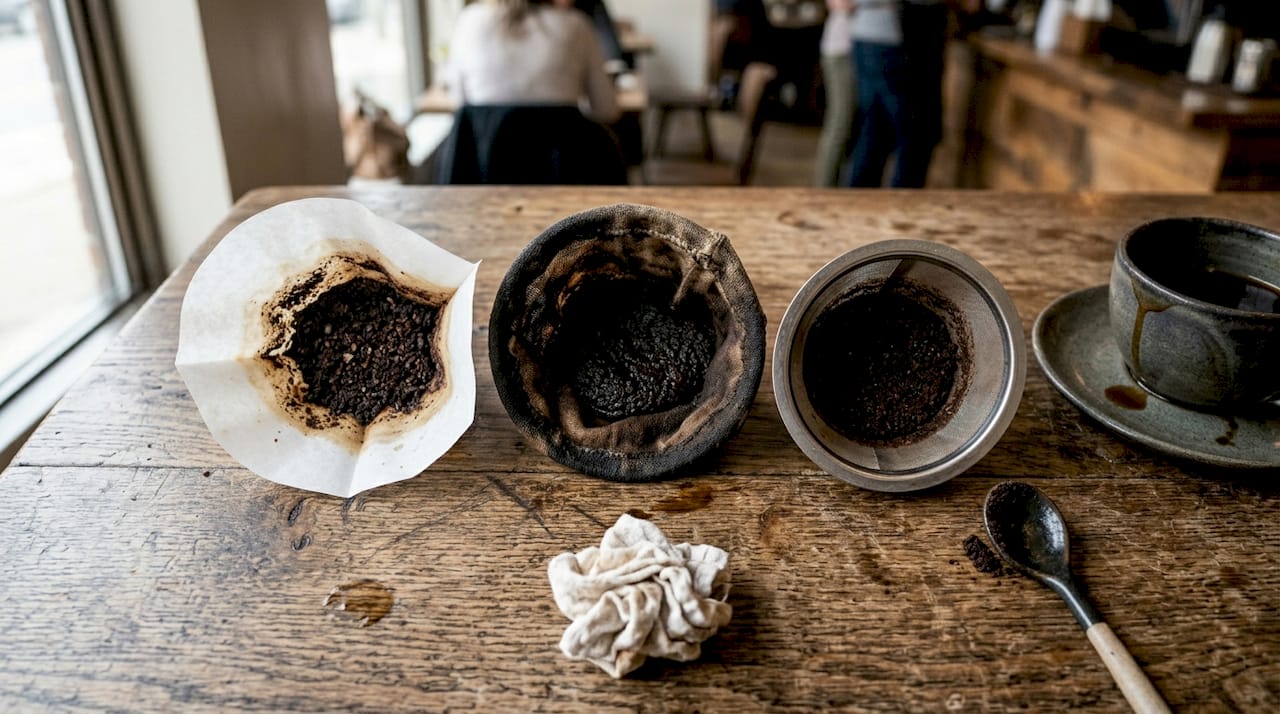
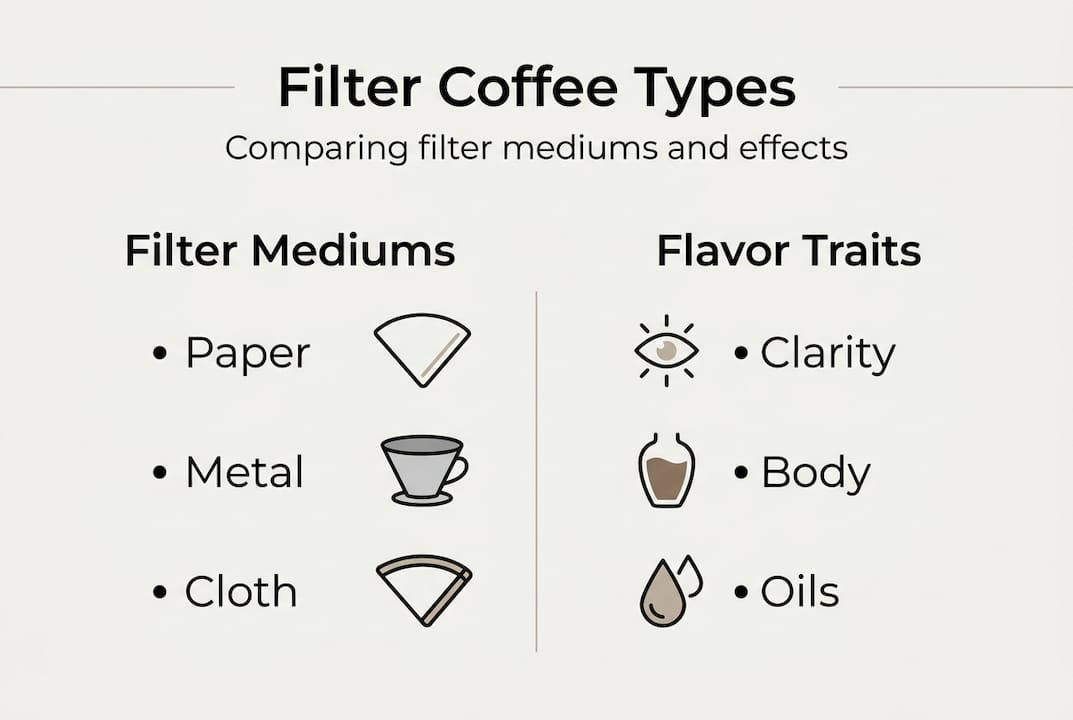
Paper filters remove oils and diterpenes for a cleaner, brighter cup with more clarity and less sediment. Metal filters let oils and fine particles pass through, resulting in a richer, fuller-bodied brew with more texture. Cloth filters sit somewhere in between, producing a balanced cup with some body but without the papery taste that can occasionally come from an unrinsed paper filter.
The traditions around each medium tell their own story. Cloth and metal filters enhance body in traditions like the Costa Rican chorreador and the Vietnamese phin, where the slower drip and richer extraction are central to the flavor identity of those cultures’ coffee. These aren’t inferior methods; they’re intentional choices built around specific taste preferences. Understanding this changes how you approach layering coffee flavors in your own brewing practice.
Filter medium comparison:
| Filter type | Body | Clarity | Oil retention | Best for |
|---|---|---|---|---|
| Paper | Light to medium | High | Low | Light roasts, single-origin |
| Metal | Full | Medium | High | Medium to dark roasts |
| Cloth | Medium | Medium-high | Medium | Balanced, traditional brews |
Each filter medium also interacts differently with roast level. A light Ethiopian roast will sing through a paper filter, showing off its floral and citrus notes. A bold, smoky medium-dark roast tends to perform better through metal, where retained oils add richness rather than overwhelm the cup.
Pro Tip: If you’re drinking light, fruit-forward coffees, go with paper filters to let those delicate notes breathe. For chocolatey or nutty medium roasts, try a metal filter and see how the added body transforms the experience.
Health-conscious drinkers will also find the paper filter advantage relevant. Cafestol and kahweol, the diterpenes found naturally in coffee oils, are associated with raising LDL cholesterol levels when consumed in large quantities. Paper filters trap most of these compounds, which is one reason why studies have associated long-term filtered coffee consumption with cardiovascular benefits compared to French press or unfiltered methods.
Filter coffee vs. espresso: What makes them different?
Understanding filter coffee’s mechanics leads naturally to asking how it stacks up against espresso, the other giant in specialty coffee. They’re both coffee, but they’re built on completely different principles, and mixing them up leads to a lot of brewing frustration.
Filter uses gravity, longer contact time, and much higher water-to-coffee ratios, while espresso uses pressure, shorter extraction times, and concentrates flavor into a small, intense shot. A typical filter brew might use a 1:15 ratio (one gram of coffee for every 15 grams of water) and take between two and a half to five minutes to complete. Espresso, by contrast, operates at a 1:2 ratio and extracts in 25 to 30 seconds under nine bars of pressure.
“Espresso is a sprint. Filter coffee is a long walk. Both get you somewhere interesting, but the journey and the destination look nothing alike.”
Side-by-side brewing parameters:
| Parameter | Filter coffee | Espresso |
|---|---|---|
| Extraction method | Gravity | Pressure (9 bar) |
| Brew time | 2.5 to 5 minutes | 25 to 30 seconds |
| Water-to-coffee ratio | 1:15 or higher | 1:2 |
| Resulting texture | Light, clear | Dense, creamy |
| Typical serving size | 8 to 12 oz | 1 to 2 oz |
| Filter used | Yes (paper, metal, cloth) | Portafilter basket (metal mesh) |
These differences matter enormously when you’re choosing which method suits your moment, your bean, or your mood. Choosing between the two isn’t just about taste preference; it’s about what experience you want.
Situations where filter coffee wins:
- When you want to appreciate the subtle terroir of a single-origin bean
- When you’re sharing coffee with multiple people at once
- When you want a longer drinking experience over 20 to 30 minutes
- When brewing light roasts with delicate floral or fruit notes
- When you’re experimenting with new origins and want transparency in the cup
- When you prefer a lower-caffeine-per-ounce drinking format
All of this context is part of elevating your brew from a reflexive habit into a deliberate, rewarding ritual.
Why filter coffee is the artisan’s choice
Once you recognize the technical and flavor differences, you can fully appreciate why filter coffee is the medium of choice for flavor-driven enthusiasts. It’s not a coincidence that most specialty coffee competitions, including World Brewers Cup events, center around filter methods. The reason is control.
Filter coffee excels for small-batch and artisan roasters because every variable, including grind size, water temperature, pour rate, and filter type, can be adjusted independently to coax out specific flavors. With espresso, a small adjustment to one variable triggers a cascade of changes across the shot. Filter brewing is more forgiving while still rewarding precision.
How filter methods highlight delicate flavor notes:
- Floral aromas (jasmine, lavender) in Ethiopian Yirgacheffe come through cleanly with paper filters
- Stone fruit notes (peach, apricot) in washed Kenyan beans shine with a slow, controlled pour
- Bright citrus (bergamot, lemon) in Colombian naturals are amplified by a clean extraction
- Tea-like body in light Guatemalan roasts is preserved without being masked by bitter oils
- Clean, lingering finishes allow you to identify individual tasting notes long after the sip
The pour-over, especially on a ceramic or glass V60 with a rinsed paper filter, has become the gold standard for tasting rare or experimental lots. When a small-batch roaster invests weeks in sourcing a single micro-lot from a remote farm in Rwanda, filter is the method that does that coffee justice.
Pro Tip: Brew your next single-origin light roast on a clean paper filter with water at 200°F and a 1:16 ratio. No additives, no flavored creamers. Let the coffee speak. You’ll likely taste notes you’ve never noticed before.
For adventurous brewers, the best coffees for flavor and small-batch artisanal picks are almost always best appreciated through filter methods. Understanding brewing artisanal blends in this context turns brewing from a chore into a genuine craft.
Exploring filter coffee at home: Expert tips and traditions
With an understanding of filter coffee’s standing among artisans, you’re ready to try, experiment, and enjoy the hands-on process yourself. The barrier to entry is lower than most people think. You don’t need a $400 brewer or a scale with five decimal places to make exceptional filter coffee at home.
The Vietnamese phin uses a metal filter with slow drip, creating a rich, concentrated brew that reflects a national coffee culture built around patience and intensity. That device costs less than ten dollars and produces one of the most satisfying cups you can make without electricity. The chorreador, the traditional Costa Rican coffee maker, works on the same gravity principle with a cloth filter and a wooden stand. Both remind us that exceptional filter coffee doesn’t require expensive gear.
5-step guide to brewing your first filter coffee:
- Choose your device. Start with a simple V60 cone, a Chemex, or even a basic pour-over dripper that fits over your mug.
- Grind fresh. Use a medium grind for most filter methods. Finer for shorter extractions, coarser for longer ones.
- Rinse your filter. If using paper, always rinse with hot water first to remove any papery taste and preheat your vessel.
- Bloom your grounds. Pour twice the weight of water as coffee over the grounds and wait 30 to 45 seconds. This releases trapped CO2 and primes the coffee for even extraction.
- Pour slowly and steadily. Add the remaining water in a controlled, circular motion over about two to three minutes. Keep the bed of grounds even.
Once you have the basics down, start experimenting with global traditions. Try a Vietnamese phin with a robusta-heavy blend and condensed milk. Attempt a Japanese-style iced pour-over by brewing directly over ice with a stronger ratio. Seek out a cloth filter and see how the texture of your cup changes.
“The most memorable cups aren’t always the most technically perfect. They’re the ones brewed with intention, curiosity, and a willingness to notice what’s in the cup.”
Understanding how to enhance coffee flavors step by step makes these experiments more meaningful and less hit-or-miss. Every brewing session teaches you something new about the beans, the method, and your own palate.
Why redefining filter coffee can transform your coffee journey
Here’s something most coffee content won’t tell you: treating filter coffee as a lesser or more basic category is actually a sign of inexperience, not sophistication. The most knowledgeable coffee professionals in the world spend the majority of their tasting time with filter methods, precisely because they reveal what’s actually in the cup without hiding flaws or masking nuance.
At Variatea, we’ve seen this shift happen again and again with our customers. Someone arrives focused entirely on espresso-based drinks, then tries one of our small-batch blends on a paper pour-over, and everything changes. The clarity of the brew makes them notice flavor notes they’ve never identified before. The ritual slows them down. They stop just drinking coffee and start actually tasting it.
The common mistake is thinking filter equals generic. In reality, the filter category contains more variety, more cultural depth, and more flavor potential than almost any other category in specialty coffee. A cloth-filtered Costa Rican brew tastes nothing like a Japanese iced pour-over, even if both fall under the same umbrella term.
Our honest advice: revisit filter methods with curiosity rather than assumption. Start with exploring bold coffee profiles through filter to understand how different roast levels and origins behave without pressure extraction distorting the picture. You’ll develop a more nuanced palate faster than any other approach. The most rewarding cups come from playful experimentation, not rigid recipes, and filter coffee gives you the most room to play.
Ready to taste the potential? Explore artisan filter coffee at Variatea
If you’re inspired to discover the limitless spectrum of filter coffee, it’s time to taste what’s possible right from your own kitchen.

At Variatea Coffee, every blend in our lineup is designed to shine through filter methods. Our whiskey barrel-aged coffee opens up beautifully on a slow pour-over, where the smoky vanilla notes develop gradually without pressure forcing them together. For something approachable and crowd-pleasing, our gourmet donut shop blend was practically made for a classic drip filter setup. If you want to explore our full range and match a coffee to your preferred brewing method and flavor preference, browse our complete artisan coffee blends collection. We’re always available to help you find the right match for your method and your palate.
Frequently asked questions
What makes filter coffee different from regular drip coffee?
While all drip coffee is filter coffee, the broader filter category also includes pour-overs, cloth drips, phins, and siphon brewers, each using a different filter medium that distinctly shapes flavor, body, and clarity in the cup.
Is filter coffee healthier than other methods?
Paper filters remove oils and diterpenes that can raise LDL cholesterol, making paper-filtered coffee a heart-healthier option compared to unfiltered methods like French press or full-immersion brews.
Why do specialty coffee professionals prefer filter methods?
Filter coffee reveals complex flavors in high-quality and single-origin beans with greater clarity than espresso, which is why it’s the standard for professional tasting, competition brewing, and evaluating new roast lots.
Can I make filter coffee without special equipment?
Absolutely. A simple pour-over cone, a reusable cloth filter, or even a fine-mesh metal strainer with filter paper placed over a mug will produce genuine filter coffee without any dedicated equipment investment.
What is the best coffee grind for filter coffee?
A medium grind is the standard starting point for most filter methods, but you should adjust coarser for devices with longer contact times, like a Chemex, and finer for quicker methods like a V60 with a fast pour.