

Examples of Cinnamon Coffee: 9 Recipes to Try
TL;DR:
- Cinnamon enhances coffee by softening bitterness and adding aromatic warmth through various infusion methods. Choosing the right cinnamon variety and brewing technique is essential for optimal flavor, with medium roasts best suited for most recipes. Proper storage and moderation in cinnamon quantity ensure a balanced, flavorful cup each time.
Cinnamon and coffee share more than a cozy reputation. The spice genuinely transforms your cup, softening bitterness, adding aromatic warmth, and making even a basic morning brew feel intentional. The range of examples of cinnamon coffee goes far beyond a quick sprinkle on top. You can stir it into grounds before brewing, whisk it into frothed milk, or layer it into a bakery-style latte with butter and brown sugar. This guide walks you through nine distinct approaches, from the simplest stir-in method to gourmet cold foam creations, with practical tips to help you get each one right.
Table of Contents
- Key takeaways
- Examples of cinnamon coffee: what to know before you start
- 1. Classic grounds-and-cinnamon drip coffee
- 2. Cinnamon stick steeped coffee
- 3. Quick stir-in cinnamon coffee
- 4. Cinnamon maple coffee
- 5. Cinnamon vanilla coffee
- 6. Cinnamon spice blend coffee
- 7. Cinnamon coffee cake latte
- 8. Iced cinnamon cold brew
- 9. Cinnamon cold foam coffee
- Comparison: which cinnamon coffee style is right for you?
- Tips for perfecting cinnamon coffee at home
- My honest take on brewing cinnamon coffee at home
- Upgrade your cinnamon coffee with the right beans
- FAQ
Key takeaways
| Point | Details |
|---|---|
| Choose your cinnamon variety | Ceylon, Korintje cassia, and Saigon cinnamon each deliver a distinct flavor profile in coffee. |
| Match method to brewing setup | Adding cinnamon to grounds works best with paper filters, not fine metal ones. |
| Start with a tested ratio | Use one teaspoon of ground cinnamon per ten tablespoons of ground coffee as your baseline. |
| Butter beats syrup for texture | Whisking softened butter with cinnamon and espresso creates a creamier mouthfeel than flavored syrup. |
| Pick the right roast | Medium roasts let cinnamon’s sweetness shine; dark roasts benefit from bold Saigon cinnamon. |
Examples of cinnamon coffee: what to know before you start
Not all cinnamon behaves the same way in coffee, and choosing the right variety is actually the first decision worth making. Ceylon cinnamon is lighter and sweeter, Korintje cassia delivers the classic warm spice most people recognize from supermarket jars, and Saigon cinnamon is bold, almost peppery, with the highest spice intensity of the three.
Beyond variety, your brewing method changes how much flavor you actually extract:
- Adding cinnamon to dry grounds before brewing delivers the deepest infusion because hot water pulls flavor from both coffee and spice at the same time.
- Stirring ground cinnamon into brewed coffee gives you quick, adjustable flavor but can leave gritty residue at the bottom.
- Steeping a cinnamon stick in hot brewed coffee produces subtle aroma and mild sweetness with no texture concerns.
- Sprinkling cinnamon on top of milk foam is purely aromatic and decorative, adding almost no flavor to the coffee itself.
Roast level matters too. Light roasts with fruity, floral notes tend to clash with heavy cinnamon; the spice overwhelms the origin character. Medium roasts are the sweet spot for cinnamon coffee drinks. Dark roasts handle bold Saigon cinnamon well because both can stand up to each other.
Health is worth a quick mention. Ceylon cinnamon is recommended for regular use because cassia varieties contain higher levels of coumarin, a natural compound that can be problematic in large daily doses. For occasional recipes, any variety is fine. If you drink cinnamon coffee every day, Ceylon is the smarter default.
Pro Tip: Buy cinnamon in small quantities and store it in an airtight container away from heat. Ground cinnamon loses potency within three to six months, and stale cinnamon in coffee tastes flat, not warm.
1. Classic grounds-and-cinnamon drip coffee
This is the most accessible starting point. Mix ground cinnamon directly into your coffee grounds before brewing, and let your drip machine or pour-over do the work. A balanced starting ratio is one teaspoon of ground cinnamon per ten tablespoons of ground coffee. That amount adds noticeable warmth without overpowering the coffee’s natural flavor.
The key detail here is filter choice. Ground cinnamon clogs fine metal filters, which slows brew time and leads to bitter over-extraction. Stick with paper filters for this method, whether you’re using a drip machine or a pour-over dripper. Paper filters also absorb some of the cinnamon’s fine particles, which means a cleaner cup with no sediment.
For sweetening, brown sugar complements the spice without fighting it. A single teaspoon of brown sugar lets the cinnamon read as warm and caramel-like rather than bitter.
2. Cinnamon stick steeped coffee
Drop one or two cinnamon sticks into a French press along with your coarsely ground coffee, add hot water just off the boil, and steep for four minutes before pressing. The result is a smooth, lightly spiced cup with a soft cinnamon aroma rather than a sharp spice hit.
This method works especially well with medium-roast beans that have nutty or chocolatey base notes. The cinnamon stick releases its oils slowly during steeping, and those oils round out the coffee’s flavor without adding any texture or grit to your cup. If you enjoy spice-infused coffee that stays subtle enough for everyday drinking, this is the right approach.
3. Quick stir-in cinnamon coffee
Brew your coffee as usual, then stir a quarter to half teaspoon of ground cinnamon directly into the hot liquid. This is the fastest of all the cinnamon coffee recipes and the most flexible, since you can adjust the amount cup by cup.
Cinnamon brings out natural sweetness in coffee and softens bitterness without any added sugar. That makes this method particularly useful for anyone cutting back on sweeteners. One small catch: ground cinnamon does not fully dissolve in liquid. Stir thoroughly and drink while hot to minimize sediment at the bottom.
Pro Tip: Mix your ground cinnamon with a small amount of hot water into a paste before stirring it into brewed coffee. The paste disperses much more evenly and leaves almost no grit behind.
4. Cinnamon maple coffee
Brew strong drip coffee or two shots of espresso. While it’s hot, stir in one teaspoon of real maple syrup and a quarter teaspoon of ground cinnamon. The maple adds sweetness with its own depth, and the two flavors together create something that tastes genuinely different from a cinnamon-plus-sugar combination.
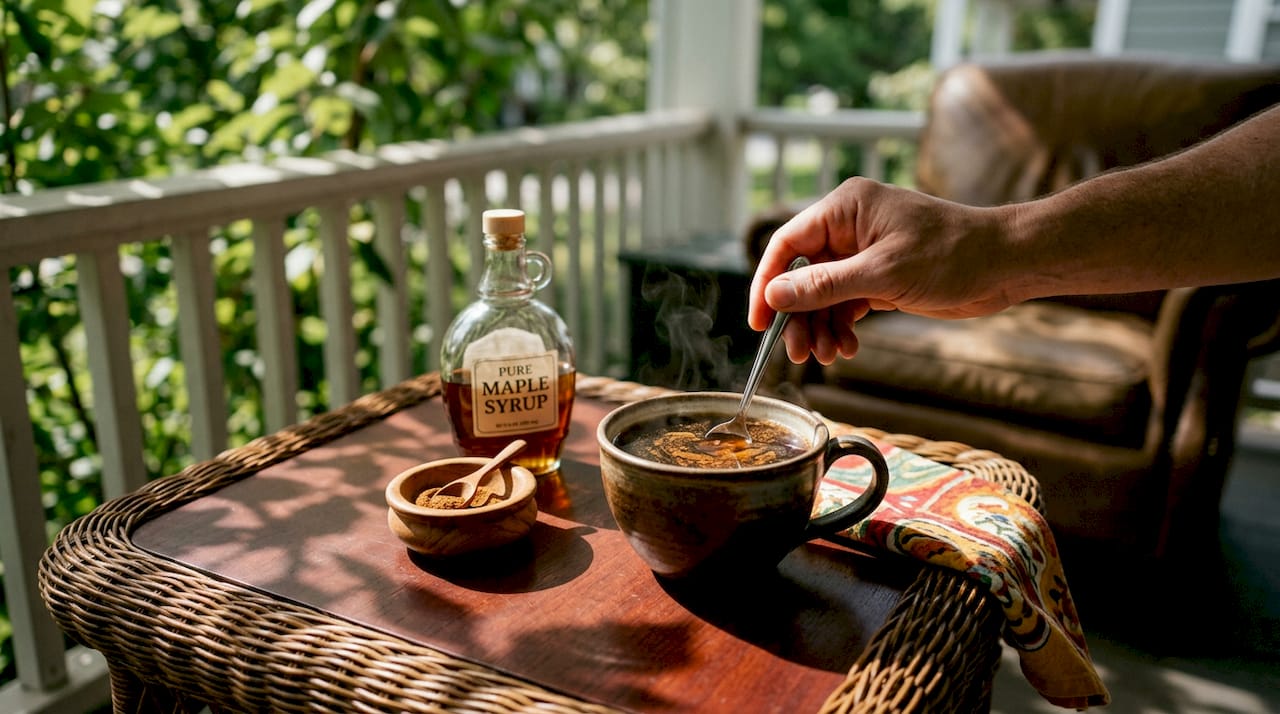
This version works beautifully with darker roasts because the maple bridges the gap between the roast’s natural bitterness and the spice’s warmth. Add a splash of oat milk if you want a creamier texture. It takes about two minutes total and requires nothing beyond your standard brewing equipment.
5. Cinnamon vanilla coffee
Add a quarter teaspoon of ground cinnamon and a half teaspoon of pure vanilla extract to your coffee grounds before brewing. Vanilla softens cinnamon’s sharpness and adds a floral, bakery-like quality to the cup. This combination is one of the more widely loved cinnamon coffee variations because it smells extraordinary the moment water hits the grounds.
For a richer version, add a small splash of heavy cream to the finished cup. The cream pulls the vanilla and cinnamon together into a flavor that genuinely resembles a dessert without being sweet.
6. Cinnamon spice blend coffee
A more complex take on cinnamon in coffee is the spiced blend approach. A classic homemade recipe combines two cups of ground coffee with two teaspoons of ground cinnamon, half a teaspoon of cardamom, half a teaspoon of allspice, and a quarter teaspoon of nutmeg. You mix the spices into the dry grounds and brew as normal.
The result is a deeply aromatic, warm coffee that reads more like a Middle Eastern or holiday spiced blend than a simple cinnamon coffee. Cardamom adds brightness, allspice contributes depth, and nutmeg provides a slightly sweet, earthy finish. Brew this one with a medium-roast bean so the spice doesn’t crowd out everything else in the cup.
7. Cinnamon coffee cake latte
This is where cinnamon coffee recipes move into genuinely gourmet territory. Whisking softened butter into hot espresso with brown sugar and cinnamon creates an emulsion that rounds out bitterness and produces a caramel-like base. The fat from the butter suspends the spice evenly and gives the drink a mouthfeel that no syrup can replicate.
To make it:
- Pull two shots of espresso into a small, warmed mug.
- Add one teaspoon of softened unsalted butter, one teaspoon of brown sugar, and a quarter teaspoon of ground cinnamon.
- Whisk vigorously for about thirty seconds until the butter fully emulsifies.
- Top with steamed whole milk or oat milk and a light dusting of cinnamon on top.
The butter trick is the detail most home brewers have never tried. It creates textural complexity that syrups simply cannot match, and the drink tastes like something from a specialty café rather than a home kitchen.
Pro Tip: Use room-temperature butter, not cold butter straight from the refrigerator. Cold butter will not emulsify properly and will leave oily slicks on top of your drink instead of blending smoothly.
8. Iced cinnamon cold brew
Combine coarsely ground coffee with a cinnamon stick and cold water in a jar or pitcher. Use a ratio of one cup of coffee to four cups of cold water. Steep in the refrigerator for twelve to sixteen hours, then strain through a paper filter. The cinnamon stick infuses gently during the long steep, producing a cold brew with subtle spice and no bitterness.
Serve over ice with a splash of oat milk or coconut milk. Be aware that certain coconut milk brands can curdle when combined with cold brew’s acidity. Test your brand first with a small amount before pouring it over a full glass. Oat milk is the more reliable choice for cold applications because it stays stable and adds a natural sweetness that complements the cinnamon.
9. Cinnamon cold foam coffee
Brew strong coffee or cold brew and pour it over ice. In a separate container, combine two tablespoons of cold oat milk with a quarter teaspoon of ground cinnamon and a small pinch of brown sugar. Froth the mixture with a handheld frother until thick and foamy. Spoon the cinnamon foam over the iced coffee.
This method keeps the cinnamon flavor concentrated in the foam layer so you get a burst of spice with every sip rather than a uniform flavor throughout. It’s visually impressive and very easy to recreate at home. For a deeper exploration of creative flavor techniques beyond spice, this style of thinking opens up a lot of options.
Comparison: which cinnamon coffee style is right for you?
| Style | Preparation ease | Flavor intensity | Best roast | Best time of day |
|---|---|---|---|---|
| Grounds and cinnamon drip | Very easy | Medium | Medium | Morning |
| Cinnamon stick steeped | Easy | Mild | Medium | Any time |
| Quick stir-in | Very easy | Adjustable | Any | Morning or afternoon |
| Cinnamon maple coffee | Easy | Medium-sweet | Dark | Morning or brunch |
| Cinnamon vanilla coffee | Easy | Mild and floral | Medium | Afternoon |
| Spice blend coffee | Moderate | Bold and complex | Medium | Morning |
| Cinnamon coffee cake latte | Moderate | Rich and sweet | Medium-dark | Weekend morning |
| Iced cinnamon cold brew | Requires planning | Subtle | Medium | Afternoon |
| Cinnamon cold foam | Easy | Burst-forward | Medium-dark | Afternoon |
Tips for perfecting cinnamon coffee at home
Getting cinnamon coffee right consistently comes down to a few habits that most recipes skip over:
- Use paper filters when brewing with ground cinnamon in your coffee grounds. Metal filters clog and slow down extraction, which makes the final cup bitter.
- Start conservative with quantity. One teaspoon per ten tablespoons of ground coffee is the right starting baseline. Add more in subsequent batches if you want a stronger cinnamon presence.
- Match your milk to your method. Oat milk steams and froths well for hot drinks. Almond milk works in cold applications. Test plant-based milks in small batches before committing to a full recipe.
- Store cinnamon correctly. Ground cinnamon degrades quickly when exposed to air, heat, or light. An airtight jar in a cool cabinet keeps it fresh. Whole cinnamon sticks last much longer than pre-ground and can be ground fresh for more vibrant flavor.
- Taste before sweetening. Cinnamon naturally softens the perception of bitterness in coffee. You may find you need less sugar than expected once the spice is properly integrated.
Pro Tip: For a quick freshness upgrade, buy whole cinnamon sticks and grind small amounts in a dedicated spice grinder. Freshly ground cinnamon has an intensity that commercial pre-ground spice rarely matches.
My honest take on brewing cinnamon coffee at home
I’ve made every version of cinnamon coffee on this list, and the one that surprised me most was the butter emulsion method. I was skeptical because it sounds fussy, but the texture it creates is genuinely unlike anything a syrup produces. The first time I tried it, I made three cups in a row just to confirm I hadn’t imagined it.
The trial-and-error reality of spicing coffee is that more is almost never better. I’ve ruined more cups by going heavy on cinnamon than by using too little. The spice amplifies as it cools, so what tastes balanced at brewing temperature can taste sharp and medicinal by the time your cup is halfway done. My rule is to start at half the amount any recipe suggests and scale up.
The cinnamon variety shift also changed my daily routine more than I expected. Switching from standard Korintje cassia to Ceylon cinnamon in my morning drip made the coffee taste noticeably lighter and more aromatic without changing anything else about the process. For anyone experimenting at home, that single swap is worth trying before you change anything else.
Cinnamon coffee rewards patience and small adjustments. Get the ratio and the method right for your setup, and you’ll stop needing to buy flavored coffee off a shelf.
— Jonathan
Upgrade your cinnamon coffee with the right beans
The bean underneath the cinnamon matters more than most people realize. A flat, stale base coffee mutes all the spice work you put in. Variateacoffee’s Whiskey Barrel-Aged Coffee is a particularly strong match for cinnamon recipes. Its smoky, vanilla-forward character from authentic charred oak barrel aging complements cinnamon’s warmth without competing with it. The depth of the roast gives the spice something to work with rather than drown out.

Variateacoffee roasts small batches to order, which means you’re getting coffee at peak freshness every time, exactly the kind of base that lets spice additions perform at their best. Ready to find the perfect foundation for your cinnamon coffee creations? Explore the Variatea Coffee & Tea Collections to find your new favorite blend, roasted to order and delivered fresh to your door.
{% include youtubePlayer.html id=“mTyQWuYcg_k” %}
FAQ
What is the best cinnamon for coffee?
Ceylon cinnamon is the best choice for daily cinnamon coffee because it has a lighter, sweeter flavor profile and lower coumarin content than cassia varieties. Saigon cinnamon works well in bold, dark-roast recipes where you want an intense spice kick.
How much cinnamon should I add to coffee?
Start with one teaspoon of ground cinnamon per ten tablespoons of ground coffee when brewing it into your grounds. For a stir-in method, begin with a quarter teaspoon per cup and adjust from there.
Can I add cinnamon to a pour-over coffee?
Yes, but only with a paper filter. Ground cinnamon clogs fine metal pour-over filters, which leads to slow extraction and a bitter cup. Paper filters handle cinnamon grounds without issue.
Does cinnamon in coffee have health benefits?
Cinnamon may help reduce blood sugar spikes after meals, but it works as a supplement to a healthy diet rather than a treatment. Ceylon cinnamon is the safer choice for regular consumption due to lower coumarin levels.
What coffee roast goes best with cinnamon?
Medium roasts are the most versatile pairing for cinnamon coffee recipes because their balanced flavor lets the spice complement rather than overpower. Dark roasts pair well with bolder cinnamon varieties like Saigon.