

Discover coffee terroir: unlock unique flavors in every cup
TL;DR:
- Coffee terroir encompasses the environmental factors, such as soil, climate, elevation, and farming practices, that influence flavor more profoundly than processing or roasting. These factors interact complexly, shaping unique sensory profiles like brightness, earthiness, floral notes, or chocolatey richness in each cup. Understanding terroir links flavors to the cultural and ecological origins, fostering deeper appreciation and intentional exploration of coffee’s diverse signatures.
You’ve probably obsessed over roast level, grind size, and water temperature. But here’s the thing most brewers miss: the roast is the last chapter of a much longer story. The land where your coffee grows, the altitude, rainfall patterns, soil chemistry, and even the shade trees overhead, shapes flavor more profoundly than anything you do after harvest. That concept has a name borrowed from the wine world: terroir. Understanding it will permanently change how you choose beans, taste your brew, and experience every single cup.
Table of Contents
- What is coffee terroir?
- How terroir shapes the flavors in your cup
- Beyond altitude: the hidden layers of coffee terroir
- Applying terroir insights to your brewing adventure
- Why coffee terroir reveals more than flavor
- Explore unique terroir-driven coffees and teas
- Frequently asked questions
Key Takeaways
| Point | Details |
|---|---|
| Terroir shapes flavor | The environment where coffee is grown deeply influences each cup’s unique taste. |
| More than altitude | Factors like climate, soil, shade, and processing all interact to define terroir. |
| Taste through exploration | Sampling different origins lets you experience the diverse world of coffee terroir. |
| Mindful brewing matters | Adjusting your brew can help highlight terroir characteristics in your coffee. |
What is coffee terroir?
Terroir is a French word (pronounced teh-RWAH) that the wine world uses to describe the complete natural environment where a crop grows. In coffee, it works the same way. Terroir captures every external force acting on a coffee plant from the moment a seed goes into the ground to the moment the cherry is picked.
Breaking it down into its core components makes it far easier to work with:
- Soil composition: Mineral content, pH level, and organic matter directly feed the plant. Volcanic soils in Guatemala and Indonesia, for example, deliver distinctly different mineral profiles to the root system, and those differences eventually end up in your cup.
- Climate: Temperature swings between day and night (called diurnal range) slow the development of the coffee cherry. Slower development means more time for sugars and acids to build complexity inside the bean.
- Elevation: Higher altitudes typically mean cooler temperatures and that slower ripening. But elevation is only one signal among many.
- Varietal: The genetic makeup of the coffee plant itself (Geisha, Bourbon, Typica, etc.) determines the flavor ceiling. A Geisha grown at sea level still won’t taste like a Geisha grown at 2,000 meters, because other terroir elements shape the outcome.
- Farming practices: Shade-grown cultivation, pruning schedules, fertilization methods, and harvesting technique all fall under terroir’s umbrella.
Here’s the part that trips up even experienced enthusiasts: coffee premium flavor is never the result of one variable acting alone. Altitude is a common, easy-to-communicate proxy for terroir, but it operates alongside other co-varying factors like climate, shading, and processing, which interact and change chemical outcomes in ways that are genuinely difficult to isolate experimentally.
“Think of terroir not as a single dial, but as a mixing board with a dozen faders. Altitude is the loudest channel, but every other fader changes the final sound.”
What this means for you is that chasing a single number on a bag, like elevation in meters, only tells part of the story.
How terroir shapes the flavors in your cup
With the basics of terroir covered, it’s time to see how these factors come alive in each cup.
Origin shapes coffee flavor at a chemical level, not just a poetic one. Terroir-driven variables like altitude, climate, and processing methods interact and change the actual chemical compounds, including chlorogenic acids, sucrose concentrations, and volatile aromatic compounds, found inside each bean. That chemistry is what you taste.
Here’s a quick breakdown of how environmental factors connect to specific sensory experiences:
- Bright, citrus-forward acidity: Often linked to high-altitude East African origins, where dramatic temperature drops at night preserve malic and citric acids inside the cherry.
- Earthy, low-acid body: Frequently found in Sumatran coffees, where humid processing methods like wet-hulling break down acids and amplify full-bodied, savory notes.
- Floral, tea-like aromatics: A hallmark of Ethiopian Yirgacheffe, where native heirloom varietals and specific soil conditions create jasmine and bergamot-like aromas.
- Nutty, chocolatey smoothness: Classic in Brazilian cerrado coffees, where flat terrain, consistent warmth, and dry processing produce a round, low-acidity cup with cocoa undertones.
- Stone fruit and caramel: Common in Colombian coffees from the Huila region, where rich soils and two harvest seasons per year allow for exceptional cherry development.
To make regional differences concrete, the table below compares two of the most distinct growing environments in specialty coffee:
| Feature | Ethiopia (Yirgacheffe) | Brazil (Cerrado) |
|---|---|---|
| Elevation | 1,700 to 2,200 m | 800 to 1,200 m |
| Climate | Cool, wet, variable | Warm, dry, stable |
| Processing | Washed or natural | Mostly natural/pulped |
| Flavor notes | Floral, citrus, tea-like | Chocolate, nuts, caramel |
| Acidity | High, bright | Low, smooth |
| Body | Light to medium | Full, round |
Explore artisanal coffee flavor profiles to see how brewing technique interacts with these regional differences and either amplifies or softens what terroir built into the bean.
Pro Tip: When you buy a new single-origin coffee, write down three flavor words before you look at the bag’s tasting notes. Then compare. Over time, this practice trains you to identify terroir signatures rather than simply confirm what you were told to taste.
Beyond altitude: the hidden layers of coffee terroir
Many enthusiasts get stuck on elevation, but there’s much more beneath the surface of terroir.
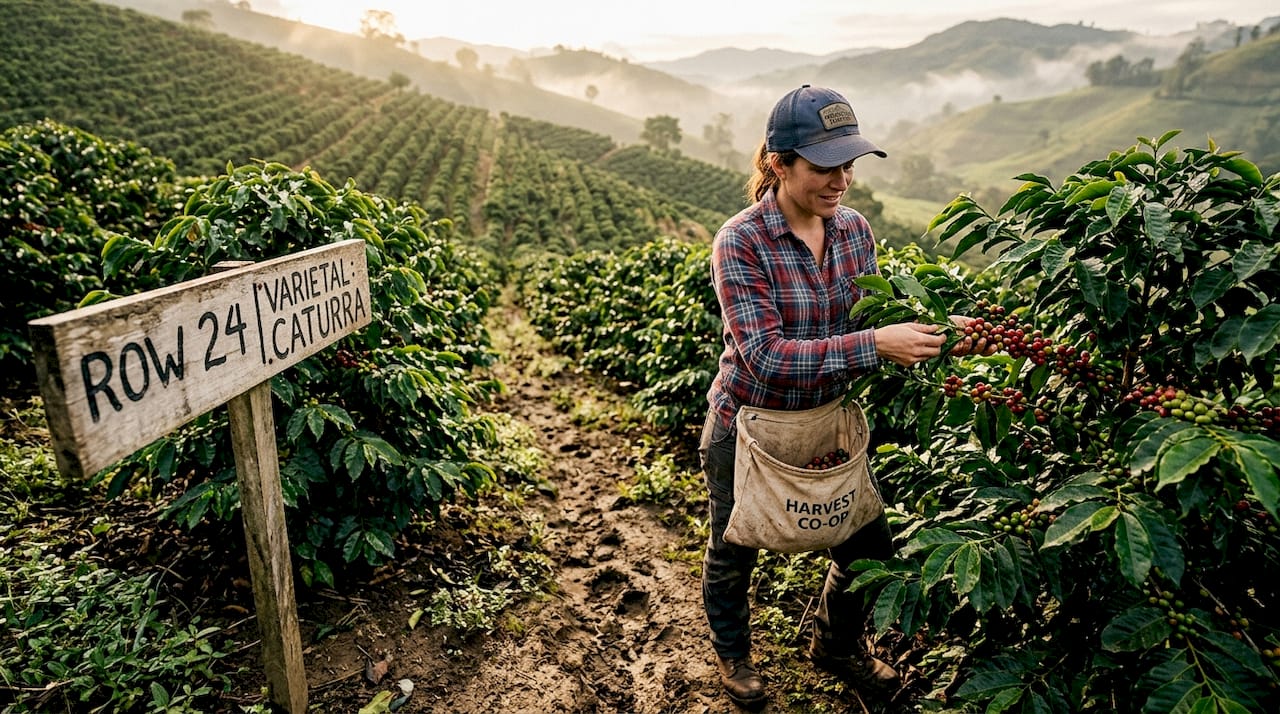
The altitude fixation is understandable. It’s measurable, it’s printed on bags, and it correlates strongly enough with quality to feel reliable. But isolating a single driver of coffee terroir is experimentally difficult because covarying factors interact to change chemical outcomes in complex ways. Two coffees grown at identical altitudes can taste completely different based on processing, shade coverage, and regional microclimate.
The following table illustrates how multiple terroir factors combine to produce distinct flavor results:
| Terroir factor | High expression | Low expression | Flavor impact |
|---|---|---|---|
| Diurnal temperature range | High (10°C+ swings) | Low (less than 5°C swings) | Acid complexity vs. flatness |
| Shade coverage | Dense canopy | Open sun | Slower ripening vs. faster, less complex |
| Processing method | Washed (wet) | Natural (dry) | Clean, bright vs. fruity, earthy |
| Soil volcanic content | High | Low | Mineral complexity vs. neutral base |
| Rainfall consistency | Seasonal and defined | Irregular or excessive | Predictable sweetness vs. variable cup |
Now consider three real-world scenarios where multiple terroir factors converge to create something unexpected:
-
Kenya AA at 1,800 meters: Kenya’s famous AA grade coffee grows in red volcanic soil rich in phosphorus, under a defined two-season rainfall pattern. The altitude matters, but so does that specific soil chemistry and the strict washed processing used by Kenyan cooperatives. Remove any one of those variables and the wine-like blackcurrant notes that define Kenyan coffee are diminished significantly.
-
Sumatra Mandheling: This coffee grows at only around 1,200 meters, which by altitude-only logic should produce a mediocre cup. Instead, the wet-hulling process (called Giling Basah) combined with the humid equatorial climate and rich volcanic earth creates an intensely earthy, full-bodied coffee unlike anything else in the world. Altitude isn’t the hero here at all.
-
Panama Geisha from Boquete: The Geisha varietal is celebrated globally, but Boquete’s specific combination of cloud forest elevation, consistent cool mist, and rich mineral soils is why Panama Geisha commands among the highest auction prices in specialty coffee. Grown elsewhere, the same plant produces a far less dramatic result.
Understanding coffee flavor variety at this level gives you a significant edge when reading bags, talking to roasters, or exploring new origins. And if you want to go even deeper into what makes aromas tick, coffee aroma explained walks through the science of volatile compounds and how they connect to specific origins.
Pro Tip: When a bag emphasizes altitude as the primary selling point with no mention of processing method, varietal, or regional microclimate, treat that as a gap in information rather than a mark of quality. Ask your roaster to fill in the blanks.
Applying terroir insights to your brewing adventure
Armed with this knowledge, you can now turn terroir theory into hands-on discovery and flavor exploration.
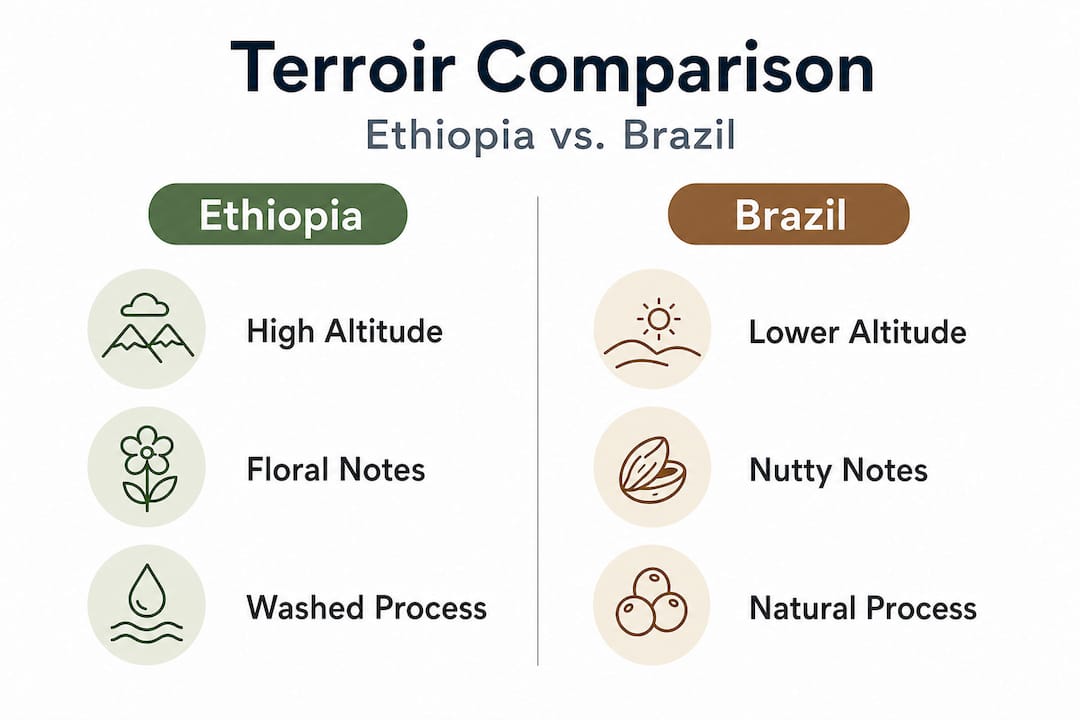
The most effective way to experience terroir is direct comparison. Here’s how to build that practice deliberately:
When selecting beans to highlight terroir, focus on:
- Single-origin coffees rather than blends, since blends mix terroirs and obscure individual signals.
- Washed (wet process) coffees when you want to taste the raw terroir most clearly, because washing removes fruit pulp that can mask origin character.
- Roasts on the lighter end of the spectrum, since lighter roasts preserve the delicate terroir-derived flavor compounds that darker roasts burn off.
- Bags with detailed processing and varietal information, not just country of origin.
- Small-batch and microlot offerings, where a single farm’s terroir is captured without averaging across multiple farms.
Your home terroir tasting in five steps:
-
Choose two contrasting origins. Ethiopia and Brazil are a perfect starting pair because their terroir profiles sit at opposite ends of the flavor spectrum. Brew them back to back using the same method and water temperature.
-
Taste both black, no additions. Milk, sugar, and cream mask terroir signals entirely. You need a clean palate and a clear cup.
-
Focus on three specific qualities: acidity (does it feel bright and sharp or smooth and low?), body (does it feel thin or heavy on your tongue?), and aroma (what do you smell before the first sip?).
-
Write your impressions immediately before your palate fatigues. Even three words per coffee per quality is enough to start building a tasting vocabulary rooted in terroir awareness.
-
Look up the terroir profile after. Compare what you experienced to what you now know about that region’s altitude, soil, and processing. You’ll be surprised how quickly you start connecting sensory data to environmental context.
Altitude, as research confirms, operates alongside other co-varying factors including climate, shading, and processing, which means every step of your tasting should account for the whole picture, not just one number on the label. Use adventurous coffee flavor tips to push your palate even further, and follow the structured coffee tasting step guide for a more formal approach to building tasting skills. As your sensory vocabulary grows, flavor-forward coffee resources will help you match brewing variables to the specific terroir traits you’ve learned to recognize.
Pro Tip: Train your palate the way sommeliers train for wine. Taste the same origin repeatedly across different roasters. You’ll start to identify the terroir baseline that persists regardless of roast style, and that’s the moment terroir becomes something you can reliably taste rather than just read about.
Why coffee terroir reveals more than flavor
Here’s the angle that most terroir guides miss entirely: terroir is not just a sensory framework. It’s a cultural one.
When you taste the jasmine in an Ethiopian Yirgacheffe, you’re tasting the result of farming traditions stretching back centuries, of smallholder farmers in the Gedeo zone who intercrop coffee with native trees because their ancestors did, and because that shade creates the conditions for flavor complexity. The terroir is inseparable from the people and practices that created it.
The same is true of Sumatran coffee’s controversial earthiness. That flavor comes directly from the wet-hulling process that local farmers developed as a practical response to the humid climate. What some Western palates initially reject as “funky” is actually the signature of an intelligent, place-specific adaptation. When you understand that context, the coffee tastes different in a deeper way.
This is the real reason we believe adventurous brewers should pursue terroir knowledge. It’s not just about impressing people with tasting notes at a dinner party. It’s about building a genuine connection to the stories, ecosystems, and human ingenuity behind every single origin. Coffee finishing techniques and post-brew experimentation are valuable, but they layer on top of a foundation of terroir understanding that makes every technique more meaningful.
As research shows, even scientists find it difficult to isolate any single driver of terroir because the interactions are so complex and intertwined. That complexity is not a frustration to overcome. It’s the beauty of the subject. Embrace it. Seek out regions you’ve never tried. Ask roasters about farming practices, not just altitude. Share your discoveries with others. The cup gets better the more you understand everything that built it.
Explore unique terroir-driven coffees and teas
Ready to put terroir knowledge into your cup? At Variatea Coffee, we curate flavor-forward beans and teas that make origin exploration genuinely exciting.

Our Whiskey Barrel Aged coffee showcases what happens when terroir meets artisanal post-processing: a distinct origin character amplified by charred oak aging that adds smoky vanilla depth without alcohol. Looking for something more approachable for everyday brewing? The Gourmet Donut Shop coffee delivers a smooth, crowd-pleasing cup built on well-sourced beans with naturally sweet terroir traits. And if your curiosity extends past coffee entirely, explore our tea collection for Hojicha, Matcha, Moroccan Mint, and more. Every product we carry is selected with the same flavor-first philosophy that makes terroir worth understanding.
Frequently asked questions
Is coffee terroir the same as wine terroir?
Coffee terroir shares the same core principles as wine terroir but involves a unique combination of natural growing conditions and human-controlled processing factors. As research confirms, altitude, climate, shading, and processing all interact to shape the final flavor, making coffee terroir equally complex and arguably more variable than wine.
Can you taste terroir differences in home-brewed coffee?
Yes, and single-origin coffees brewed light are the fastest way to experience this. Many enthusiasts notice clear terroir differences once they start comparing origins side by side, especially when accounting for the co-varying factors that interact to change chemical flavor outcomes.
Is high-altitude coffee always better?
Not always. Quality depends on the full interplay of altitude, climate, processing, and varietal rather than elevation alone. Isolating a single driver like altitude is experimentally difficult because covarying factors interact to change chemical outcomes in ways altitude cannot predict by itself.
What is the best way to explore coffee terroir?
Sample coffees from clearly different origins, brew them using the same method, and keep tasting notes focused on acidity, body, and aroma. Over time, rotating through new regions and comparing your notes to the known terroir profiles of each origin builds a palate that can genuinely recognize and appreciate the fingerprint of place.