

Develop your coffee palate: unlock deeper flavor experiences
TL;DR:
- A coffee palate is a trainable skill that combines taste and aroma awareness, allowing anyone to improve their appreciation. Developing it involves deliberate practice using methods like cupping, blind tasting, and temperature testing to recognize subtle flavor differences. Most barriers are psychological, and consistent curiosity and note-taking can rapidly sharpen sensory perception regardless of experience level.
Coffee tasting is often dismissed as something reserved for barista competitions or specialty cafes where experts speak in mysterious descriptors like “stone fruit” and “terroir.” But that picture is wrong. A coffee palate is simply a trained ability to perceive, distinguish, and describe the flavor characteristics in your cup, and it’s a skill anyone can build with the right approach. This article breaks down what a coffee palate really means, how it develops through practice and structure, what myths are quietly getting in your way, and which exercises you can start using right now to taste more deeply every single time you brew.
Table of Contents
- What is a coffee palate?
- How is a coffee palate developed?
- Common misconceptions and palate training nuances
- Practical exercises to refine your coffee palate
- The real secret: why anyone can develop a coffee palate (and what most guides miss)
- Take your coffee tasting further with Variatea Coffee
- Frequently asked questions
Key Takeaways
| Point | Details |
|---|---|
| Coffee palate defined | A coffee palate is your trained ability to identify and describe a coffee’s flavors by combining taste and aroma. |
| Anyone can develop it | With mindful practice and simple tools, every enthusiast can improve their palate over time. |
| Structured practice works | Regular, repeatable tasting exercises are more effective than random sips for flavor recognition. |
| Misconceptions are common | Developing a palate is a learnable skill, not a gift for professionals only. |
| Experiment and enjoy | Trying different coffees, temperatures, and comparisons will unlock new layers of appreciation. |
What is a coffee palate?
A coffee palate is not a mysterious gift. It is a trained skill, and understanding it clearly is the first step to actually building it.
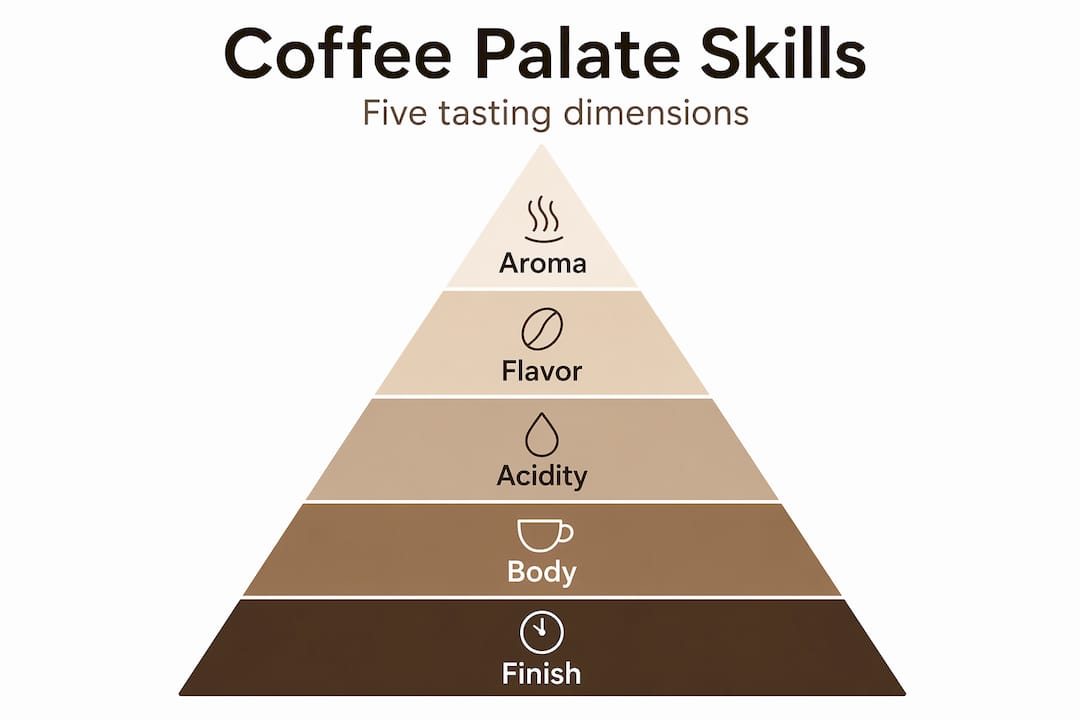
In practical terms, your coffee palate is your ability to notice, sort out, and put words to the flavors in a cup. It combines two distinct senses working together: taste (what your tongue picks up, like sweetness, bitterness, and acidity) and aroma (what your nose detects before, during, and after each sip). Most people use these senses separately without realizing it. A trained palate brings them together intentionally.
Why does this matter for your daily brew? Because once you understand what you’re tasting, every cup becomes a richer experience. You stop reacting to coffee as “good” or “bad” and start reading it like a map. Learning to identify artisan flavor profiles opens up a whole new level of appreciation for how processing, roast level, and origin interact in the cup.
Here’s what a trained palate allows you to identify in any coffee:
- Sweetness: Natural sugars from the bean, often more noticeable in lighter roasts
- Acidity: The bright, lively sensation associated with citrus or berry notes
- Bitterness: Present in most coffees, but the quality and intensity tells you about roast and extraction
- Body: The weight and texture of the coffee on your palate, from thin and tea-like to full and syrupy
- Aftertaste: What lingers after you swallow, often where the most interesting notes show up
“The flavor wheel offers a shared language that helps tasters move from general impressions to specific, repeatable descriptors, turning subjective experience into communicable perception.” — Specialty Coffee Association
These five dimensions aren’t just vocabulary. They’re the building blocks of every coffee conversation, every brewing decision, and every moment of genuine enjoyment.
How is a coffee palate developed?
With a clear definition in hand, the next step is understanding how you actually build and train your coffee palate through structured, repeatable practice.
Developing a coffee palate is not about drinking more coffee. It’s about drinking coffee more deliberately. The biggest difference between a casual drinker and a skilled taster is not experience volume but attention quality. The tools and methods below make that attention structured and productive.
| Practice method | Tool used | Key benefit |
|---|---|---|
| Cupping (side-by-side tasting) | SCA flavor wheel | Builds shared sensory vocabulary |
| Blind tasting | Covered cups, notebook | Removes bias and builds honesty |
| Temperature testing | Thermometer, timer | Reveals notes hidden at different heat levels |
| Aroma comparison | Coffee aroma kits | Trains nose before the palate |
| Solo journaling | Tasting notebook | Builds a personal reference library over time |
A good coffee tasting workflow follows a predictable structure so your brain knows what to look for each time. Here is a simple four-step process to get started:
- Smell the dry grounds. Before you add water, take a slow inhale over the grounds. Note the first aroma that hits you, whether it’s earthy, floral, chocolatey, or nutty.
- Smell the wet grounds. The moment hot water touches coffee, volatile aromatic compounds are released. Lean in. This stage often gives you the clearest preview of what the cup will taste like.
- Slurp and coat your palate. Tasting pros slurp coffee loudly on purpose. This sprays the liquid across all taste receptors and sends aroma up through the back of the throat. It sounds inelegant. It works.
- Sit with the aftertaste. After swallowing, wait fifteen seconds before reaching any conclusion. The flavors that linger are often the most telling. Notes of cocoa, smoke, fruit, or vanilla often reveal themselves here and not during the first sip.
Pairing consistent brewing techniques with this tasting structure speeds up palate development faster than any other method. When your brewing variables stay the same, the differences you taste between coffees become much easier to isolate and name.
Understanding coffee finishes and flavor is especially important in that final aftertaste stage. The finish is where complexity hides, and training yourself to notice it changes everything.
Pro Tip: Taste the same coffee at three different temperatures: right off the brew at around 185°F, again at room temperature around 120°F, and once more as it cools to under 100°F. A coffee that tastes one-dimensional when hot often reveals surprising fruity or caramel notes as it cools. This single habit does more for your palate than a week of casual drinking.
Common misconceptions and palate training nuances
Having covered the foundational tools, it’s worth addressing the persistent myths that quietly derail most people before they ever get started.
The biggest barrier to palate training isn’t lack of talent. It’s a set of assumptions that make people feel like outsiders before they’ve even tried. These misconceptions are worth confronting directly.
| Misconception | Reality |
|---|---|
| “Tasting coffee is innate, you either have it or you don’t.” | Palate sensitivity is a skill that genuinely improves with deliberate practice. |
| “Coffee tasting is entirely subjective.” | Certain flavor compounds are chemically consistent across cups. Perception varies, but the skill of noticing differences is trainable. |
| “You need professional training to develop a real palate.” | Most flavor professionals started exactly where you are, at home, with curiosity and a notebook. |
| “Expensive or rare beans are needed to practice.” | Any two beans of different origins or roast levels offer enough contrast to train effectively. |
| “If I don’t use the right words, my tasting doesn’t count.” | Language matters less than attention. Describing a coffee as “tastes like wet forest and brown sugar” is more useful than saying “it’s fine.” |
Palate training is really about one core habit: noticing differences between cups and then putting words to those differences. It is not about getting a grade or matching someone else’s vocabulary. It’s about building your own reference library, one session at a time.
Here’s a fact that surprises most people: roughly 80 percent of what we perceive as “taste” is actually aroma processed through the olfactory system. When you practice coffee cupping at home, you’re training your nose just as much as your tongue. Neglecting the smell stages of tasting means you’re only working with a small fraction of the available information.
Spending time exploring coffee aroma before you even sip is one of the fastest accelerators for palate development. Professional cuppers spend as much time smelling coffee as they do drinking it, and there’s a real reason for that.
Pro Tip: Keep a dedicated tasting journal and write at least three observations per session: one about aroma, one about the first sip, and one about the finish. After four weeks, read back through your entries. You’ll be shocked at how much your descriptors have sharpened and how clearly you can now communicate what you’re tasting. The act of writing forces precision that casual drinking never demands.
Practical exercises to refine your coffee palate
Finally, it’s time to bring this knowledge to life with real exercises you can try the next time you brew.
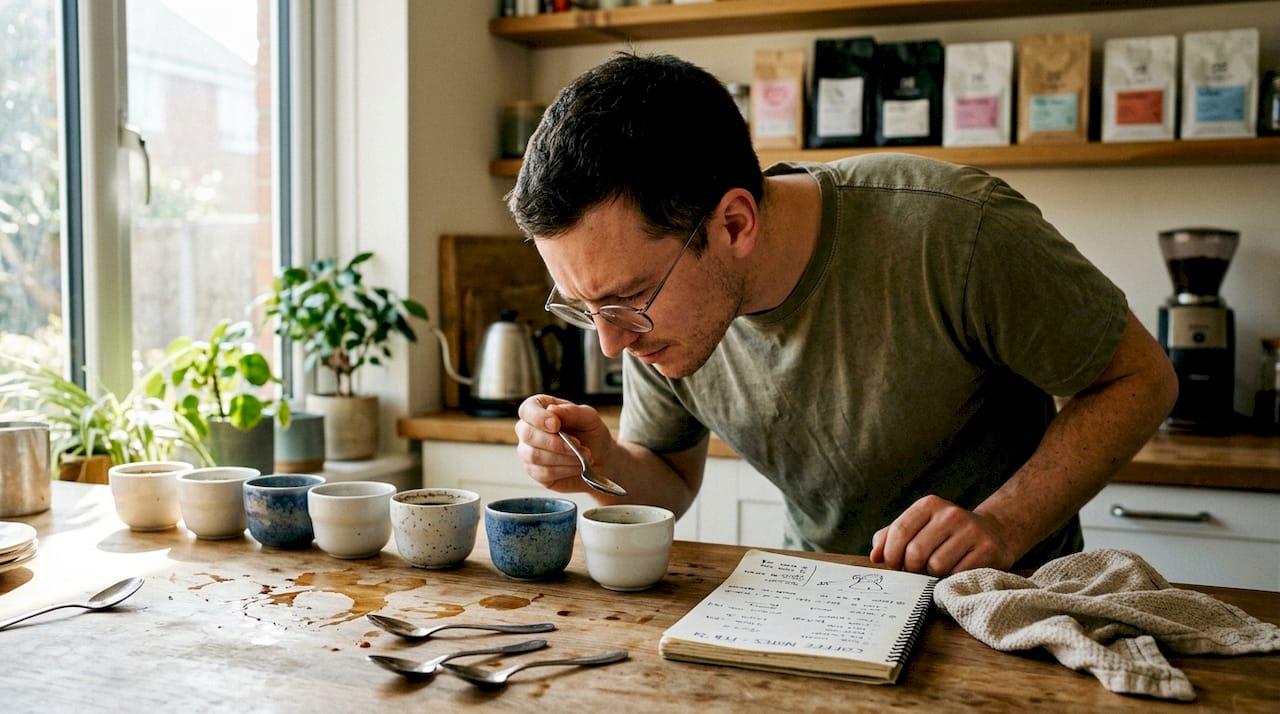
Reading about palate development is useful. Actually practicing it is what changes your perception. These exercises are designed to create the kind of deliberate, comparative, repeated exposure that builds sensory skill fast. Repetition and comparison are the two levers that drive the most improvement.
Exercises to try:
- Side-by-side roast comparison. Brew the same origin bean at two roast levels, light and dark, using identical brewing parameters. Taste them together and list every difference you notice across aroma, sweetness, body, and aftertaste. This one exercise trains your palate faster than almost anything else because the contrast is immediate and obvious.
- Blind tasting with a friend. Have someone brew two or three coffees for you without telling you what they are. Taste and describe each one, then check your notes against the actual coffees. This removes the powerful bias that comes from seeing a label before tasting.
- The temperature ladder. Brew one cup and taste it at five-minute intervals as it cools. Keep a running log of what changes. You’ll start to see how heat masks certain flavors and reveals others, which gives you far more control over your brewing decisions.
- Palate reset between cups. Practice using plain crackers or still water to reset your palate between different coffees. This habit from formal cupping sessions makes a real difference in how cleanly you can distinguish one coffee from another.
- Single origin exploration week. Spend an entire week drinking coffees from one region, Ethiopia or Colombia for example, then switch to a completely different region the following week. The contrast at the week boundary creates a powerful before-and-after comparison that sticks in your sensory memory.
Essential supplies for tasting sessions:
- Basic brewing gear (pour-over, French press, or whatever you already use consistently)
- A printed or digital SCA flavor wheel
- A plain notepad or dedicated tasting journal
- Fresh beans from at least two different origins or roast levels
- A kitchen thermometer for temperature tracking
- Plain crackers or water for palate cleansing
For deeper guidance tailored to adventurous tasters, check out our exotic coffee tasting tips and our detailed guide on how to enhance coffee flavors step by step. For ongoing inspiration, our curated coffee flavor tips for adventurous enthusiasts keep things fresh session after session.
The social tasting format also deserves mention. Inviting two or three friends to taste the same coffees and share their individual observations exposes you to descriptors and perceptions you’d never reach alone. It normalizes the range of human perception and makes the whole process far more enjoyable.
The real secret: why anyone can develop a coffee palate (and what most guides miss)
Here’s the opinion most guides avoid because it challenges a comfortable assumption: the biggest obstacle to palate development is not your biology or your experience level. It’s the cultural belief that coffee expertise belongs to a certain kind of person. That belief is false, and it costs ordinary coffee lovers an enormous amount of joy.
Most palate-building guides are written with a tone of authority that subtly signals membership in an exclusive club. They use Latin taxonomies, proprietary scoring systems, and industry-specific jargon in a way that says “this is for professionals.” The irony is that the SCA’s own research shows that repetition and genuine curiosity matter more than any natural talent or formal training. The most surprising discoveries often come from amateur tasters who ask simple, honest questions.
What we rarely talk about is the emotional side of palate training. Anxiety about using the “wrong” descriptor, embarrassment about not tasting what someone else tastes, and the fear of looking unsophisticated are the real reasons most people give up early. These are psychological barriers, not sensory ones.
The solution is deliberately lowering the stakes. Your tasting notes don’t need to match anyone else’s. A descriptor like “smells like the inside of a used bookstore” is not wrong. It’s a memory anchor, and it’s exactly the kind of specific, personal reference that builds a lasting internal library. That is how pairing flavors in coffee becomes intuitive rather than academic.
The honest truth is that a six-week-old home taster who writes detailed notes after every session will outperform a casual coffee shop regular with three years of experience. Attention always beats time. Start curious, stay consistent, and drop the idea that there’s a right way to taste. There is only your way, steadily sharpened.
Take your coffee tasting further with Variatea Coffee
Building a real coffee palate requires contrast, variety, and access to genuinely distinctive flavor experiences. Most grocery-store options simply don’t offer enough range to train on.

At Variatea Coffee, every product is designed to give your palate something worth noticing. Our whiskey barrel aged coffee delivers deep smoky layers, vanilla, and charred oak complexity that you simply cannot find in a standard roast. It’s exactly the kind of distinctive, layered cup that accelerates palate development because it demands attention. For those drawn to the world of specialty tea as a complementary tasting practice, our full range of artisan teas offers profiles from toasty Japanese hojicha to vibrant hibiscus berry, giving your palate a completely different but equally rich sensory vocabulary to explore. Every cup is a new session.
Frequently asked questions
How long does it take to develop a coffee palate?
Some improvement is noticeable within just a few weeks of regular, mindful tasting. Structured, repeatable practice builds the mental library that underlies a real coffee palate, though true mastery is an ongoing, lifelong process.
Do I need expensive equipment to train my palate?
No. Basic brewing tools, fresh beans, a notepad, and a printed flavor wheel are genuinely enough to get started. Palate training focuses on repeatable tasting and building shared vocabulary, not on costly equipment.
Is a coffee palate the same as just “liking” certain coffees?
Not at all. A preference tells you what you enjoy. A palate lets you identify and articulate taste and aroma characteristics with specificity, so you can understand why you enjoy it and seek out similar experiences intentionally.
What are the first signs my palate is improving?
You’ll start to notice differences between cups before you can fully name them. Noticing those differences and reaching for descriptors, especially around sweetness, acidity, and aftertaste, is the clearest early signal that your palate discrimination is genuinely sharpening.