

What is decadent coffee? Elevate every sip with premium flavor
TL;DR:
- Decadent coffee emphasizes complex flavor, ethical sourcing, and advanced processing techniques rather than added syrups or sweetness. It includes specialty decaf, single origin, and artisan blends that deliver rich, nuanced tasting experiences rooted in origin and craft. Achieving decadence at home involves careful preparation, sensory exploration, and choosing beans with recent roast dates and transparent origin details.
Most people hear “decadent coffee” and picture a whipped cream tower sitting on top of a sugar-loaded caramel drink. That picture is almost completely wrong. True decadent coffee lives in a different world entirely, one built on careful craftsmanship, advanced processing methods, and flavor complexity that takes your palate somewhere genuinely new. If you’ve been settling for sweetened syrups passed off as “indulgence,” this guide will reframe what premium coffee can actually feel like in your cup.
Table of Contents
- Defining decadent coffee: More than just flavor
- Kinds of decadent coffee: Decaf, single origin, and artisan blends
- How decadent coffees achieve depth: Methods and craftsmanship
- Taste, aroma, and experience: Savoring decadence at home
- Why most coffee lovers underestimate true decadence
- Explore decadent flavors with Variatea Coffee
- Frequently asked questions
Key Takeaways
| Point | Details |
|---|---|
| Decadence is about quality | True decadent coffee prioritizes craftsmanship, specialty processing, and ethical sourcing for richer flavor. |
| Many types qualify | Both premium decaf and unique artisan blends can be considered decadent when they deliver layered taste and high cupping scores. |
| Process makes the magic | Advanced techniques like Swiss Water and CO2 extraction preserve complexity and aroma without chemicals. |
| Home brewing can elevate the experience | Choosing quality beans and refining your brewing method unlocks the full spectrum of decadent coffee flavors at home. |
Defining decadent coffee: More than just flavor
Walk into any chain coffee shop and you’ll find drinks labeled “indulgent” or “luxurious” that are really just espresso buried under flavored syrups and shelf-stable creams. That’s not decadence. That’s dessert in a cup, and there’s a meaningful difference.
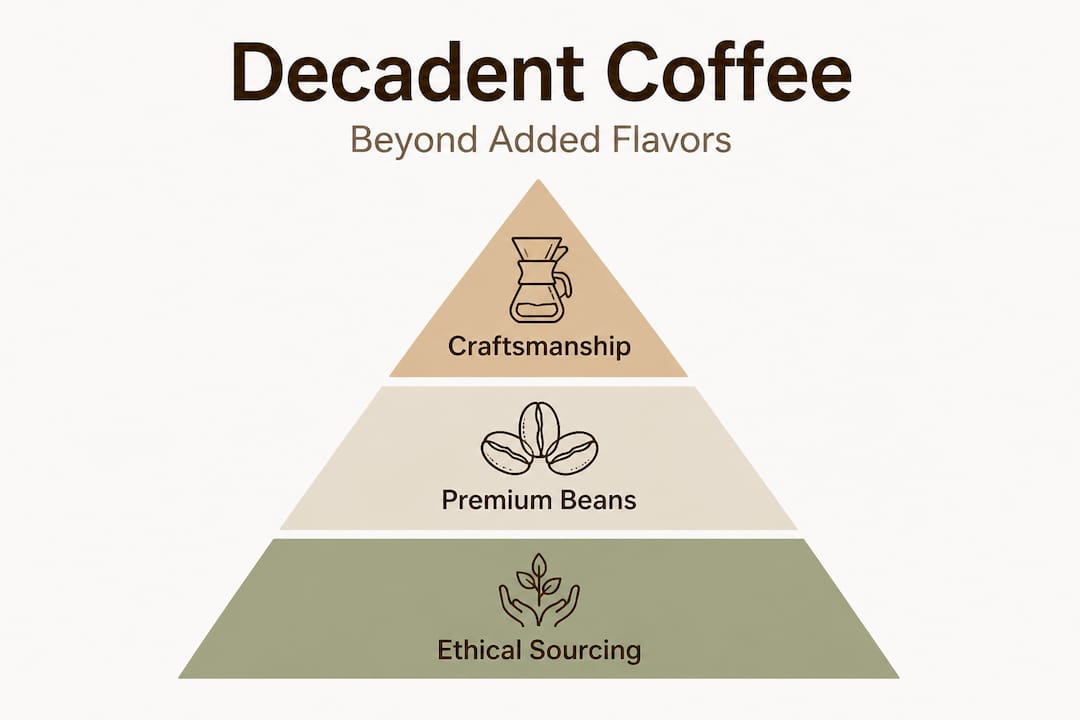
Real decadent coffee centers on three things: complex taste, elevated processing, and intentional sourcing. The flavor isn’t layered on top of the coffee. It comes from inside the bean itself, shaped by where it was grown, how it was processed, and how carefully it was roasted. This is the same principle that drives specialty coffee and flavor exploration in the artisan coffee world.
What separates decadent coffee from standard grocery store bags comes down to a few concrete markers:
- Cupping score of 80 or higher: The Specialty Coffee Association uses a 100-point scale to evaluate aroma, flavor, aftertaste, acidity, body, and balance. Anything at 80 or above qualifies as specialty grade.
- Ethical and traceable sourcing: Knowing the farm, the region, and the farmer matters. Traceability connects quality to accountability.
- Advanced processing techniques: Methods like Swiss Water or CO2 decaffeination strip caffeine without stripping character. Conventional solvent-based decaf strips both.
- Small-batch, fresh roasting: Beans roasted in small quantities allow for tighter quality control and faster delivery to your grinder.
“Specialty decaf coffees, sometimes called ‘decadent,’ use advanced methods like Swiss Water or CO2 to preserve flavor, with high cupping scores (80+), ethical sourcing, and fresh roasting.”
This definition matters because it shifts the focus from additions to essentials. A truly decadent cup doesn’t need anything added. It earns its richness through process and origin.
Pro Tip: When evaluating any premium coffee, skip the marketing language on the front of the bag and flip it over. Look for origin details, roast date, and processing method. Those three details tell you almost everything.
Kinds of decadent coffee: Decaf, single origin, and artisan blends
Now that we know what decadent coffee means, let’s see the main types you can bring into your cup. The category is broader than most people expect, and each type offers a distinctly different sensory experience.
1. Artisan specialty decaf This is where the term “decadent” gets used most often in the industry. Specialty decaf coffees ride the third wave of coffee culture, meaning they’re treated with the same respect and rigor as high-end caffeinated options. The Swiss Water Process uses only water, temperature, and time to remove caffeine, preserving the bean’s oils and aromatic compounds. CO2 decaffeination goes even further, using pressurized carbon dioxide to selectively target caffeine molecules without touching flavor compounds. The result is a cup that tastes as rich, layered, and satisfying as any full-caffeine specialty roast.
2. Single origin coffee Single origin means the beans come from one specific farm, cooperative, or region. A Yirgacheffe from Ethiopia brings bright berry and floral notes tied directly to the altitude and soil of that specific growing zone. A Huila from Colombia delivers rich caramel and citrus characteristics unique to that region’s microclimate. Traceability is the entire point. You know exactly where your flavor came from, and that transparency is a form of quality assurance. Exploring advanced decaf processing alongside single origin options gives you a fuller picture of how processing and origin interact.
3. Artisan blends Blending is a craft in its own right. A master roaster combines beans from multiple origins to build a flavor profile that’s more layered and consistent than any single origin could deliver alone. Think of it like a chef balancing sweet, acid, salt, and fat across a dish. The blend achieves something none of the individual ingredients could do alone. Studying artisanal coffee flavor profiles shows just how intentional these combinations can be.
Here’s a quick comparison of all three types:
| Type | Origin | Flavor profile | Processing | Best use case |
|---|---|---|---|---|
| Specialty decaf | Single or multi origin | Full, rich, complex | Swiss Water or CO2 | Evening brewing, caffeine sensitivity |
| Single origin | One farm or region | Distinct, terroir-driven | Washed, natural, honey | Tasting and exploration |
| Artisan blend | Multi origin | Layered, balanced | Varies by roaster | Daily drinking, espresso |
How each type elevates your home brewing experience:
- Specialty decaf lets you brew a genuinely satisfying cup in the evening without compromising sleep, without compromising flavor.
- Single origin coffees train your palate to recognize regional characteristics, turning every brew into a tasting exercise.
- Artisan blends give you consistent, crowd-pleasing complexity that holds up across different brew methods, from pour over to French press to espresso.
How decadent coffees achieve depth: Methods and craftsmanship
So what exactly goes into making a cup of coffee this vibrant and multi-layered? Here’s how the magic happens.
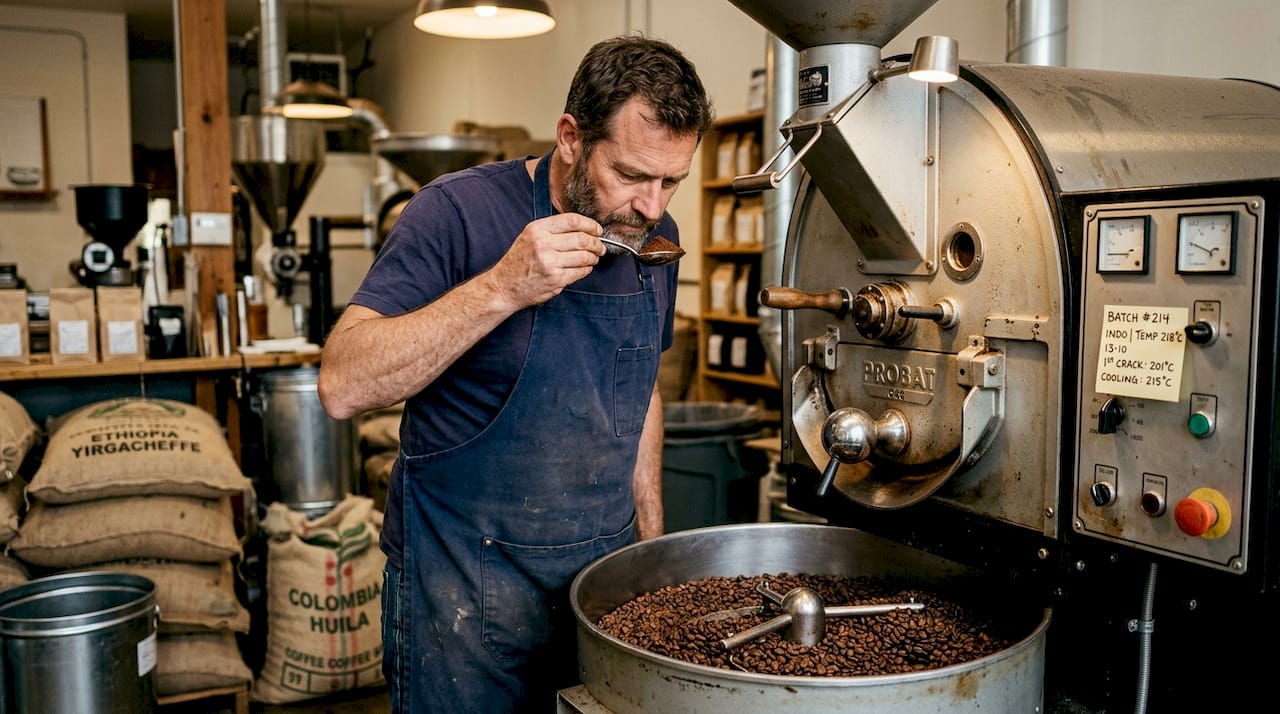
The journey from raw green bean to a decadent cup involves several distinct stages, and each one either adds or removes potential flavor. Most mass-market coffee loses flavor at multiple points in this chain. Decadent coffees are designed to protect it at every stage.
The Swiss Water Process and CO2 method Both methods share one critical advantage: no chemical solvents. Conventional decaffeination often uses methylene chloride or ethyl acetate, which can leave trace chemical residues and dull the bean’s natural flavor compounds. Swiss Water uses a flavor-charged water solution to gradually draw out caffeine while leaving the aromatic oils intact. CO2 decaffeination is even more precise, using supercritical carbon dioxide to target caffeine molecules specifically. Specialty decaf produced through these advanced chemical-free methods consistently achieves cupping scores above 80, matching their caffeinated counterparts in quality.
Ethical and traceable sourcing When a roaster can name the farm and the farmer, that traceability usually reflects a direct trade relationship. Direct trade means the roaster visits the farm, sets quality standards in person, and pays a premium for exceptional lots. That accountability flows directly into the cup. Farmers who receive fair compensation invest more in their crop, which means better cherry selection, more careful processing, and higher quality green beans leaving the farm.
Small-batch roasting Industrial roasters process hundreds of kilograms of beans at once. Small-batch roasters work in quantities of 5 to 25 kilograms per roast, which allows them to monitor temperature curves closely and adjust in real time. The result is a more even roast development, which means fewer underdeveloped or scorched beans in your bag. Understanding coffee cupping at home helps you evaluate whether a roaster is hitting these quality targets consistently.
Here’s a look at how key process variables affect your final cup:
| Process stage | What it affects | Quality indicator |
|---|---|---|
| Decaf method | Flavor retention, chemical residue | Swiss Water or CO2 label |
| Sourcing | Freshness, ethics, traceability | Farm name, direct trade notes |
| Roast batch size | Evenness, development, freshness | Small-batch label, roast date |
| Roast date | Volatile aroma compounds | Within 2 to 4 weeks of purchase |
Key steps that take green beans to a genuinely decadent cup:
- Green beans are carefully selected for ripeness and density before processing begins.
- Decaffeination, if applicable, happens at the green bean stage before any heat is applied.
- Roasting profiles are developed for each specific bean, adjusting for density, moisture content, and target flavor.
- Beans are rested post-roast to allow CO2 to off-gas before packaging.
- Packaging uses one-way degassing valves to preserve freshness without oxidation.
Pro Tip: Always check the roast date before buying. A cupping score of 80+ from a batch roasted six months ago won’t taste like an 80+ coffee in your cup. Freshness is part of the quality equation. Explore small-batch coffee choices to find roasters who prioritize both score and freshness.
Taste, aroma, and experience: Savoring decadence at home
Once you’ve got luxurious beans, here’s how to experience every nuance and get the most from your investment.
Decadent coffees communicate in layers. The first sip might hit you with brightness, a fruit-forward acidity that lifts the cup. As it cools slightly, heavier notes emerge: dark chocolate, toasted nut, caramel, or floral sweetness depending on the origin and roast. The finish, what lingers after you swallow, is where quality really separates itself. A great decadent coffee leaves a clean, sweet aftertaste that makes you want another sip immediately.
These flavor notes, called descriptors, are the vocabulary of specialty coffee cupping scores above 80. Common descriptors include fruity, nutty, floral, chocolatey, spicy, caramel, citrus, and earthy. Learning to identify them at home transforms coffee from a morning habit into a genuine sensory practice.
Here’s how to build that sensory practice at home:
- Start with a clean palate. Taste your coffee before eating anything. Your taste buds are sharpest on a clean palate.
- Smell before you sip. Hold the cup about two inches from your nose and inhale slowly. Aroma accounts for a large portion of perceived flavor.
- Let it cool slightly. Brewing-hot coffee masks a lot of nuance. At around 130 to 140 degrees Fahrenheit, the flavor complexity opens up noticeably.
- Use filtered water. Chlorine in tap water interferes with aromatic compounds. A basic carbon filter makes a real difference.
- Pair thoughtfully. Dark chocolate, fresh fruit, and toasted nuts amplify coffee’s natural flavor compounds without masking them. Explore confections and coffee flavors for specific pairing ideas.
- Match your grind to your brew method. A coarse grind for French press, medium for drip, fine for espresso. Getting this wrong mutes even the best beans.
Building layered flavor at home goes beyond the bean itself. Exploring mastering flavor layering opens up techniques that work alongside your bean selection to produce a more complex, satisfying result. And for broader guidance on pulling flavor out of every cup, coffee flavor tips offers a practical framework worth bookmarking.
Pro Tip: Experiment with water temperature between 195 and 205 degrees Fahrenheit and grind size incrementally. Change only one variable at a time. That way you’ll know exactly what shifted the flavor, and you can repeat it.
Why most coffee lovers underestimate true decadence
Bringing it all together, let’s dig into why understanding decadence changes the game for home coffee.
Here’s something we’ve noticed consistently: most adventurous brewers chase boldness. They go darker, stronger, more intense. They add spices, alternative milks, flavored syrups. The chase is for impact, for something that immediately announces itself. And in doing so, they skip right over the coffees that would actually satisfy them most.
True decadence is quieter than that. It’s a single origin Ethiopian natural process coffee that tastes like strawberry jam without a single thing added. It’s a Swiss Water decaf that has more body and sweetness than most caffeinated options you’ve ever tried. It’s a whiskey barrel-aged roast where the oak and vanilla notes emerge from the bean itself, not from a bottle of flavoring. Understanding chocolate coffee insights is a good example of how flavor can come from craft rather than additives.
The mindset shift we’d encourage is this: stop trying to make your coffee taste like something else, and start listening to what the coffee is already saying. That requires slowing down, brewing with intention, and tasting with real attention. It also requires sourcing beans that actually have something to say, which is why process and origin matter so much.
Most enthusiasts benefit more from going subtler than from going bigger. The next level isn’t a more extreme flavor. It’s a more nuanced one.
Explore decadent flavors with Variatea Coffee
If the craft behind decadent coffee resonates with you, the next step is finding beans and blends that actually deliver on that promise. That’s exactly what we’ve built Variatea Coffee to do.

Our whiskey barrel aged coffee is aged in authentic charred oak barrels to produce deep bourbon and vanilla notes without a drop of alcohol. It’s a masterclass in how process creates flavor. For mornings when you want decadence in under a minute, our premium instant coffee brings specialty-grade quality to your travel mug or desk. And if you want to explore beyond coffee entirely, our unique tea selections include Hojicha, ceremonial matcha, Moroccan mint, and hibiscus berry, each chosen for the same flavor-forward philosophy that drives everything we make.
Frequently asked questions
What makes coffee “decadent” compared to regular coffee?
Decadent coffee is defined by advanced processing, ethical sourcing, and high cupping scores (80+) that produce rich, complex flavor without relying on added sweeteners or flavoring agents.
Is all decadent coffee decaf?
No, decadent coffee can be decaf or caffeinated, but specialty decaf processed through Swiss Water or CO2 methods is a standout example because it proves premium flavor doesn’t require caffeine.
Are there health benefits to choosing ethically sourced decadent coffee?
Ethically sourced decadent coffee is typically fresher and free from the harsh chemical solvents used in conventional decaf processing methods, which means a cleaner cup with no residue concerns.
How do I know if a coffee is truly decadent?
Look for a roast date within the past four weeks, detailed origin information, and a processing method label. Coffees that score above 80 on cupping evaluations consistently back up their quality claims with flavor you can taste.