

Craft coffee: Artisanal flavor and handcrafted excellence
TL;DR:
- Craft coffee emphasizes intentionality and artisanal techniques rather than just higher prices or origin labels. It involves small-batch roasting, single-origin sourcing, and precise brewing methods, distinguishing it from specialty coffee, which focuses on bean quality. The craft lies in the continuous, deliberate decision-making process that shapes a uniquely flavorful cup.
Most people assume that paying more for coffee automatically means a better experience. Grab a bag labeled “premium” or “gourmet” from any grocery shelf, and the assumption kicks in: this must be craft. The truth is messier and far more exciting than that. Craft coffee is less about the price tag and more about the intentionality behind every single step, from the soil where the beans grow to the pour-over you finish at your kitchen counter. This guide breaks down what craft coffee genuinely means, how it differs from specialty coffee, what artisan methods produce those impossible-to-replicate flavors, and how you can start brewing it today.
Table of Contents
- Defining craft coffee: What it really means
- Craft coffee vs. specialty coffee: Key differences explained
- Artisan methods: Sourcing, roasting, and brewing for bold flavor
- Pour-over perfection: How to brew craft coffee at home
- The rising value of craft coffee: Flavor, trends, and cost
- What most coffee lovers miss: The artistry behind each cup
- Elevate your cup: Explore craft blends and unique origins
- Frequently asked questions
Key Takeaways
| Point | Details |
|---|---|
| Craft coffee definition | Craft coffee means hands-on, small-batch brewing with a focus on bean quality and preparation artistry. |
| Specialty vs. craft | Specialty coffee refers to bean grading, while craft spotlights skilled preparation by artisan baristas. |
| Home brewing potential | With knowledge and care, you can create a craft experience—even with simple tools—right at home. |
| Premium price explained | Craft coffee costs more due to high-quality beans, skilled labor, and complex flavors. |
| Flavor adventure | Exploring craft coffee opens new doors to unique, memorable taste experiences. |
Defining craft coffee: What it really means
Craft coffee is a term that gets borrowed, stretched, and occasionally misused by marketers. But when you strip away the label, the core concept is surprisingly precise. Craft coffee is premium, small-batch coffee emphasizing meticulous attention to bean origin, roasting, grinding, and brewing to highlight unique flavor profiles, often using single-origin, high-quality beans and artisanal techniques. That definition does a lot of work. Notice it says nothing about price. It says everything about process.
The origins of craft coffee trace back to what coffee culture calls the “third wave,” a movement that began gaining serious momentum in the early 2000s. Third-wave producers started treating coffee the way winemakers treat grapes: as an agricultural product with terroir (the influence of soil, climate, and altitude on flavor). Instead of roasting beans dark to mask defects, craft roasters began using lighter profiles to preserve a bean’s natural character. The goal became revealing flavor, not standardizing it.
What sets craft coffee apart in practice:
- Small-batch roasting: Typically roasted in runs of 20 pounds or fewer, allowing constant monitoring and adjustment
- Single-origin sourcing: Beans from one specific farm, region, or cooperative for a traceable flavor identity
- Artisan involvement: A skilled roaster or barista who makes intentional decisions at every stage
- Transparency: Knowing the farmer, harvest date, processing method, and roast date
- No blending to cover defects: Every component earns its place in the cup
Is “craft” just a marketing word? Sometimes, yes. Any brand can slap it on packaging. But when you look for the specifics, traceability, roast dates, brewing guidance, and small-batch labeling, you quickly separate genuine craft from imitation. The concept of hand-crafted coffee and flavor is rooted in real technique, not just narrative.
“Craft coffee is about asking every question a commodity producer skips: Who grew this? At what altitude? How was it processed? How long ago was it roasted? Those questions lead to flavors you simply cannot find on a standard shelf.”
Craft coffee vs. specialty coffee: Key differences explained
These two terms live next door to each other, and plenty of people use them interchangeably. They overlap but they are not identical, and knowing the distinction sharpens your palate and your purchasing decisions.
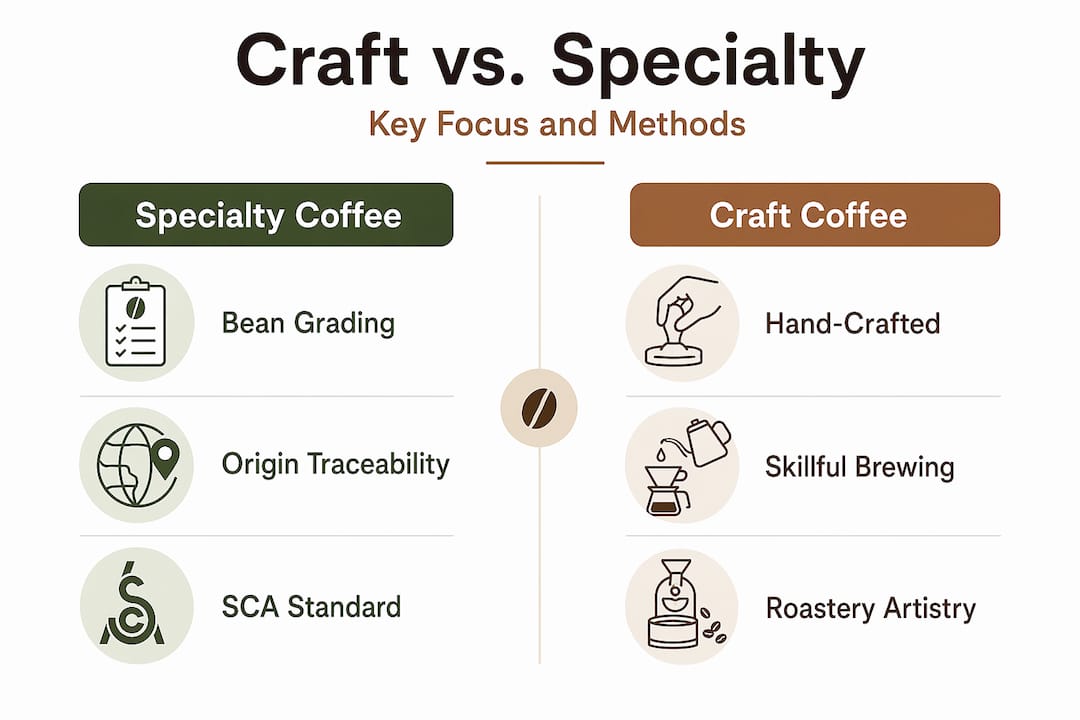
Specialty coffee is a grading standard. The Specialty Coffee Association (SCA) defines specialty coffee as beans scoring 80 points or higher on a 100-point quality scale, assessed by certified Q Graders who evaluate aroma, flavor, aftertaste, acidity, body, and balance. A specialty-grade bean is an excellent raw ingredient. It tells you the starting material is exceptional.
Craft coffee is about what happens after. Craft coffee differs from specialty coffee in focusing on the hand-crafted preparation process by skilled baristas, while specialty refers to high-grade beans scoring 80+ on the SCA scale. You can brew specialty-grade beans poorly and destroy everything the farmer worked for. Conversely, a talented craft barista can coax remarkable results from good (but not technically specialty) beans through precise technique and attention to detail.
| Category | Focus | Who leads | Key measure | Typical cost |
|---|---|---|---|---|
| Specialty coffee | Bean quality and origin | Growers and Q Graders | SCA score 80+ | $15 to $25 per lb |
| Craft coffee | Preparation artistry | Roasters and baristas | Flavor complexity | $15 to $30 per lb |
| Mass-market coffee | Consistency and scale | Industrial producers | Volume and price | $5 to $10 per lb |
The cultural overlap is real. Most craft coffee shops use specialty-grade beans precisely because great preparation deserves great raw material. Think of it this way: specialty coffee is the screenplay, and craft coffee is the film direction. Both matter. Neither alone guarantees the final experience you want. Exploring specialty coffee flavor alongside craft technique is where the magic truly starts.
Pro Tip: When shopping for craft coffee, look for the roast date on the bag, not just the “best by” date. Fresh roasted within the last two weeks is the standard to aim for.
Artisan methods: Sourcing, roasting, and brewing for bold flavor
Once you understand the concept, seeing the actual process unfold step by step makes everything click. Craft coffee is not one skill. It is a chain of interdependent decisions, and a weak link at any point costs you flavor.
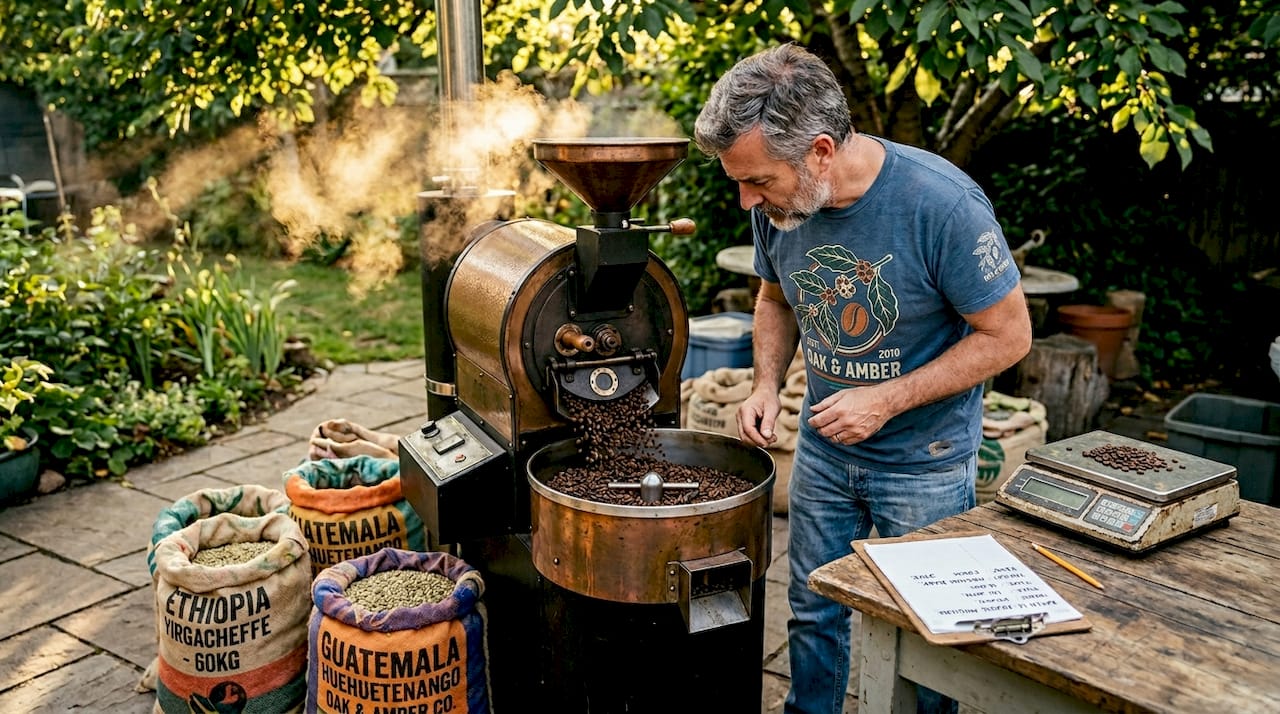
1. Sourcing single-origin, high-altitude beans High altitude forces coffee plants to grow slowly, producing denser, more complex beans. Farms above 1,500 meters in regions like Ethiopia, Colombia, and Guatemala consistently produce beans with pronounced floral, fruity, or chocolatey notes. Craft sourcing means building direct relationships with specific farms or cooperatives rather than buying anonymously on the commodity market.
2. Roasting with intention A craft roaster reads the drum temperature, listens for the audible “crack” that marks roast stages, and logs every variable for reproducibility. Light roasts preserve bright acidity and fruit-forward notes. Medium roasts develop body and sweetness. Dark roasts bring chocolate and caramel, though at the cost of origin character. Knowing how roasting transforms flavor is foundational to understanding why craft roasters obsess over every degree.
3. Grinding with precision Grind size controls extraction rate. Too fine and you over-extract, producing bitterness. Too coarse and you under-extract, leaving sour, thin coffee. Key mechanics include sourcing high-altitude single-origin beans, fresh roasting within 2 weeks, precise grinding (800 to 1,200 microns), and brewing at 195 to 205°F with methods like pour-over or AeroPress. Always grind right before brewing.
4. Brewing with control Water temperature, brew ratio, contact time, and method all shape the final cup. Each brewing method extracts differently.
| Brewing method | Grind size | Water temp | Brew time | Flavor character |
|---|---|---|---|---|
| Pour-over | Medium-fine | 200°F | 2:30 to 3:30 min | Clean, bright, nuanced |
| AeroPress | Medium-fine to fine | 195°F | 1:30 to 2:00 min | Concentrated, smooth |
| French press | Coarse | 200°F | 4 min | Full-bodied, rich |
| Chemex | Medium-coarse | 200°F | 3:30 to 4:30 min | Crisp, tea-like clarity |
Every choice you make is a flavor decision. That is the spirit of artisanal flavor and techniques: treating brewing as a craft rather than a routine.
Pro Tip: Buy a scale and use it. The difference between 15 grams and 18 grams of coffee in a pour-over is the difference between a flat cup and a layered, flavorful one.
Pour-over perfection: How to brew craft coffee at home
Pour-over brewing has become the signature method of craft coffee culture for good reason. It gives you complete control over every variable, no machine making decisions for you, just your hands, your attention, and the water.
Here is how to nail it:
- Heat your water to 200°F. If you do not have a thermometer, bring water to a boil and let it sit for 30 to 45 seconds.
- Weigh your coffee at a 1:16 ratio. For a 12-oz cup, use about 22 grams of coffee to 350 grams of water.
- Grind medium-fine, roughly the texture of sea salt. Grind immediately before brewing.
- Pre-wet your filter with hot water to remove papery taste, then discard that water.
- Add your grounds, then start the bloom: pour just enough water to saturate all the grounds (about 40 to 50 grams) and wait 30 to 45 seconds. The bloom releases CO2 from freshly roasted coffee, which would otherwise disrupt extraction.
- Pour in steady, circular motions, keeping the water level consistent without flooding the filter. Finish all pours by 2 minutes 30 seconds, targeting a total draw-down of 3 to 3.5 minutes.
Pour-over methodology confirms the standard: a 1:16 ratio, medium-fine grind, 200°F water, 30 to 45 second bloom, and total draw-down of 2 minutes 30 seconds to 3 minutes 30 seconds. Grind finer if the coffee tastes sour (under-extracted) and coarser if it tastes bitter (over-extracted).
The beauty of pour-over is that once you own the variables, you can elevate your brew in any direction you want. Try a slightly lower temperature to highlight delicate floral notes in an Ethiopian natural process. Try a finer grind with a Guatemalan medium roast to pull out more body and sweetness. These are the coffee blending techniques and brewing experiments that make craft brewing genuinely addictive.
Pro Tip: Keep a simple brew journal for one week. Note your ratio, grind setting, water temp, and tasting notes. You will identify patterns faster than any tutorial can teach you.
The rising value of craft coffee: Flavor, trends, and cost
Craft coffee is not a niche curiosity anymore. It is a significant and expanding segment of the market, and the consumer appetite driving it shows no signs of slowing down.
55% of Americans now drink specialty coffee, according to NCA data, with craft commanding premium pricing of $15 to $30 per pound versus $5 to $10 per pound for conventional coffee.
That price gap reflects real costs. Small-batch roasting is labor-intensive. Direct-trade beans from ethical farms cost more than commodity beans. The skilled roasters who monitor every batch earn professional wages. And unlike mass-market coffee, craft products do not benefit from economies of scale.
What is actually driving the demand?
- Flavor complexity: Consumers who have experienced bright, fruit-forward Ethiopian naturals or deep, chocolatey Colombian washed coffees find mass-market blends flat by comparison
- Origin storytelling: Knowing a coffee came from a specific cooperative in Yirgacheffe or a family farm in Antioquia adds meaning to the morning ritual
- Health consciousness: Lighter roasts retain more antioxidants and less bitterness, appealing to health-aware drinkers
- Social identity: Craft coffee has become a cultural signifier, tied to values of sustainability, quality, and intentionality
- Uniqueness: Signature blends, barrel-aged roasts, and limited releases offer something no grocery aisle can match
Understanding what makes coffee premium goes beyond bean grades and into the full ecosystem of decisions that bring a remarkable cup to your table. The single-origin experience especially resonates with adventurous brewers who want their cup to tell a specific story about a specific place. And for those exploring premium e-commerce coffee, the access to small-batch roasters has never been better.
What most coffee lovers miss: The artistry behind each cup
Here is an uncomfortable truth the craft coffee world rarely says out loud: most enthusiasts focus on gear and beans while completely overlooking the person making the decisions. A $400 grinder and a bag of award-winning Ethiopian beans can still produce a mediocre cup if the brewer is not paying attention.
The craftsperson’s influence is the invisible variable. It is the roaster who decides to stop the roast 10 seconds earlier to preserve a particular brightness. It is the barista who adjusts the grind by one notch because the humidity in the room changed. These micro-decisions are what separate genuinely memorable cups from technically adequate ones.
Contrasting views exist in the industry: some treat craft and specialty as interchangeable (particularly in third-wave spaces), while others insist craft is specifically about preparation artistry versus specialty’s focus on bean quality. The fact that no legal definition exists means the term is used loosely. But that ambiguity actually contains an invitation: you get to define craft coffee through your own practice.
What we believe at Variatea Coffee is that craft is intentionality in action. It is not about owning the most sophisticated equipment or sourcing the rarest beans. It is about showing up curious, adjusting variables with purpose, and trusting your palate to guide the next decision. The home barista guide is a perfect starting point if you are building that practice from scratch. Engage with your brewing. Taste critically. Experiment without anxiety. That is the real craft.
Elevate your cup: Explore craft blends and unique origins
Ready to taste what intentional, artisanal brewing actually feels like in your cup? The educational journey through craft coffee is best completed with the right materials in hand.

At Variatea Coffee, every product is designed for the adventurous brewer who wants something genuinely different. Our Whiskey Barrel Aged coffee is aged in authentic charred oak barrels to deliver deep, smoky bourbon and vanilla notes without a drop of alcohol, proof that craft innovation can go places standard roasters never consider. If you want something with serious caffeine and bold character, the Max Caf Blend delivers high-octane intensity with the complexity you expect from a small-batch roast. Explore the full collection at Variatea Coffee and find the blend that matches your curiosity.
Frequently asked questions
Is craft coffee always single-origin?
While many craft coffees are single-origin for distinct flavors, innovative blends are also prized for their complexity and artistry. The defining feature is intentional sourcing and process, not origin exclusivity.
Can you make craft coffee with regular beans?
The artful methods of craft coffee can be applied to any beans, but using high-quality, fresh beans is key to achieving the best flavor. As craft coffee fundamentals confirm, meticulous attention to origin, roasting, grinding, and brewing defines the experience.
What makes craft coffee more expensive?
Higher prices result from small-batch production, premium beans, skilled labor, and attention to artisanal methods. Craft commands $15 to $30 per pound versus $5 to $10 for conventional options, reflecting genuine quality differences at every stage.
Is pour-over the only way to make craft coffee?
Pour-over is a popular and expressive method, but other manual brewers like AeroPress or Chemex also embody the hands-on craft approach. Craft mechanics include any method that uses precise grinding at 800 to 1,200 microns and brewing at 195 to 205°F with full brewer control.
Recommended
- Why hand crafted coffee delivers unique flavor and quality – Variatea Coffee
- Artisanal coffee flavor profiles and brewing techniques – Variatea Coffee
- Explore Coffee Finishes: Flavor, Art & DIY Techniques – Variatea Coffee
- Explore artisan coffee varieties for unique flavor experiences – Variatea Coffee