

Coffee tasting workflow: Step-by-step guide for artisanal flavor
TL;DR:
- A structured coffee tasting workflow enhances flavor detection and sensory skills through scientific principles.
- Key tools include a burr grinder, precise scale, temperature-controlled kettle, ceramic cups, and TDS measurement devices.
- Consistent, repeatable practices with controlled variables build tasting proficiency faster than chasing new techniques annually.
Most coffee enthusiasts grind their beans, pour hot water, and call it a tasting. They miss 80% of what’s actually in the cup. The truth is that a structured coffee tasting workflow, backed by modern science and sensory technique, can reveal smoky whiskey notes, delicate florals, and layered sweetness that a casual sip never will. Brewing science benchmarks show that factors like water temperature, dose ratio, and even the cup material you use have measurable impacts on flavor perception. This guide breaks down a repeatable, advanced tasting workflow built for adventurous brewers who want more from every cup in 2026.
Table of Contents
- Gathering your tools and ingredients: Setting the stage for tasting
- Step-by-step: Modern coffee tasting workflow for 2026
- Troubleshooting and avoiding common tasting mistakes
- Verifying and reflecting: How to analyze your results and refine your palate
- Why reinventing your coffee tasting workflow every year misses the point
- Explore artisanal blends to elevate your workflow
- Frequently asked questions
Key Takeaways
| Point | Details |
|---|---|
| Prepare your toolkit | Start with the right tools, beans, and environment for clear flavor discovery. |
| Follow the modern workflow | Upgrade each step—grind, brew, measure, taste, record—to include 2026’s best practices and innovations. |
| Embrace troubleshooting | Address common errors early for consistently superior coffee tastings. |
| Track your progress | Use measurements and tasting notes to systematically refine your palate. |
Gathering your tools and ingredients: Setting the stage for tasting
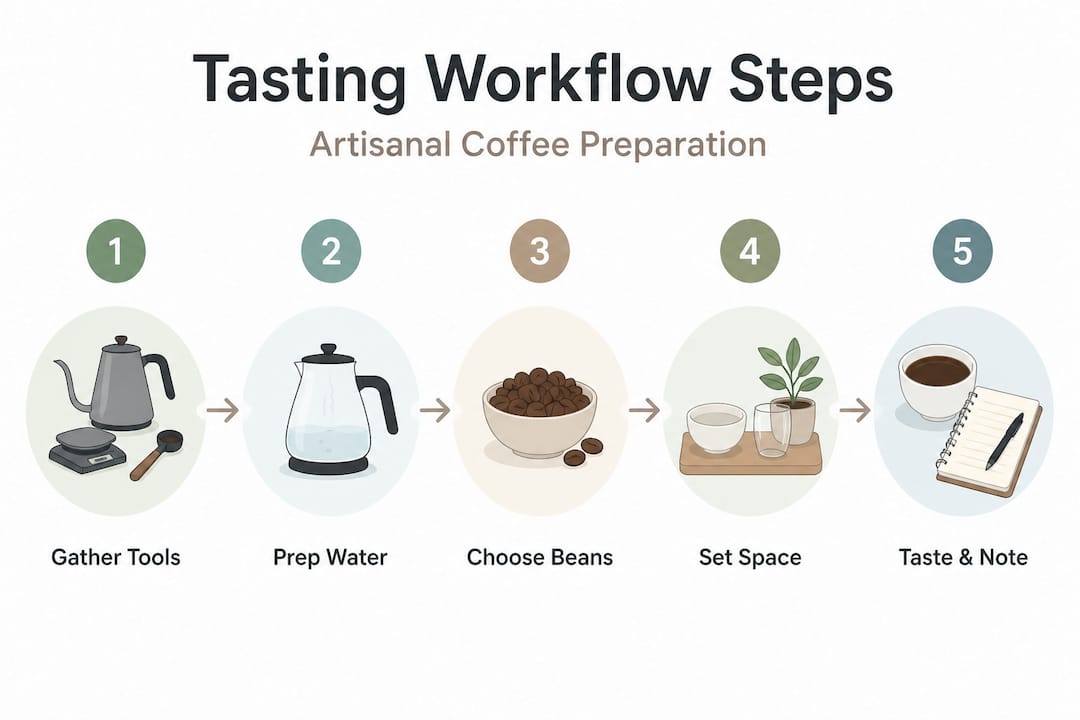
Once you understand what makes a great coffee tasting workflow essential, it’s time to assemble your toolkit and select your coffee. Think of this stage as calibrating your instrument before a performance. You are the instrument. Your tools just help you measure and focus.
The essential tasting kit
You don’t need a professional cupping lab. But you do need a few specific pieces of gear to get repeatable, meaningful results:
- Burr grinder: Blade grinders create uneven particle sizes that muddy flavor. A burr grinder (conical or flat) gives you consistent grounds every time.
- Digital scale: Accurate to 0.1 grams. Eyeballing your dose destroys consistency.
- Gooseneck kettle with thermometer: Temperature control is non-negotiable. You want precision, not guesswork.
- Ceramic cups: Research confirms that ceramic is the preferred vessel for tasting because it doesn’t interfere with aroma or heat retention the way glass or plastic can.
- Refractometer: This small optical device measures TDS (total dissolved solids), which tells you exactly how much coffee material has extracted into your water. It’s the difference between guessing and knowing.
- Tasting spoons: Wide, shallow spoons let you slurp and aerate the coffee across your palate, just like professional cuppers do.
- Tasting journal or score sheet: Paper or digital, just use something consistent.
Why water matters more than most brewers realize
Tap water full of chlorine or mineral imbalances can completely distort a coffee’s flavor. For tasting purposes, use filtered water with a moderate mineral content, around 75 to 150 mg/L of total dissolved solids. Too soft and the coffee tastes flat. Too hard and it tastes harsh.
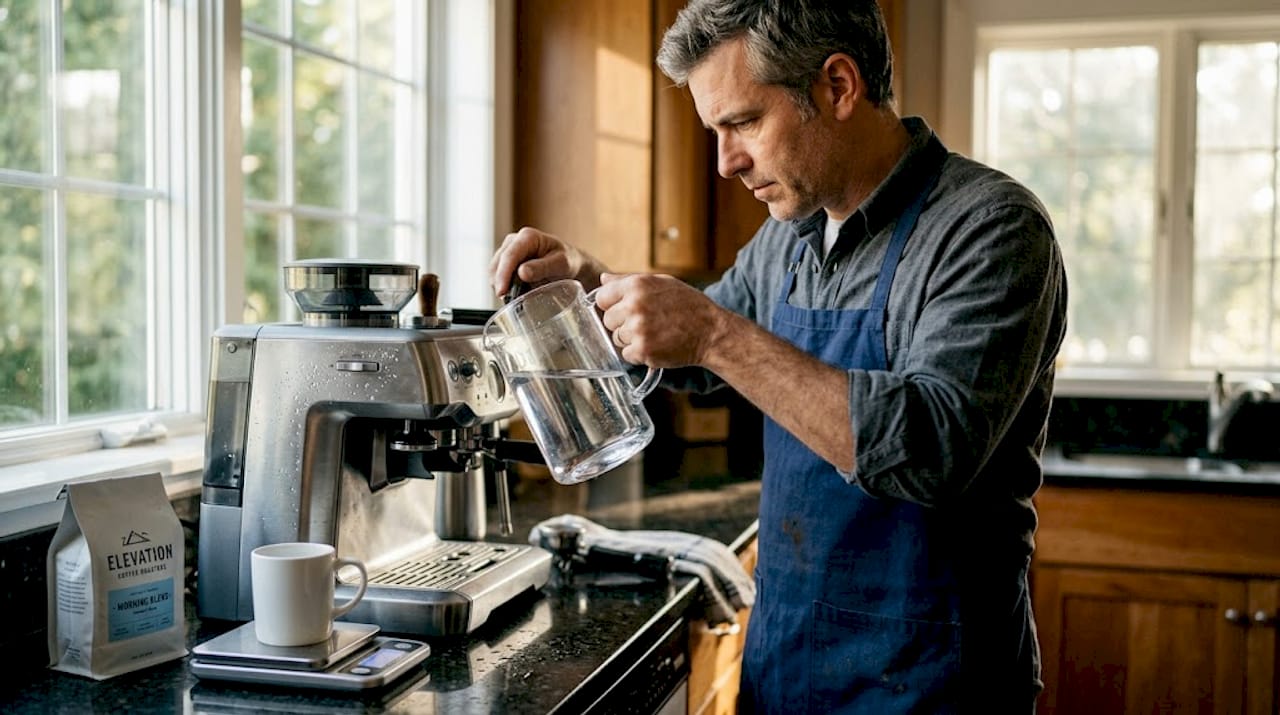
The SCA Golden Cup standards specify brewing at 92 to 96°C (197 to 205°F), a 1:15 to 1:18 coffee-to-water ratio, 18 to 22% extraction yield, and a TDS of 1.15 to 1.35% for ideal cup quality. These aren’t suggestions. They’re empirically tested benchmarks you can build your workflow around.
Choosing the right beans
Single-origin coffees from distinct growing regions give you the clearest flavor signals for tasting practice. A natural-processed Ethiopian will taste completely different from a washed Colombian, and both will teach you something new. Small-batch and specialty roasters who publish processing details on the bag are your best allies here. When you’re ready to explore beyond standard roasts, reviewing brew profiles and techniques for flavored and barrel-aged coffees adds a genuinely exciting variable to your workflow.
Setting up your space
Eliminate competing aromas. No cologne, scented candles, or food odors nearby. Natural light is better than fluorescent for visual assessment of color and clarity. Keep your setup clean and consistent session to session so your only variable is the coffee itself.
| Tool | Purpose | Priority level |
|---|---|---|
| Burr grinder | Grind consistency | Essential |
| Digital scale | Dose accuracy | Essential |
| Refractometer | TDS/extraction measurement | Highly recommended |
| Ceramic cups | Neutral flavor environment | Essential |
| Gooseneck kettle | Temperature precision | Essential |
| Tasting journal | Record and compare results | Essential |
Pro Tip: Run a blank tasting with just hot water in your ceramic cups before you begin. This helps you identify any residual aromas or flavors in the cups that could interfere with your results.
Step-by-step: Modern coffee tasting workflow for 2026
With tools and ingredients on hand, you’re ready to start tasting. Let’s break down each step of the modern workflow and see what’s new in 2026.
-
Grind fresh, grind consistent. Grind just before brewing. Set your burr grinder to medium-coarse for cupping, or adjust to your chosen brew method. Weigh your grounds immediately after grinding, before volatile aromatic compounds escape.
-
Dose precisely. Use your target ratio as your anchor. If you’re cupping (the standard professional method), 8.25 grams per 150 mL of water hits the SCA sweet spot. Adjust based on your specific brew method.
-
Brew with controlled temperature. Heat your water to 93 to 95°C for most light to medium roasts. Dark roasts like a Whiskey Barrel-Aged Coffee can handle a slightly lower temp, around 91°C, to avoid amplifying bitterness.
-
Measure TDS and extraction yield. Once brewed, use your refractometer on a small cooled sample. Plug the TDS reading into a standard extraction formula (many free apps do this automatically). This is where 2026 tasting practice diverges from older approaches. Objective measurement replaces pure subjective guessing. Innovations in electrochemistry for flavor profiling now allow voltage-based roast and strength identification, and accessible consumer tools like E-Tongue devices are starting to appear in serious home setups.
-
Sensory assessment. Let the coffee cool to about 70°C before your first sniff. Assess aroma (dry fragrance, wet aroma), taste (sweetness, acidity, bitterness, saltiness, umami), and mouthfeel (body, texture, finish). Slurp loudly and deliberately to coat your entire palate.
-
Note-take immediately. Don’t wait. Flavor memory fades fast. Write down every descriptor that comes to mind, even strange ones. “Burnt rubber” is as valuable as “dark cherry” because it points to a specific extraction or processing issue.
-
Compare and repeat. If you’re tasting multiple coffees side by side, always start with the lightest roast and move to the darkest. Reset your palate with plain water and a neutral cracker between each sample.
| Workflow step | For black coffee | For blended/flavored coffee |
|---|---|---|
| Grind size | Medium-coarse (cupping) | Adjust per recipe |
| Temperature | 93 to 95°C | 91 to 93°C |
| TDS target | 1.15 to 1.35% | 1.20 to 1.40% |
| Aroma focus | Origin notes, terroir | Added flavor integration |
| First impression | Acidity, sweetness | Blend harmony, finish |
For adventurous brewers using unique blends, check out flavor enhancement techniques and innovative coffee discoveries to understand how flavored and specialty coffees behave differently in this workflow.
Pro Tip: Taste each coffee at two temperatures: just after brewing and again when it’s cooled to room temperature. Many coffees reveal completely different flavor profiles as they cool, especially naturally processed or fruit-forward roasts.
Troubleshooting and avoiding common tasting mistakes
You know the workflow. But what if your results feel off? Here’s how to troubleshoot and steer clear of common missteps.
The most common errors
- Inconsistent grind: Even a small variation in particle size changes extraction dramatically. Check your grinder burrs regularly for wear and calibrate your grind setting per bean density.
- Wrong ratios or temperatures: Going too strong (below 1:15) often reads as bitter and muddy. Too weak (above 1:18) reads as watery and flat. Temperature above 96°C scorches delicate aromatics. Below 92°C and you under-extract, producing a sour, thin cup.
- Distracted environment: Your phone, a loud room, or a strong scent nearby are real interferences, not minor annoyances. Flavor perception is deeply tied to focus and the absence of competing sensory input.
- Using the wrong cup: Plastic and thin glass cups absorb aromas and change heat retention. Citizen science data confirms higher liking for ceramic cups among trained and untrained tasters alike.
- Tasting at the wrong time of day: Data from large-scale preference studies shows that morning tasting sessions consistently produce higher ratings for black coffee. Your palate is freshest and least saturated earlier in the day.
“Price, cup material, and time of day are overlooked variables that measurably affect how we perceive coffee flavor. Getting these right isn’t perfectionism. It’s just good science applied to a ritual you already love.”
How price and equipment investment affect cup quality
Paying more for specialty grade beans matters, but so does investing in precise equipment. A $20 scale and a $40 refractometer will do more for your tasting accuracy than a $200 fancy mug. Focus your investment on grind consistency and measurement tools first.
For deeper guidance on getting more from each variable in your brew, explore flavor-forward brewing tips, flavor layering for 2026, and how to enhance coffee flavors step by step.
Pro Tip: Keep your tasting notes in exactly the same format every session. Consistency in documentation lets you run blind comparisons across weeks or months and actually see how your palate is developing over time.
Verifying and reflecting: How to analyze your results and refine your palate
Once you’ve completed your workflow, the next move is to validate what you’ve discovered and cultivate your own tasting expertise.
Comparing measurements to benchmarks
Pull up your TDS and extraction yield numbers. Compare them directly to the SCA target range: 1.15 to 1.35% TDS and 18 to 22% extraction. If your measured results land within range but the cup still tastes off, the problem is likely in your beans, your water, or your grind distribution. TDS and sensory records together give you a complete picture of each tasting outcome, connecting the objective data to your subjective experience.
Building a personal score table
Use a simple, repeatable scorecard for every session. Here’s a starting framework:
| Category | Score (1 to 10) | Notes |
|---|---|---|
| Aroma | Describe first impression | |
| Acidity | Bright, crisp, dull, harsh | |
| Sweetness | Caramel, fruity, neutral | |
| Bitterness | Clean, astringent, absent | |
| Body | Light, medium, full | |
| Finish | Short, long, pleasant | |
| TDS measured | Compare to 1.15 to 1.35% | |
| Overall rating | Personal enjoyment score |
How to train your palate systematically
- Repeat the same coffee three sessions in a row. You’ll notice details on day three that were invisible on day one. Repetition builds sensory memory.
- Run blind tastings. Have someone prepare two cups without telling you which is which. Blind assessment eliminates expectation bias.
- Vary one variable at a time. Change only the grind size one session, then the temperature the next. Isolation is how you learn what each variable actually does.
- Taste across categories. Move between single-origin naturals, washed coffees, and specialty blends. For best small-batch coffees that genuinely challenge your palate, look for producers who publish full traceability data alongside their roast notes.
- Compare your scores over time. After 20 sessions, look back at your earliest notes. You’ll see a pattern in what you once missed and what now seems obvious.
Pro Tip: Add a specialty tea tasting session to your monthly routine. Hojicha Roasted Green Tea or Moroccan Mint Tea develops completely different sensory muscles around temperature sensitivity and aroma subtlety, skills that transfer directly back to your coffee tasting accuracy.
Why reinventing your coffee tasting workflow every year misses the point
Here’s a perspective that most coffee content in 2026 won’t give you: the annual “new workflow” obsession is actually slowing your development as a taster.
Every January, a new set of trending techniques, gadgets, and protocols floods the specialty coffee space. Voltage sensors. AI flavor mapping. Cryogenic grinding. Some of these tools are genuinely interesting. But chasing them year after year breaks the one thing that actually builds palate skill: controlled repetition with consistent variables.
The brewers who make the most dramatic improvements in sensory skill are the ones who run the same foundational workflow, session after session, with tiny deliberate adjustments. They’re not reinventing. They’re refining. There’s a massive difference.
True flavor discovery happens when you understand your own palate well enough to know why a specific Ethiopian natural tastes different to you at 7am versus 3pm, or why a barrel-aged roast opens up differently after two minutes of cooling. That level of personal sensory knowledge can’t come from chasing novelty. It comes from building on a stable foundation.
The most exciting part? Once your baseline is solid, the genuinely innovative tools, like refractometers and objective flavor profiling, actually start to make sense in context. They stop being gimmicks and start being real diagnostic instruments. Flavor variety insights matter most when you have the sensory vocabulary to appreciate what’s varying.
So yes, update your knowledge. Try new coffees. But anchor your workflow. Mastery is iterative, not annual.
Explore artisanal blends to elevate your workflow
Ready to put your advanced workflow into practice? The most powerful way to sharpen your tasting skills is to brew coffees that were deliberately designed with complex, layered flavor profiles in mind.

At Variatea Coffee, every product in the lineup is built to reward a thoughtful taster. Our whiskey barrel-aged coffee brings smoky vanilla and charred oak notes that test your nose and palate simultaneously. If you’re expanding your session to include tea, our premium teas selection features Hojicha, Matcha, Moroccan Mint, and Hibiscus Berry, each one a distinct sensory experience worth scoring and documenting. For something adventurous in the coffee category, browse our unique flavored coffees and add a new challenge to your next workflow session. Every cup is a data point and a pleasure.
Frequently asked questions
What is the ideal water-to-coffee ratio for tasting in 2026?
For the best tasting results, use a ratio between 1:15 and 1:18, following SCA Golden Cup standards for brewing accuracy and optimal extraction.
How can I objectively measure coffee flavor profiles at home?
You can use a refractometer to measure TDS at home, and emerging tools inspired by electrochemical flavor profiling are making voltage-based roast and strength identification increasingly accessible for serious home brewers.
Does the time of day affect my coffee tasting results?
Yes. Data shows higher liking for black coffee when tasted in the morning, meaning your palate’s freshness and lower sensory fatigue in the morning hours meaningfully influence flavor perception and scoring.
What’s the recommended frequency of coffee tasting for skill improvement?
Studies confirm that 4 to 5 cups per day is optimal for building palate memory while still being enjoyable, making consistent daily tasting the most effective path to sensory skill development.