

Coffee flavors unlocked: How confections elevate every cup
A single square of dark chocolate placed on your tongue right before a sip of coffee can completely rewrite what you taste in that cup. Most people assume the flavor experience lives entirely in the beans, the roast, or the brew method. But the confection sitting beside your mug is doing serious work. The science of pairing coffee with chocolates, pastries, and other sweets reveals a layered world of flavor chemistry that adventurous brewers can use to transform every cup into something genuinely memorable.
Table of Contents
- Why confections transform coffee flavor
- How to pair confections with coffee: Principles and frameworks
- Case studies: Real-world coffee and confection pairings
- How to taste: Step-by-step guide to maximizing flavor
- Explore premium coffees and confections to elevate your tasting
- Frequently asked questions
Key Takeaways
| Point | Details |
|---|---|
| Flavor harmony | Coffee and confections share compounds that can balance bitterness and enhance aroma naturally. |
| Pairing principles | Matching intensity and balancing sweetness are key—contrast often creates a better taste experience than similarity. |
| Experimental approach | Try different origins, textures, and tasting sequences to explore new flavor dimensions. |
| Common pitfalls | Avoid overly sweet combinations or pairing bold coffee with fragile pastries to prevent flavor overload. |
Why confections transform coffee flavor
Coffee and chocolate share more than a cozy reputation. Both contain caffeine and theobromine, a naturally occurring compound that contributes to bitterness and that characteristic warm, stimulating feeling. Because of this chemical overlap, the two interact in ways that go far beyond simple taste preference. When you eat chocolate alongside coffee, the shared compounds create a kind of flavor resonance, amplifying certain notes while softening others.
The roasting process is another key connection. Both coffee beans and cacao nibs undergo high-heat roasting that produces Maillard reaction compounds, the same chemical family responsible for the deep, toasty aromas in bread crusts and caramelized sugar. This overlap in aroma chemistry means that coffee flavor profiles and chocolate profiles often share nutty, smoky, and fruity notes before you even combine them.
Chocolates enhance coffee flavor through complementary and contrasting flavor notes, balancing bitterness and acidity via shared compounds and overlapping aromas.
Here is what confections actually do to your cup:
- Balance bitterness: Dark chocolate’s tannins can neutralize sharp, over-extracted bitterness in espresso.
- Soften acidity: Milk chocolate and caramel-based sweets coat the palate, reducing the perception of bright, citrusy acidity.
- Add body: Fat-rich confections like truffles or hazelnut pralines create a heavier mouthfeel that makes a thin brew feel more substantial.
- Create contrast: Tart fruit jellies or berry-forward sweets can make a mellow, low-acid coffee taste more vibrant by comparison.
Not every pairing is additive. Some combinations create harmony through contrast, while others clash and amplify the worst qualities in both. Learning to enhance coffee flavors means understanding which direction a pairing will pull your palate. Now that you’ve seen how confections aren’t just a side treat, let’s look at precisely how pairing works.
How to pair confections with coffee: Principles and frameworks
The most reliable pairing principle is intensity matching. Bold, dark-roasted coffees can stand up to rich, high-cacao chocolates without either one disappearing. A delicate light roast, on the other hand, pairs beautifully with a buttery shortbread or a mild milk chocolate that won’t bulldoze its subtle floral notes. Match intensity and complement or contrast flavors, and always balance sweetness against coffee’s natural bitterness and acidity.
Roast level and cacao percentage matter more than origin when building a pairing. A 70% dark chocolate will behave very differently from a 50% milk chocolate regardless of where the cacao was grown. Keep this in mind before you reach for an expensive single-origin bar.
Here is a practical framework to guide your pairings:
- Identify your coffee’s dominant note. Is it nutty, fruity, smoky, or floral? This is your anchor.
- Choose a confection that complements or contrasts. Nutty coffee pairs naturally with hazelnut chocolate. Fruity coffee creates a surprising harmony with berry-forward dark chocolate.
- Check sweetness levels. If your brew is already sweet (think a vanilla latte), a very sweet confection will overload the palate and mask nuance.
- Consider texture. Silky ganache softens acidity. Crunchy biscotti adds contrast to a smooth, mellow brew.
- Taste and adjust. Flavor layering is iterative. Try flavor layering in coffee techniques to refine your approach over multiple sessions.
| Coffee type | Ideal confection | Why it works |
|---|---|---|
| Dark espresso roast | 70%+ dark chocolate | Shared roast compounds, intensity match |
| Light fruity roast | Berry or citrus chocolate | Contrast amplifies brightness |
| Nutty medium roast | Hazelnut praline | Complementary flavor wheel alignment |
| Smoky barrel-aged | Salted caramel | Salt cuts smoke, caramel adds sweetness |
| Milk-based latte | Shortbread or biscotti | Delicate match, avoids sweetness overload |
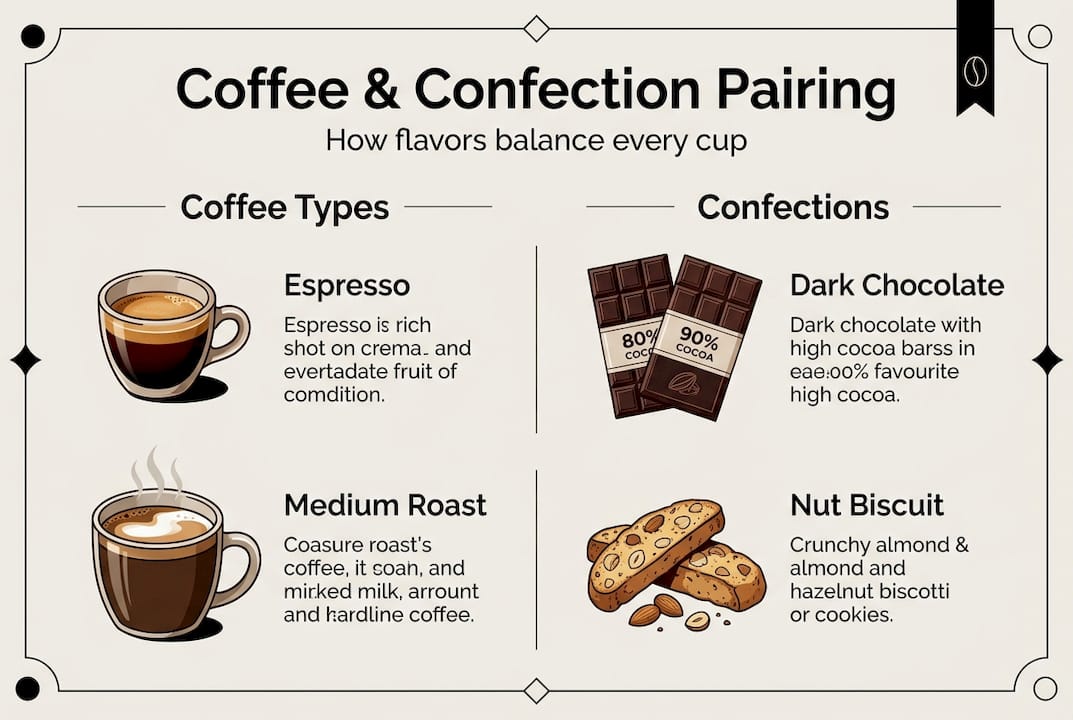
Pro Tip: Use a coffee flavor wheel when shopping for confections. If your coffee’s tasting notes mention “brown sugar” and “walnut,” look for a confection with similar descriptors. The wheel turns guesswork into a reliable system. You can also explore coffee blending techniques to build a brew that’s already primed for a specific pairing.
Once you understand pairing principles, let’s look at real pairings that illustrate these frameworks.
Case studies: Real-world coffee and confection pairings
Research into flavor pairing science has produced some genuinely surprising results. In one study, Dominican Republic chocolate paired best with Papua New Guinea coffee, not with chocolate from the same region. The cross-origin combination reduced perceived sourness and bitterness more effectively than any same-origin pairing tested. Contrast, not similarity, was the winner.
This finding flips the intuitive assumption that matching origins creates the most coherent flavor story. Same-origin pairings can amplify undesirable sour or bitter notes because the shared flavor compounds have nothing to balance against. When you introduce contrast, each element fills in the gaps the other leaves behind.
Here are some real-world pairings worth trying:
- Berry dark chocolate + Ethiopian light roast: The fruit-forward notes in both align, but the chocolate’s tartness contrasts the coffee’s floral brightness, creating a layered finish.
- Hazelnut chocolate + medium nutty blend: A textbook complementary pairing. Both lean into the same flavor family, creating a seamless, indulgent experience.
- Salted caramel truffle + whiskey barrel aged coffee: The salt cuts through the smoky oak notes while caramel echoes the vanilla undertones in the barrel-aged roast.
- Spiced dark chocolate + spice-infused coffee: Bold on bold. This pairing works when both elements share a specific spice note like cinnamon or cardamom.
| Pairing | Flavor outcome | Contrast or complement |
|---|---|---|
| Dominican chocolate + PNG coffee | Reduced bitterness, balanced finish | Contrast |
| Berry chocolate + fruity light roast | Amplified brightness, layered fruit | Complement |
| Hazelnut chocolate + nutty medium roast | Seamless, rich, indulgent | Complement |
| Salted caramel + smoky dark roast | Smoke softened, sweetness elevated | Contrast |
Exploring unique coffee blends gives you more anchor points for these experiments. The more distinct your coffee’s flavor identity, the easier it is to find a confection that either mirrors or balances it. If you want a starting point, check out the best coffees for flavor to identify brews with strong, identifiable tasting notes.
Having seen the impact of real pairings, it’s time to apply these principles step-by-step to elevate your next coffee experience.
How to taste: Step-by-step guide to maximizing flavor
Tasting coffee with confections is a skill, and like any skill, it improves with a deliberate method. Rushing through it means missing the most interesting part: the way flavors evolve as they interact on your palate.
Follow this sequence for the best results:
- Brew fresh. Use a coffee you know well so you have a baseline. A flavored coffees sample pack is a great way to build that reference library quickly.
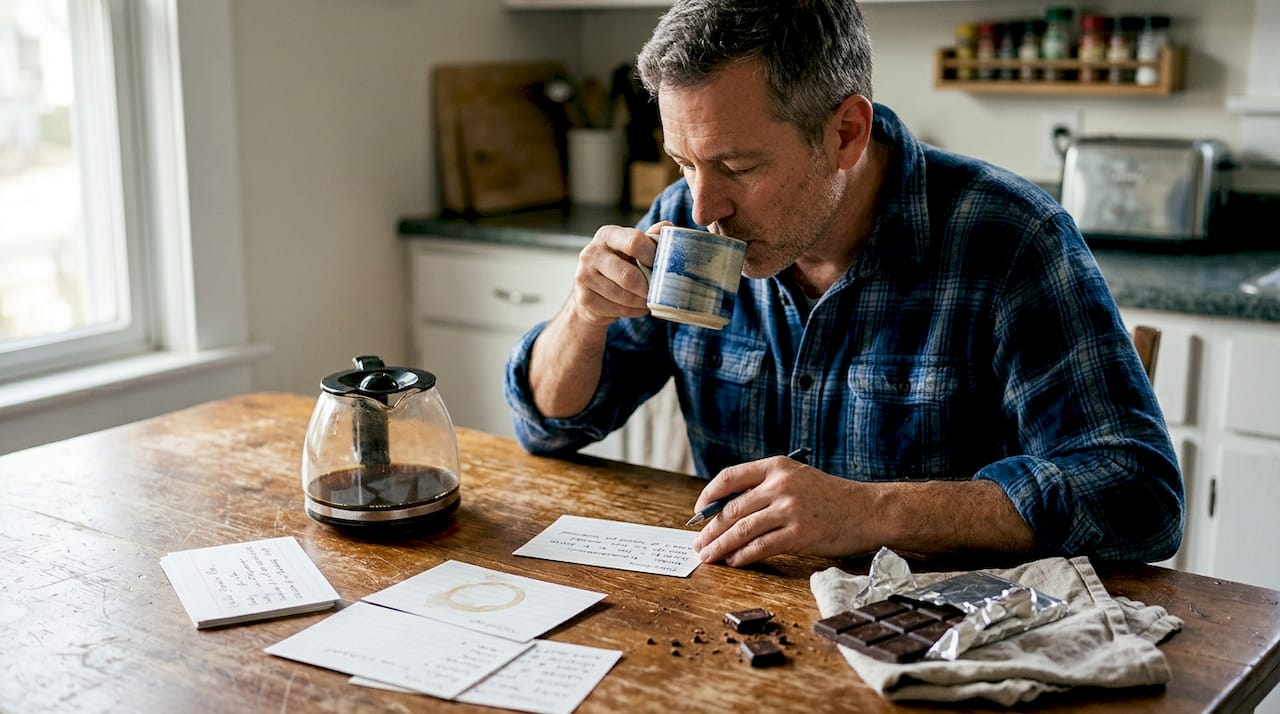
- Sip coffee first to awaken your palate and establish the baseline flavor. Note the acidity, body, and finish before anything else.
- Take a small bite of your confection and let it melt slowly. Don’t chew aggressively. Let the fat and sugar coat your tongue.
- Sip coffee again immediately. Pay attention to what changed. Did the acidity soften? Did a new note appear? Did the finish lengthen?
- Repeat with a different confection to compare. This is where the real learning happens.
The tasting sequence matters: sip coffee first to awaken the palate, then melt the confection, and note changes in acidity, body, and finish. Skipping the first sip means you lose your reference point entirely.
Texture interplay is just as important as flavor. Silky chocolate softens coffee’s acidity, while a crisp pastry contrasts a mellow brew and adds a satisfying textural dimension. Try pairing a chocolate hazelnut confection with a medium roast and notice how the ganache-like texture changes the coffee’s perceived weight.
Pro Tip: Keep a small tasting journal. Write down the coffee, the confection, and three words for what you noticed after each sip. After a few sessions, patterns emerge and you’ll start predicting great pairings before you even taste them. A flavor wheels pairing reference can help you build that vocabulary faster.
Common pitfalls to avoid:
- Sweetness overload: Sweet lattes with sweet confections overload the palate and mask every nuanced note in both.
- Intensity mismatch: A bold dark roast will completely overpower a delicate macaron or a light fruit pastry.
- Eating too fast: Confections need time to melt and interact. Rushing kills the flavor evolution.
- Ignoring finish: The finish (what lingers after you swallow) is often where the most interesting pairing magic happens.
You’ve learned to taste like an expert. Now let’s see how these skills unlock new enjoyment in your routine.
Explore premium coffees and confections to elevate your tasting
Putting pairing science into practice starts with having the right coffee in your cup. At Variatea Coffee, we build our blends with flavor identity in mind, which makes them natural anchors for confection pairing experiments.

Our whiskey barrel aged coffee brings deep smoky vanilla notes that pair beautifully with salted caramel or dark chocolate. For something lighter and more playful, our gourmet donut shop coffee is practically built for pastry pairing. If you want to explore the full range before committing, browse our flavored coffees collection to find a blend that matches the confection adventure you have in mind. Every cup is a new experiment waiting to happen.
Frequently asked questions
What types of confections pair best with bold coffee?
Intense chocolates and robust pastries balance bold brews through intensity matching. Avoid delicate sweets like light fruit tarts or airy meringues, which bold coffee will simply overpower.
Can same-origin coffee and chocolate enhance flavor?
Same-origin pairings can amplify sour or bitter notes rather than balance them, so contrasting origins typically produce more harmonious and enjoyable results.
How does texture affect coffee and confection pairing?
Silky chocolate softens acidity in coffee, while crisp pastries add textural contrast to mellow brews, and both effects shape the overall tasting experience significantly.
Are sweet lattes and confections a good match?
Pairing very sweet lattes with sweet confections overloads the palate with sweetness and masks the nuanced flavor notes in both the coffee and the treat.
What’s the best sequence for tasting coffee and confections?
Sip coffee first to establish a flavor baseline, then melt the confection slowly and sip again to notice changes in acidity, body, and finish.