

Explore Coffee Finishes: Flavor, Art & DIY Techniques
TL;DR:
- Coffee finish refers to the lingering taste and sensations after swallowing or used as wood stain.
- Understanding coffee finish enhances appreciation of flavor complexity and natural craft applications.
- Factors like processing, roast level, and brewing techniques influence both taste and aesthetic finishes.
Most coffee lovers spend time obsessing over the first sip. The aroma, the crema, the temperature. But the finish? That’s where the real story lives. Coffee finish carries two surprisingly different meanings: the lingering taste you notice after swallowing, and a DIY wood staining technique that uses brewed coffee as a natural colorant. Both are worth understanding. Whether you want to sharpen your palate or pick up a sustainable craft project, this guide breaks down every angle of coffee finish so you can put it to work immediately.
Table of Contents
- Decoding the coffee finish: What does it really mean?
- The flavor finish: Savoring the final note of your brew
- Factors that shape your coffee’s finish
- DIY coffee finish for wood: Natural artistry with your brew
- Our take: Why the finish sets coffee—and creativity—apart
- Bring home bold finishes: Explore Variatea Coffee
- Frequently asked questions
Key Takeaways
| Point | Details |
|---|---|
| Double meaning | Coffee finish describes both flavor aftertaste and a natural wood stain technique. |
| Flavor appreciation | Savoring the coffee finish reveals nuanced notes that change with bean origin and brew method. |
| DIY potential | You can use coffee to craft a sustainable, earthy wood stain easily at home. |
| Expert tips | Experimenting with beans, grinds, and water temp helps customize finish to your taste. |
Decoding the coffee finish: What does it really mean?
The word “finish” shows up constantly in wine and whiskey circles, but it belongs just as much in your morning coffee routine. In the world of tasting, finish refers to the flavors and sensations that linger on your palate after you’ve swallowed. It’s the final impression a coffee leaves behind, and it can last anywhere from a few seconds to nearly a minute with a complex, well-roasted bean.
But there’s a second meaning that most coffee enthusiasts never hear about. DIY coffee wood stain can be made from brewed coffee grounds or instant coffee, creating natural earthy brown tones on wood surfaces. This artisanal approach to woodworking uses the same ingredient in your cup to color furniture, picture frames, or craft projects without synthetic chemicals.
So why does finish matter on both fronts?
- Flavor finish tells you about a coffee’s quality, origin, and roast integrity. A long, clean finish signals a well-crafted bean.
- Wood finish offers a non-toxic, biodegradable alternative to commercial stains that’s cheap, renewable, and genuinely beautiful.
- Both definitions reward patience. You have to slow down to appreciate either one.
- Understanding both gives you a richer relationship with coffee as a material and not just a drink.
For the flavor side, think about coffee cupping basics as your entry point. Cupping is the professional method used to evaluate coffee, and finish is one of its core scoring criteria. When you start paying attention to what happens after the sip, you begin to understand why two coffees from the same origin can taste completely different depending on roast and processing.
“Finish is the signature a coffee leaves on your palate. Ignore it, and you’re only reading half the story.”
Pro Tip: The next time you try a new coffee, wait 30 seconds after swallowing and ask yourself: does the flavor grow, shrink, or shift? That answer tells you more about the bean than the first sip ever could.
From a craft standpoint, the DIY wood finish approach also reflects a broader philosophy we believe in deeply: coffee is not a disposable ingredient. It can be a stain, a dye, a flavor agent, and a creative tool all at once.
The flavor finish: Savoring the final note of your brew
The sensory lingering flavors and mouthfeel left after swallowing coffee are what define the flavor finish. It’s not just taste. It’s texture, temperature, and the way certain compounds coat your throat and tongue. A smooth finish feels almost creamy. A dry finish pulls moisture from the sides of your mouth. A bitter finish can be sharp and quick, or slow and evolving.
Here’s how finish compares to other parts of the tasting experience:
| Tasting element | When you notice it | What it reveals |
|---|---|---|
| Aroma | Before the sip | Volatile compounds, roast level |
| Upfront taste | First contact | Acidity, sweetness, body |
| Finish | After swallowing | Depth, complexity, roast integrity |
Finish reveals what aroma and first taste often mask. It’s the layer that exposes how the bean was processed, how far it was roasted, and whether the brewing was dialed in correctly.
The most common flavor finishes you’ll encounter include:
- Chocolate or cocoa: common in medium to dark roasts, especially from Brazil or Colombia
- Fruit or berry: typical in light roasts from Ethiopia or Kenya, where acidity lingers longer
- Spice or tobacco: associated with Sumatran or Guatemalan origins, often with a dry edge
- Sweet or caramel: found in well-balanced espresso or honey-processed beans
- Bitter or astringent: often a sign of over-extraction or low-quality robusta beans
Understanding artisanal flavor profiles helps you connect what you’re tasting to the decisions made during roasting and processing. It’s not random. Every note has a cause.
Pro Tip: After brewing, rinse your mouth with plain water before the tasting sip. This clears residual flavors and lets the finish come through cleaner and more defined.
The way coffee aroma compounds behave also shapes your perception of finish. Some aromatic molecules stay bound in liquid longer, which is why certain coffees seem to keep evolving for 30 to 60 seconds after you swallow. For those just starting out with understanding coffee complexity, finish is one of the most approachable entry points because you don’t need any equipment. Just patience.
Factors that shape your coffee’s finish
Finish doesn’t happen by accident. It’s the result of decisions made at every stage from the farm to your cup. The four biggest variables are bean origin, processing method, roast level, and brewing technique.
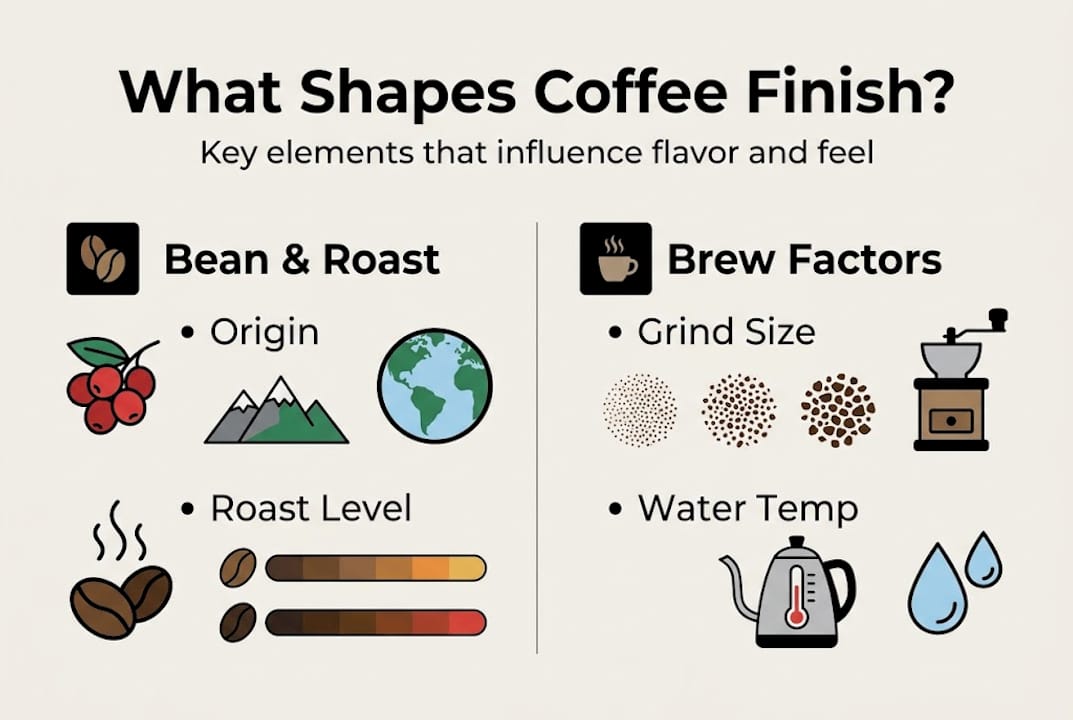
Processing methods including washed, natural, or honey-processed coffees directly influence the finish you experience. Here’s how they break down:
| Processing method | Typical finish profile |
|---|---|
| Washed (wet) | Clean, bright, crisp with mild aftertaste |
| Natural (dry) | Fruity, syrupy, long and complex |
| Honey processed | Balanced, sweet, medium-length finish |
| Pulped natural | Smooth with subtle fruit and chocolate notes |
To start experimenting with finish at home, follow these steps:
- Choose two coffees from different processing methods (one washed, one natural).
- Brew them identically using the same ratio, water temperature, and method.
- Taste each one separately and note the finish length and character.
- Wait one minute, drink a little water, and revisit your notes.
- Compare the two finishes side by side and write down what changed.
Beyond processing, roast level plays a huge role. Light roasts tend to deliver brighter, more acidic finishes with floral or fruit notes. Dark roasts push toward bitter, smoky, or earthy finishes. Medium roasts usually land in the sweet spot with a balanced, smooth aftertaste.
Exploring premium coffee factors reveals that even water temperature affects finish. Water that’s too hot over-extracts the bean and amplifies bitterness. Water between 195°F and 205°F typically produces a cleaner, more nuanced finish.
Pro Tip: Grind size has a direct impact on finish. A coarser grind shortens extraction time and often results in a brighter, quicker finish. A finer grind extends extraction and can deepen the finish or push it toward bitterness if overdone. Adjust one variable at a time and taste the difference deliberately.
DIY coffee finish for wood: Natural artistry with your brew
Now for the hands-on side. Using coffee as a wood stain is one of the most satisfying ways to see your favorite ingredient do double duty. Coffee grounds or instant coffee can create natural earthy brown tones on wood surfaces, sealed for durability, and the process requires almost no special tools.
Here’s how to make and apply a coffee wood stain:
- Brew a very strong pot of coffee. Use double the normal grounds-to-water ratio for a darker, richer tone.
- Let the liquid cool to room temperature. Straining out the grounds gives a smoother finish.
- Lightly sand your wood surface with 220-grit sandpaper to open the grain.
- Apply the coffee with a clean cloth or paintbrush using long, even strokes following the grain.
- Let it dry completely (about 30 to 60 minutes), then evaluate the tone.
- Repeat coats to deepen the color. Each layer builds intensity.
- Once satisfied with the shade, seal the surface with beeswax, linseed oil, or a water-based polyurethane for durability.
“Coffee stain is the ultimate slow craft. Each layer asks you to wait, observe, and decide whether to go deeper.”
This approach works beautifully on small crafts, unfinished pine furniture, wooden frames, cutting boards (sealed with food-safe finish), and rustic home accessories. It’s especially popular in sustainable design circles because it’s completely non-toxic and uses a renewable byproduct.
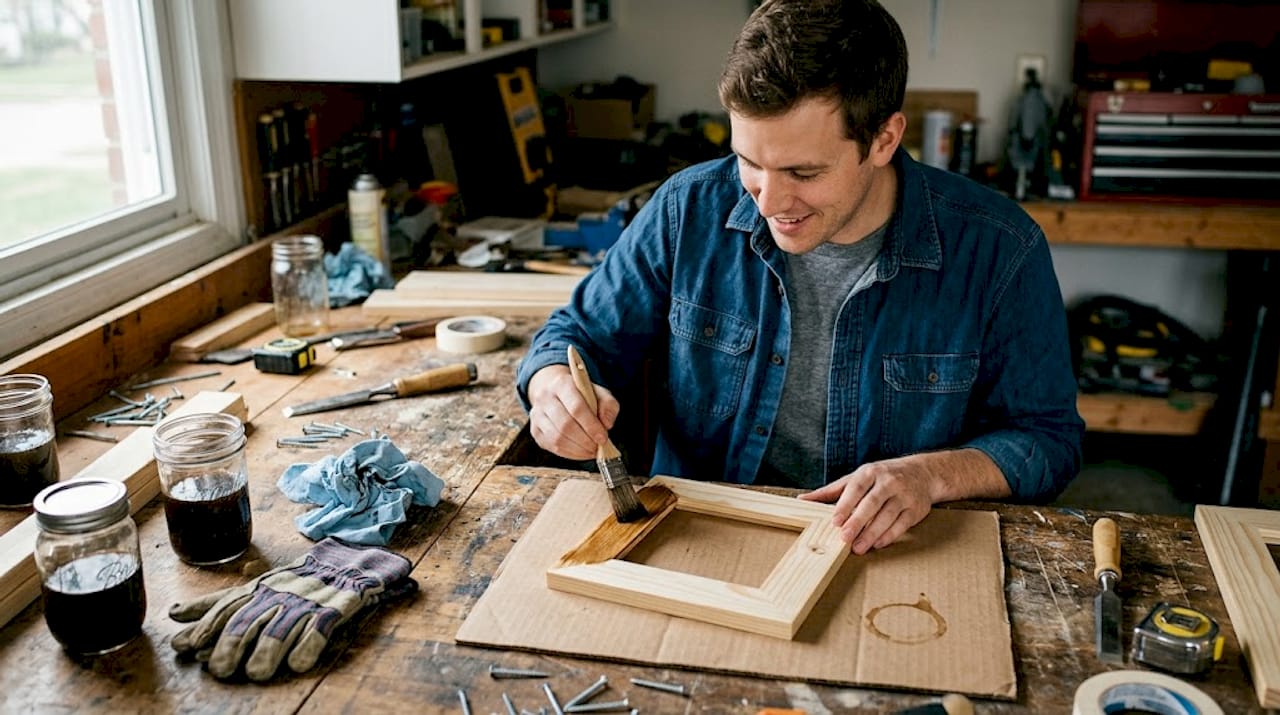
For safety and clean-up, use gloves to avoid staining your skin, wash brushes with warm soapy water immediately after use, and dispose of leftover liquid responsibly (not directly into drains if using very large quantities).
Pro Tip: Add a small amount of white vinegar to your coffee stain solution. The mild acid helps the pigment bond more deeply to wood fibers, improving both color richness and longevity without affecting the natural look.
The beauty of coffee wood finish is that no two applications look exactly the same. The grain of the wood interacts with the pigment in unpredictable, organic ways, which is exactly what makes it feel artisanal rather than manufactured.
Our take: Why the finish sets coffee—and creativity—apart
Most coffee education focuses on origin stories, roast curves, and brewing ratios. Finish gets a footnote. That’s a mistake. At Variatea Coffee, we think the finish is where a coffee reveals its character most honestly. Anyone can be impressed by a dramatic aroma. But a finish that evolves over 45 seconds, shifting from dark chocolate to dried cherry to cedar? That takes craft.
The same principle applies to the DIY wood finish approach. It’s not the quickest method or the most precise. But it rewards the maker who slows down, adds another coat, waits, and decides deliberately. That patience mirrors what the best brewers do every single day.
We’d encourage you to look for finish in every cup you try going forward. And if you want to elevate your brew beyond the basics, start with beans that have enough complexity to give you something worth chasing in the aftertaste. The finish will tell you everything.
Bring home bold finishes: Explore Variatea Coffee
If this guide has you thinking about finish differently, the best next step is tasting it firsthand with beans built for it. At Variatea Coffee, every product is designed to deliver a memorable, layered aftertaste that goes well beyond the ordinary.

Our whiskey barrel aged coffee delivers a long, smoky finish with notes of vanilla and toasted oak that linger beautifully. For something sweeter and more indulgent, the gourmet donut shop coffee offers a smooth, caramel-forward finish that feels like dessert in every sip. Browse the full collection at Variatea Coffee and find the finish that speaks to your palate.
Frequently asked questions
What is a coffee finish in tasting?
Coffee finish describes the lingering taste and mouthfeel that remains after swallowing, often revealing the bean’s deepest and most complex flavors. It’s one of the primary scoring criteria used in professional coffee cupping.
How do I identify different coffee finishes at home?
Sip slowly, swallow, then wait and focus on what stays behind. Note whether you sense sweetness, bitterness, dryness, or fruit, and track how long those impressions last before fading.
Can I use coffee as a natural wood stain?
Yes. Brewed coffee or instant coffee creates a natural, eco-friendly wood stain with earthy brown tones, and sealing the surface afterward locks in the color for lasting results.
What factors affect the coffee finish?
Bean processing methods including washed, natural, and honey-processed styles each produce a distinct finish, and roast level, origin, and brew technique shape the experience further.