

Master coffee blending techniques for artisanal brews
Crafting your own coffee blend at home is one of the most rewarding experiences for adventurous brewers, but it can also be surprisingly challenging. The key to success lies in understanding how different beans interact and using a structured approach to balance flavor, body, and complexity. By mastering techniques like selecting base, highlight, and depth beans in precise ratios, you can create blends that rival premium artisanal offerings. This guide will walk you through expert blending strategies, roasting methods, and practical experimentation tips to elevate your home brewing game.
Table of Contents
- Key takeaways
- 1. Define your blend structure: base, highlight, and depth beans
- 2. Master roasting methods: pre-blend vs. post-blend roasting
- 3. Experiment and refine: blending process for home brewers
- 4. Understand expert nuances and flavor balancing challenges
- Explore artisanal blends and equipment at Variatea Coffee
- FAQ
Key Takeaways
| Point | Details |
|---|---|
| Blend structure roles | Use base 60 to 70 percent, highlight 20 to 30 percent, and depth 10 to 20 percent to balance flavor, body, and complexity. |
| Roasting approach | Post blend roasting lets you tailor each bean to its ideal roast level for maximum flavor, unlike pre blend roasting which blends them all together. |
| Experiment in batches | Start with small three bean blends and test different brew methods and ratios to discover what works best for your palate. |
| Balance and nuance | Be mindful of acid brightness and roast level interactions, as too much highlight or mismatched roasts can reduce harmony or depth. |
1. Define your blend structure: base, highlight, and depth beans
The foundation of any exceptional coffee blend starts with understanding bean roles. Core coffee blending techniques include selecting complementary beans by role: base (60-70%, e.g., Brazilian for body/sweetness), highlight/character (20-30%, e.g., Ethiopian/Kenyan for acidity/fruit), depth (10-20%, e.g., Sumatran for earthiness). This framework gives you control over every flavor dimension in your cup.
Your base bean forms the majority of your blend, typically 60-70% of the total composition. Brazilian coffees work beautifully here because they deliver smooth body, natural sweetness, and chocolatey notes that create a stable foundation. Think of the base as the canvas on which you’ll paint brighter, more complex flavors.
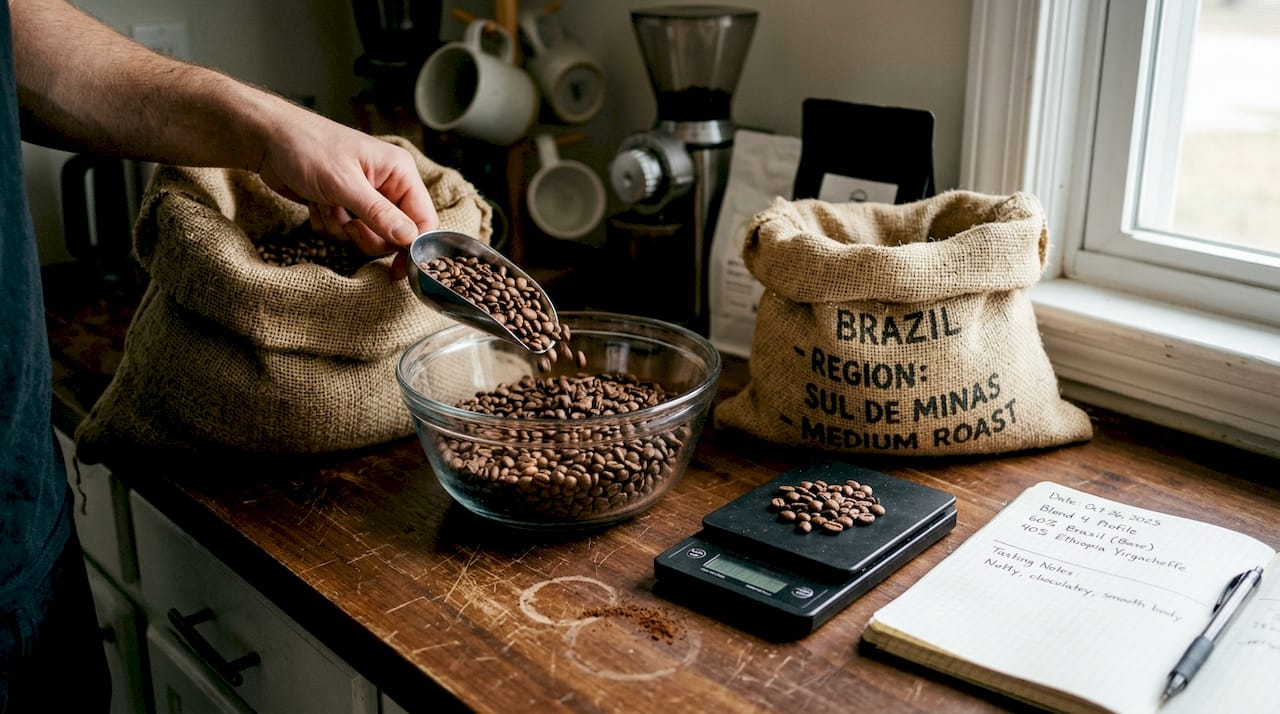
Highlight beans bring character and excitement to your blend, making up 20-30% of the mix. Ethiopian and Kenyan coffees excel in this role with their vibrant acidity, fruity notes, and floral aromatics. These beans cut through the base’s richness and add the brightness that makes each sip interesting. The Max Caf Blend demonstrates this principle by layering bright, energetic notes over a solid foundation.
Depth beans contribute the final 10-20%, adding earthy, complex flavors that round out your blend. Sumatran coffees are ideal here, offering herbal notes, low acidity, and a syrupy body that adds dimension without overwhelming the other components. These beans create the finish that lingers on your palate.
Maintaining these ratio ranges is crucial for balance. Too much highlight bean can make your blend sharp and one-dimensional. Too little depth and you lose the complexity that distinguishes artisanal blends from commodity coffee. The 6 Bean Blend showcases how multiple origins can work together when properly proportioned.
Pro Tip: Start with a simple three-bean blend before experimenting with more complex compositions. Master the fundamentals of balance before adding additional layers.
2. Master roasting methods: pre-blend vs. post-blend roasting
How you roast your beans dramatically impacts your final blend’s flavor profile and complexity. Roasting methodologies include separate roasting (post-blend) for optimal control per bean’s ideal roast level versus pre-blend roasting together (faster, but less control, new compounds). Expert preference leans toward post-blend roasting for maximum flavor precision.
Pre-blend roasting involves combining all your green beans before roasting them together as a single batch. This method creates new flavor compounds through the interaction of different bean chemistries during the roasting process. While faster and simpler, it severely limits your ability to customize roast levels for each bean’s unique characteristics. Dense, high-altitude beans may under-roast while softer beans over-roast in the same batch.
Post-blend roasting gives you complete control over each bean’s development. You can roast your highlight beans to a light City roast to preserve their bright acidity and fruit notes, take your base beans to a balanced medium Full City roast for sweetness and body, and push your depth beans to a darker Vienna roast for rich, earthy complexity. This precision is why experienced roasters prefer this method.
The Latin American Blend benefits from post-blend roasting techniques that allow each origin to express its terroir fully before combining. You’re not forcing beans with different densities and moisture contents to roast uniformly, which often leads to compromise rather than optimization.
Commercial roasters sometimes favor pre-blend roasting for efficiency and scale, but home brewers have the luxury of time and small batch sizes. Your equipment matters too. A simple popcorn popper or small drum roaster makes separate roasting manageable, while larger setups might make pre-blend roasting more practical.
Pro Tip: Keep detailed roast logs for each bean type, including temperature curves and development times. This documentation becomes invaluable when you want to replicate successful blends.
3. Experiment and refine: blending process for home brewers
Creating your signature blend requires systematic experimentation and careful refinement. Blending process for home brewers starts with small batches, consistent brew tests, noted ratio tweaks, and matching blends to your brewing method. This iterative approach minimizes waste while maximizing learning.
-
Start with test batches around 50 grams total. This size gives you enough coffee for multiple brew tests without committing large quantities of beans to an untested recipe. Small batches also make it easier to track variables and adjust ratios precisely.
-
Choose simple starting ratios for your initial trials. Try a classic 60/25/15 split (base/highlight/depth) or equal parts of three beans to establish a baseline. These straightforward proportions make it easier to identify which adjustments improve your blend.
-
Brew your test blends using the same method every time. If you primarily make pour-over coffee, test your blends with pour-over. Espresso drinkers should pull shots for evaluation. Consistency in brewing eliminates variables and helps you isolate the impact of blend changes.
-
Record detailed tasting notes immediately after brewing. Note body, acidity, sweetness, flavor notes, and finish. Write down what you like and what needs adjustment. These records become your roadmap for refinement.
-
Adjust ratios gradually, changing only one variable at a time. If your blend tastes too bright, reduce highlight beans by 5% and add to your base. If it lacks complexity, increase depth beans slightly. Small, incremental changes prevent overcorrection.
-
Match your blend composition to your brewing method and taste goals. Espresso blends benefit from more body and sweetness, while pour-over blends can handle brighter acidity and delicate flavors. The House Blend demonstrates how versatile a well-balanced blend can be across different brewing methods.
Pro Tip: Taste your blends at multiple temperatures as they cool. Flavors evolve dramatically from hot to warm to room temperature, revealing nuances you might miss if you only evaluate immediately after brewing.
4. Understand expert nuances and flavor balancing challenges
Advanced blending requires awareness of subtle interactions and potential pitfalls that can make or break your creation. Expert nuances include managing acidity clashes, mixing roast levels for depth (with risks), tracking blends for repeatability, and blending philosophies like breakfast bright versus dessert rich. These considerations separate good blends from exceptional ones.
Acidity conflicts can surprise even experienced blenders. Combining two high-acid beans might seem like a recipe for disaster, but sometimes they balance each other in unexpected ways. A bright Ethiopian and a crisp Kenyan can create a complex, layered acidity rather than harsh sharpness. However, this requires careful testing and adjustment.
Mixing light and dark roasts adds visual appeal and flavor complexity, but it introduces extraction challenges. Lighter roasts are denser and extract more slowly, while darker roasts are more porous and extract quickly. When brewed together, you risk over-extracting the dark roast while under-extracting the light, creating bitter and sour notes simultaneously. Grind size adjustments can help, but this technique demands precision.
Labeling and tracking your blends is essential for repeatability. Create a simple naming system and record exact ratios, roast levels, and roast dates for each component. When you create something exceptional, you need to be able to recreate it exactly. Digital notes or a dedicated notebook work equally well.
Your blending philosophy guides every decision you make. Are you crafting a bright, vibrant morning blend to wake up the palate? Or a rich, sweet dessert blend to savor slowly? Understanding your goal helps you select beans and ratios that align with that vision. The Single Origin Favorites collection can help you explore different flavor profiles before committing to blend components.
| Blending challenge | Characteristics | Considerations |
|---|---|---|
| Acidity clashing | Two high-acid beans combined | May balance unexpectedly or create harshness; requires testing |
| Roast level mixing | Light and dark roasts blended | Adds complexity but risks uneven extraction; adjust grind carefully |
| Blend philosophy | Morning bright vs dessert rich | Guides bean selection and ratio decisions for intended use |
Explore artisanal blends and equipment at Variatea Coffee
Ready to take your blending experiments to the next level? Variatea Coffee offers carefully curated selections that inspire creativity and elevate your home brewing experience.

Discover expert-crafted options like our African Espresso, which demonstrates masterful blending of bright, fruit-forward beans for espresso perfection. Browse our complete coffee collection to find base, highlight, and depth beans that match your blending vision. Each offering is selected for adventurous flavor profiles and artisanal quality that you won’t find in standard grocery aisles.
Beyond coffee, explore our tea collection featuring unique options like Hojicha Roasted Green Tea and Moroccan Mint Tea. These artisanal teas provide low-caffeine alternatives and palate-cleansing breaks between blend testing sessions. Whether you’re sourcing premium beans for your next blend or seeking inspiration from expertly crafted combinations, Variatea Coffee delivers the variety and quality that adventurous brewers demand.
FAQ
What is the ideal ratio for coffee blending?
The most balanced starting point is 60-70% base beans for body and sweetness, 20-30% highlight beans for brightness and character, and 10-20% depth beans for complexity and earthiness. Adjust these ratios based on your flavor goals and preferred brewing method. Espresso blends often use more base for body, while pour-over blends can handle higher highlight percentages for brighter acidity.
Should I roast beans together or separately for blending?
Post-blend roasting, where you roast each bean separately to its ideal level before blending, gives you maximum flavor control and precision. This method allows you to optimize each bean’s roast profile for its unique characteristics. Pre-blend roasting is faster but compromises individual bean development, though it can create interesting new flavor compounds through bean interaction during roasting.
How do I test and refine my coffee blends?
Start with small 50-gram test batches and brew them consistently using your preferred method. Record detailed tasting notes about body, acidity, sweetness, and flavor for each test. Adjust ratios gradually, changing only one variable at a time, and always match your blend composition to your intended brewing method for accurate evaluation.
Can I blend different roast levels successfully?
Yes, but it requires careful attention to extraction. Mixing light and dark roasts adds complexity and visual interest, but lighter roasts extract more slowly than darker roasts. This can cause simultaneous over-extraction of dark beans and under-extraction of light beans, creating bitter and sour notes together. Adjust your grind size and brewing parameters to compensate for these differences.
What are common mistakes in coffee blending?
Using too many different beans creates confusion rather than complexity. Failing to track successful recipes makes them impossible to replicate. Skipping small test batches wastes expensive beans on untested ideas. Not matching your blend to your brewing method leads to disappointing results, as espresso and pour-over require different flavor profiles for optimal performance.