

Coffee aroma: What it is and how to experience it
TL;DR:
- Understanding coffee aroma involves distinguishing between fragrance and aroma, with the SCA Flavor Wheel providing a structured language for precise description. Aroma results from complex chemical reactions during roasting, primarily Maillard reactions, producing volatile compounds that define unique flavor profiles influenced by origin, processing, and roast level. Developing aroma recognition skills requires intentional practice, sensory evaluation, and exploring diverse coffees beyond preferences to enhance perception and appreciation.
Walk up to a freshly brewed cup and you already know something about what’s inside before you take a single sip. That moment of recognition feels simple, but it’s actually the result of hundreds of chemical reactions working together in precise sequence. Most coffee drinkers treat aroma as background noise, a pleasant bonus before the “real” experience starts. Specialty coffee professionals see it as the headline act. Understanding coffee aroma at a deeper level changes how you buy, brew, and taste every single cup, and it opens a sensory vocabulary that most people never knew was available to them.
Table of Contents
- Defining aroma in coffee: More than just smell
- How coffee aroma is created: The science behind the scent
- How roast level, origin, and processing influence aroma
- Exploring and evaluating coffee aroma like a pro
- Aroma appreciation: What most coffee lovers miss
- Bring aroma exploration to your next cup
- Frequently asked questions
Key Takeaways
| Point | Details |
|---|---|
| Aroma is complex | Coffee aroma involves many compound groups, not just a simple smell. |
| Roast and origin matter | Both roast level and bean origin significantly shape the aroma profile in your cup. |
| Technique enhances experience | Using professional tasting steps and a flavor wheel maximizes understanding of aroma. |
| Anyone can improve | With curiosity and practice, anyone can develop a deeper appreciation for coffee aromas. |
Defining aroma in coffee: More than just smell
To understand why aroma matters, let’s start by clarifying what specialty coffee professionals and enthusiasts mean by “aroma” in the first place. The word gets used casually, but inside the world of coffee aroma explained professionally, it carries a very specific meaning with distinct stages.
The Specialty Coffee Association (SCA) draws a firm line between two related but separate concepts. Fragrance refers to what you smell from dry grounds and then wet grounds right after water hits them. Aroma refers to the scent that rises from brewed coffee before you take your first sip. According to the SCA Flavor Wheel protocol, professional cuppers (trained tasters) evaluate fragrance and aroma as separate attributes, scoring them independently because they often tell completely different stories about the same coffee.
The SCA Flavor Wheel itself is the industry’s shared language for this experience. Think of it as a map with the broadest categories at the center and the most specific descriptors at the outer edge. The main aroma categories the wheel recognizes include:
- Fruity: Citrus, berry, tropical fruit, stone fruit
- Floral: Jasmine, rose, chamomile, elderflower
- Nutty/cocoa: Almond, hazelnut, dark chocolate, peanut
- Sweet: Vanilla, caramel, honey, maple
- Sour/fermented: Winey, sour berry, kombucha-like
- Green/vegetative: Fresh cut grass, herb, raw
- Roasted: Tobacco, cedar, smoky, ashy
- Spicy: Clove, pepper, anise, cinnamon
“The SCA Flavor Wheel is not just a reference chart. It is a structured evaluation tool designed to guide tasters from broad perception to precise description, giving every brewer a common language for what they’re smelling and tasting.”
Understanding these categories turns a vague impression, “this coffee smells good,” into a specific observation you can repeat, compare, and build on over time.
How coffee aroma is created: The science behind the scent
Now that you know what “aroma” means, let’s uncover how it’s actually created at the molecular level. The short answer: heat, chemistry, and time.
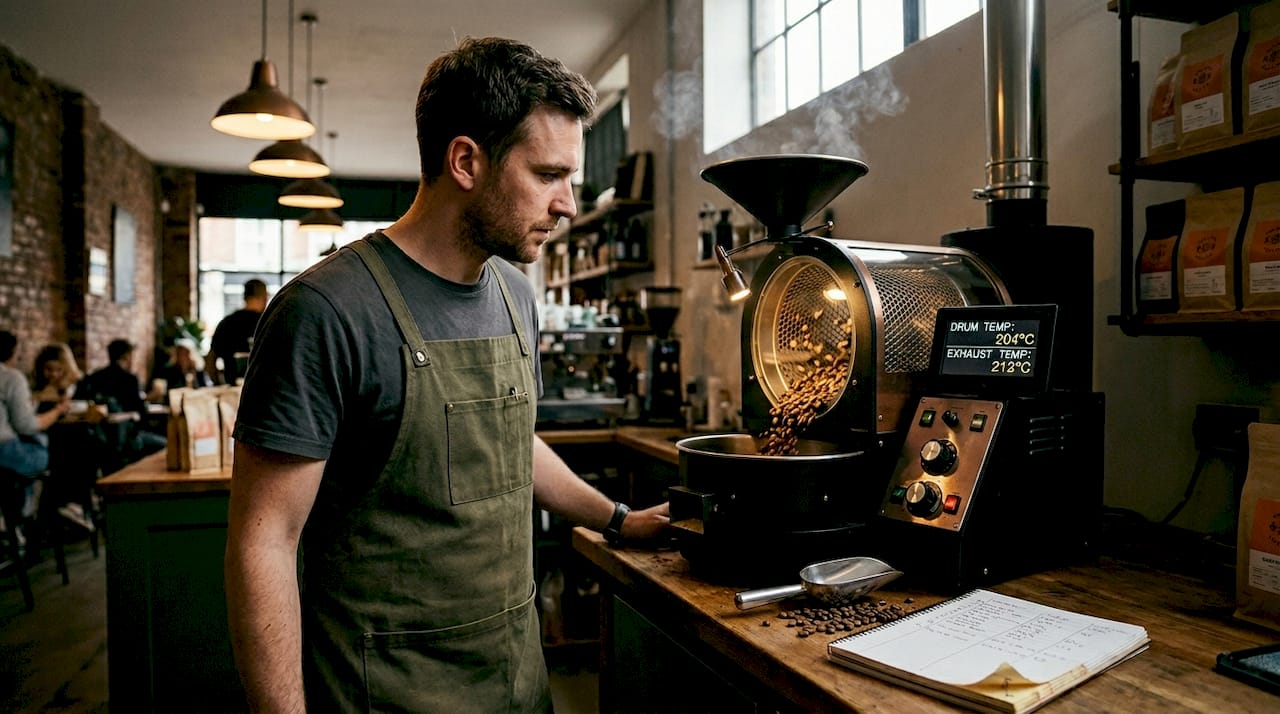
Coffee aroma is driven by volatile organic compounds (VOCs), which are small molecules that evaporate easily at room temperature and travel directly to your nose. Scientists have identified over 1,000 VOCs in roasted coffee, formed through Maillard reactions, caramelization, and Strecker degradation during roasting. Only a fraction of those compounds significantly shape what you actually perceive in the cup.
Here’s a breakdown of the key compound classes and what they contribute:
| Compound class | Aroma notes | Example coffee character |
|---|---|---|
| Aldehydes | Fruity, floral, green | Bright Ethiopian naturals |
| Pyrazines | Roasty, nutty, earthy | Dark roast, Sumatra |
| Furans | Caramel, sweet, toasty | Medium roast blends |
| Phenols | Spicy, smoky, medicinal | Dark French roast |
| Ketones | Buttery, creamy, sweet | Washed Colombian |
| Thiols | Sulfury, roasty (trace) | Espresso crema notes |
The Maillard reaction (named after French chemist Louis-Camille Maillard) is the primary driver. It occurs when amino acids and reducing sugars react under heat, producing hundreds of new flavor and aroma compounds that did not exist in the green bean. Caramelization then layers in sweetness and toasty notes. Strecker degradation, a more specific subset of Maillard chemistry, breaks down amino acids into aldehydes that are responsible for many of coffee’s fruity and floral top notes.
Pro Tip: Always smell your coffee in the first 30 seconds after brewing. Heat releases the most volatile aromatic compounds, which dissipate quickly. A cup you smell at the 10-minute mark will give you a fundamentally different and usually diminished aroma experience than the one you smell right off the brew.
Two other important factors shape which VOCs you end up with:
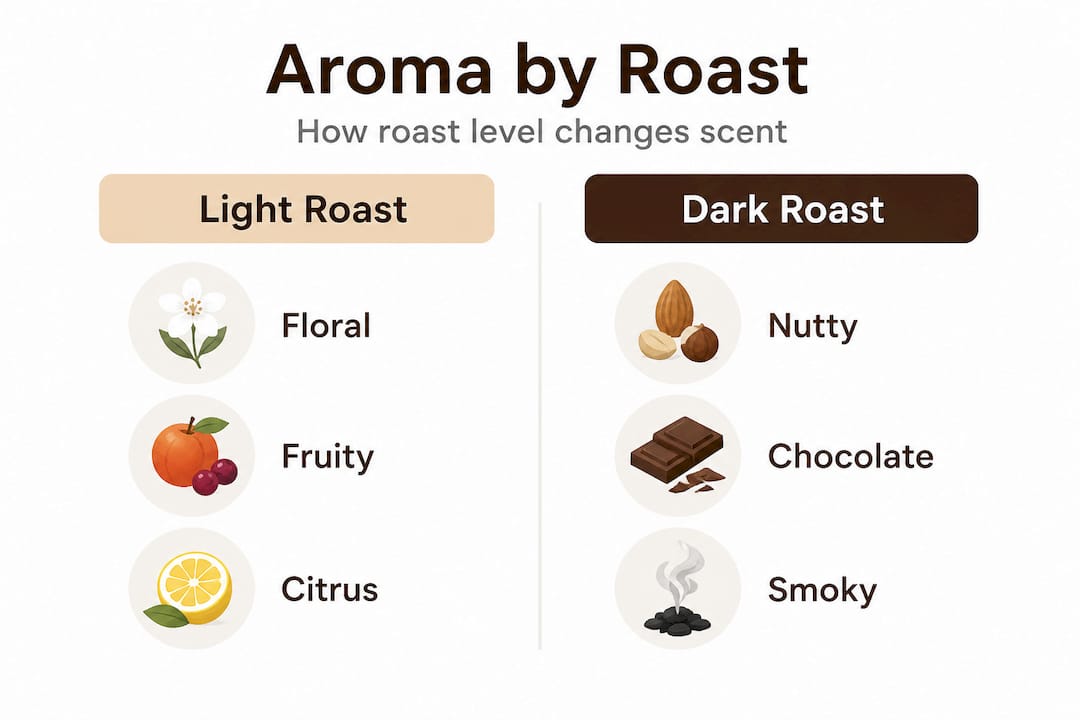
- Roast degree: Higher temperatures push reactions further, burning off delicate floral aldehydes and building up heavier pyrazines and phenols
- Freshness: Stale coffee loses VOCs to oxidation. The aroma profile of a bean two weeks post-roast is measurably different from one that is two months old
That chemistry is why roasting transforms coffee flavor so dramatically, and why two coffees from the same farm can smell and taste completely different based on how they were processed and roasted.
How roast level, origin, and processing influence aroma
But what makes one coffee’s aroma so different from another? The answer comes down to roast style, origin, and processing. These three variables interact with each other, and understanding them gives you a real framework for predicting what’s in your cup before you even open the bag.
Roast level and origin aroma comparison
| Variable | Light roast | Medium roast | Dark roast |
|---|---|---|---|
| Ethiopia (high altitude) | Jasmine, bergamot, lemon | Stone fruit, honey, mild floral | Dark berry, bittersweet cocoa |
| Colombia (mid-altitude) | Bright citrus, apple | Caramel, hazelnut, red fruit | Chocolate, tobacco |
| Sumatra (low altitude, wet-hulled) | Earthy, herbal, raw wood | Cedar, dark fruit, cocoa | Smoky, tarry, leather |
| Brazil (low altitude, natural) | Peanut, mild fruit | Nutty, brown sugar, chocolate | Roasted nut, dark chocolate |
How do these differences actually develop? Here’s a step-by-step look at the process:
- Green bean chemistry starts in the field. Altitude, rainfall, and soil composition all influence the sugar and amino acid content of the green bean. Higher altitudes mean slower cherry development, which concentrates more complex precursors.
- Post-harvest processing changes the baseline. Washed (wet) processing strips the fruit before drying, producing cleaner, brighter aroma. Natural (dry) processing lets the bean ferment inside the fruit, loading it with heavier, winey, and fruity VOC precursors.
- Roasting amplifies or suppresses what’s already there. Light roasts let origin character lead. Dark roasts shift the profile toward compounds created by roasting itself, particularly pyrazines and phenols.
- Climate shapes specific compounds. Research on coffee volatile compounds shows that drier growing conditions favor the development of 2-acetylfuran, a compound associated with caramel and toasty sweetness.
- Grind and brew method determine what reaches your nose. A coarser grind releases VOCs more slowly. Espresso extraction pushes a concentrated burst of aroma compounds in a short window.
Pro Tip: If you’re searching for a floral, fruit-forward cup, start with a light roast from a high-altitude origin like an Ethiopian Yirgacheffe or a Kenyan AA. If you want that deep, smoky complexity, look at how origin shapes coffee flavor in low-altitude, naturally processed options.
Exploring and evaluating coffee aroma like a pro
Knowing the science is just the beginning. Let’s put these insights into action with a practical guide for exploring aroma at home using a process inspired by coffee cupping at home protocols used in professional tasting labs.
Your step-by-step aroma evaluation process:
- Grind fresh, smell immediately. Before you add any water, place your nose directly over the freshly ground coffee and inhale slowly. This is your fragrance evaluation. Note whether you pick up anything fruity, floral, or earthy.
- Evaluate wet grounds. In a cupping bowl or French press, add just-boiled water and wait 30 seconds. Break the crust (the layer of grounds floating on top) and hover your nose over the cup as you do. The rush of aroma in that moment is one of the most revealing moments in the whole process.
- Smell the brewed liquid. Before you sip, cup the mug in both hands, close your eyes, and take two or three slow, deliberate sniffs. Let the aroma build rather than rushing to the first sip.
- Use the Flavor Wheel inside-out. Start at the center categories. Is this roasted, fruity, or sweet? Only then move outward to identify whether “fruity” means citrus, berry, or tropical. The SCA Flavor Wheel is color-coded to guide this process.
- Let the cup cool. Aroma changes significantly as temperature drops. Many floral and fruity notes emerge more clearly between 140°F and 120°F (60°C and 49°C) than they do in a piping hot cup.
- Write it down. Keep a small notebook or use a notes app to record what you smell at each stage. Even one sentence per session builds your aroma vocabulary faster than any formal course.
Pro taster techniques that sharpen your skills quickly:
- Sniff at three separate stages: dry grounds, wet grounds, and finished brew
- Compare two coffees side by side to sharpen contrast perception
- Use a clean coffee filter as a “blank” to reset your nose between evaluations
- Practice with spices, teas, and citrus peels to train yourself to recognize specific aroma families before applying them to coffee
“Aroma is not a bonus feature of coffee. It’s the first chapter of the cup. Evaluate it with the same attention you give to acidity or body, and the entire tasting experience becomes more vivid, more specific, and far more rewarding.”
This framework applies whether you’re brewing a pour-over at home or exploring the artisanal coffee flavor profiles of specialty blends that use complex origin selections and precision roasting.
Aroma appreciation: What most coffee lovers miss
Here’s a view that often gets overlooked, even among enthusiasts who already read about specialty coffee regularly.
Most people who care about coffee aroma still approach it passively. They notice it, enjoy it, and move on. That’s a missed opportunity. The biggest leaps in aroma appreciation we’ve seen come not from learning more theory but from doing something uncomfortable: brewing a coffee you think you won’t like and then evaluating it seriously anyway.
Brewing outside your comfort zone forces you to separate your preferences from your perceptions. When you already know you love a nutty, medium roast Colombian, your nose essentially confirms what you expect. Blind tasting an unfamiliar Ethiopian natural or a Sumatran dark roast with no prior knowledge breaks that pattern. Suddenly, you’re actually detecting, not just confirming.
The conventional wisdom says you need years of professional experience to develop a sophisticated palate for aroma. That’s not true. What you actually need is curiosity and a repeatable process. A barista in their first year who cups three different coffees every week will outperform a 10-year casual drinker in aroma identification, because practice with a framework beats passive consumption every time.
Checking out adventurous coffee tips from brewers who have pushed outside familiar roast profiles can accelerate your development significantly. The real unlock is committing to comparison, note-taking, and the occasional “strange” bottle on the shelf that you’d normally walk past.
Aroma appreciation is also not a solo sport. Brewing and evaluating with another person and comparing what each of you identifies often surfaces notes that neither would have caught alone. Two perspectives working from the same Flavor Wheel create a richer map of any cup.
Bring aroma exploration to your next cup
Ready to deepen your aroma adventure? Here’s how to put your learning into practice with distinct, flavor-first coffees.

At Variatea Coffee, every blend is selected and crafted with a specific aroma profile in mind, which makes them ideal testing grounds for the evaluation techniques you’ve just learned. The Gourmet Donut Shop blend delivers a warm, sweet, bakery-forward aroma that’s perfect for practicing your recognition of furan-based caramel and vanilla notes. The Whiskey Barrel Aged coffee takes it further, offering a genuinely complex aromatic experience where charred oak phenols layer over the coffee’s natural base, giving you a live case study in how post-roast processing adds aroma dimensions. Use your new cupping steps, your SCA wheel, and your notes the next time you brew. Explore all signature blends to find a flavor profile that matches exactly what you want to train your nose on next.
Frequently asked questions
What chemical compounds make up coffee aroma?
Key compounds include aldehydes, pyrazines, furans, and phenols, each contributing different aroma notes ranging from fruity and floral to smoky and spicy. According to research on coffee VOCs, these form through Maillard reactions, caramelization, and Strecker degradation during roasting, though only a fraction of the hundreds identified significantly shape what you actually perceive.
How does coffee aroma change during brewing?
Aroma evolves across three distinct stages: dry grounds, wet grounds, and finished brew, each highlighting different volatile compounds. SCA cupping protocol treats fragrance and aroma as separate evaluated attributes precisely because they can reveal very different aspects of the same coffee.
Can anyone learn to identify coffee aromas?
Yes, and you don’t need professional training to start. With a consistent evaluation process, a Flavor Wheel, and regular practice across different coffee origins and roast levels, most people develop meaningful aroma recognition skills within a few months.
Does roast level affect aroma more than origin?
Both matter enormously, and they interact. Research on climate and volatile compounds confirms that origin determines the starting chemical blueprint while roast level either preserves origin character (light roast) or builds new roast-driven aromas like pyrazines and phenols over it (dark roast). Neither factor alone tells the whole story.