

Coffee aroma explained: 1,000+ compounds in your cup
TL;DR:
- Coffee aroma results from over 1,000 volatile organic compounds created during roasting.
- Postharvest processing and roasting decisions shape coffee’s unique aroma profile.
- Brewing methods and techniques significantly influence which aromatics are expressed in the cup.
Most people think coffee has one smell. Maybe two if you count the difference between fresh grounds and a finished brew. The reality is far more layered. Over 1,000 volatile organic compounds have been identified in coffee aroma, each shaped by where the bean grew, how it was processed, how it was roasted, and how you brewed it. That means every cup you make is a unique sensory event, not a repeat of the last one. This guide breaks down the actual science behind coffee aroma, walks you through how farming and roasting decisions shape what you smell, and gives you practical tools to recognize and appreciate aroma in your own brewing routine.
Table of Contents
- The science behind coffee aroma: volatile organic compounds explained
- From crop to cup: how postharvest and roasting shape aroma
- Decoding the flavor wheel: how coffee aroma is categorized and described
- How brewing methods unlock (or mask) coffee aroma
- A deeper take: why chasing complexity matters more than hunting for quantity
- Bring new aromas to your cup with Variatea Coffee
- Frequently asked questions
Key Takeaways
| Point | Details |
|---|---|
| Aroma is complex chemistry | Coffee aroma comes from over 1,000 volatile compounds formed mainly during roasting. |
| Every process shapes aroma | From farm to cup, choices in harvest, processing, roasting, and brewing determine final aromas. |
| Flavor wheels guide tasting | Using a standardized flavor wheel transforms subtle smells into fun, shared flavor discoveries. |
| Brewing unlocks or mutes notes | Your brewing method can highlight certain aromas or suppress them, so experiment with different approaches. |
| Seek nuance, not just intensity | The best cups have balanced, complex aromatics—not just the highest aroma counts. |
The science behind coffee aroma: volatile organic compounds explained
Aroma starts at the molecular level. Volatile organic compounds, or VOCs, are carbon-based molecules that evaporate easily at room temperature and travel to your nose as gas. In coffee, these compounds are the reason you can smell a fresh brew from across the room. Coffee aroma arises from over 1,000 VOCs formed through a cascade of chemical reactions during roasting, and no single compound is responsible for the full experience.
Four major reactions drive VOC formation:
- Maillard reaction: Amino acids and reducing sugars react under heat, producing hundreds of compounds including pyrazines (earthy, nutty) and furans (caramel, sweet).
- Strecker degradation: A subset of the Maillard reaction that breaks down amino acids into aldehydes, contributing malty, green, and roasted notes.
- Caramelization: Sugars break down independently of proteins, generating furans and diacetyl, which add buttery and sweet tones.
- Lipid oxidation: Coffee’s natural fats degrade during roasting and storage, producing aldehydes and ketones that can read as fruity or, when overdone, rancid.
Here are the major VOC families and what they typically smell like:
- Pyrazines: Roasted, earthy, nutty
- Furans: Caramel, sweet, slightly burnt
- Phenols: Smoky, medicinal, spicy
- Aldehydes: Green, malty, fruity
- Ketones: Buttery, creamy
- Thiols: Sulfurous, roasty (potent even at trace levels)
“Coffee aroma is one of the most chemically complex in the food world, with over 1,000 volatile compounds identified, yet only a fraction are considered aroma-active at typical concentrations.”
What makes this fascinating is that VOC formation peaks at specific roast temperatures and times. Push past those windows and certain delicate aromatics burn off entirely. Pull back too early and others never develop. Exploring artisanal coffee flavor profiles gives you a real sense of how roasters balance these variables deliberately. If you want to unlock flavor-forward coffee, understanding VOCs is the foundation.
From crop to cup: how postharvest and roasting shape aroma
Chemistry does not happen in a vacuum. The VOCs in your cup were shaped long before the roaster ever touched the beans. Postharvest stages influence aroma precursors, and roasting then integrates these into the complex VOC profile you actually experience. Every farm decision, every fermentation choice, every drying method either builds or limits aroma potential.
Here is how each stage contributes:
| Processing stage | Key precursors produced | Resulting aroma | Chemical family |
|---|---|---|---|
| Picking (ripe vs. unripe) | Chlorogenic acids, sugars | Fruity, bright | Aldehydes, esters |
| Fermentation | Alcohols, organic acids | Winey, floral | Esters, alcohols |
| Drying | Lipid breakdown products | Nutty, earthy | Aldehydes, ketones |
| Roasting | Integration of all pathways | Full aroma profile | Pyrazines, furans, phenols |
Fermentation is where things get especially interesting. Natural (dry) processed coffees ferment inside the fruit, producing rich ester compounds that read as winey or tropical. Washed coffees skip most of that fermentation, yielding cleaner, more origin-driven floral and citrus notes. The drying phase adds another layer: slow sun-drying allows lipid oxidation to develop nutty complexity, while faster mechanical drying can cut that process short.
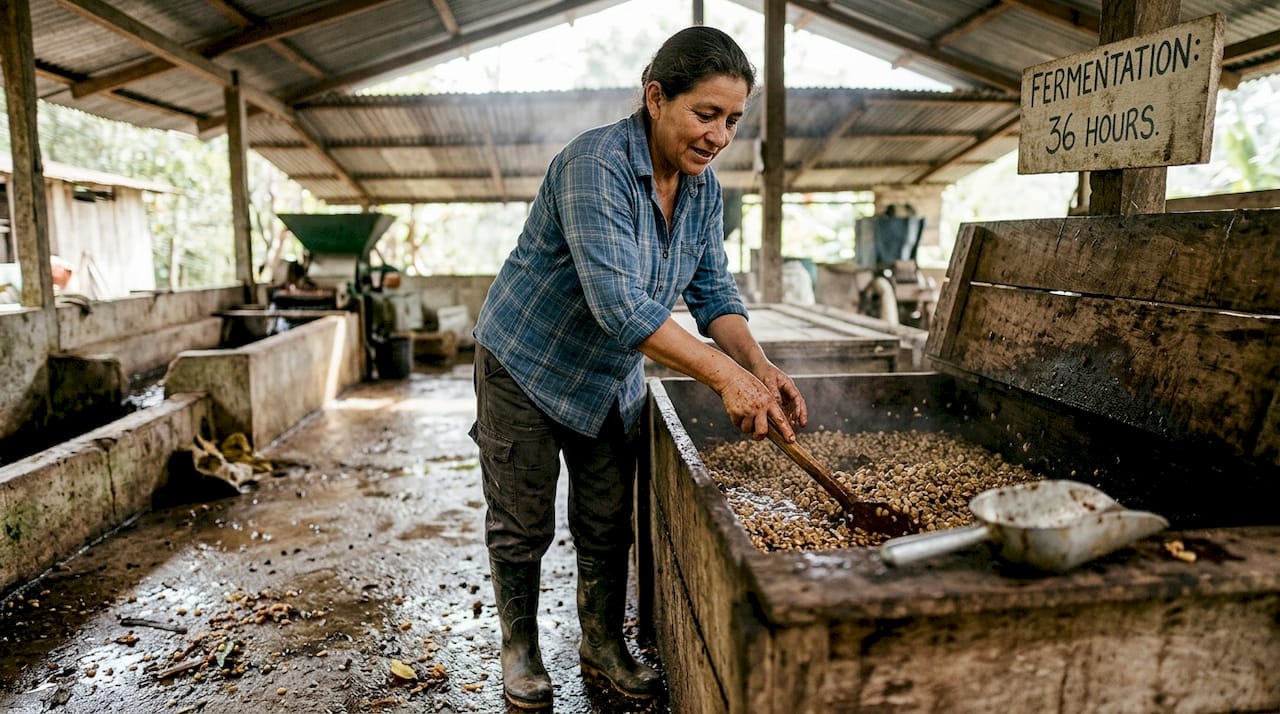
Key aroma-active compounds like furfural, guaiacol, and pyrazines are considered high-impact markers of both roast degree and processing method. Guaiacol, for example, is a phenol that gives dark roasts their characteristic smoky quality. Furfural contributes caramel sweetness and is more prominent in medium roasts. These are not random, they are predictable outputs of deliberate craft decisions.
Pro Tip: When buying coffee, look for bags that disclose the processing method and roast level. “Washed, light roast” and “natural, medium roast” will smell dramatically different, and knowing why makes tasting far more rewarding.
Terroir matters here too. Altitude, soil mineral content, and rainfall patterns all affect the sugar and amino acid composition of the raw bean, which determines what the roaster has to work with. Exploring a single origin coffee experience is one of the best ways to taste how geography writes itself into aroma.
Decoding the flavor wheel: how coffee aroma is categorized and described
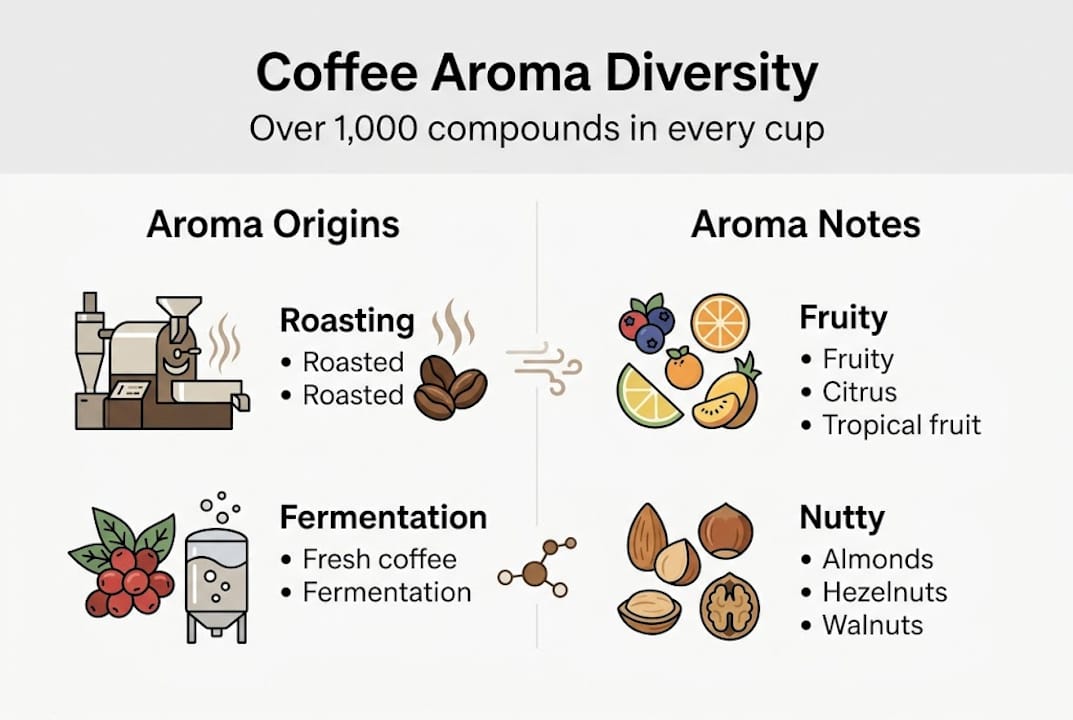
Knowing that coffee contains hundreds of aroma compounds is one thing. Being able to name what you are smelling is another skill entirely, and that is where the SCA Coffee Taster’s Flavor Wheel becomes essential. The SCA Flavor Wheel standardizes aroma categories using 110 attributes organized from broad to specific, giving enthusiasts and professionals a shared language for describing what is in the cup.
The wheel is structured hierarchically. The outermost ring holds the most specific descriptors, while the inner rings group them into broader families. Here is a quick comparison:
| Broad category | Mid-level | Specific descriptor |
|---|---|---|
| Nutty | Tree nut | Almond, hazelnut, walnut |
| Fruity | Citrus fruit | Lemon, grapefruit, orange |
| Floral | Black tea | Chamomile, rose |
| Roasted | Tobacco | Pipe tobacco, ash |
| Spices | Pungent | Pepper, clove |
Here is how to actually use the wheel during a tasting session:
- Smell the dry grounds before brewing. Note the first broad category that comes to mind.
- Smell the bloom (the first pour of hot water) and see if your initial impression shifts.
- Taste and let the coffee cool slightly. Aroma perception changes with temperature.
- Move from the inner ring outward on the wheel, narrowing your description from broad to specific.
- Write it down. Memory is unreliable; notes build a personal reference library over time.
This structured approach does more than satisfy curiosity. It trains your nose to detect nuance you would otherwise miss. A shared vocabulary also makes it possible to have real conversations about coffee, whether you are comparing notes with a friend or deciding which bag to order next. Digging into a guide to rich coffee flavors can help you apply these descriptors to specific blends and origins.
How brewing methods unlock (or mask) coffee aroma
All the aroma potential in a perfectly processed, expertly roasted bean means nothing if your brew method works against it. Different brewing methods extract aroma compounds in unique ways, producing dramatically different profiles even from the same bag of coffee. Understanding this gives you real control over what ends up in your cup.
Here is how the major methods compare in terms of aroma expression:
- Espresso: High pressure forces water through fine grounds rapidly, concentrating VOCs and producing crema, a foam layer that traps and slowly releases roasted, caramelized aromatics. Best for highlighting dark, bold, and chocolatey notes.
- French press: Full immersion brewing keeps oils in the cup, amplifying body and earthy, nutty aromas. The lack of a paper filter means more phenols make it through.
- Pour-over (V60, Chemex): Slow percolation through a paper filter removes oils and emphasizes clarity. Bright fruity, floral, and tea-like aromas shine here.
- Cold brew: Extended cold extraction (12 to 24 hours) pulls fewer volatile compounds overall, resulting in a smooth, low-acid cup with muted but very clean aromatic notes.
Pro Tip: Try brewing the same coffee as a pour-over and a French press on the same morning. The difference in aroma alone will make the science click in a way that reading about it never quite does.
Grind size plays a bigger role than most people realize. A finer grind increases surface area, which accelerates VOC extraction. Too fine and you over-extract, burning off delicate florals and leaving harsh, bitter phenols behind. Water temperature matters too: water around 195 to 205 degrees Fahrenheit extracts the widest range of aroma compounds. Going lower mutes extraction; going higher scorches the more fragile ones. For more hands-on guidance, top coffee flavor tips and this step-by-step flavor guide are great starting points for experimenting at home.
A deeper take: why chasing complexity matters more than hunting for quantity
Here is something the specialty coffee world does not say loudly enough: more aroma is not automatically better. The assumption that a cup packed with the highest concentration of VOCs is the superior cup misses the point entirely. Aroma perception is about synergy between compounds, not simply the number or concentration of VOCs present.
“The most memorable cups are rarely the most intense ones. They are the ones where the aromas are balanced, coherent, and surprising in combination.”
At Variatea Coffee, we see this play out constantly. A whiskey barrel-aged roast does not wow you with sheer aromatic volume. It earns attention because the smoky oak and vanilla notes interact with the coffee’s natural caramel tones in a way that feels genuinely novel. That is synergy, not quantity. Adventurous drinkers who focus on unique combinations rather than maximum intensity tend to develop a far richer appreciation over time. The goal is attentive sipping, not sensory overload. Rethinking what makes a cup truly premium starts with letting go of the “more is more” mindset.
Bring new aromas to your cup with Variatea Coffee
Ready to apply your new aroma knowledge and try something distinct? Here’s where to start.
Every concept covered in this guide, from VOC formation to processing methods to brew technique, comes to life in the blends we craft at Variatea Coffee. If you want to experience how barrel-aging adds a whole new aromatic dimension, the Whiskey Barrel Aged coffee is the most direct experiment you can run at home. For something approachable and layered, the Gourmet Donut Shop blend offers a warm, sweet aromatic profile that rewards slow sipping. And if you want maximum caffeine alongside complex roasted notes, the Max Caf Blend delivers intensity with real nuance. Let your curiosity about aroma guide your next order.
Frequently asked questions
What exactly causes coffee to smell the way it does?
Coffee aroma is created by over 1,000 volatile organic compounds generated during roasting through chemical reactions like Maillard and caramelization. Each compound contributes a distinct note, and it is their combination that creates the full aroma experience.
How does roast level change the aroma of coffee?
Light roasts preserve more origin-driven fruity and floral notes, while dark roasts develop caramelized and roasted aroma compounds like guaiacol and pyrazines. The roast level is essentially a dial that shifts the entire aromatic profile.
Does the brewing method really affect aroma that much?
Yes. Brewing methods alter aroma extraction and which volatile compounds reach your nose. Espresso concentrates roasted notes through pressure, while pour-over highlights floral and fruity aromatics through slow percolation.
Are Arabica beans more aromatic than Robusta?
Generally yes. Arabica emits higher levels of pleasant aroma compounds compared to Robusta, which tends to produce more harsh, rubbery VOCs at equivalent roast levels.
Is there a simple way to start identifying coffee aromas at home?
After brewing, take short sniffs at different stages (grounds, bloom, finished cup) and use the SCA Flavor Wheel to move from broad categories to specific descriptors. Writing down your observations after each session builds your sensory vocabulary faster than anything else.
Recommended
- Coffee complexity: A guide to rich flavors and artisanal brews – Variatea Coffee
- Unlock unique coffee rituals: expert brews & premium flavor – Variatea Coffee
- What makes coffee premium? Expert guide to flavor and quality – Variatea Coffee
- Coffee flavors unlocked: How confections elevate every cup – Variatea Coffee