

Coffee antioxidants: 5 key compounds for your health
TL;DR:
- Coffee provides more antioxidants daily than fruits and vegetables combined for regular drinkers.
- Light roasts retain more phenolic compounds like chlorogenic acids, while dark roasts have more melanoidins.
- Brewing method and bean type significantly influence the antioxidant profile and health benefits of coffee.
Not every cup of coffee you brew is doing the same work for your body. While most coffee lovers chase flavor, the health-conscious adventurous brewer knows that what’s inside the bean matters just as much as what’s inside the roaster. Coffee is one of the richest dietary sources of antioxidants available, yet the specific compounds, and how well they survive roasting and brewing, vary wildly from blend to blend. This article breaks down exactly which antioxidants are present in coffee, how they function in your body, and how to choose blends that deliver both maximum health impact and unforgettable flavor.
Table of Contents
- Understanding coffee antioxidants: Why they matter
- Phenolic compounds: The coffee antioxidant all-stars
- Roasting and brewing: How melanoidins and more reach your cup
- Other vital antioxidants: Flavonoids, diterpenes, and variety by coffee type
- Our take: What most guides miss about coffee antioxidants
- Discover antioxidant-rich blends at Variatea Coffee
- Frequently asked questions
Key Takeaways
| Point | Details |
|---|---|
| Coffee packs diverse antioxidants | A range of phenolics, melanoidins, flavonoids, and diterpenes give coffee its unique health properties. |
| Bean choice and brew method matter | Robusta, high-altitude Arabica, and French press or espresso methods maximize antioxidant retention. |
| Roast levels offer different benefits | Light roasts are rich in CGAs while dark roasts provide melanoidins; neither is universally best. |
| Artisan blends enhance both health and flavor | Selecting premium and innovative blends elevates both the antioxidant content and the drinking experience. |
Understanding coffee antioxidants: Why they matter
Antioxidants are molecules that neutralize free radicals, which are unstable compounds that damage cells and accelerate aging and disease. Your body produces some antioxidants naturally, but diet fills the gap. And for millions of daily coffee drinkers, that cup is doing serious heavy lifting.
Coffee stands out as a top dietary antioxidant source for a simple reason: most people drink it every single day, in meaningful quantities. Studies on Western diets consistently show that coffee contributes more antioxidants to daily intake than fruits and vegetables combined for regular drinkers. That’s not a case against eating your greens. It’s a powerful reminder that your brew ritual has real nutritional weight.
The antioxidant profile of coffee is not one thing. It’s a layered mix of compound families, each with distinct roles:
- Phenolic compounds (especially chlorogenic acids): the most abundant and well-studied
- Melanoidins: formed during roasting, unique to heat-treated coffee
- Flavonoids: present in smaller amounts but biologically active
- Diterpenes (cafestol and kahweol): found mainly in unfiltered preparations
The chlorogenic acids in coffee are the primary phenolic antioxidants, particularly 5-O-caffeoylquinic acid (5-CQA), making them the most studied compounds in the entire coffee chemistry picture.
“Coffee’s antioxidant mix is genuinely unlike any other beverage. It combines heat-generated compounds like melanoidins with plant-based polyphenols in a ratio you simply won’t find in tea, wine, or juice.”
The bold coffee benefits that serious enthusiasts seek aren’t just about intensity of flavor. They’re about the full spectrum of what a well-crafted cup delivers to your body and palate together.
Phenolic compounds: The coffee antioxidant all-stars
With a broad understanding of antioxidants in place, let’s get into coffee’s phenolic compounds, the core players in your daily cup.
Chlorogenic acids (CGAs) dominate. They account for the largest share of coffee’s antioxidant activity and are found in the green bean before any heat is applied. But CGAs aren’t a single molecule. They’re a family. Phenolic acids in coffee include caffeic acid, ferulic acid, and quinic acid, each contributing to both flavor complexity and protective biological activity.
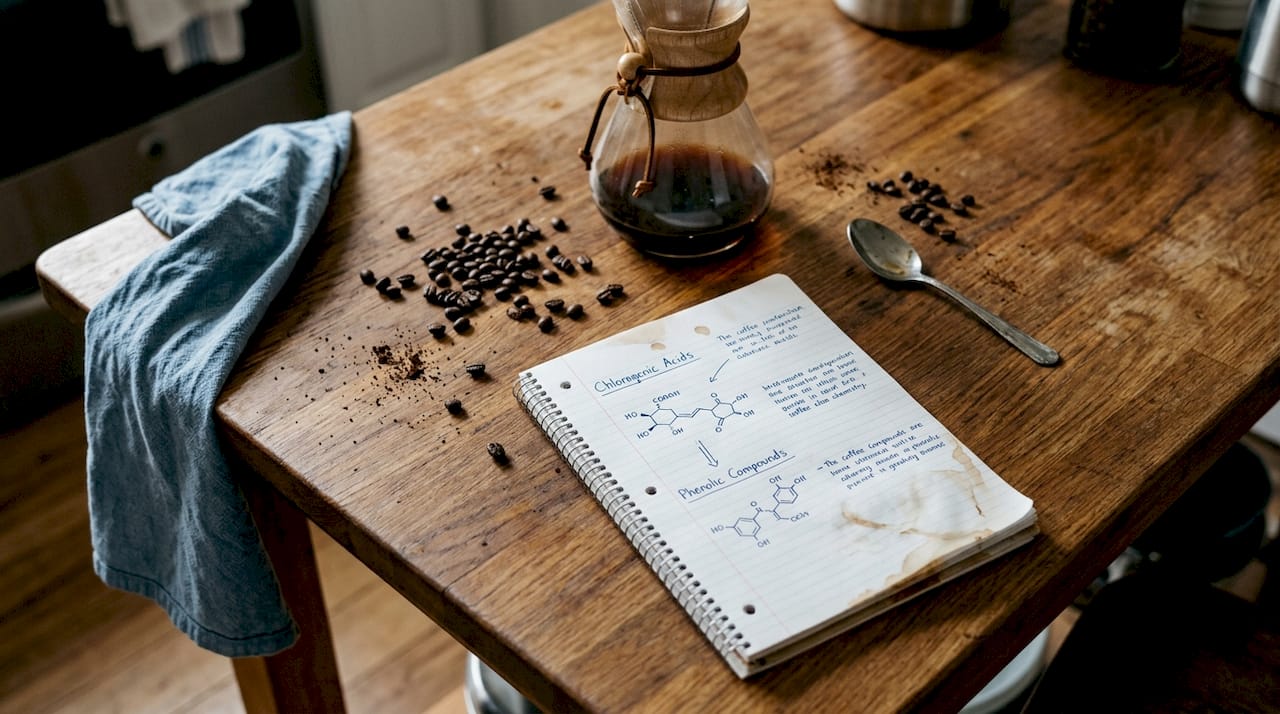
Here’s how the major phenolic antioxidants compare across coffee types:
| Compound | Source | Typical content | Key health action |
|---|---|---|---|
| Chlorogenic acids (CGAs) | Arabica and Robusta | 6-12% dry weight in green beans | Anti-inflammatory, glucose regulation |
| Caffeic acid | Both species | Lower, post-CGA hydrolysis | Antioxidant, antimicrobial |
| Ferulic acid | Both species | Trace amounts | Neuroprotective, skin protective |
| Quinic acid | Both species | Increases with roasting | Antimicrobial, flavor contributor |
CGAs are particularly exciting for neuroprotective effects. They activate the Nrf2 and AMPK pathways, which are cellular defense systems that regulate inflammation and energy metabolism. This is why research keeps linking regular coffee consumption to reduced risk of cognitive decline.
Phenolics also directly shape what you taste. Higher CGA content in lighter roasts produces that bright, slightly tangy flavor note. Ferulic acid contributes to sweet, spicy undertones. Caffeic acid adds a mild bitterness that balances sweetness in blends like our Cinnamon Hazelnut Coffee.
- CGAs are highest in green or lightly roasted beans
- Caffeic acid increases as CGAs break down during roasting
- Ferulic acid is heat-stable and survives moderate roasting
- Quinic acid rises with roast level, contributing to perceived body
Pro Tip: If maximizing CGA intake is your goal, choose a light to medium roast. The relationship between roasting and antioxidants is inverse for CGAs: the darker the roast, the more CGA is degraded.
Roasting and brewing: How melanoidins and more reach your cup
Phenolics set the stage, but roasting and brewing dramatically change which antioxidants end up in your cup.
When heat hits the green bean, a cascade of reactions begins. CGAs degrade at high temperatures, but something new and powerful takes their place. Melanoidins from roasting are high-molecular-weight brown polymers formed through Maillard reactions, and they contribute meaningfully to antioxidant activity in darker roasts.
Here’s what roast level does to your antioxidant profile:
| Roast level | CGA content | Melanoidin content | Antioxidant character |
|---|---|---|---|
| Light | High | Low | Polyphenol-rich, bright |
| Medium | Moderate | Moderate | Balanced profile |
| Dark | Low | High | Melanoidin-dominant, bold |
Neither extreme is universally better. Each roast delivers a distinct antioxidant mix, which is exactly why artisanal blends that combine roast levels can offer something more complex than a single-origin light or dark alone.
“There is no single ‘best’ roast for health. The ideal cup is the one you’ll actually drink consistently, prepared in a way that aligns with your flavor preferences and health priorities.”
Brewing method is the next variable, and it’s one most coffee guides underplay. Here are the top methods ranked by antioxidant retention:
- French press: Retains the full spectrum, including diterpenes and melanoidins, because there’s no paper filter
- Espresso: High-pressure extraction pulls a concentrated antioxidant shot in a small volume
- Cold brew: Long steep time extracts significant phenolics with lower acidity
- Pour-over / drip with paper filter: Strong CGA and flavonoid extraction but filters out diterpenes
- Instant coffee: Processed and often lower in total antioxidant content
Pro Tip: For the best of both worlds, try a French press with a medium roast. You’ll get balanced CGA content from the roast level and full diterpene retention from the unfiltered method. Pair that with guidance on enhancing coffee flavor and you’re optimizing on every front.
Other vital antioxidants: Flavonoids, diterpenes, and variety by coffee type
Besides the well-known phenolics and melanoidins, coffee surprises with lesser-known but potent antioxidants.
Flavonoids in coffee include catechin, epigallocatechin, and quercetin. These compounds appear in smaller amounts than CGAs, but their biological activity is notable. Quercetin, for example, is a well-documented anti-inflammatory agent studied for cardiovascular and immune support.
Then there are diterpenes. Cafestol and kahweol are fat-soluble antioxidants found in the coffee oil. They’re trapped by paper filters, which is why unfiltered brewing methods like French press and Turkish coffee deliver significantly more of them. Cafestol in particular has shown hepatoprotective (liver-protecting) effects in early research.
Which beans deliver the most of these compounds? Here’s a quick breakdown:
- Robusta beans: Higher chlorogenic acids and overall antioxidant activity compared to Arabica
- Arabica beans: More nuanced flavor, lower CGA, but often richer in aromatic compounds
- Blends: Combining Robusta and Arabica can balance antioxidant density with flavor complexity
- Specialty single-origins: Terroir (the growing environment) affects polyphenol development, with high-altitude beans often showing stronger phenolic profiles
Robusta’s antioxidant advantage is significant: it can contain up to twice the chlorogenic acid concentration of Arabica. For the health-focused brewer, that’s not a trivial difference. But flavor matters too, and that’s where smart blending earns its place.
If you’re ready to push past standard grocery shelf options, exploring adventurous coffee tips can help you match antioxidant-rich choices with preparation styles that amplify both health and taste. And building unique coffee rituals around these compounds turns a daily habit into a genuinely intentional practice.
Our take: What most guides miss about coffee antioxidants
Most antioxidant guides hand you a ranking and tell you to chase the top of the list. Drink light roast. Use French press. Buy Robusta. Done. But that approach misses the real story.
The healthiest coffee is the one you’ll brew with care and drink with enjoyment every single day. Consistency beats optimization. A beautiful medium roast you love will always outperform a bitter light roast you abandon after three cups. Fresh beans, thoughtful preparation, and a blend that excites your palate are what actually sustain a healthy coffee habit over months and years.
We also think most guides undervalue how much the experience of brewing affects outcomes. When you slow down, use quality water, and choose a premium blend, you’re more likely to drink one or two cups mindfully than pour a rushed, low-quality brew four times a day. That matters for both flavor and how your body processes what’s in the cup.
Exploring elevated brewing experiences isn’t just an aesthetic pursuit. It’s how you build a coffee practice that’s genuinely good for you, cup after cup.
Discover antioxidant-rich blends at Variatea Coffee
Ready to put antioxidant knowledge into action? Choosing the right blend doesn’t have to mean sacrificing the flavors you love.

At Variatea Coffee, every blend is crafted with both depth of flavor and quality sourcing in mind. Our Whiskey Barrel Aged coffee brings the rich complexity of charred oak and vanilla in a medium-dark profile that balances melanoidin development with bold character. For something more approachable and aromatic, the Gourmet Donut Shop coffee delivers a smooth, satisfying daily brew. And if you’re looking to add antioxidant variety beyond coffee, our curated line of artisan teas includes matcha and hojicha options that complement your coffee ritual beautifully.
Frequently asked questions
Which coffee beans have the most antioxidants?
Robusta beans contain more chlorogenic acids and overall antioxidant activity than Arabica, making them the denser source by weight. Blends that incorporate Robusta can offer a strong antioxidant foundation with added flavor complexity.
How does brewing method affect coffee antioxidants?
French press and espresso retain more of the full antioxidant spectrum, including diterpenes, because paper filters remove fat-soluble compounds like cafestol and kahweol that unfiltered methods preserve.
Are dark roasts healthier than light roasts for antioxidant content?
Neither is simply better. Light roasts are richer in polyphenols like CGAs, while dark roasts develop melanoidins through Maillard reactions that offer their own antioxidant activity. Your ideal roast depends on which compounds you want more of.
Do flavored or instant coffees provide the same antioxidants?
Generally no. Flavored and instant coffees go through additional processing and often include additives that dilute or degrade antioxidant content compared to fresh, whole-bean coffee brewed at home.
What are the top health benefits of coffee antioxidants?
Coffee antioxidants fight free radicals and support anti-inflammatory, neuroprotective, and metabolic health. CGAs in particular act through Nrf2 and AMPK pathways to regulate cellular defense systems linked to cognitive protection and energy metabolism.