

Discover bold coffee flavor: artisanal profiles explained
Most coffee drinkers assume bold means bitter, dark, and punishingly strong. That assumption leads to a lot of over-roasted, one-dimensional cups that leave you grimacing instead of savoring. Real boldness in coffee is something far more interesting. It lives in the layered interplay of aroma, body, and a finish that lingers long after the last sip. This article breaks down what bold coffee flavor actually means, which beans and roasts deliver it best, how your brewing method shapes it, and what artisanal techniques can push your cup into genuinely remarkable territory.
Table of Contents
- What does bold coffee flavor really mean?
- What influences bold coffee flavor? Bean origins, roast, and blends
- Brewing methods that enhance boldness
- Artisanal approaches: Layering, finishing, and flavor highlights
- A fresh take on bold coffee: Why complexity, not intensity, should be your goal
- Experience bold coffee with Variatea’s curated blends
- Frequently asked questions
Key Takeaways
| Point | Details |
|---|---|
| Boldness is complexity | Bold coffee delivers deep, layered flavors and a memorable aftertaste, not just intensity. |
| Bean and brew matter | Origin, roast, blending, and brewing method all influence boldness in each cup. |
| Artisanal tweaks boost flavor | Techniques like finishing spices, layering, and blend adjustments help create a signature bold profile. |
What does bold coffee flavor really mean?
The word “bold” gets thrown around on grocery store bags like a marketing promise with no real definition behind it. But for serious brewers, it means something specific and worth understanding.
Bold coffee is distinguished by depth, richness, and a complexity of flavor, not just strength. That distinction matters enormously. A cup can be intense without being bold, and bold without being harsh. Think of it like the difference between a one-note shout and a full orchestra. Strength is volume. Boldness is the music.
The key sensory components that build a bold profile include:
- Aroma: The fragrance before the first sip sets the expectation. Smoky, earthy, or floral notes signal what’s coming.
- Body: The weight and texture of the coffee on your palate. Full-bodied coffees feel dense and coating, not thin or watery.
- Richness: The depth of flavor compounds that make a sip feel layered rather than flat.
- Aftertaste: A bold coffee leaves a finish. Chocolate, cedar, dried fruit, or roasted nut notes that evolve after you swallow.
- Complexity: The way flavors shift and reveal themselves across multiple sips.
“True boldness in coffee isn’t about overpowering your senses. It’s about flavors that are distinct, memorable, and evolving across the cup.”
What boldness is not: bitterness from over-extraction, burnt notes from excessive roasting, or the harsh edge that comes from low-quality robusta beans. Those are flaws, not features. If your “bold” coffee tastes like an ashtray, that’s a roasting or brewing problem, not a sign of quality.
Exploring artisanal coffee profiles and understanding flavor layering in coffee are two of the fastest ways to retrain your palate toward genuine boldness. The coffee complexity guide from Variatea Coffee is also a solid starting point if you want to map the full spectrum. Coffee itself is one of the most chemically complex beverages on the planet, with over 1,000 aroma compounds identified in a single roasted bean.
What influences bold coffee flavor? Bean origins, roast, and blends
Understanding bold means knowing how beans, origin, and roasting craft the cup. The flavor in your mug starts long before brewing, it starts in the soil, altitude, and processing method of the farm, and gets shaped further by the roaster’s decisions.
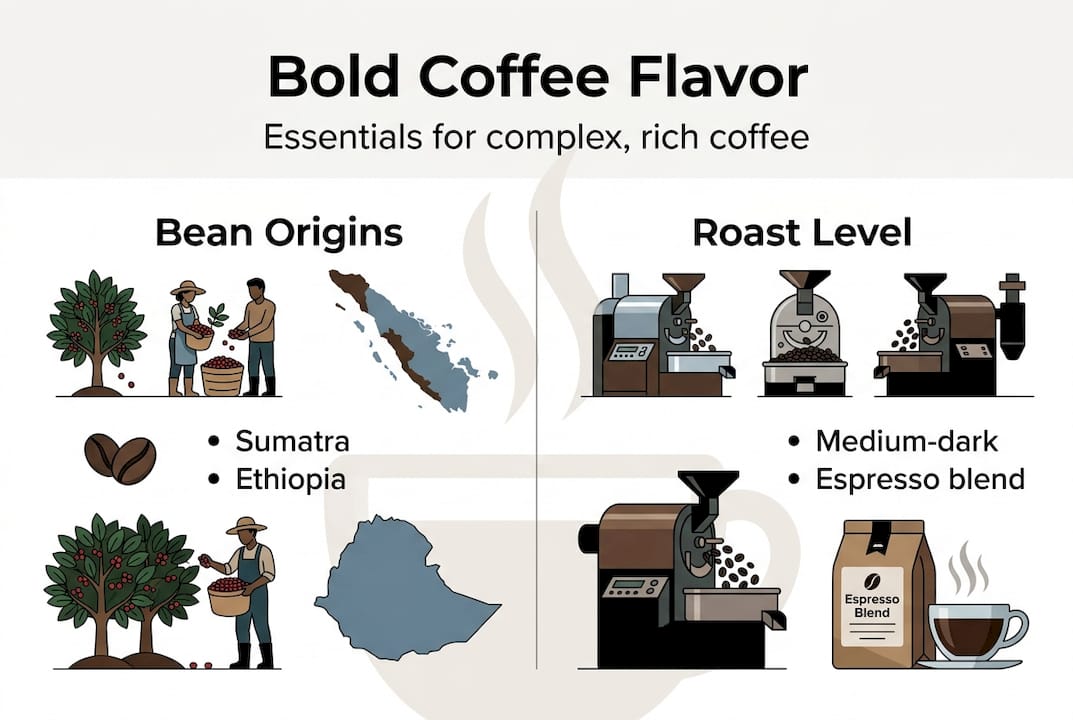
Bean origin and roast level are primary contributors to bold flavor. Here’s how the main variables stack up:
| Factor | Effect on boldness | Example |
|---|---|---|
| Single-origin (Sumatra) | Earthy, full-bodied, low acidity | Deep, syrupy boldness |
| Single-origin (Ethiopia) | Fruity, complex, floral | Bright boldness with layered finish |
| Espresso blend | Balanced richness, crema, depth | Classic bold with sweetness |
| Medium roast | Preserves origin character | Nuanced, complex boldness |
| Dark roast | Amplifies body, reduces acidity | Intense, smoky boldness |
Sumatra is a go-to for brewers who want that heavy, almost syrupy body with earthy and herbal undertones. Ethiopian beans bring a different kind of boldness, one built on fruit-forward complexity rather than weight. Espresso blends are engineered for balance, pulling together beans from multiple origins to create a cup that’s rich, sweet, and deeply satisfying under pressure.
Blends give you a creative advantage. A skilled blend can combine the body of a Sumatra with the brightness of a Central American bean, producing a boldness that neither origin achieves alone. The coffee blend guide at Variatea Coffee walks through how intentional blending creates flavor outcomes you simply can’t get from a single origin.
The SCA Flavor Wheel is an excellent reference for mapping the specific tasting notes that different origins and roasts produce.
Pro Tip: Start with a medium-dark roast from Sumatra or a well-constructed espresso blend if you’re new to chasing bold flavor. These profiles are forgiving and consistently deliver the richness most brewers are looking for without the risk of over-roasted bitterness.
Exploring small-batch flavor picks is one of the most practical ways to taste these differences side by side.
Brewing methods that enhance boldness
Beyond the bean, your brewing process can make or break a bold coffee experience. The same bag of beans can produce a flat, forgettable cup or a rich, layered one depending entirely on how you brew it.
Brewing method is as crucial as bean selection in achieving a bold cup. Here’s how the most popular methods compare:
| Method | Boldness level | Key characteristic |
|---|---|---|
| French press | Very high | Full immersion, heavy body, oils intact |
| Espresso | Very high | Concentrated, rich crema, intense finish |
| AeroPress | High | Versatile, smooth, adjustable strength |
| Pour-over | Medium | Clean, bright, highlights complexity |
| Cold brew | Medium-high | Low acidity, sweet, slow-extracted depth |
To maximize boldness with any method, follow these steps:
- Use a coarser grind for French press to avoid over-extraction and bitterness. Aim for a 1:12 coffee-to-water ratio and steep for four minutes.
- For espresso, dial in a fine grind and a 1:2 ratio (18g coffee to 36g yield) to pull a shot with full body and a caramel-sweet finish.
- With AeroPress, use a medium-fine grind, invert the brewer, and steep for two minutes before pressing slowly for a concentrated, bold result.
- For cold brew, use a coarse grind at a 1:4 ratio and steep for 18 to 24 hours in the refrigerator. The slow extraction pulls sweetness and depth without heat-driven bitterness.
Pro Tip: Grind size is your most powerful lever. A grind that’s too fine causes over-extraction and bitterness. Too coarse and you lose body and richness. Adjust in small increments and taste after each change before moving on to ratio or time.
The guides on enhancing coffee flavors and coffee blending techniques offer step-by-step frameworks for dialing in each method. For brewers who want to go further, spice-infused coffee blending opens up a completely different dimension of bold flavor. The Coffee Institute’s brewing basics is also worth bookmarking as a technical reference.
Artisanal approaches: Layering, finishing, and flavor highlights
For those truly seeking something unique, artisanal methods offer another level of control. This is where bold coffee stops being a product you buy and starts being something you craft.
Layering and finishing can push the boundaries of bold coffee flavor in ways that bean selection and brewing alone cannot. The idea is simple: you build the cup in stages, adding elements that amplify or complement the coffee’s existing character.
Here are the most effective artisanal techniques for deepening boldness:
- Barrel-aging: Aging green or roasted beans in charred oak barrels infuses smoky vanilla and bourbon-like depth without any alcohol. Variatea’s Whiskey Barrel-Aged Coffee is a direct example of this process producing something genuinely distinct.
- Cinnamon finishing: Adding a small pinch of Ceylon cinnamon to your grounds before brewing introduces warm spice that amplifies the natural sweetness of medium-dark roasts.
- Cacao nibs: Tossing a few raw cacao nibs into your French press with the grounds adds a bittersweet chocolate note and extra body to the cup.
- Salt pinch: A tiny amount of salt, less than a quarter teaspoon per 12 ounces, suppresses bitterness and allows the richer, more complex notes to come forward.
- Layered brewing: Brewing a concentrated base and then adding a second, lighter extraction on top creates a cup with multiple flavor zones that evolve as you drink.
Pro Tip: Start with one addition at a time. Adding cinnamon and cacao and salt all at once makes it impossible to know what’s working. Isolate each variable, taste, then build from there.
The flavor layering guide at Variatea Coffee walks through these techniques in detail. If you want inspiration for where to take your cup next, the unique blends for flavor and coffee confections articles are worth exploring.
A fresh take on bold coffee: Why complexity, not intensity, should be your goal
Here’s the uncomfortable truth most coffee marketing won’t tell you: chasing intensity is a dead end.
The heaviest, darkest roasts tend to score lower in blind taste panels than well-developed medium-dark roasts with genuine complexity. Why? Because intensity is a blunt instrument. It overwhelms the palate quickly, and after the first few sips, there’s nothing left to discover. A cup built on complexity, on the other hand, keeps revealing itself. The first sip tastes different from the last. Notes shift. The finish evolves.
We’ve seen this pattern consistently. Brewers who start chasing boldness through darkness and strength eventually plateau. The ones who make real progress are the ones who start paying attention to rich flavors in coffee and treat each variable, origin, roast, method, finish, as a tool for building depth rather than volume.
The goal isn’t to make the most intense cup possible. It’s to make a cup that rewards attention. That’s the standard we hold our blends to, and it’s the standard worth holding your brewing to as well.
Experience bold coffee with Variatea’s curated blends
If this article has you ready to taste the difference between bold and merely strong, the next step is getting the right beans in your hands.

Variatea Coffee’s lineup is built specifically for brewers who want more from their cup. The Max Caf Blend delivers high-octane richness without sacrificing flavor complexity, making it a strong starting point for anyone exploring bold profiles. For something truly artisanal, the Whiskey Barrel Aged coffee brings smoky vanilla depth that you simply cannot replicate with a standard roast. Browse the full range at Variatea Coffee to find the blend that matches your brewing style and flavor goals.
Frequently asked questions
Does bold coffee have more caffeine?
Not always. Boldness is about flavor complexity and depth, while caffeine content depends on bean variety and brewing method, not roast darkness or perceived intensity.
Which beans are best for a bold flavor?
Sumatra, Ethiopian, and bold espresso blends are top picks for their rich, distinct profiles. Certain origins and blends consistently deliver the depth and finish that define a truly bold cup.
Is bold coffee the same as dark roast?
Dark roast can produce a bold cup, but boldness involves more than just roast level. Origin, blend composition, and brewing method all play equally important roles.
How can I make my coffee taste bolder at home?
Adjust your grind size, extend brew time slightly, experiment with your bean blend, or add a finishing spice like cinnamon. Brewing technique and blend tweaking are the fastest routes to a noticeably bolder cup without changing your equipment.